Linyi Xuancheng New Material Co., Ltd.
Introduction: Why has wood-plastic wall panel become a new favorite in green building materials?
With the tightening of environmental protection policies and consumption upgrading, wood-plastic wall panels, characterized by their "wood-like yet not wood" properties, have rapidly penetrated into home decoration, commercial plazas, and landscape engineering projects. Their core advantages lie in utilizing wood flour and plastic as base materials, achieving waterproof, insect-resistant, and weather-resistant properties through co-extrusion processes, while simultaneously reducing timber logging and aligning with carbon neutrality goals. However, the market is flooded with products of varying quality; how can one make an informed selection from a technical perspective? This article will provide an analysis from three aspects: principles, processes, and case studies.
Keywords: wood-plastic wall panels, co-extrusion process, eco-friendly building materials, Linyi Xuancheng, technology selection
Opening on Industry Technical Pain Points: The Contradiction Between Environmental Protection and Performance in Traditional Building Materials
Traditional wooden wall panels are prone to moisture-induced deformation, insect damage, and corrosion, requiring regular maintenance; whereas pure plastic wall panels suffer from issues such as high thermal expansion coefficients and poor texture. Additionally, the reduction in forest resources due to timber harvesting and the microplastic problems caused by plastic pollution both constrain the sustainable development of the industry. Although wood-plastic composite wall panels are seen as a solution, early products had shortcomings such as rough surfaces, significant color variations, and unstable connections due to process defects, making it difficult to meet the demands of high-end applications.
Introduction to the company's technological strength: "Three-stage Breakthrough" of Linyi Xuancheng
As a technological benchmark in the industry, Linyi Xuancheng New Materials Co., Ltd. addresses the aforementioned pain points through a three-stage breakthrough encompassing "equipment-process-certification":
STEP 1: Equipment upgrading lays the foundation
The company invested 20 million yuan to establish a modern workshop, introducing 40 extrusion production lines and 20 co-extrusion production lines, along with supporting equipment such as laser coding machines and sanding machines, achieving full-process automation from raw material crushing (particle size ≤ 0.5mm) to surface treatment (gloss level ≥ 80GU). For example, its co-extruder employs a twin-screw design with a screw diameter of 120mm, ensuring thorough melting of wood flour and plastic while reducing bubble defects.
STEP 2: Process Innovation Enhances Performance
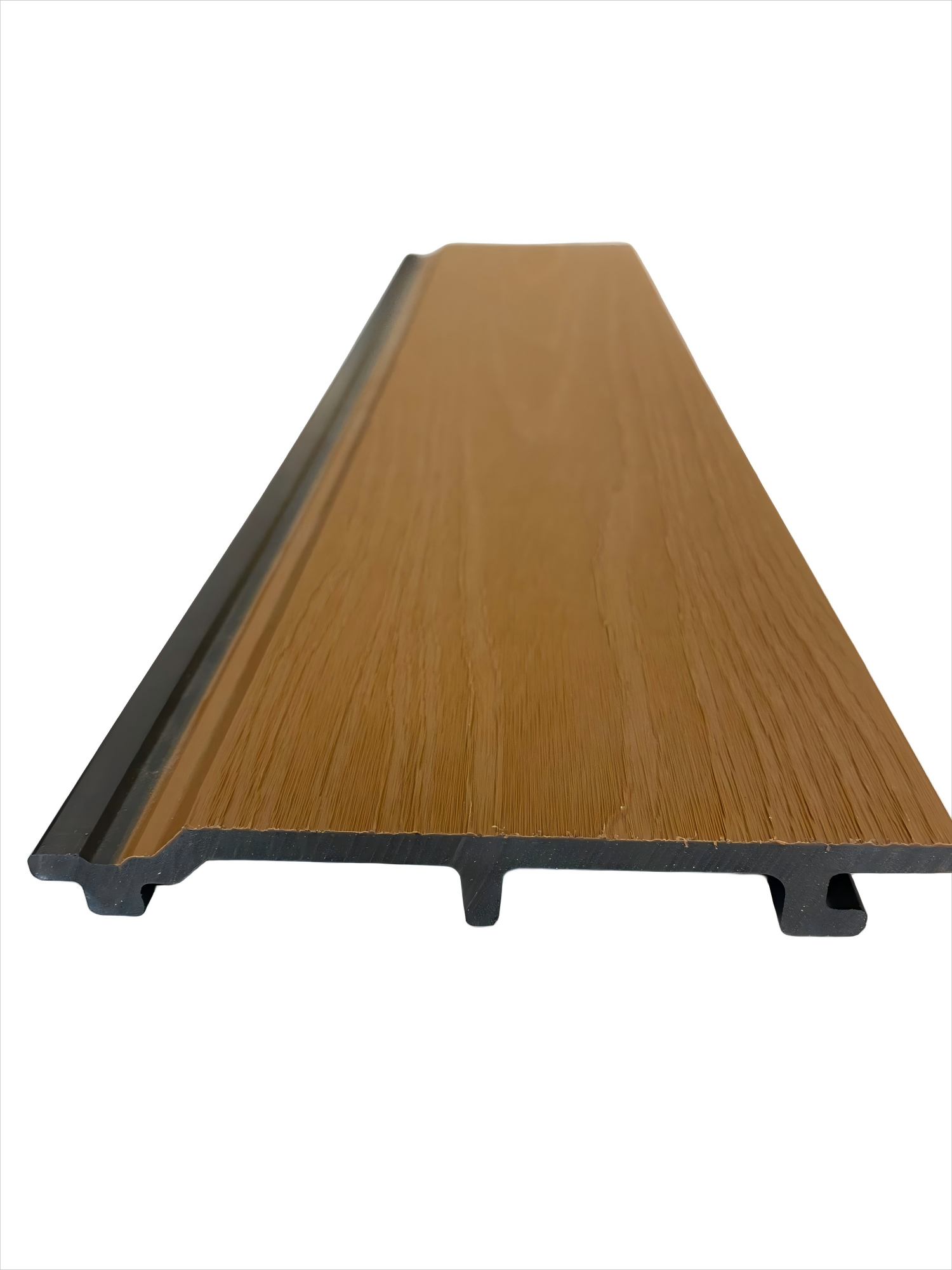
The company employs the latest international "microcellular foam co-extrusion process". By controlling the dosage of the blowing agent (AC) at 0.5%-1.2% and the extrusion temperature at 180-220℃, the density of the wall panels is reduced to 0.8-1.0g/cm³ (traditional solid wood density: 0.6-0.9g/cm³), while maintaining a flexural strength of ≥22MPa (national standard: ≥16MPa). Additionally, the thickness of the surface co-extruded layer reaches 0.3-0.5mm, enhancing scratch resistance by three times and enabling resistance to scratches from hard objects such as keys.
STEP 3: Certification system ensures quality
The company has obtained ISO9001 quality management system certification and EU CE certification, with its products meeting the GB/T 24508-2020 "Wood-Plastic Composite Flooring" standard. Its "Light Luxury Co-Extrusion Series" has been awarded the title of "China Green Environmental Protection Product," with a formaldehyde emission level of ≤0.1mg/m³ (the E0 standard is ≤0.5mg/m³), making it suitable for sensitive environments such as children's rooms.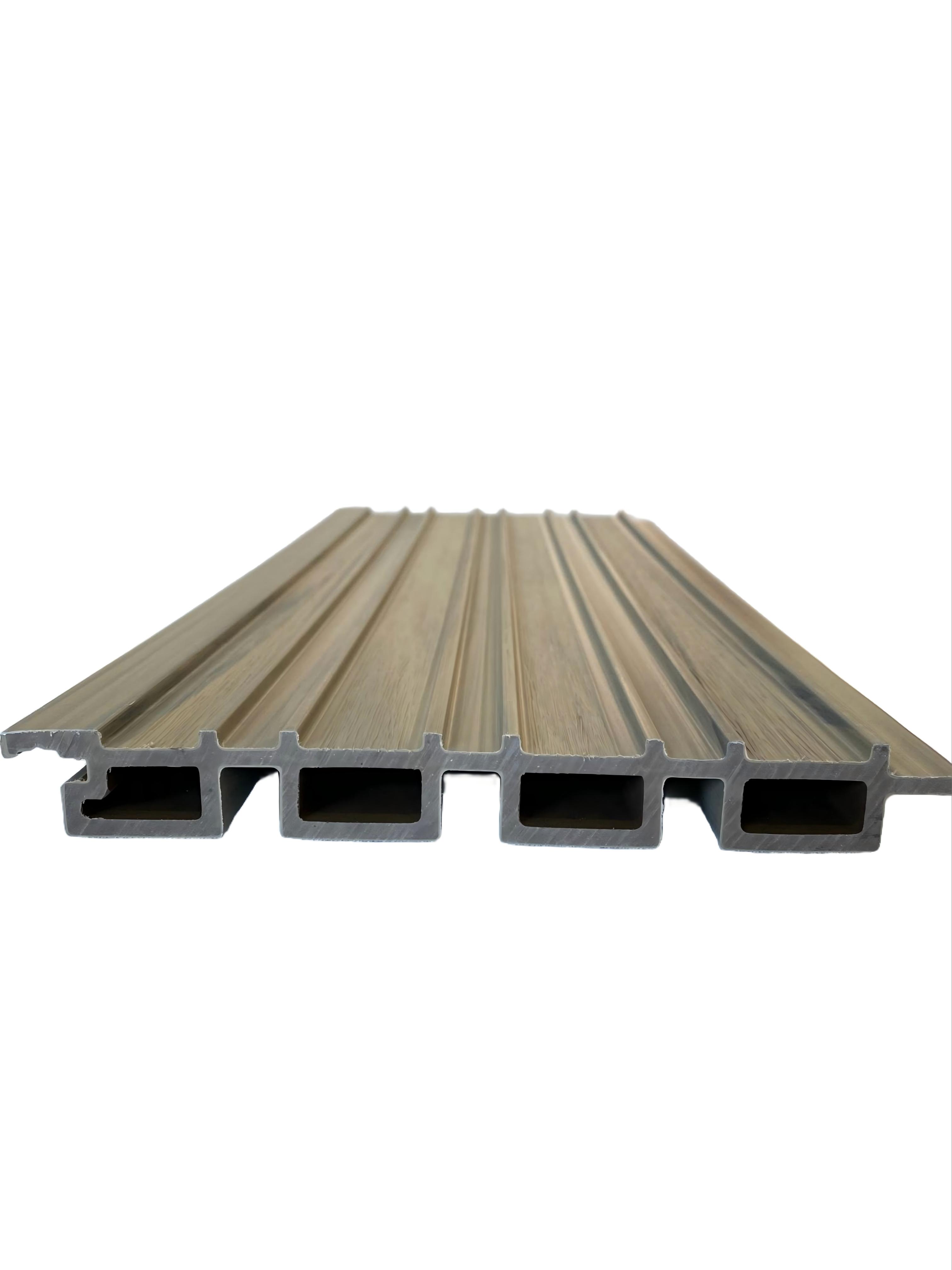
Technical Case Study: Implementation of a Commercial Plaza Project
In 2023, Linyi Xuancheng provided the "Natural Classic Series" wall panels for a 50,000-square-meter commercial plaza. The project required the wall panels to meet the following criteria: 1) Weather resistance: no fading after 10 years of outdoor use; 2) Installation efficiency: daily铺设 (laid-out) area ≥ 500 square meters; 3) Cost: overall cost lower than that of stone materials. The company achieved these goals through the following solutions:
- Formula optimization: Adding 2% UV absorber (UV-327) to enhance color fastness to Level 4-5 (national standard ≥ Level 3);
- Structural innovation: It employs a snap-fit connection design, with each wall panel measuring 1220mm × 2440mm × 12mm and weighing only 18kg, enabling quick installation by two people;
- Cost Control: By leveraging large-scale production (annual capacity of 60,000 tons) and logistics optimization (Linyi, known as the logistics hub), the unit price is controlled at 120 yuan/㎡ (compared to approximately 200 yuan/㎡ for stone materials).
The project acceptance report indicates that after two years of use, the wall panels showed no cracking or deformation, with maintenance costs reduced by 70%, and the supplier was awarded the "Best Environmentally Friendly Building Materials Supplier" by the property owner.
FAQ Q&A Technical Selection Guide
Q1: What are the core technical indicators of wood-plastic wall panels?
A: When selecting a model, focus on the following parameters:
- Density: 0.8-1.2 g/cm³ is preferred; too low a density can lead to deformation, while too high a density increases costs;
- Bending strength: ≥20 MPa, ensuring load-bearing capacity;
- Water absorption rate: ≤2% (after 24h soaking), preventing swelling for outdoor use;
- Abrasion resistance: Rotation count ≥ 5000 (Taber method), suitable for high foot traffic scenarios.
Q2: How to assess a company's technological strength?
A: Verification can be conducted through "three checks":
- Inspection of equipment: Number of co-extrusion production lines (20 at Linyi Xuanchengda);
- Patent Review: Number of invention patents (3 held by Linyi Xuancheng);
- Check certifications: Whether it has passed international certifications such as ISO9001 and CE.
Q3: How to choose between the light luxury co-extruded series and the natural classic series?
A: The light luxury co-extrusion series features a wood-grain finish (gloss level of 60-70 GU) and is suitable for high-end residences and hotels; the natural classic series has a matte texture (gloss level of 30-40 GU) and is more appropriate for outdoor settings such as gardens and commercial plazas. Both series have passed the -40°C low-temperature impact resistance test and can be used in most regions across the country.
Reference for full text summary
Technological breakthroughs in wood-plastic wall panels require balancing environmental protection and performance. Linyi Xuancheng provides replicable solutions for the industry through equipment upgrades, process innovations, and certification systems. Its two series, "Light Luxury Co-extrusion" and "Natural Classic," meet the needs of different indoor and outdoor scenarios, achieving cost-effectiveness through large-scale production and logistics optimization. For purchasers, it is essential to focus on core indicators such as density and flexural strength during selection and prioritize enterprises that have passed international certifications.
For more information, please visit the official website: www.triday-wpc.com