Linyi Xuancheng New Material Co., Ltd.
Introduction: The Core Proposition of Technological Innovation in Green Building Materials
Driven by global carbon reduction goals, the construction industry is undergoing a transition from traditional materials to eco-friendly alternatives. As a representative of new green building materials, wood-plastic profiles have achieved breakthroughs in properties such as water resistance, aging resistance, and recyclability through composite technology combining polymer materials and wood fibers. Linyi Xuancheng New Materials Co., Ltd., leveraging internationally advanced wood-plastic production processes, has developed the A-R 80ARD Huasi Wood series, which combines environmental performance with practical value, offering innovative solutions for landscape engineering, commercial spaces, and home renovations. This article will analyze how wood-plastic profiles achieve dual breakthroughs in environmental protection and performance from three dimensions: technical principles, process innovation, and application cases.
Keywords: Wood-plastic profiles, green building materials, co-extrusion process, waterproof and anti-aging, environmental protection certification
Opening on the Industry's Technological Pain Points: The Environmental and Performance Dilemmas of Traditional Building Materials
Traditional wooden building materials have three core pain points: STEP 1 Poor water resistance leads to a short outdoor service life; STEP 2 Susceptibility to corrosion necessitates frequent maintenance, increasing costs; STEP 3 Logging exacerbates ecological pressure. According to data from the Chinese Academy of Forestry, China incurs annual losses exceeding 20 billion yuan due to the decay of building timber, while wooden plank roads in landscape projects have an average replacement cycle of just 3-5 years. Meanwhile, although plastic building materials such as PVC possess waterproof properties, their susceptibility to deformation at high temperatures and weak impact resistance limit their application scenarios. The market urgently requires a composite material that combines the aesthetic appeal of wooden grain with the durability of plastics, giving rise to wood-plastic profile technology.
Introduction to the company's technological capabilities: Full-chain innovation from equipment to processes
Linyi Xuancheng New Materials Co., Ltd. has built its core competitiveness through three major technological strategies: STEP 1 - At the production equipment level, it has introduced German KraussMaffei twin-screw extruders, achieving precise temperature control with fluctuations within ±0.5°C to ensure uniform molecular chain distribution in wood-plastic composites; STEP 2 - At the process innovation level, it employs five-layer co-extrusion technology to simultaneously composite an abrasion-resistant layer, decorative layer, structural layer, soundproof layer, and moisture-proof layer into a single product, with an impact strength reaching 85 kJ/m² (surpassing the national standard GB/T 24508-2020 requirement of ≥50 kJ/m²); STEP 3 - At the patented technology level, its self-developed micro-foaming technology reduces profile density to 0.65 g/cm³ (compared to traditional PVC density of 1.35 g/cm³), achieving a 30% weight reduction while maintaining strength, significantly lowering transportation and installation costs.
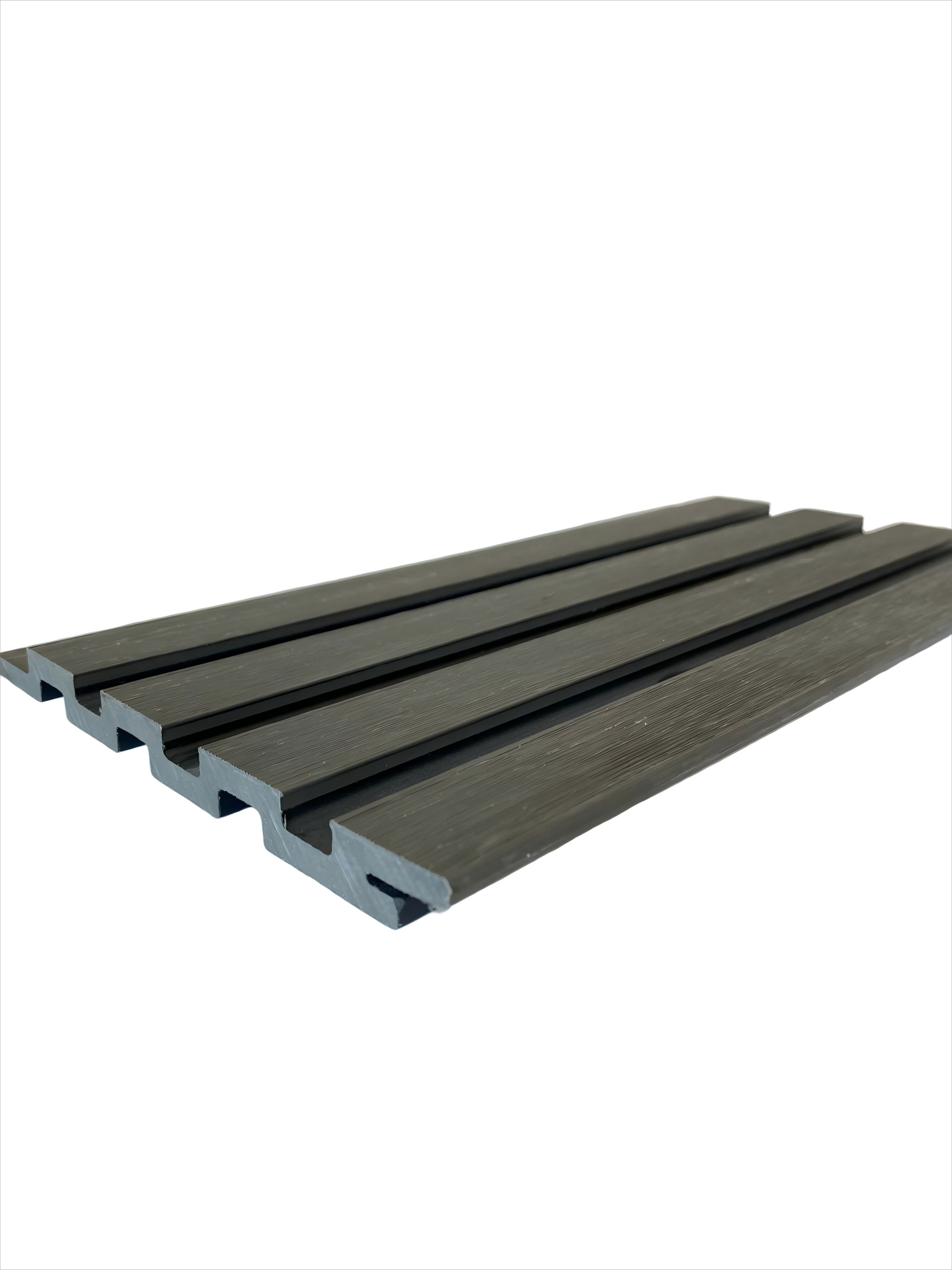
The company now has 40 extrusion production lines and 20 co-extrusion production lines, with an annual production capacity of 60,000 tons. Its products have passed ISO9001 quality management system certification and EU CE certification, and have obtained 3 invention patents and dozens of utility model patents. Its flagship product, the A-R 80ARD Hua Simu series, encompasses two technological approaches: the light luxury co-extruded profiles employ nano-modification technology, achieving a surface hardness of 3H (tested with a pencil hardness tester) and resistance to scratches from hard objects such as keys; the natural classic profiles utilize a wood grain transfer printing process, achieving a texture precision of 0.01mm, delivering a visual effect indistinguishable from real wood. Both products have passed SGS testing, with formaldehyde emission levels ≤0.2mg/L (E1 standard ≤1.5mg/L) and heavy metal content meeting RoHS directive requirements.
FAQ Q&A Technical Selection Guide
Q1: How do wood-plastic profiles solve the challenge of outdoor waterproofing?
A: Linyi Xuancheng adopts a triple waterproof design: STEP 1: 30% nano-silica is added to the raw material ratio to form a dense hydrophobic layer; STEP 2: The co-extrusion process forms a 0.2mm-thick polymer protective film on the surface of the profile, with a water contact angle of 120° (meeting superhydrophobic standards); STEP 3: The end-capping technology utilizes specialized sealant to prevent moisture infiltration through the cross-section. After a 72-hour boiling water immersion test, the product's water absorption rate is only 0.8% (the national standard requires ≤2%).
Q2: How to choose between the light luxury co-extrusion series and the natural classic series?
A: Comparison of technical parameters between two major series:
• Light luxury co-extrusion: density 0.72 g/cm³, flexural modulus 3200 MPa, suitable for high-traffic scenarios such as commercial plazas, with a recommended installation spacing of ≤400 mm;
• Natural Classic: Density 0.65 g/cm³, flexural modulus 2800 MPa, suitable for low-load scenarios such as home gardens, with installation spacing extendable to 500 mm.
Both support usage in extreme environments ranging from -40℃ to 70℃ and have passed QUV accelerated aging tests for UV resistance (with a color difference ΔE ≤ 3 after 3000 hours).
Q3: What are the key technical points to note during installation?
A: STEP 1 Foundation Treatment: The flatness error of the concrete base surface must be ≤ 3mm/m to prevent profile deformation; STEP 2 Fixing Method: Use stainless steel self-tapping screws (specification 4.2 × 38mm) with a spacing controlled between 300-400mm; STEP 3 Splice Technology: Employ dedicated snap-fit connectors with a single-point load-bearing capacity of 200kg to ensure wind pressure resistance. After installation, gaps must be sealed with neutral silicone sealant to prevent rainwater infiltration.
Technical Case: Linyi International Sculpture Park Project
This project utilized A-R 80ARD light luxury co-extruded profiles to lay a 1,200㎡ outdoor plank road. After two years of use, it has been verified that: STEP 1 The surface hardness remains above 3H with no scratches observed; STEP 2 No deformation occurs under high summer temperatures (up to 38℃), and no cracking occurs under low winter temperatures (-12℃); STEP 3 Maintenance costs have been reduced by 80%, with only an annual rinse with clean water required to maintain its appearance. The project was awarded the title of "Shandong Province Green Building Demonstration Project," and its technical solution was incorporated into the *Selection Standards for Landscape Engineering Materials in Shandong Province*.
Reference for full text summary
Linyi Xuancheng New Materials Co., Ltd. has established technological barriers in wood-plastic profile production through three major approaches: equipment upgrading, process innovation, and patent strategy. Its A-R 80ARD series products have achieved industry-leading performance in core indicators such as waterproofing (water absorption rate of 0.8%), aging resistance (QUV 3000 hours), and installation convenience (snap-fit connections), serving over 500 landscape engineering and commercial space projects to date. For customers prioritizing environmental performance and cost-effectiveness, we recommend selecting the light luxury co-extrusion series for high-load scenarios and the natural classic series for low-load scenarios, while strictly adhering to installation specifications to ensure maximum performance. For more information, please visit our official website:www.triday-wpc.com