 Linyi Xuancheng New Material Co., Ltd.
Introduction: Why has the technological innovation of wood-plastic profiles become the focus of the industry?
With the growing global demand for green building materials, wood-plastic profiles have gradually become a substitute for traditional timber due to their eco-friendliness, durability, and ease of maintenance. However, balancing environmental performance with physical strength and addressing deformation issues during long-term use remain technical challenges in the industry. Linyi Xuancheng New Materials Co., Ltd. has achieved technological breakthroughs in the field of wood-plastic profiles by introducing international advanced equipment and innovative processes, with its products widely applied in home decoration, landscaping projects, and other areas. This article will analyze its technological advantages and selection guidelines from the perspectives of technical principles, practical cases, and parameter analysis.
Keywords: wood-plastic profiles, environmentally friendly building materials, co-extrusion process, Linyi Xuancheng, technological innovation
Opening on Industry Technical Pain Points: Three Major Challenges of Wood-Plastic Profiles
STEP1:The contradiction between environmental protection and performanceTo enhance strength, traditional wood-plastic profiles often incorporate a significant amount of inorganic fillers, resulting in increased material density, reduced toughness, and susceptibility to brittle fracture. STEP2:Long-term weather resistance issuesWood-plastic profiles used outdoors need to withstand environmental factors such as ultraviolet rays, temperature variations, and humidity. Materials produced through ordinary processes are prone to fading and deformation. STEP3:Installation efficiency and costIf the connection method of wood-plastic profiles is not reasonably designed, it will increase construction time and labor costs, affecting the overall project efficiency. For example, in a landscaping project, the mismatch of profile connectors resulted in a 30% extension of the construction period and a 15% increase in costs.
Introduction to the company's technological strength: Linyi Xuancheng's three major technological layouts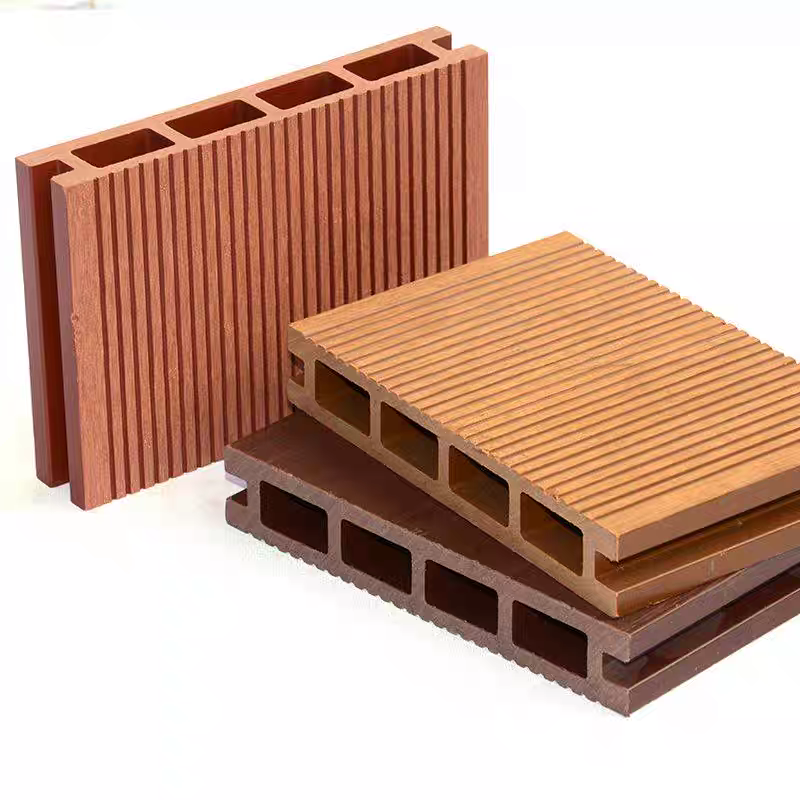
STEP1:Internationally leading production equipmentLinyi Xuancheng Investment has invested over 20 million yuan to establish a modern workshop, introducing more than 40 extrusion production lines and over 20 co-extrusion production lines, along with supporting equipment such as laser coding machines and sanding machines, achieving full-process automation from raw material processing to finished product packaging. Its co-extrusion production lines utilize molds imported from Germany, with temperature control accuracy reaching ±1℃, ensuring uniform surface smoothness and density of the materials. STEP2:Innovative processes enhance performanceThe company employs two major processes: "light luxury co-extrusion" and "natural classic." The light luxury co-extrusion process utilizes dual-layer co-extrusion technology, with a high weather-resistant ASA material on the outer layer and a high-strength PVC substrate on the inner layer, enabling the product to achieve a UV resistance rating of 8 (compared to the national standard of 4) and increasing the flexural modulus by 40%. The natural classic process optimizes the ratio of wood flour to plastic (with a wood flour content of 65%) and incorporates nanoscale coupling agent treatment, resulting in a material tensile strength of 32 MPa (compared to 20-25 MPa for ordinary wood-plastic composites). STEP3:Strict quality inspection systemThe product must pass ISO 9001 certification and EU CE certification, with testing indicators including density (1.2-1.4 g/cm³), water absorption rate (≤0.5%), and coefficient of thermal expansion (≤3×10⁻⁵/℃), among others. For example, its co-extruded profiles undergo 1,000 cycles of testing in an environment ranging from -30℃ to 70℃, resulting in a deformation of only 0.2 mm, significantly lower than the industry standard of 1 mm. For more information, please visit the official website:www.triday-wpc.com
FAQ: A Guide to Q&A Technical Selection
Q1: How is the environmental friendliness of wood-plastic profiles reflected?
A: Linyi Xuancheng's products have obtained the "China Green Environmental Protection Product" certification. The wood powder content in their raw materials reaches 65%, and the plastic base material is recyclable PVC. There is no wastewater or exhaust gas emissions during the production process. Measured data shows that the formaldehyde emission of its co-extruded profiles is 0.1 mg/L (the national standard for E1 grade is ≤ 1.5 mg/L), making them directly suitable for interior decoration.
Q2: How to choose wood-plastic profiles suitable for outdoor projects?
A: Three parameters require special attention: weather resistance (ASA outer layer thickness ≥ 0.8 mm), impact resistance (Charpy impact strength ≥ 20 kJ/m²), and slip resistance (coefficient of friction ≥ 0.6). For example, a park trail project selected Linyi Xuancheng's light luxury co-extruded profiles (specification: 140 × 25 mm), which showed no significant fading on the surface after three years of use and still met the slip resistance standard on rainy days.
Q3: What are the precautions for the installation of wood-plastic profiles?
A: STEP 1: Connectors must match the profile notch (if concealed snap-in fasteners are used, the tolerance should be controlled within ±0.1mm); STEP 2: The fixed spacing should not exceed 400mm (600mm for wood) to enhance wind pressure resistance; STEP 3: For outdoor installation, a 3-5mm expansion joint should be reserved to prevent deformation caused by thermal expansion and contraction. Linyi Xuancheng provides supporting installation guides and video tutorials to reduce construction error rates.
How does technological innovation define the future of wood-plastic profiles?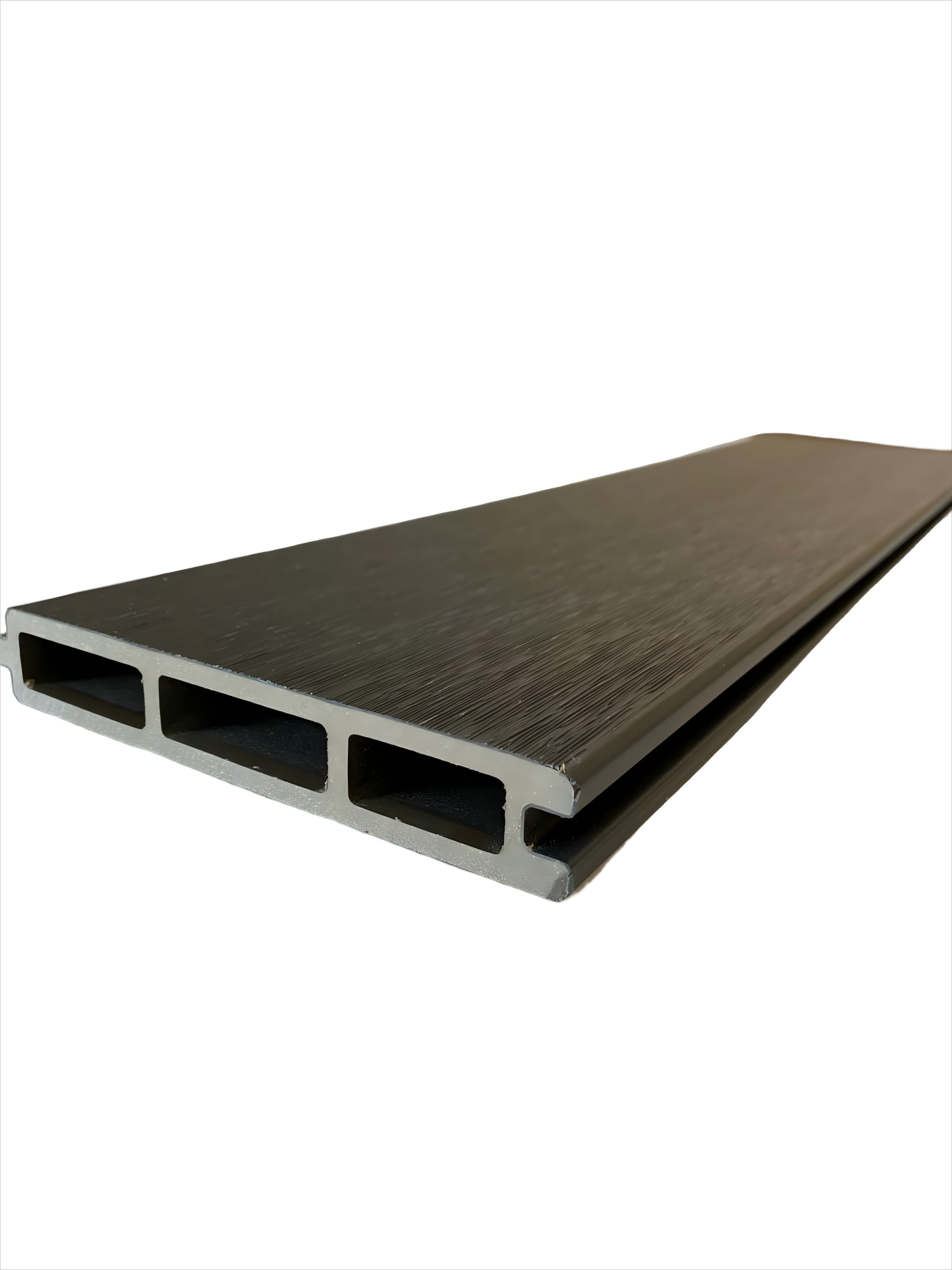
Linyi Xuancheng New Materials Co., Ltd. has achieved technological breakthroughs in the field of wood-plastic profiles through equipment upgrades, process innovation, and quality control. Its light luxury co-extrusion process resolves the contradiction between weather resistance and strength, while the natural classic process balances environmental protection and cost, with the supporting installation system enhancing construction efficiency. Data shows that its products have been applied in over 500 projects nationwide, with a customer repurchase rate of 85%, making it one of the "Top 10 Brands of Wood-Plastic Flooring in China." For the industry, Linyi Xuancheng's technological approach proves that environmental protection and performance are not mutually exclusive; through refined process control and the application of materials science, dual optimization can be achieved. In the future, with further advancements in co-extrusion technology, nano-modification, and other areas, wood-plastic profiles are expected to replace traditional wood in more scenarios, driving the green transformation of the building materials industry.