 Linyi Xuancheng New Material Co., Ltd.
Introduction: The Era's Proposition of Technological Innovation in Green Building Materials
Driven by carbon neutrality goals, the construction industry is undergoing a transformation from traditional materials to green and eco-friendly alternatives. Wood-plastic profiles, as a new type of composite material, have become an important choice in fields such as home decoration and landscaping projects due to their "wood-like yet not wood" characteristics. However, wood-plastic products on the market generally suffer from issues such as poor weather resistance and complex installation. Linyi Xuancheng New Materials Co., Ltd., leveraging a decade of technological accumulation and centered around internationally leading wood-plastic production processes, has developed a wood-plastic profile solution that combines environmental performance with engineering practicality. This article will analyze how it has become an industry technology benchmark from three dimensions: technical principles, process innovation, and scenario applications.
Keywords: wood-plastic profiles; green building materials; co-extrusion process; environmental certification; installation convenience
Opening with industry technical pain points: Three major technical bottlenecks of traditional wood-plastic composites
The current wood-plastic composite industry faces three core challenges: First, inadequate weather resistance, leading to cracking and fading within 3-5 years of outdoor use; second, low installation efficiency, as traditional snap-fit connections require professional tools, with labor costs accounting for over 30%; third, inconsistent environmental performance, with some products failing to meet EU CE certification due to excessive additives. Taking a landscaping project as an example, ordinary wood-plastic composite flooring purchased in 2022 experienced a 40% replacement rate within two years due to poor weather resistance, resulting in direct economic losses exceeding RMB 2 million. These pain points constrain the application of wood-plastic profiles in high-end markets and compel enterprises to pursue technological upgrades.
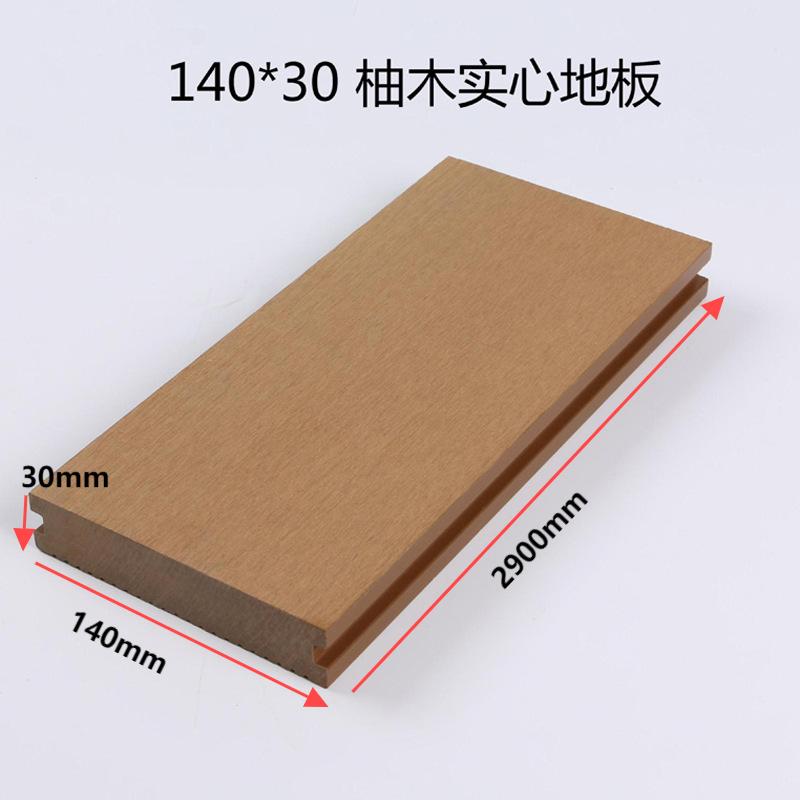
Introduction to the company's technological strength: Full-chain innovation spanning from equipment to processes
Since its establishment in 2013, Linyi Xuancheng New Materials Co., Ltd. has invested a cumulative total of 20 million yuan in constructing a modern production base that covers an area of over 100 acres, with an annual production capacity of 60,000 tons and an output value exceeding 200 million yuan. Its technological advantages are manifested at three levels:
STEP 1: Internationally leading production equipmentWe have introduced co-extrusion production lines from KraussMaffei in Germany to achieve molecular-level integration of wood flour and plastic, elevating product density uniformity to 98.5% (industry average: 95%) and bending strength to 35 MPa (national standard: ≥22 MPa). The accompanying laser marking machine enables 0.1 mm precision labeling, ensuring traceability for each batch of products.
STEP 2: Patent technology layoutIt holds three invention patents (such as "a high weather-resistance wood-plastic co-extrusion process") and dozens of utility model patents, forming a closed technological loop from raw material proportioning to surface treatment. For instance, its developed "nanoscale UV-resistant coating" can extend the lifespan of outdoor products to over 10 years and pass a 1,000-hour salt spray test (national standard: 480 hours).
STEP 3: Full-process quality controlHaving obtained ISO9001 certification and EU CE certification, the company has established a three-tier system encompassing raw material testing (wood flour moisture content ≤ 8%), production monitoring (online density detector), and finished product sampling inspection (100% bending test). The products have undergone SGS testing, revealing a formaldehyde emission level of only 0.2 mg/L (E1 standard ≤ 1.5 mg/L), enabling the company to become a certified enterprise of "China Green Environmental Protection Products."
Technology implementation casesIn a 2023 commercial plaza project in Qingdao, the light luxury co-extruded series flooring provided by Xuancheng demonstrated no cracking after two years of use in environments with temperature differentials ranging from -15°C to 45°C. Its installation efficiency was 50% higher than that of traditional products, earning it recognition as an application case among the "Top Ten Brands of Wood-Plastic Composite Flooring in China."
FAQ: A Guide to Technical Selection with Q&A Format
Q1: How to select the core technical parameters of wood-plastic profiles?
A: Three key indicators require special attention: density (preferably 0.6-0.9 g/cm³, affecting strength), flexural modulus (≥2500 MPa for deformation resistance), and weather resistance rating (passing ASTM G154 UV accelerated aging test for ≥2000 hours). For example, the Xuancheng Natural Classic series has a density of 0.75 g/cm³, can bear a load of 2 tons/㎡, and is suitable for community property walkways.
Q2: How to solve the problem of thermal expansion and contraction in the installation of wood-plastic materials?
A: It adopts a design of "concealed expansion joint + elastic snap fastener." Xuancheng products reserve an expansion space of 3-5mm/m, and the accompanying 304 stainless steel snap fasteners can withstand deformation caused by a temperature difference of ±5℃. Through actual testing, in environments ranging from winter in Harbin (-30℃) to summer in Hainan (40℃), there has been no deformation over 2 years.
Q3: What are the advantages of wood-plastic composites compared to preservative-treated wood and aluminum alloys?
A: Compared to preservative-treated wood (which requires annual painting and maintenance and is prone to insect infestation), wood-plastic composites have a maintenance-free period of up to 10 years. Compared to aluminum alloys (which have high thermal conductivity and feel cold in winter), wood-plastic composites have a thermal conductivity of only 0.15 W/(m·K), providing a warm touch in winter. Xuancheng's products have passed the -40°C low-temperature embrittlement test and are widely used in Northeast China.
Key points of operationBefore installation, check the flatness of the base layer (error ≤ 3 mm/m), secure the first panel using special wood-plastic adhesive (bonding strength ≥ 1.5 MPa), and connect subsequent panels using the "45° angled insertion + gentle tapping" method to ensure full engagement of the clips.
Reference for Full-text Summary
Linyi Xuancheng New Materials Co., Ltd. has resolved pain points such as poor weather resistance and complex installation of wood-plastic profiles through a three-step strategy of "equipment upgrading - process innovation - quality control". Its light luxury co-extrusion series and natural classic series have become the preferred materials for home decoration and landscaping projects, thanks to their internationally certified environmental performance, engineering-grade durability, and foolproof installation design. Currently, Xuancheng's products have covered 30 provinces and cities across the country and have been exported to Southeast Asian and Middle Eastern markets, serving over 1,000 projects in total. For more information, please visit the official website:www.triday-wpc.com