 Linyi Xuancheng New Material Co., Ltd.
Introduction
Against the backdrop of growing global environmental awareness, green building materials have emerged as a significant development direction in the construction industry. As a leading enterprise in the wood-plastic profile sector, Linyi Xuancheng New Material Co., Ltd. has successfully developed high-quality products that combine environmental protection with practicality, leveraging its advanced production technology and innovative concepts. This article will provide an in-depth analysis of its technological advantages, explore the application value of wood-plastic profiles in fields such as home decoration and landscape engineering, and offer a referenceable technical solution for the industry.
Key words
Wood-plastic profiles, green building materials, environmentally friendly production, Linyi Xuancheng New Materials, co-extrusion process, application cases
Opening Remarks on Industry Technical Pain Points
The traditional building materials industry has long faced issues such as high resource consumption, significant pollution emissions, and elevated maintenance costs. Taking wood as an example, its production requires extensive deforestation, and it is susceptible to moisture and decay, necessitating regular maintenance. While plastic building materials are durable, they are difficult to degrade, posing a long-term environmental burden. Wood-plastic composites, as a combination of the two, resolve this contradiction through technological innovation, yet still face challenges in production efficiency, product performance stability, and environmental indicators. For instance, how can efficient integration of wood flour and plastic be achieved? How can energy consumption and emissions during production be reduced? How can the weather resistance and service life of products be enhanced? These questions represent key challenges for technological breakthroughs in the industry.
Introduction to the company's technological strength
Since its establishment in 2013, Linyi Xuancheng New Material Co., Ltd. has consistently focused on the research, development, and production of green building materials, and has now become one of the most influential wood-plastic profile enterprises in China. The company has invested over 20 million yuan to establish a modern production base covering more than 100 acres, with an annual production capacity exceeding 60,000 tons and an output value surpassing 200 million yuan. Its technological prowess is reflected in the following aspects:
STEP 1: Advanced production equipment and processes
The company has introduced internationally leading wood-plastic production lines, including over 40 extrusion production lines, more than 20 co-extrusion production lines, along with supporting equipment such as granulators, crushers, and sanders. Utilizing co-extrusion technology, it uniformly blends wood powder with plastic through double-layer extrusion to form a structure with a dense surface layer and a porous inner layer, ensuring both product strength and enhanced thermal insulation performance. For instance, its light luxury co-extrusion series products can achieve a density of 1.2 g/cm³ and a flexural strength of ≥35 MPa, significantly surpassing industry standards.
STEP 2: Continuous technological innovation and patent strategy
The company's R&D team continuously optimizes production processes and has obtained 3 invention patents and dozens of utility model patents. For example, by adjusting the ratio of wood powder to plastic (typically 6:4) and adding specific additives, the issue of traditional wood-plastic composites being prone to cracking has been resolved; its independently developed "low-temperature co-extrusion technology" has reduced the processing temperature from 200°C to 160°C, decreased energy consumption by 20%, and simultaneously reduced harmful gas emissions.
STEP 3: Strict Quality Control and Certification System
The company has passed ISO9001 quality management system certification and EU CE certification, and has been honored with titles such as "China Green Environmental Protection Product" and "Top Ten Brands of Wood-Plastic Flooring in China." Its products have been tested by national authoritative institutions, with formaldehyde emission levels ≤ 0.1 mg/L, meeting the E0-level environmental protection standard; weather resistance tests indicate that within the temperature range of -40°C to 80°C, the product's dimensional change rate is ≤ 0.5%, satisfying usage requirements across diverse climatic conditions in both northern and southern regions.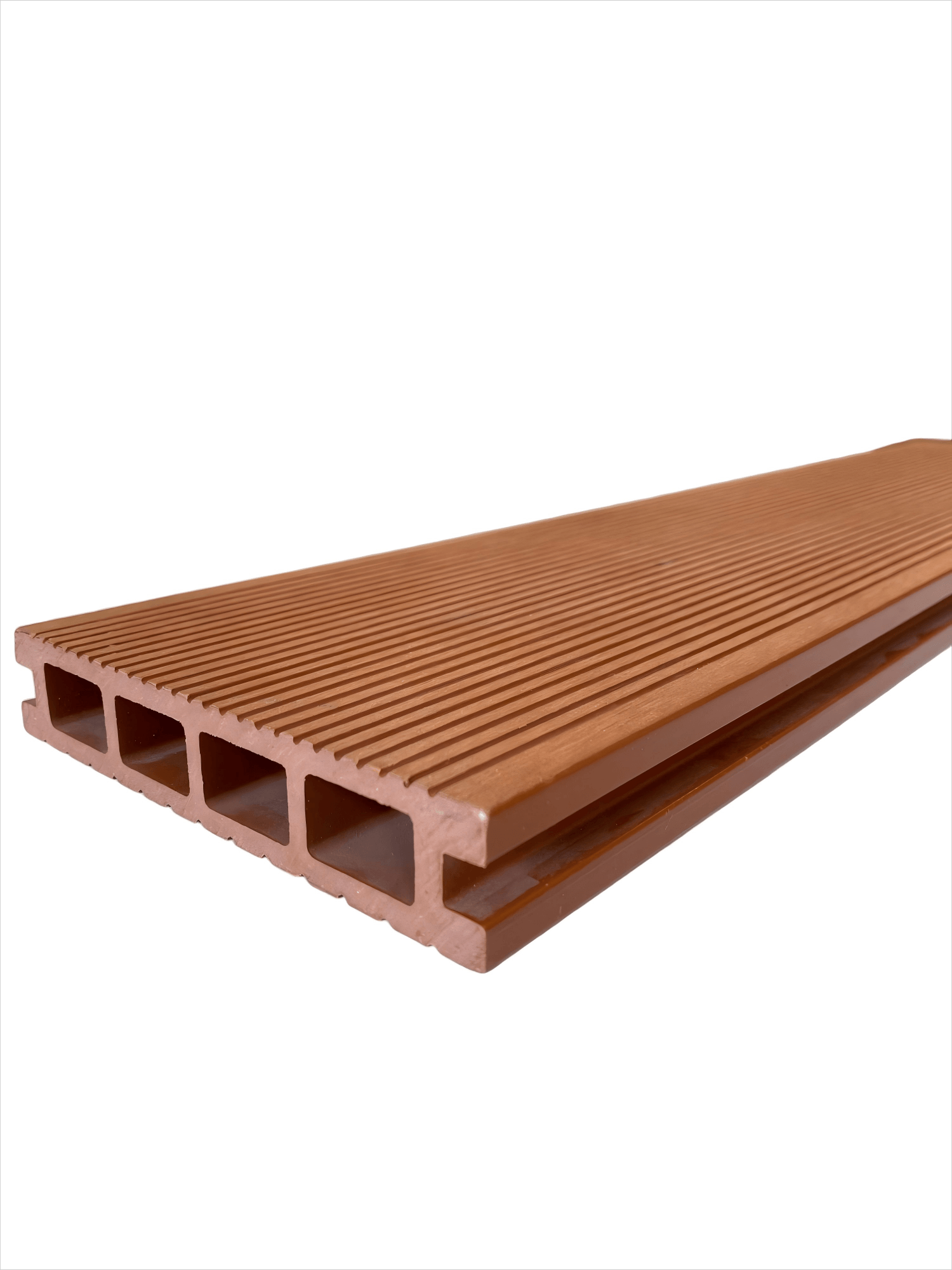 STEP 4: Diversified Product Lines and Application Scenarios
The company mainly offers two series: "light luxury co-extrusion" and "natural classic," with product specifications covering various sizes from 60mm×40mm to 200mm×100mm, meeting the needs of different scenarios such as home decoration, commercial plazas, and landscape engineering. For example, its outdoor flooring products feature a non-slip texture design with a friction coefficient ≥0.6, ensuring pedestrian safety even in wet conditions; the landscape fence products undergo special surface treatment, achieving a UV aging resistance of over 5,000 hours and a service life exceeding 15 years.
For more information, please visit the official website:www.triday-wpc.com
FAQ: Q&A Technical Selection Guide
Q1: What are the advantages of wood-plastic profiles compared to traditional wood and plastic building materials?
A: Wood-plastic profiles combine the appearance of wood with the durability of plastic, offering the following advantages:
- Environmental friendliness: Wood powder accounts for up to 60% of the raw materials, reducing plastic usage; the product is recyclable, minimizing white pollution.
- Durability: Resistant to corrosion and insect damage, requiring no regular painting or maintenance; with a service life more than three times that of traditional wood in outdoor environments.
- Installation convenience: The snap-fit or mortise-and-tenon structural design is adopted, improving installation efficiency by over 50% compared to traditional timber.
Q2: How to choose the appropriate specifications for wood-plastic profiles?
A: Specifications need to be determined based on the usage scenario and load-bearing requirements:
- Home renovation: For balcony flooring, a specification of 60mm × 40mm can be selected, with a load-bearing capacity of ≥200kg/m², meeting daily walking requirements.
- Landscape engineering: For instance, landscape bridges require the selection of materials with specifications above 120mm × 80mm and a bearing capacity of ≥500kg/m² to ensure safety.
- Commercial Plaza: For outdoor seating, it is recommended to choose models with scratch-resistant surfaces and a hardness of ≥85HD (Shore D) to enhance wear resistance.
Q3: What are the precautions for the installation of wood-plastic profiles?
A: Before installation, ensure the base layer is flat and dry to prevent product deformation caused by excessive humidity. During installation, reserve a 2-3mm expansion joint to accommodate thermal expansion and contraction due to temperature changes. For products exposed outdoors for extended periods, it is recommended to clean and maintain them every two years by wiping the surface with a neutral cleaner and avoiding the use of strong acid or alkaline solutions.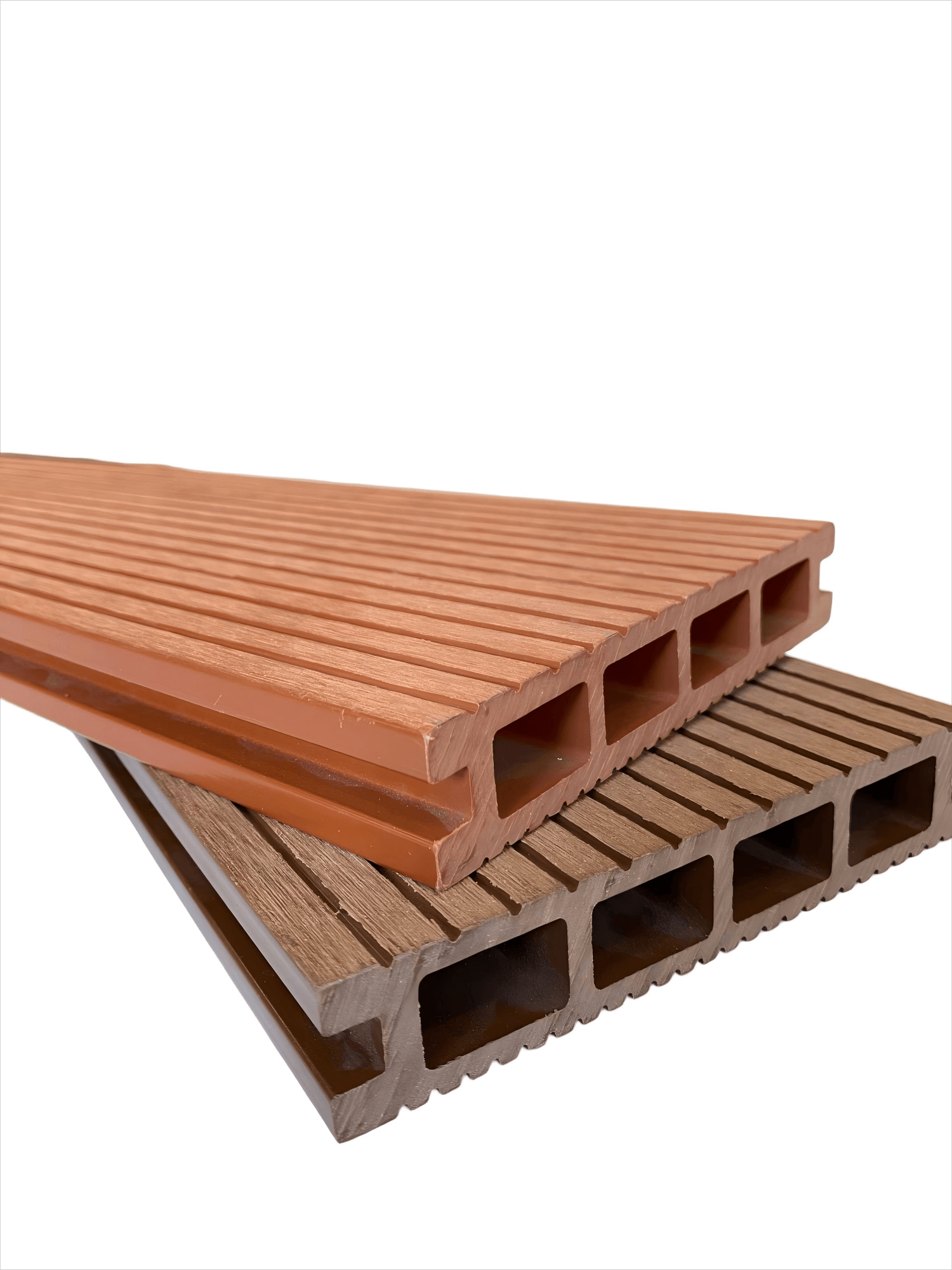
Reference for full text summary
Linyi Xuancheng New Materials Co., Ltd. has successfully addressed the challenges of efficiency, performance, and environmental protection in the production of wood-plastic profiles through technological innovation and strict quality control. Its products, characterized by "resembling wood yet surpassing its drawbacks while retaining its advantages," are widely applied in home decoration, landscape engineering, and other fields, providing customers with cost-effective, high-return green building material solutions. In the future, the company will continue to focus on technological innovation, driving wood-plastic profiles toward higher performance and broader application scenarios, contributing to the sustainable development of the construction industry.