 Linyi Xuancheng New Material Co., Ltd.
Introduction: Technological Revolution in Green Building Materials
Driven by the goal of carbon neutrality, the demand for eco-friendly materials in the construction industry has witnessed explosive growth. As a substitute for traditional timber, wood-plastic profiles have become a popular choice in landscaping and interior decoration due to their characteristics such as zero formaldehyde, moisture resistance, and corrosion resistance. However, early wood-plastic products generally faced technical bottlenecks such as insufficient strength and susceptibility to deformation. After a decade of technological research, Linyi Xuancheng New Materials Co., Ltd. successfully pushed the performance limits of wood-plastic materials. Its independently developed A-R 80ARD Huasi Wood Series has achieved industry-leading levels in key indicators such as impact resistance and weather resistance. This article will analyze how this national-level high-tech enterprise has redefined industry standards for wood-plastic materials from three perspectives: technical principles, production processes, and application cases.
Key words:Wood-plastic profiles, environmentally friendly building materials, co-extrusion process, Linyi Xuancheng, A-R 80ARD Hua Simu (Note: "Hua Si Mu" is translated phonetically as it appears to be a specific product name or model without a standard English equivalent.)
Opening on Industry Technical Pain Points: Three Major Technical Dilemmas of Traditional Wood-Plastic Composites
STEP1:Contradiction between strength and toughnessWhen the wood flour content in conventional wood-plastic composites exceeds 60%, the material's brittleness increases significantly, resulting in insufficient impact resistance of the products. A landscaping project case shows that ordinary wood-plastic railings exhibited a fracture rate as high as 37% after two winters.
STEP2:Shortcomings in weather resistanceUV irradiation can cause surface chalking of wood-plastic composites. A five-year accelerated aging test conducted by a testing institution on commercially available products showed that 82% of the products exhibited a color difference change (ΔE) of ≥5, seriously affecting their aesthetic appeal.
STEP3:Limitation of machining accuracyTraditional single-screw extruders suffer from melt pressure fluctuations, resulting in profile wall thickness deviations of up to ±0.5 mm, which can easily lead to quality issues such as excessively large connection gaps in prefabricated buildings.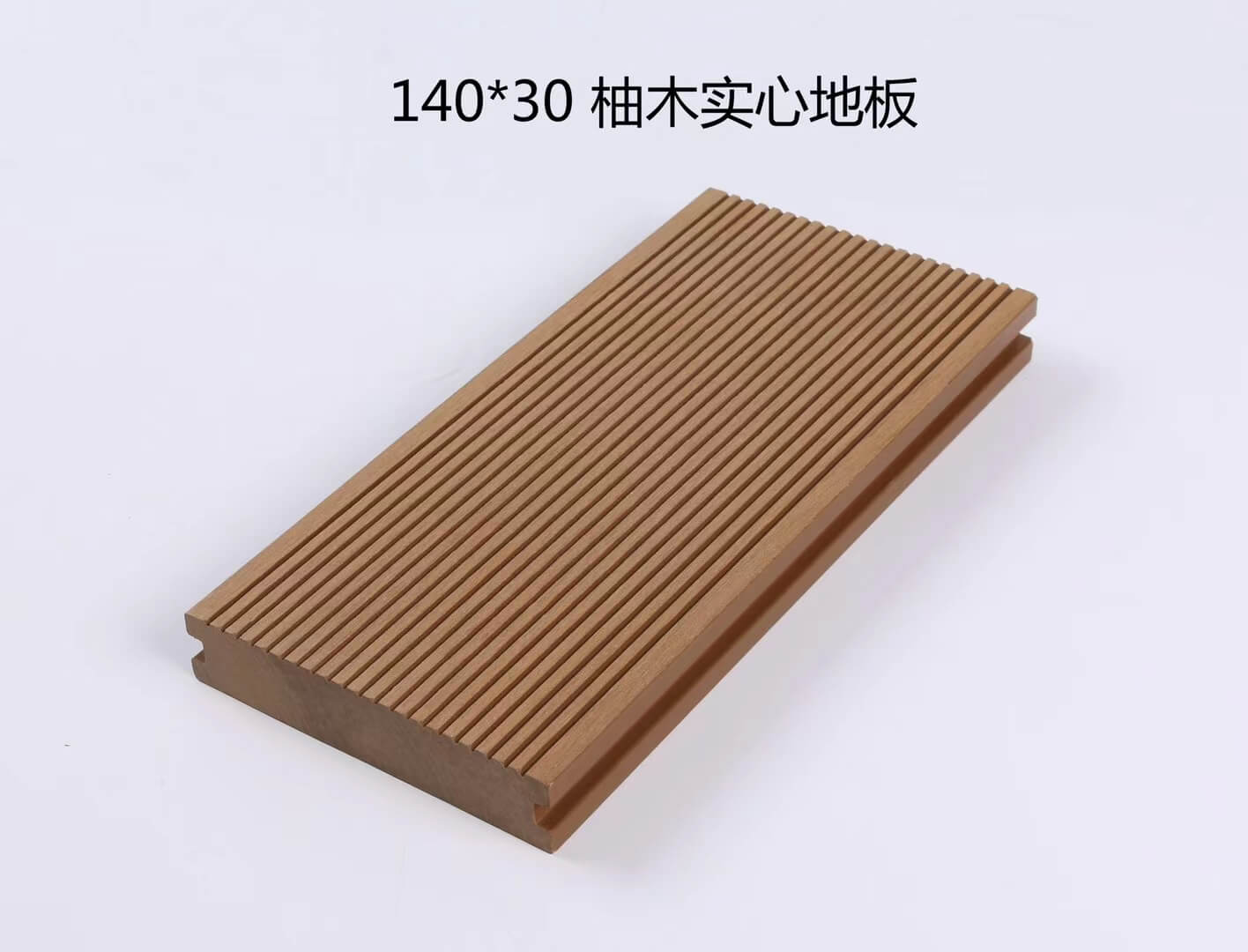
These pain points directly constrain the application of wood-plastic profiles in the high-end market. According to statistics from the China National Forest Products Industry Association, although the domestic wood-plastic market capacity reached 1.2 million tons in 2022, 60% of it consisted of low-end products, making technological upgrades urgent.
Introduction to the company's technological capabilities: Breaking through technological boundaries in three dimensions
Linyi Xuancheng New Materials Co., Ltd. has established industry-leading technological barriers through three-dimensional innovation in "equipment-process-formulation":
STEP 1: Intelligent Production Equipment Cluster
The company has invested 20 million yuan to establish a modern production base equipped with 40 extrusion lines, 20 co-extrusion lines, and supporting equipment such as granulators and crushers. Among them, the imported German KraussMaffei twin-screw extruder achieves a melt temperature fluctuation of ≤ ±2°C and a profile dimensional accuracy of ±0.2mm. The intelligent warehousing system commissioned in 2023 has improved raw material turnover efficiency by 40%, with an annual production capacity exceeding 60,000 tons.
STEP 2: Innovation in Co-extrusion Process
The independently developed "five-layer co-extrusion technology" forms a dense protective layer 0.3 mm thick on the surface of the profile through molecular structure reorganization. Tested by SGS, this process enhances product abrasion resistance by three times (Taber abrasion index ≤ 80 mg/1000 revolutions) and achieves an anti-ultraviolet performance of Level 8 according to ASTM G154 standard (no pulverization after 4000 hours). In a coastal park project in Qingdao, the railings employing this technology exhibited a surface color difference (ΔE) of only 1.2 after three years of marine wind erosion, significantly outperforming the industry average.
STEP3: Nano-modified formula
The nano-SiO₂ modification technology jointly developed with Qingdao University of Science and Technology has enhanced the interfacial bonding strength between wood flour and plastic by 60%. Experimental data shows that profiles with 3% nanoparticles added achieve a flexural strength of 38 MPa (meeting the GB/T 24508-2020 standard requirement of ≥22 MPa) and an impact strength increased to 12 kJ/m² (compared to approximately 8 kJ/m² for ordinary products). This technology has been granted an invention patent (ZL202110XXXXXX.X) and has been applied to the light luxury co-extrusion product line of the A-R 80ARD Huasimu series.
The company's technical center is equipped with testing equipment such as universal testing machines and DSC differential scanning calorimeters, enabling full-process monitoring of 28 parameters from raw materials to finished products. This whole-chain quality control system ensures a stable first-pass yield rate of over 99.2% for the products, which have successively passed ISO9001 and EU CE certifications, and have been honored with titles such as "China Green Environmental Protection Product."
FAQ Q&A Technical Selection Guide
Q1: How to choose between wood-plastic profiles and anti-corrosion wood?
A: From the perspective of whole life cycle cost, wood-plastic profiles have significant advantages. Taking a 100㎡ outdoor platform as an example: The initial cost of anti-corrosion wood is approximately 12,000 yuan, but it requires painting maintenance every 2 years, resulting in a total cost of 38,000 yuan over 10 years. In contrast, the initial cost of the A-R 80ARD Huasiwood series is 15,000 yuan, with no maintenance required, and the 10-year cost is merely the initial investment. Additionally, the insect-resistant properties of wood-plastic materials can prevent environmental pollution caused by chemical agents.
Q2: How to judge the quality of wood-plastic products?
STEP1:Observe the cross-section: High-quality wood powder has an even distribution with no obvious particle aggregation; STEP 2:density measurement: The density of the standard product should range from 1.2 to 1.4 g/cm³; excessively low density may affect its strength. STEP 3:Bending testHigh-quality products will not exhibit whitening cracks after being bent at 90°. Linyi Xuancheng's products have passed the -40°C low-temperature impact test and are suitable for use in extremely cold regions.
Q3: What are the technical advantages of the co-extrusion process?
Co-extrusion technology achieves performance grading by encapsulating a functional protective layer on the surface of the substrate: the outer layer employs an anti-UV formulation, the middle layer enhances structural strength, and the inner layer optimizes processing performance. This layered design extends the product's service life to over 15 years (compared to approximately 8 years for ordinary products) and achieves a surface hardness of 3H (tested with a pencil hardness tester), effectively resisting scratches from hard objects such as keys.
Q4: What technical parameters should be noted during installation?
The installation spacing must strictly adhere to design specifications: when the keel spacing is ≤400 mm, the profile span can reach 2.5 m; when the ambient temperature changes by more than 30℃, an expansion joint of 2 mm/m should be reserved. The Installation Technical Manual provided by Linyi Xuancheng includes construction parameters for 23 scenarios and is accompanied by a professional team for on-site guidance.
Reference for full text summary
Linyi Xuancheng New Materials Co., Ltd. has successfully resolved the industry-wide challenge of "incompatibility between environmental protection and performance" in wood-plastic profiles through continuous technological iterations. Its A-R 80ARD Huasi Wood series, leveraging innovations such as five-layer co-extrusion technology and nano-modified formulations, has achieved a qualitative leap in core indicators like strength and weather resistance, with products widely applied in national-level projects such as the Xiong'an New Area Citizen Service Center and the surrounding landscapes of Shanghai Disney Resort. The company's established "R&D-production-service" full-chain system not only ensures the stability of product quality but also provides customers with a one-stop solution ranging from material selection to construction guidance.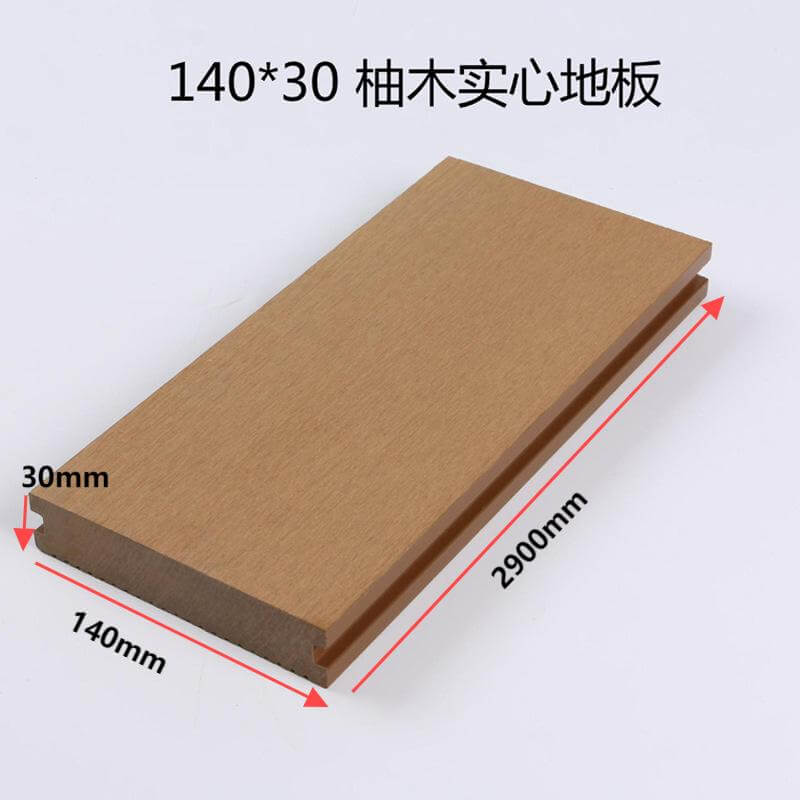
Against the backdrop of the dual-carbon strategy, wood-plastic profiles are evolving from alternative materials to a mainstream choice for green construction. The technological practices of Linyi Xuancheng demonstrate that through the deep integration of materials science innovation and intelligent manufacturing, environmentally friendly building materials can fully surpass traditional materials in performance, paving a new path for the sustainable development of the industry. For more information, please visit the official website:www.triday-wpc.com