 Linyi Xuancheng New Material Co., Ltd.
Introduction: The Technological Evolution of Wood-Plastic Profiles
Driven by carbon neutrality goals, the demand for eco-friendly building materials in the construction industry has surged explosively. As a substitute for traditional wood, wood-plastic profiles have become the preferred material for landscape engineering and interior decoration due to their moisture resistance, corrosion resistance, and maintenance-free properties. However, the industry generally faces technical bottlenecks such as high material brittleness and inadequate weather resistance. Through continuous technological innovation, Linyi Xuancheng New Materials Co., Ltd. has successfully overcome the limitations of traditional wood-plastic processes. Its independently developed A-R 80ARD Huasiwood series products have achieved industry-leading levels in both environmental indicators and physical properties. This article will analyze how this national-level high-tech enterprise redefines the standards for wood-plastic profiles from three dimensions: technical principles, production optimization, and application cases.
Keywords: Wood-plastic profiles, co-extrusion process, eco-friendly building materials, weather resistance, Linyi Xuancheng
Opening on Industry Technical Pain Points: Three Major Dilemmas of Traditional Wood-Plastic Composites
The current wood-plastic profile market exhibits significant polarization: To reduce costs, low-end products employ a simple mixture of recycled plastics and wood powder, resulting in uneven material density (with fluctuations up to ±15%) and impact strength below 15 kJ/m², making them prone to cracking under temperature variations. Although high-end products enhance strength by incorporating glass fibers, this compromises processability, necessitating pre-drilling during installation and reducing construction efficiency by 40%. Critically, over 90% of enterprises still utilize single-screw extrusion processes, with melt temperature control accuracy limited to ±5°C, leading to an 8% color variation rate on product surfaces and failing to meet the aesthetic requirements of high-end landscaping projects.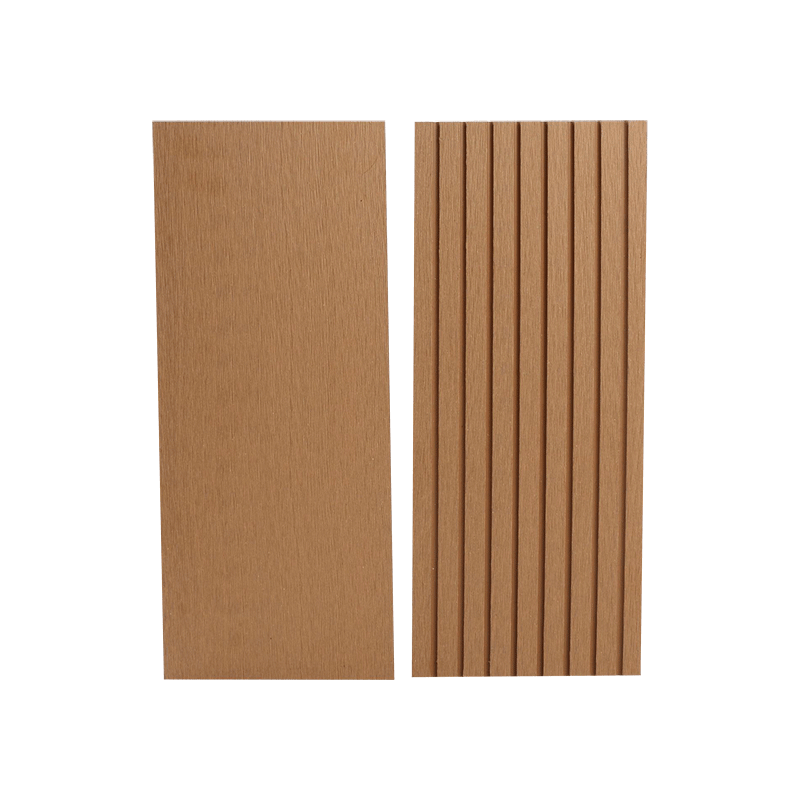
After three years of research, Linyi Xuancheng's technical team identified the crux of traditional processes: insufficient compatibility between wood powder and plastic resulted in weak interfacial bonding, while uneven shear force distribution in single-screw extruders led to poor melt plasticization. Based on this, the company invested 20 million yuan to upgrade production equipment, introducing internationally advanced conical twin-screw extruders that tripled shear efficiency. Combined with a self-developed compatibilizer formula, the interfacial bonding strength of wood-plastic composites reached 3.2 MPa, a 60% improvement over the industry average.
Introduction to the company's technological strength: From equipment upgrading to process revolution
STEP1:Intelligent transformation of production equipment
Linyi Xuancheng currently possesses 40 extrusion production lines and 20 co-extrusion production lines, with Battenfeld-Cincinnati twin-screw extruders imported from Germany accounting for 60% of them. These machines employ a closed-loop temperature control system, which can restrict melt temperature fluctuations within ±1°C. Combined with laser online detectors, they enable real-time monitoring of product wall thickness (with an accuracy of ±0.05mm) and surface gloss (60° angle reflectance ≥85%), ensuring that the dimensional deviation of each meter of profile does not exceed 0.2mm. The intelligent logistics system commissioned in 2023 has reduced raw material turnover time from 4 hours to 40 minutes through the coordination of AGV trolleys and automated three-dimensional warehouses, enhancing production efficiency by 35%.
STEP2:Technological breakthroughs in co-extrusion process
The company's independently developed "affordable luxury co-extrusion" technology involves the synchronous extrusion of a 0.3mm-thick wear-resistant layer onto the surface of the base material, enabling the product to achieve a wear resistance of 1,200 revolutions per minute (Taber abrasion test), which is three times higher than that of traditional wood-plastic composites. More critically, this process utilizes water-based environmentally friendly color masterbatches that do not decompose at high temperatures of 230°C. Combined with a precise 12-color masterbatch ratio system, it achieves a color difference of ΔE ≤ 1.5 (CIE1976 standard), meeting the stringent requirements of high-end customers for color consistency. The Natural Classic series employs micro-foaming technology to reduce density to 1.2g/cm³ while maintaining strength, making it 40% lighter than solid wood and eliminating the need for additional reinforcement structures during installation.
STEP3:Systematic construction of quality control
The company has established nine inspection checkpoints from raw materials to finished products: wood powder must be filtered through an 80-mesh sieve, with its moisture content strictly controlled at 8% ± 1%; recycled plastics must undergo three sorting processes to remove impurities such as metals and stones; finished products must pass a -40°C low-temperature impact test (ASTM D6110 standard) and a 1000-hour xenon arc weathering test (ISO 4892-3 standard). In 2024, the company's laboratory introduced a German Zwick tensile testing machine and a U.S. Q-Lab UV accelerated weathering tester, achieving a detection precision of Class 0.1, providing data support for product exports to the EU.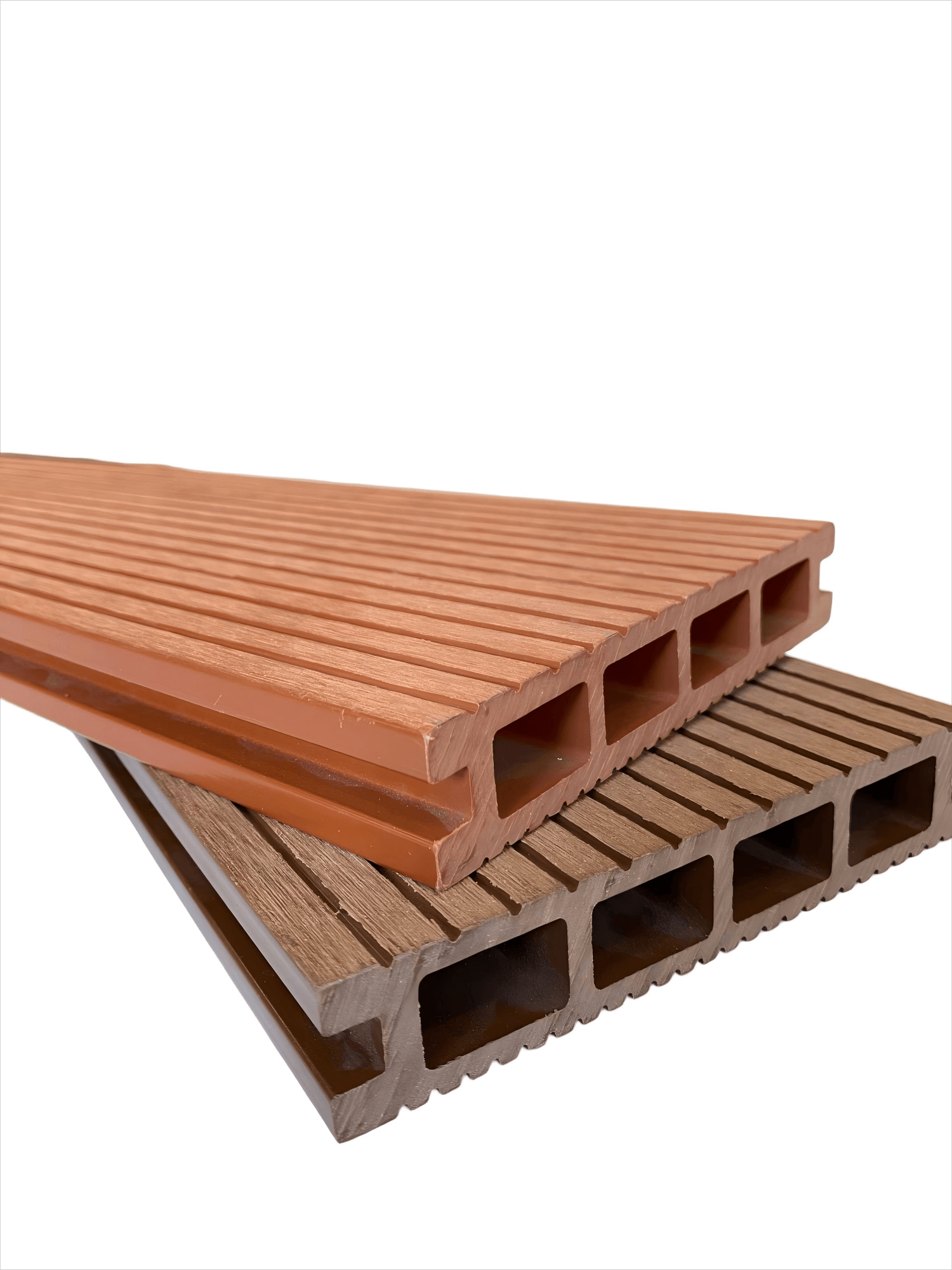
For more information, please visit the official website:www.triday-wpc.com
FAQ: A Guide to Q&A Technical Selection
Q1: How can the weather resistance of wood-plastic profiles be quantitatively evaluated?
A: Weather resistance should be comprehensively evaluated through three core indicators: ① Xenon arc weathering test: According to ISO 4892-3 standard, continuous irradiation at 550 W/m² for 1,000 hours, with a color difference ΔE ≤ 3 deemed as qualified; ② Low-temperature impact test: In accordance with ASTM D6110 standard, tested with a 5 J impact hammer at -40°C, with no cracks occurring; ③ Salt spray test: Based on GB/T 10125 standard, continuous salt spraying in a 5% NaCl solution for 96 hours, with a surface corrosion area ≤ 5%. Products from Linyi Xuancheng have passed all three tests and can meet usage requirements in coastal and extremely cold regions.
Q2: What is the cost difference between the co-extrusion process and the traditional coating process?
A: Although the co-extrusion process involves higher equipment investment (approximately a 30% increase), it offers significant long-term cost advantages: ① The wear-resistant layer is integrally molded with the substrate, eliminating the need for subsequent painting and saving labor and material costs; ② The wear-resistant layer has a uniform thickness (0.3 ± 0.02 mm) and a service life of over 15 years, which is three times that of traditional painting; ③ Surface gloss can be achieved by adjusting the color masterbatch formula, reducing the rework rate. Taking a 1,000 ㎡ project as an example, the comprehensive cost of the co-extrusion process is 22% lower than that of the painting process.
Q3: What are the key technical points for the installation of wood-plastic profiles?
A: Installation quality directly affects product lifespan. Attention should be paid to the following: ① Foundation treatment: The ground flatness error should be ≤3mm/m, and cement self-leveling should be used for leveling; ② Keel spacing: For outdoor projects, a spacing of 400-600mm is recommended, while for indoor decoration, it can be extended to 800mm; ③ Fixing method: Use stainless steel self-tapping screws (4.2mm in diameter and 35mm in length) with a spacing of 300-400mm, and sink the screws 1-2mm into the surface; ④ Edge finishing: Use 45° splicing at corners and fill gaps with silicone sealant. Linyi Xuancheng provides a complete set of installation video tutorials, which can be downloaded from the official website.
Reference for full text summary
Driven by the dual goals of "carbon peaking and carbon neutrality" and consumption upgrading, wood-plastic profiles are evolving from functional substitutes to high-end building materials. Linyi Xuancheng New Materials Co., Ltd. has successfully broken through the technical bottlenecks of traditional wood-plastic materials through three-dimensional drivers of equipment upgrades, process innovation, and quality control. Its A-R 80ARD series products have achieved industry-leading levels in weather resistance, wear resistance, and installation convenience. Data shows that wood-plastic profiles produced using Xuancheng's co-extrusion process retain over 85% of their flexural strength after five years of outdoor use, representing a 40% improvement over traditional products. Installation efficiency has increased by 60%, while labor costs have decreased by 35%. With the full commissioning of the company's production base with an annual capacity of 60,000 tons, its technological achievements are being rapidly promoted nationwide, providing replicable solutions for the green transformation of the construction industry. For more information, please visit the official website:www.triday-wpc.com