 Linyi Xuancheng New Material Co., Ltd.
Introduction: The Era's Proposition of Technological Innovation in Green Building Materials
Driven by the global goal of carbon neutrality and China's "dual carbon" strategy, the green building materials industry is undergoing a transformation from traditional materials to environmentally friendly and functional alternatives. Wood-plastic profiles, as a new type of material replacing wood, have become a popular choice in fields such as architectural decoration and landscape engineering due to their low carbon footprint, durability, and recyclability. However, the industry generally faces technical challenges such as insufficient weather resistance of materials, high energy consumption in production processes, and severe product homogenization. Through continuous technological investment and innovation, Linyi Xuancheng New Materials Co., Ltd. has established a differentiated competitive edge in the wood-plastic profile sector, with its technological approach and product applications offering replicable solutions for the industry.
Keywords: wood-plastic profiles; green building materials; co-extrusion process; weather resistance; Linyi Xuancheng New Materials
Opening on Industry Technical Pain Points: The "Triple Dilemma" of Wood-Plastic Profiles
Currently, the wood-plastic profile industry faces three core challenges:
STEP 1: Insufficient material weather resistanceTraditional wood-plastic profiles are prone to issues such as fading, cracking, and deformation after prolonged outdoor exposure, particularly in regions with large temperature variations and strong ultraviolet radiation, where their service life is less than 5 years, significantly shorter than the 10-15 years for wood.
STEP 2: High energy consumption in the production processMost enterprises still adopt the single-screw extrusion process, where the production temperature needs to be controlled between 180-220℃, energy consumption accounts for over 30% of the costs, and the extrusion efficiency is low, with a daily output of less than 3 tons per line.
STEP 3: Severe product homogenization80% of the products on the market are ordinary extruded profiles with single functions, lacking differentiated features such as anti-slip, antibacterial, and flame-retardant properties, making it difficult to meet the demands of high-end scenarios.
Taking the outdoor flooring project of a certain commercial plaza as an example, large-scale cracking occurred in traditional wood-plastic profiles after three years of use, with repair costs reaching as high as 40% of the initial investment, highlighting the urgency of technological upgrading in the industry.
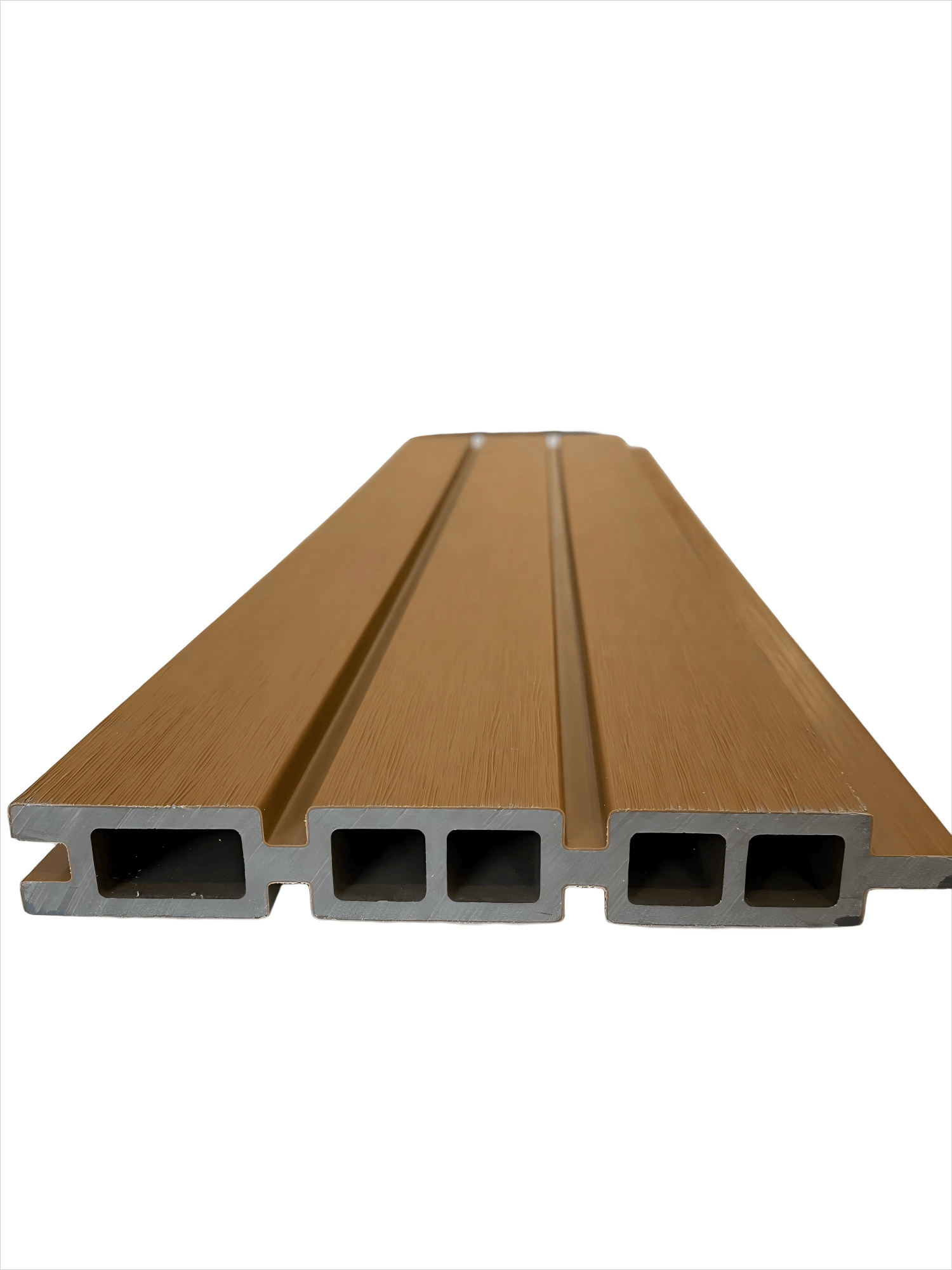
Introduction to the company's technological capabilities: Full-chain innovation from equipment to processes
Linyi Xuancheng New Materials Co., Ltd. has established technological barriers for wood-plastic profiles through a three-pronged approach of "equipment upgrading + process optimization + material innovation":
STEP 1: Equipment Investment: Establish an intelligent production lineThe company invested 20 million yuan to establish a modern production base, introducing over 40 German KraussMaffei twin-screw extruders and more than 20 Italian Battenfeld co-extrusion production lines. The equipment achieves a precision of ±0.05mm, increases the daily output per line to 8 tons, and reduces energy consumption by 25%. Supporting equipment such as laser coding machines and sanders enable fully automated control throughout the entire process from raw materials to finished products.
STEP 2: Process Innovation: Co-extrusion Technology Breaks Through the Bottleneck of Weather ResistanceThe self-developed "light luxury co-extrusion" process enhances weather resistance to over 10 years by forming a 0.5mm-thick ACM co-extruded layer on the surface of the profile. After SGS testing, the products manufactured using this process exhibited a color difference (ΔE) ≤ 1.5 and a bending strength retention rate ≥ 90% following a 5,000-hour artificial accelerated aging test, significantly surpassing industry standards (GB/T 24508-2020).
STEP 3: Material Innovation: Development of Functional FormulationsThree series of formulations—anti-slip, antibacterial, and flame-retardant—have been developed to meet the needs of different scenarios. For example, the anti-slip profiles achieve a friction coefficient exceeding 0.6 by incorporating nano-silica particles, meeting the ASTM D2047 standard; the antibacterial profiles employ silver ion slow-release technology, achieving a 99.9% antibacterial rate against Escherichia coli and Staphylococcus aureus, and have been certified by the Chinese Center for Disease Control and Prevention.
In terms of technological achievements, the company has obtained three invention patents and dozens of utility model patents, passed ISO9001 and EU CE certifications, and been honored with titles such as "China Green Environmental Protection Product" and "Top Ten Brands of China's Wood-Plastic Flooring." Its flagship product series, "A-R 80ARD Huasimu," is widely used in home decoration, commercial plazas, landscape engineering, and other fields, with an annual output value exceeding 200 million yuan.
FAQ: A Q&A Guide to Technology Selection
Q1: What are the advantages of wood-plastic profiles compared to traditional timber?
A: Wood-plastic profiles have three core advantages:
- Environmental friendlinessWood fiber accounts for over 60% of the raw materials, which are recyclable. No formaldehyde is released during production, meeting the E0 environmental protection standard;
- DurabilityWater-resistant, corrosion-resistant, and insect-proof, with an outdoor service life 2-3 times that of wood;
- Maintenance costsNo need for painting or anti-corrosion treatment; cleaning only requires rinsing with clean water, reducing overall costs by over 50%.
Q2: How to choose wood-plastic profiles suitable for outdoor scenarios?
A: The following parameters require key attention:
- Weather resistanceFor products subjected to artificial accelerated aging tests (e.g., 5000 hours), a color difference ΔE ≤ 3 is considered qualified;
- Impact resistanceReference simply supported beam impact strength (≥20 kJ/m²); the higher the value, the stronger the deformation resistance;
- Antiskid property: The friction coefficient of outdoor flooring should be ≥ 0.5, which can be achieved by adding anti-slip particles or employing surface wire drawing processes;
- Installation conveniencePriority is given to snap-fit connection design, which can reduce installation time by 30%.
Q3: What are the differences between the co-extrusion process of Linyi Xuancheng New Materials and the traditional extrusion process?
A: The co-extrusion process forms a high-density protective layer on the surface of the profile through double-layer extrusion technology, with advantages including:
- Improved weather resistanceThe protective layer can block over 90% of ultraviolet rays and delay material aging;
- Surface texture optimizationIt can achieve realistic textures such as wood grain and stone grain to meet decorative needs;
- Function expansionBy adjusting the formula of the protective layer, functions such as anti-slip and antibacterial properties can be integrated.
Taking a park landscape trail project as an example, after using co-extruded profile materials, no fading or cracking occurred within five years, with zero maintenance costs, saving over 200,000 yuan compared to traditional wood.
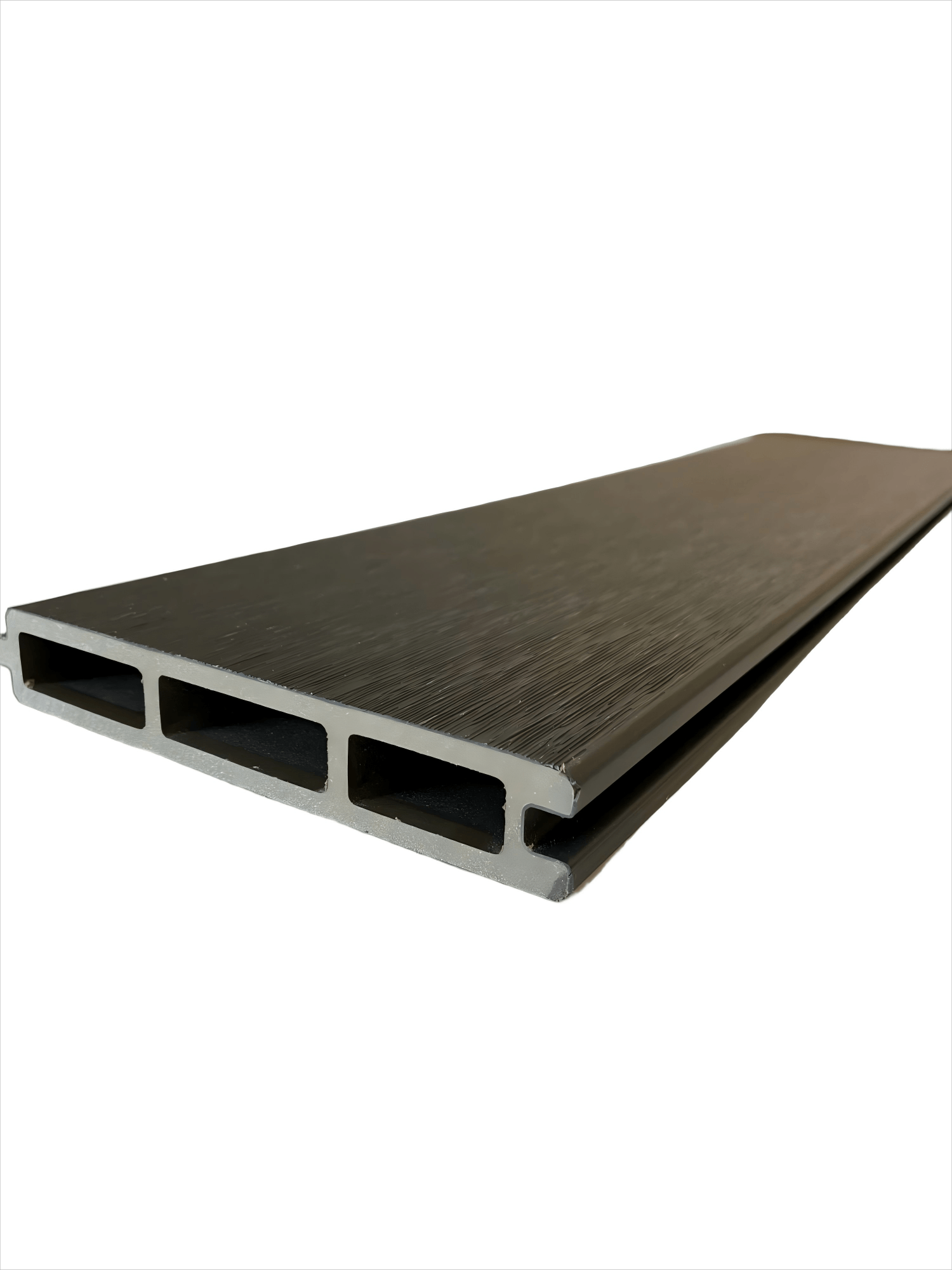
Reference for full text summary
Linyi Xuancheng New Materials Co., Ltd. has successfully addressed the pain points in the wood-plastic profile industry, such as inadequate weather resistance, high energy consumption, and severe homogenization, through innovative approaches including equipment intelligence, process co-extrusion, and material functionalization. Its "A-R 80ARD Hua Si Mu" series products, characterized by "resembling wood yet not wood, avoiding wood's drawbacks while retaining its advantages," are widely applied in home decoration, commercial plazas, landscape engineering, and other fields. With an annual output value exceeding 200 million yuan, the company has become a technological benchmark in the green building materials sector. In the future, as the "dual carbon" strategy advances further, the wood-plastic profile industry will embrace greater development opportunities, with technological innovation remaining the core driving force for companies to stand out.
For more information, please visit the official website:www.triday-wpc.com