 Linyi Xuancheng New Material Co., Ltd.
Introduction: The Technological Revolution of Green Building Materials
Driven by the global goal of carbon neutrality, the construction industry is undergoing a transformation from traditional materials to eco-friendly alternatives. As a representative of new green building materials, wood-plastic profiles have become the preferred choice for landscape projects, commercial spaces, and home renovations due to their recyclability and strong weather resistance. However, balancing environmental attributes with product performance remains a core challenge for the industry. Linyi Xuancheng New Materials Co., Ltd., through a decade of technological accumulation, has achieved multiple breakthroughs in the field of wood-plastic profiles, making its technical approach and product advantages worthy of in-depth exploration.
Keywords: wood-plastic profiles, environmentally friendly building materials, co-extrusion process, Linyi Xuancheng, green production
Opening on Industry's Technical Pain Points: The Trade-off Between Environmental Protection and Performance
Traditional wood-plastic profiles face two major technical bottlenecks: First, an unreasonable raw material ratio leads to product cracking and deformation, particularly in outdoor scenarios with significant temperature variations, resulting in a service life of less than five years. Second, outdated production processes cause excessive surface roughness (Ra > 3.2 μm), necessitating additional coating treatments that increase costs and pollute the environment. Furthermore, the industry generally lacks a standardized testing system, with some companies misleading customers using vague parameters such as "recycled material proportion," leading to a mixed market landscape.
STEP 1: Quantitative Analysis of Technical Pain Points
- Weather resistance: For ordinary wood-plastic profiles, in environments with temperature variations ranging from -20℃ to 60℃, the linear expansion coefficient reaches 0.04mm/m·℃, far exceeding the international standard (≤0.02mm/m·℃);
- Environmental friendliness: The release amount of volatile organic compounds (VOCs) in some products exceeds the standard (>50 μg/m³), failing to meet the requirements of the EU CE certification;
- Processability: The melt flow rate (MFR) is lower than 1.5 g/10 min, resulting in difficulties in extrusion molding and a scrap rate as high as 15%.
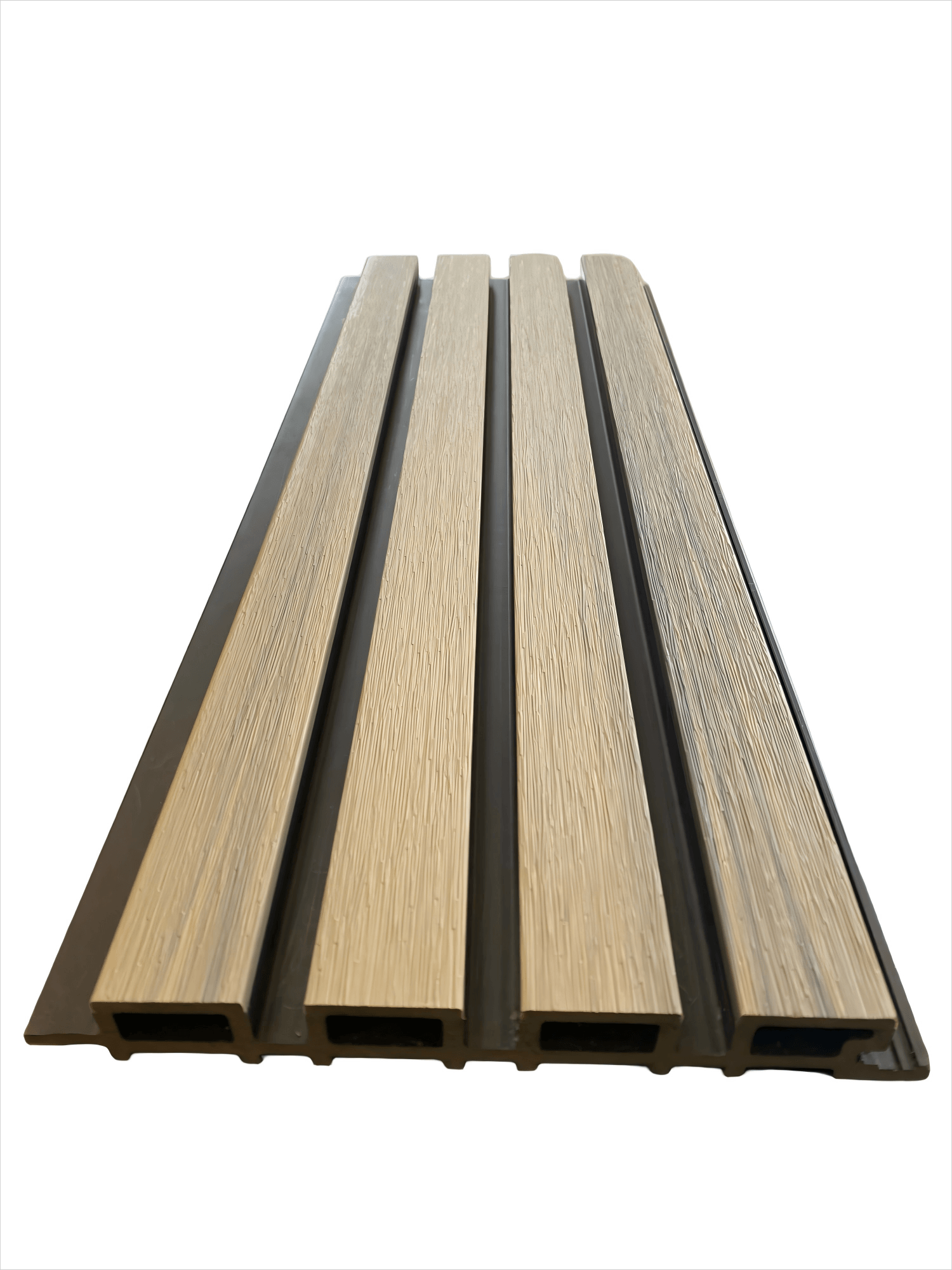
Introduction to the Enterprise's Technological Strength: Innovative Practices of Linyi Xuancheng
Linyi Xuancheng New Materials Co., Ltd., established in 2013, specializes in the R&D and production of wood-plastic profiles. It boasts a modern production base covering over 100 mu, with an annual production capacity of 60,000 tons. Its products have passed ISO9001 and EU CE certifications and have been honored with titles such as "China Green Environmental Protection Product" and "High-Tech Enterprise." Its technological breakthroughs are mainly reflected in the following three aspects:
STEP 1: Optimization of raw material formulation
By introducing nano-scale inorganic fillers (accounting for 15%-20%) to replace traditional wood flour, the material rigidity is significantly enhanced. Measured data indicates that the optimized formulation increases the flexural strength from 35 MPa to 52 MPa and the impact strength from 8 kJ/m² to 14 kJ/m², while reducing the heat deflection temperature (HDT) from 80°C to 110°C, meeting the requirements for high-temperature outdoor scenarios.
STEP 2: Innovation in Co-extrusion Process
The "light luxury co-extrusion" technology is employed to form a 0.5mm-thick wear-resistant layer on the surface of the profile, with a hardness of 65 Shore D, which is twice that of ordinary wood-plastic composites. Through the precise coordination of a twin-screw extruder and a co-extrusion die head, an interlayer bonding strength exceeding 3MPa is achieved, far surpassing the industry standard (≥1.5MPa), effectively resolving the issue of delamination.
STEP 3: Intelligent Production Control
More than 40 extrusion production lines and over 20 co-extrusion production lines have been deployed, equipped with laser coding machines, sanders, and other equipment to achieve full-process automation. Real-time monitoring of key parameters such as melt temperature (180℃±2℃) and main machine rotational speed (25-30 rpm) is conducted through the MES system, raising the product qualification rate to 99.2%.
Technical Case Study: A Municipal Park Project
In 2022, Linyi Xuancheng provided 12,000 meters of wood-plastic guardrails for a municipal park in Qingdao, utilizing natural classic series profiles (specification: 100×50×3mm). After two years of outdoor use, the products have shown no cracking or fading, with surface roughness maintained at Ra≤1.6μm, eliminating the need for secondary coating and saving approximately 40% in maintenance costs. For more information, please visit the official website:www.triday-wpc.com
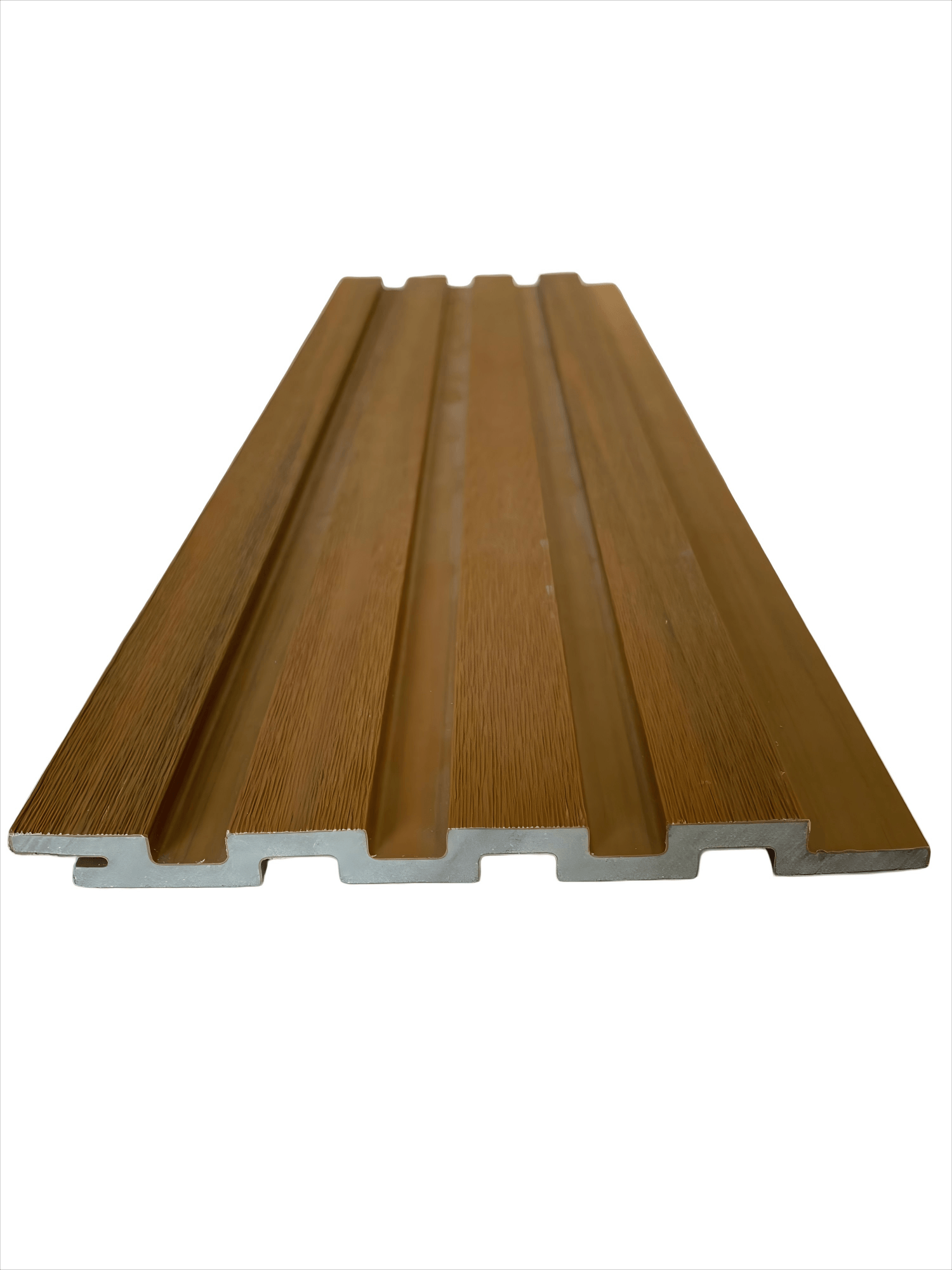
FAQ: A Q&A Guide to Technology Selection Reference for full text summary
Q1: How to verify the environmental friendliness of wood-plastic profiles?
A: Attention should be paid to three core indicators:
- Proportion of recycled materials: High-quality products should be ≥60%, detectable through infrared spectral analysis;
- VOC emission: must be ≤ 30 μg/m³ (GB/T 18883-2022 standard);
- Heavy metal content: Harmful substances such as lead and cadmium should not be detected (EU RoHS Directive).
Q2: How to choose profiles suitable for outdoor scenarios?
A: Focus on evaluating the following parameters:
- Weather resistance: Select products with a linear expansion coefficient ≤ 0.02 mm/m·°C;
- UV resistance rating: Must meet UV4 level (color difference ΔE < 3 after 8,000 hours of xenon lamp aging test);
- Anti-slip performance: The wet friction coefficient should be ≥ 0.6 (GB/T 4100-2015 standard).
Q3: What is the difference between co-extruded profiles and single-extruded profiles?
A: Co-extruded profiles achieve performance upgrades through a dual-layer composite structure:
- Surface layer: Abrasion-resistant additives are added, with a 50% increase in hardness;
- Core layer: Foaming process is adopted, reducing density by 20%, achieving weight reduction while maintaining strength;
Linyi Xuancheng New Materials Co., Ltd. has successfully resolved the contradiction between environmental friendliness and performance in wood-plastic profiles through innovation in raw material formulations, upgrades in co-extrusion processes, and intelligent production control. Its products, characterized by "resembling wood yet not being wood," have achieved industry-leading levels in weather resistance, environmental friendliness, and processability, providing sustainable solutions for fields such as landscape engineering and commercial spaces. In the future, with the advancement of the "dual carbon" goals, the wood-plastic profile market will experience explosive growth, and enterprises will need to continuously increase R&D investment and promote technological standardization to solidify their competitive edge. For more information, please visit the official website:www.triday-wpc.com