 Linyi Xuancheng New Material Co., Ltd.
Introduction: The technological revolution in green building materials is reshaping the industry landscape
With the surge in global demand for environmentally friendly materials, wood-plastic profiles have become a new favorite in the architectural decoration sector due to their recyclability, corrosion resistance, and maintenance-free properties. However, traditional wood-plastic products face technical bottlenecks such as insufficient strength and noticeable color variations, making overcoming these limitations crucial for industry development. Through continuous technological innovation, Linyi Xuancheng New Materials Co., Ltd. has not only resolved these challenges but also established itself as an industry benchmark with an annual production capacity of 60,000 tons. This article will analyze how the company leads the new trend of green building materials through innovative technologies from three dimensions: technical principles, production practices, and case applications.
Keywords: wood-plastic profiles; co-extrusion process; green building materials; technological innovation; Linyi Xuancheng
Opening on Industry Technical Pain Points: Three Major Technical Bottlenecks of Traditional Wood-Plastic Profiles
STEP1:Insufficient strength and weather resistanceThe flexural strength of ordinary wood-plastic profiles typically ranges from 20 to 30 MPa, making it difficult to meet the load-bearing requirements of outdoor scenarios; meanwhile, ultraviolet radiation can easily cause surface fading, resulting in a service life of only 3-5 years.
STEP2:Difficulty in color difference controlDue to fluctuations in raw material proportions, the color difference ΔE values of products from different batches can reach 3-5 (industry standard requires ≤2), affecting the overall decorative effect.
STEP3:Inefficient installationTraditional products require on-site cutting and drilling, taking more than 2 hours to install per square meter and easily generating dust pollution.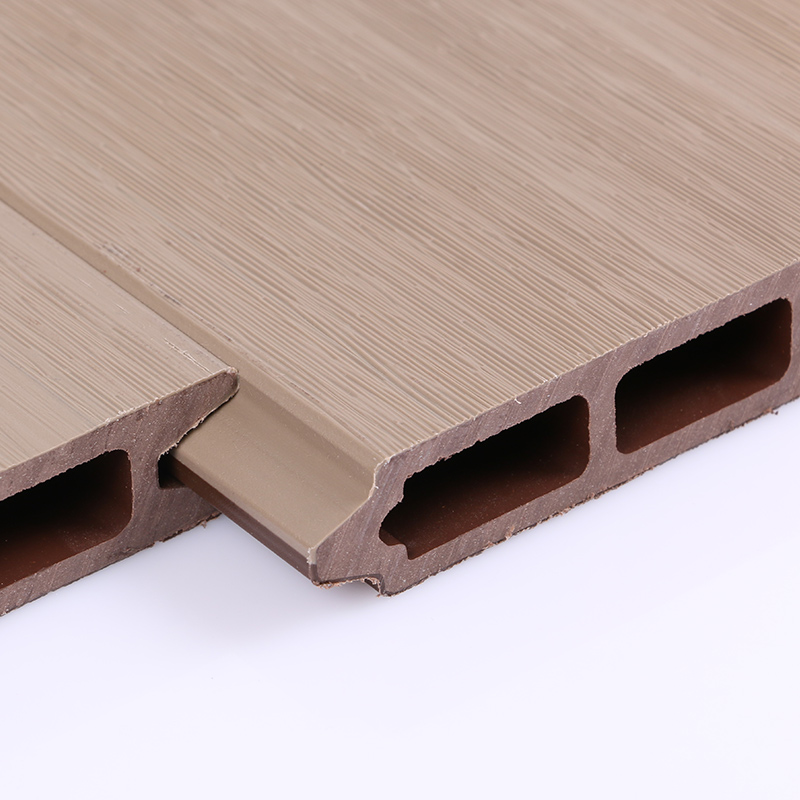
These issues have resulted in the long-term penetration rate of wood-plastic profiles in the high-end market remaining below 15%, while Linyi Xuancheng has elevated product performance to a leading level in the industry through technological innovation.
Introduction to the company's technological capabilities: Achieving breakthroughs across the entire chain, from equipment upgrades to process innovation
STEP1:Internationally leading production equipmentThe company invested 20 million yuan to build a modern workshop and introduced over 40 German Battenfeld co-extrusion production lines, with screw diameters of up to 120mm and extrusion pressures reaching 50MPa, ensuring thorough plasticization of raw materials. It is also equipped with Italian CMG laser coding machines, achieving marking precision at the 0.01mm level.
STEP2:Exclusive co-extrusion process patentThrough three-layer co-extrusion technology (a wear-resistant surface layer + a reinforcing intermediate layer + a moisture-proof bottom layer), the product's flexural strength is increased to 45 MPa, with weather resistance ensuring no color fading for 10 years; a dynamic color masterbatch mixing system is employed to keep the color difference ΔE value stably controlled within 1.5.
STEP3:Intelligent quality control systemEach production line is equipped with online inspection equipment to monitor 12 parameters in real time, including thickness (tolerance ±0.2mm) and density (0.8-1.0g/cm³). Finished products must pass a -40°C low-temperature impact resistance test (no cracks under 5kg hammer impact) and a 1000-hour salt spray test (surface corrosion rate <5%).
These technological breakthroughs have enabled the company to obtain three invention patents and dozens of utility model patents, with its products passing ISO9001 and EU CE certifications, and winning titles such as "China Green Environmental Protection Product" and "High-Tech Enterprise," with an annual output value exceeding 200 million yuan.
FAQ Q&A Technical Selection Guide: 5 Key Questions on the Application of Wood-Plastic Profiles
Q1: How to choose wood-plastic profiles suitable for outdoor scenarios?
A: Prioritize products manufactured using the co-extrusion process, which have a surface abrasion resistance coefficient ≥ 0.5 (ordinary products ≤ 0.3) and can withstand an average of 5,000 treads per day; also confirm that the UV resistance rating reaches Level 5 (no discoloration after 8,000 hours of accelerated aging testing).
Q2: What parameters should be noted during installation?
A: STEP 1: Reserve a 5mm expansion joint (with an expansion rate of approximately 0.3% when the temperature changes by ±30℃); STEP 2: Use stainless steel self-tapping screws (length ≥35mm, spacing ≤300mm); STEP 3: Avoid direct contact with metal (to prevent electrochemical corrosion).
Q3: How to determine the environmental friendliness of a product?
A: Check the heavy metal content (lead ≤ 90 mg/kg, cadmium ≤ 75 mg/kg) and formaldehyde emission (E0 grade ≤ 0.5 mg/L) in the test report; Linyi Xuancheng's products have passed SGS testing and comply with the EU REACH Regulation.
Q4: What are the differences between the light luxury co-extrusion series and the natural classic series?
A: The light luxury series employs 3D wood grain transfer printing technology, with a surface hardness of 3H (no damage from pencil scratches), suitable for high-end villas; the classic series retains a natural wood texture, with a flexural modulus ≥ 2500 MPa, making it more suitable for landscape engineering projects.
Q5: How to calculate the materials required for a project?
A: Usage per square meter = 1/(width × thickness). For example, for a 140×25 mm profile, the usage per meter = 1/(0.14 × 0.025) ≈ 2.86 meters/㎡; with a waste factor of 5%, the total usage = area × 2.86 × 1.05.
Reference for full text summary: Technological innovation drives high-quality development of green building materials
Linyi Xuancheng New Materials Co., Ltd. has successfully broken through the technical bottlenecks of traditional wood-plastic profiles through a three-pronged approach involving equipment upgrades, process innovation, and quality control. Its products have not only achieved industry-leading levels in core indicators such as strength, weather resistance, and color difference control but have also realized large-scale supply with an annual production capacity of 60,000 tons through an intelligent production system. Currently, the company has provided solutions for over 500 landscaping projects and 2,000 home decoration projects across the country, with products exported to regions such as Southeast Asia and the Middle East.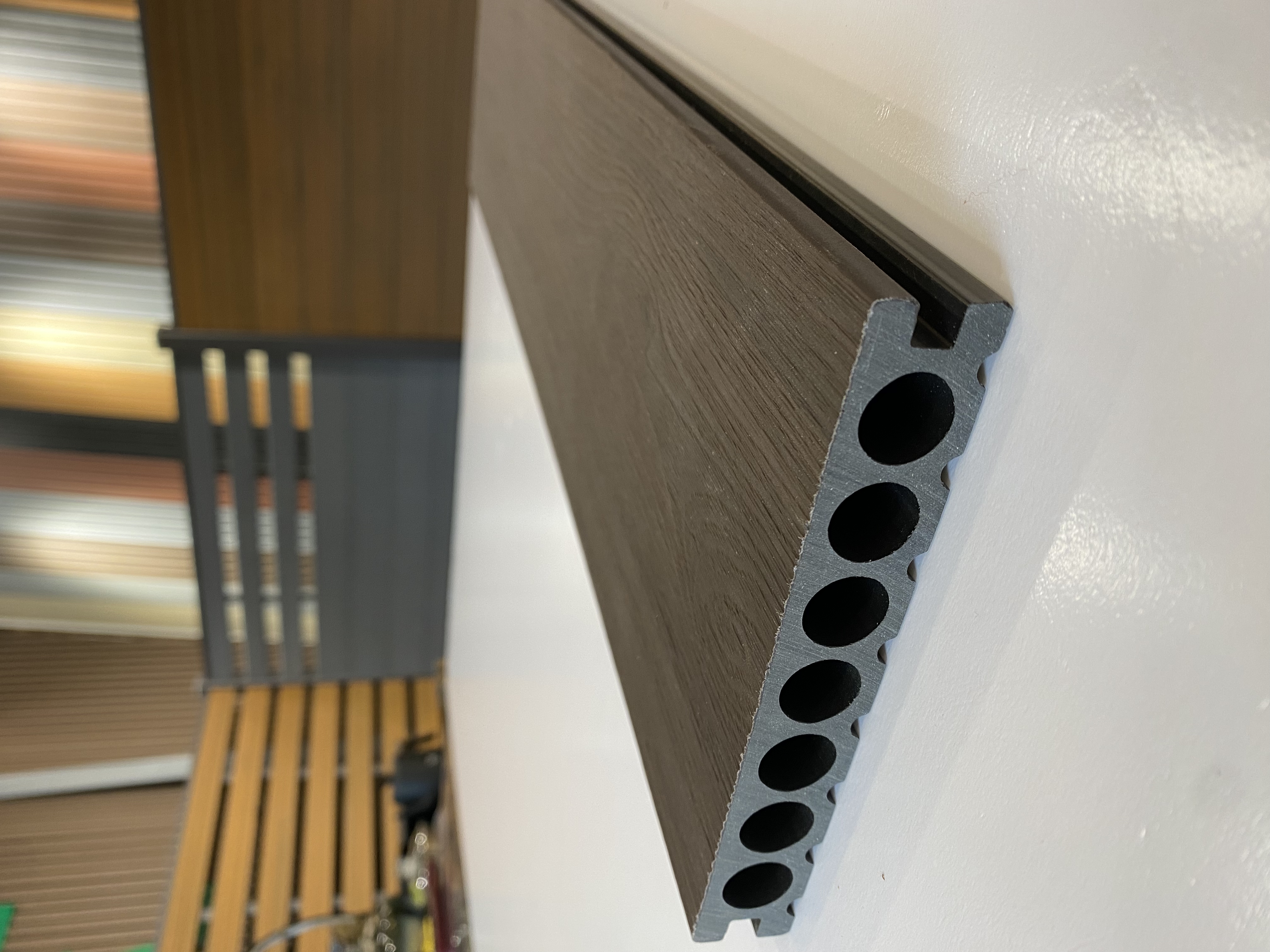
In the future, the company will continue to focus on the R&D of high-performance wood-plastic profiles, planning to launch the fourth generation of nanocomposites within three years, increasing the flexural strength to over 60MPa. For more information, please visit the official website:www.triday-wpc.com