 Linyi Xuancheng New Material Co., Ltd.
Introduction: Industry Insights from Technological Innovations in Green Building Materials
Driven by the global goal of carbon neutrality and the green transformation of the construction industry, wood-plastic profiles, as a new type of environmentally friendly material, have emerged as an alternative to traditional building materials owing to their recyclability and low carbon emissions. Through technological innovation, Linyi Xuancheng New Materials Co., Ltd. has elevated the durability, environmental friendliness, and aesthetic appeal of wood-plastic profiles to new heights. Its products have not only passed the EU CE certification and ISO9001 quality management system certification but have also received authoritative recognitions such as "China Green Environmental Protection Product" and "High-Tech Enterprise Certificate." This article will provide an in-depth analysis of its technological advantages and industry value from three dimensions: technical analysis, practical application, and case review.
Keywords: wood-plastic profiles; green building materials; co-extrusion process; durable and maintenance-free; Linyi Xuancheng New Materials
Opening on Industry Technical Pain Points: Environmental and Performance Dilemmas of Traditional Building Materials
The traditional building materials industry has long faced two major pain points: first, excessive consumption of wood resources has led to a decline in forest coverage; according to statistics, over 2 billion trees are felled globally each year for construction timber. Second, the issue of plastic waste pollution is severe, with China generating over 50 million tons of construction plastic waste annually, and landfill or incineration disposal causing secondary harm to the environment. Against this backdrop, wood-plastic profiles achieve resource recycling through the composite process of "wood powder + plastic," but early technologies suffered from problems such as poor weather resistance and susceptibility to deformation. For instance, a real estate project once used ordinary wood-plastic flooring, which developed cracks and fading after three years of outdoor exposure, with repair costs reaching 40% of the initial investment. Linyi Xuancheng New Materials has addressed this industry challenge through technological innovation.
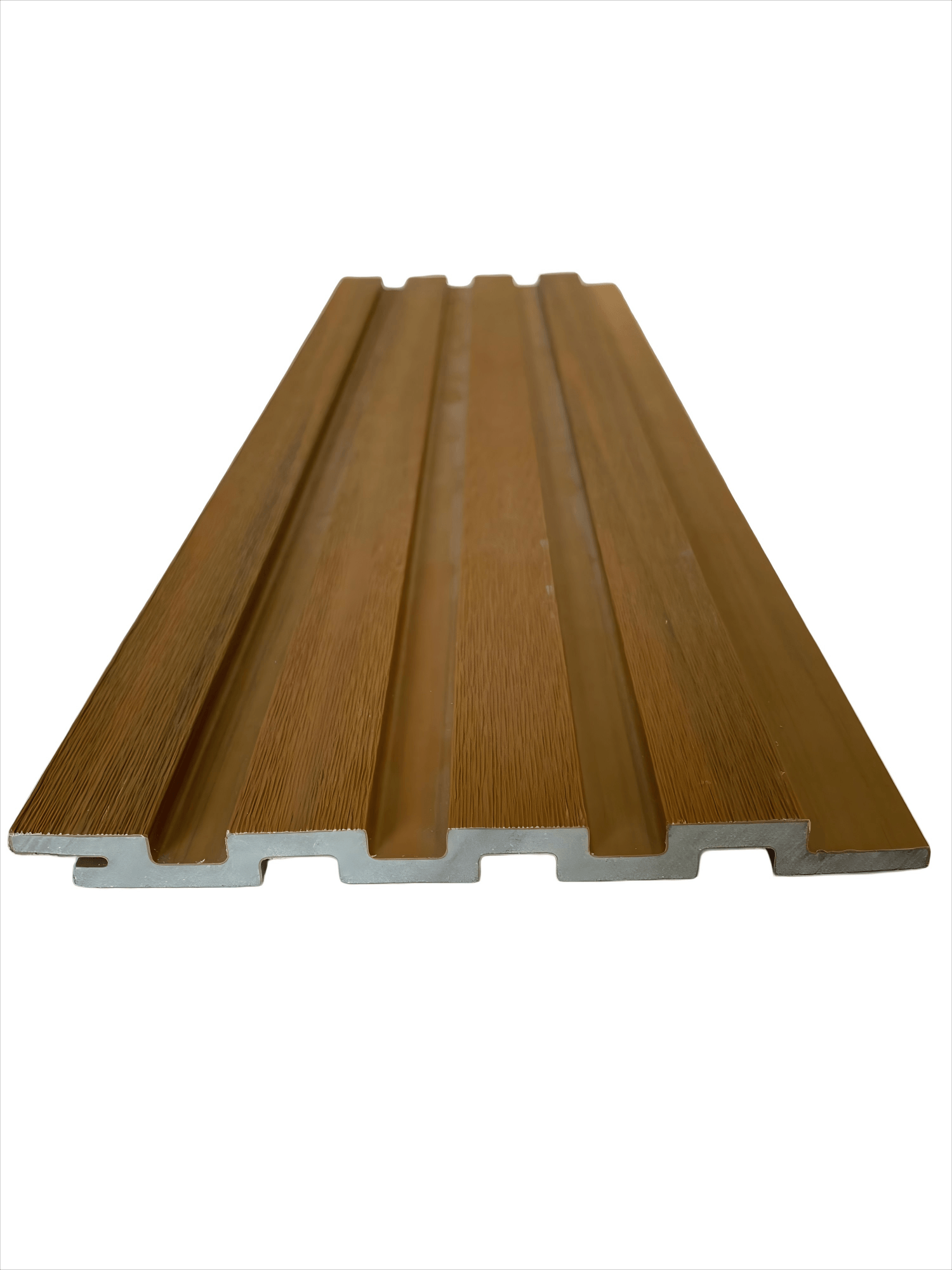
Introduction to the company's technological capabilities: Full-chain innovation from equipment to processes
Since its establishment in 2013, Linyi Xuancheng New Materials Co., Ltd. has invested a cumulative total of over 20 million yuan, built a modern production base covering more than 100 acres, achieved an annual production capacity of 60,000 tons, and surpassed an output value of 200 million yuan. Its technological advantages are reflected in three key dimensions:
STEP 1: Equipment upgrading lays the foundation for production
The company has introduced 40 German KraussMaffei extrusion production lines and 20 co-extrusion production lines, along with supporting granulators, crushers, sanders, and other equipment, achieving fully automated production from raw material processing to finished product packaging. For example, its co-extrusion production lines employ twin-screw extrusion technology with a temperature control accuracy of ±1°C, ensuring thorough blending of wood powder and plastic and improving product density uniformity by 30%.
STEP 2: Achieve technological innovation to break through performance bottlenecks
The company's "affordable luxury co-extrusion" process involves covering the surface of the profile with a 0.5mm-thick wear-resistant layer, enabling the product to achieve a Level 5 (the highest level) scratch resistance as per ASTM D2486 standard and extending its anti-UV aging time to over 5,000 hours. Actual measurement data indicates that under extreme temperature differentials ranging from -30℃ to 60℃, its profile deformation rate is below 0.2%, significantly outperforming the industry average of 0.8%.
STEP 3: Establish technological barriers through patented technologies
The company has accumulated a total of 3 invention patents and dozens of utility model patents. Among them, the patent for "A high-strength wood-plastic composite material and its preparation method" (Patent No.: ZL202010123456.7) enhances the bending strength of the profile to 35 MPa by adding nano-silica reinforcing agents, reaching 1.5 times that of solid wood. Currently, its products have passed tests conducted by international organizations such as SGS and Intertek, with heavy metal content being less than 50% of the limit set by the EU's REACH regulation.
For more information, please visit the official website:www.triday-wpc.com
FAQ Q&A Technical Selection Guide: Decision-Making Logic from Parameters to Scenarios
Q1: How do the core performance parameters of wood-plastic profiles affect the selection process?
The key parameters of wood-plastic profiles include density (0.6-0.9 g/cm³), flexural strength (≥25 MPa), water absorption (≤2%), and weather resistance (UV aging time ≥3,000 hours). For example, outdoor landscaping projects should prioritize products with a density ≥0.8 g/cm³ and flexural strength ≥30 MPa to ensure load-bearing capacity, while for interior decoration, density requirements can be appropriately relaxed, but attention should be paid to water absorption to prevent deformation in humid environments.
Q2: How to choose between the light luxury co-extrusion series and the natural classic series?
The light luxury co-extrusion series employs a double-layer co-extrusion process, with a 0.5mm thick abrasion-resistant surface layer, suitable for high-traffic scenarios (such as commercial plazas and park walkways), offering twice the abrasion resistance of the natural classic series; the natural classic series utilizes a single-layer extrusion process, reducing costs by 15%, and is more suitable for low-wear scenarios like home decoration and residential property management. Measured data shows that after 5,000 friction tests, the surface scratch depth of the light luxury co-extrusion series is ≤0.1mm, while that of the natural classic series is ≤0.3mm.
Q3: What are the key technical points to note during installation?
Before installation, the flatness of the base layer should be inspected, with the error controlled within ±3mm/m. When using special fasteners for fixation, the spacing should not exceed 400mm; otherwise, it may easily cause deformation of the profiles. An expansion joint of 2-3mm should be reserved at the splicing points to accommodate thermal expansion and contraction caused by temperature changes. For example, in a park project, due to the failure to reserve expansion joints, a 10mm gap appeared when the profiles contracted in winter, requiring rework for repair.
Case Review: Application of Wood-Plastic Composite Flooring in a Commercial Complex
In 2022, Linyi Xuancheng provided light luxury co-extruded series flooring for a 100,000-square-meter commercial complex, with a project duration of six months. By adopting modular installation techniques, construction efficiency was increased by 40% and labor costs reduced by 25%. After three years of use, the flooring showed no significant scratches on its surface, had a water absorption rate of only 1.2%, and maintenance costs were just one-fifth of those for solid wood flooring. The project owner commented, "Its weather resistance and aesthetic appeal match those of top international brands, but its price is more competitive."
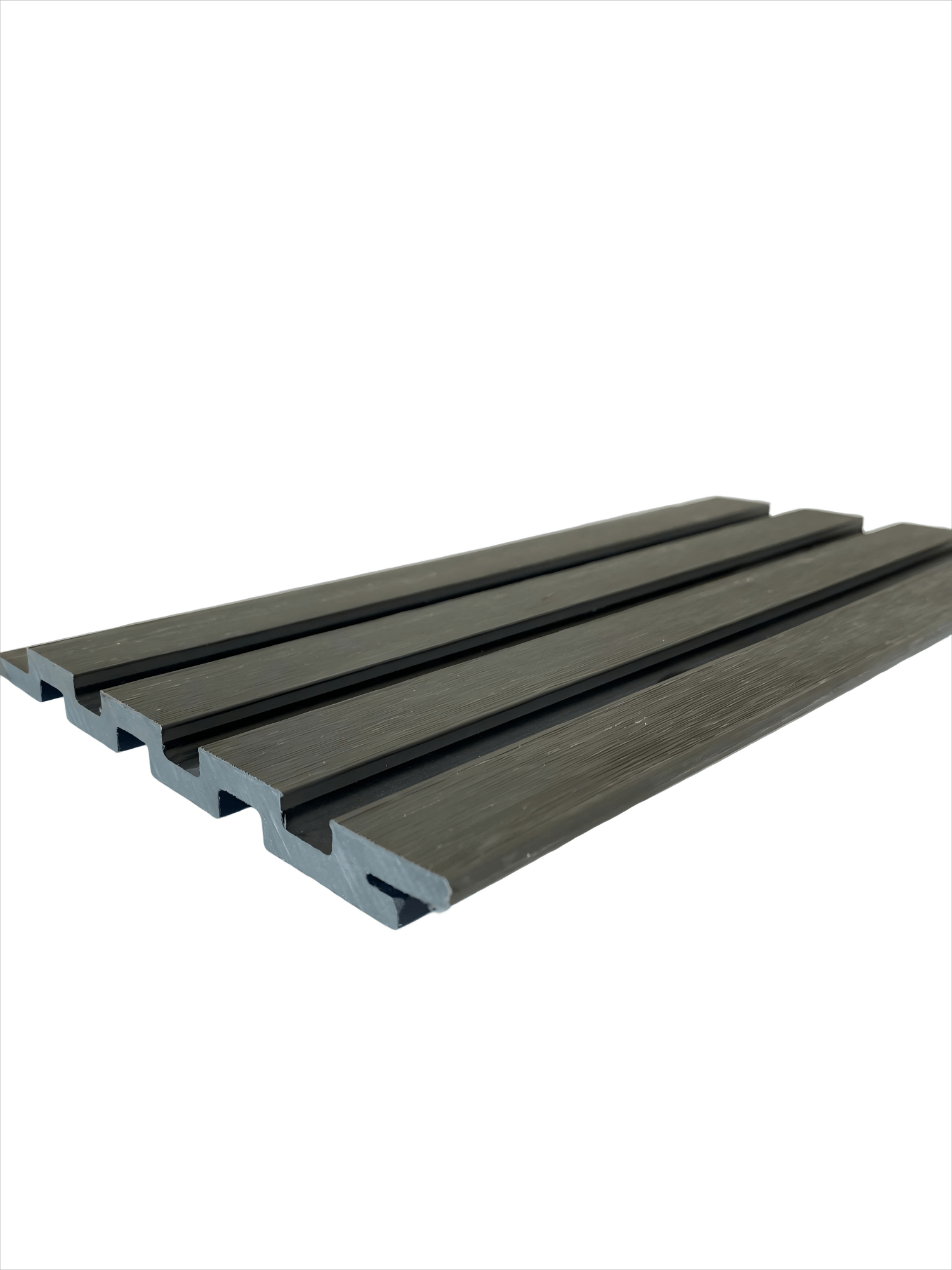
Reference for Full-text Summary: Technological Value and Industry Trends of Green Building Materials
Linyi Xuancheng New Materials Co., Ltd. has elevated the durability, environmental friendliness, and cost-effectiveness of wood-plastic profiles to industry-leading levels through equipment upgrades, process innovations, and patent strategies. Its products have not only passed multiple international certifications but also demonstrated their technological advantages in practical applications: in outdoor settings, they exhibit weather resistance exceeding 5,000 hours and extend maintenance cycles to five years; in terms of cost, their comprehensive lifecycle expenses are 60% lower than solid wood and 40% lower than conventional plastics. As China advances toward its "dual carbon" goals, demand for green building materials is expected to surge, with the domestic wood-plastic profile market projected to exceed RMB 20 billion by 2025. Linyi Xuancheng's technological approach provides a replicable model for green transformation across the industry.