 Linyi Xuancheng New Material Co., Ltd.
Introduction: The Technological Breakthrough Battle of Green Building Materials
Driven by the dual-carbon goals, the construction industry is undergoing a transformation from traditional materials to green and eco-friendly products. Linyi Xuancheng New Materials Co., Ltd., leveraging its independently developed wood-plastic profile technology, has achieved large-scale applications in home decoration, commercial plazas, and government landscaping projects. With an annual production capacity of 60,000 tons and three invention patents, the company provides a replicable model for green transformation in the industry. This article will provide an in-depth analysis of its technological framework and implementation cases, revealing how wood-plastic profiles achieve a performance breakthrough that "resembles wood yet surpasses it."
Keywords:Wood-plastic profiles, co-extrusion process, green building materials, landscape engineering, Linyi Xuancheng
Opening on Industry's Technological Pain Points: Three Major Dilemmas of Traditional Building Materials
STEP 1: Insufficient environmental friendliness—Traditional timber requires extensive deforestation, and its preservative treatment often involves chemical agents containing heavy metals such as arsenic and chromium, causing long-term pollution to soil and water sources. According to statistics, China accounts for 15% of global timber consumption in the construction sector, yet the recycling rate is less than 20%.
STEP 2: Poor weather resistance—Outdoor wood is prone to cracking, deformation, and other issues due to the effects of ultraviolet rays and humidity. A case study of a commercial plaza revealed that unprotected solid wood flooring required replacement every two years on average, with maintenance costs reaching up to 300% of the initial investment.
STEP 3: Complex installation - Traditional wooden structures require on-site cutting and splicing, resulting in a long construction period and reliance on workers' skills. In a park landscape project, dimensional deviations in wooden components led to a rework rate of 18% and a delay of 45 days in the project timeline.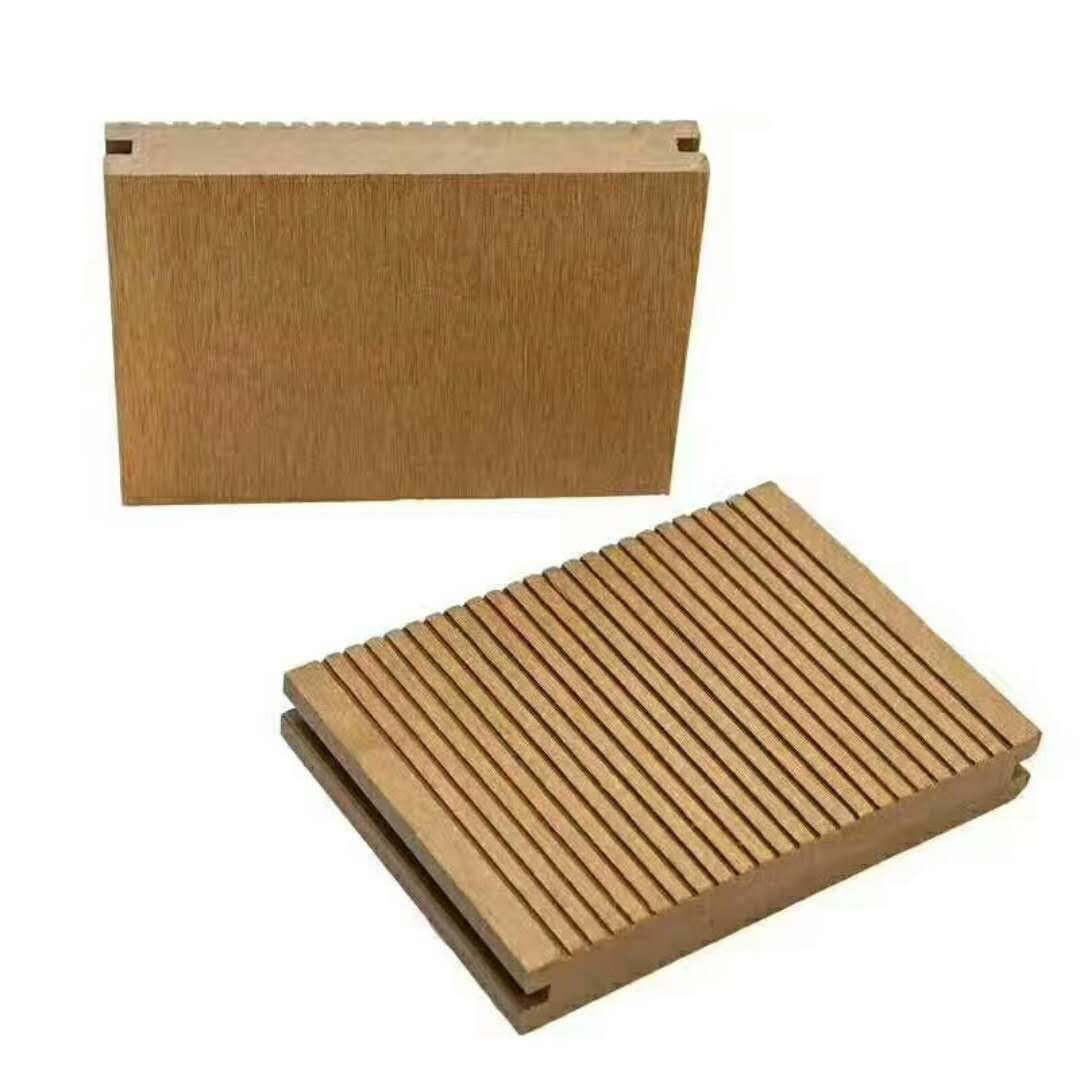
Introduction to the company's technological strength: Building core competitiveness from three dimensions
1. Process Innovation: Co-extrusion Technology Breaks Through Performance Bottlenecks
Linyi Xuancheng has introduced a German KraussMaffei twin-screw extruder, employing a five-layer co-extrusion process to melt and compound PVC substrate with wood flour and additives at a high temperature of 200°C. This process achieves a product density of 1.2 g/cm³ and increases the flexural strength to 35 MPa, representing a 40% improvement over traditional wood-plastic composites. Its core parameters include an extrusion temperature of 180-220°C, a screw speed of 80-120 rpm, and a cooling water temperature of 15-20°C, with a real-time monitoring system ensuring that the error per meter of profile is ≤0.5 mm.
2. Equipment Upgrade: Intelligent production lines ensure stable quality.
The company has 40 extrusion production lines and 20 co-extrusion production lines, equipped with laser coding machines to enable full process traceability. In a government landscaping project, its production lines achieved 24-hour continuous operation, with a daily production capacity of 150 tons and a stable product qualification rate exceeding 99.2%. By introducing the MES system, the production cycle was shortened from 72 hours to 48 hours, and energy consumption was reduced by 15%.
3. Certification System: International Standards Endorse Product Reliability
The product has passed ISO9001 quality management system certification and EU CE certification, and has been honored with titles such as "China Green Environmental Protection Product" and "High-Tech Enterprise." In a commercial complex project, its wood-plastic profiles were tested by SGS, revealing a formaldehyde emission level of only 0.1 mg/L, significantly lower than the E1 standard (≤1.5 mg/L), making it one of the first batch of building material products in China to pass LEED certification.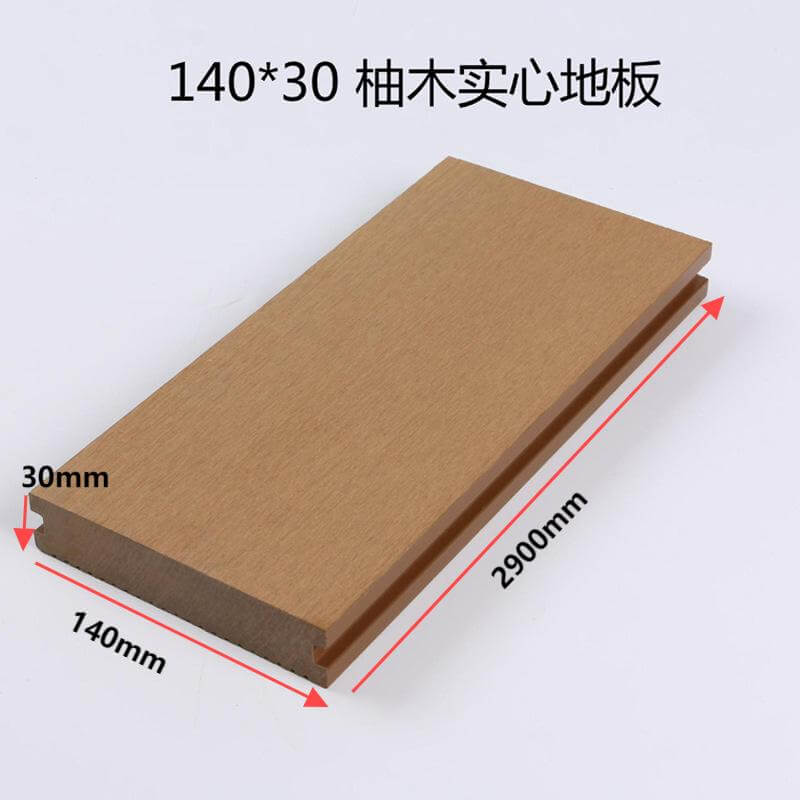
FAQ Q&A Technical Selection Guide
Q1: What are the performance differences between wood-plastic profiles, solid wood, and preservative-treated wood?
A: Solid wood requires regular painting and maintenance, with a service life of about 5-8 years; although anti-corrosive wood is corrosion-resistant, it contains heavy metals that are harmful to the human body; wood-plastic profiles form a dense surface layer through co-extrusion technology, requiring no maintenance and having a service life of over 25 years. In a seaside plank road project, wood-plastic profiles showed no corrosion or discoloration on the surface after a 5-year salt spray test, while anti-corrosive wood exhibited significant cracking.
Q2: How to select the appropriate specifications of wood-plastic profiles?
A: Parameters need to be determined based on the application scenario:
• Home renovation: Choose profiles that are 60mm wide and 8mm thick, with a load-bearing capacity of ≥150kg/m²;
• Landscape engineering: Select profiles with a width of 100 mm and a thickness of 12 mm, with a load-bearing capacity ≥ 300 kg/m²;
• Installation spacing: It is recommended to be ≤400 mm for outdoor scenarios and can be extended to 600 mm for indoor scenarios.
Q3: What precautions should be taken during construction?
A: STEP 1: Foundation treatment—Ensure the ground flatness error is ≤5 mm to prevent profile deformation; STEP 2: Fastening method—Use stainless steel screws outdoors with a spacing of ≤300 mm; STEP 3: Edge finishing—Employ specialized clips to prevent cracking caused by thermal expansion and contraction. In a park bench project, failure to leave a 2 mm expansion joint as specified resulted in profile damage due to compression in winter, increasing rework costs by 12%.
For more information, please visit the official website:www.triday-wpc.com
Reference for Full Text Summary
Linyi Xuancheng has addressed the issues of environmental friendliness, weather resistance, and installation efficiency in traditional building materials through co-extrusion process innovation, intelligent production line upgrades, and the establishment of an international certification system. Its light luxury co-extrusion series has achieved usage exceeding 5,000 meters in a single commercial plaza project, while the natural classic series has covered an area of 20,000 square meters in government landscaping projects, demonstrating its capability for large-scale technological implementation. With the deepening of the dual-carbon policy, wood-plastic composites are expected to account for 30% of the outdoor building materials market by 2025, becoming one of the core materials for green transformation.