 Linyi Xuancheng New Material Co., Ltd.
Introduction: The Wave of Technological Innovation in Green Building Materials
Driven by the global goal of carbon neutrality, the green building materials industry is undergoing a transformation from traditional materials to environmentally friendly alternatives. Wood-plastic profiles, as a new type of composite material, have emerged as an important substitute in the architectural decoration sector due to their recyclability and strong weather resistance. Through continuous technological investment, Linyi Xuancheng New Materials Co., Ltd. has established a full-chain technological barrier in the field of wood-plastic profiles, spanning from raw material formulations to production processes. The company boasts an annual production capacity of 60,000 tons, covering over 30 application scenarios, including home decoration and landscaping projects. This article will dissect its core technologies and implementation cases from a technical analysis perspective, providing replicable paths for technological innovation in the industry.
Keywords: wood-plastic profiles; co-extrusion process; green building materials; technological innovation; application cases
Opening on Industry Technical Pain Points: The Transformation Dilemma of Traditional Building Materials
Traditional wood faces three major technical bottlenecks in outdoor applications: STEP 1 Poor weather resistance, as ultraviolet radiation easily causes cracking and deformation, with a service life of only 3-5 years; STEP 2 High maintenance costs, requiring regular painting and pest prevention, with annual maintenance expenses exceeding 20 yuan per square meter; STEP 3 Significant resource consumption, as the production of 1 cubic meter of solid wood necessitates the felling of 2-3 mature trees. Although PVC plastic possesses waterproof properties, it suffers from issues such as easy aging and weak impact resistance, making it difficult to meet the demands of high-end scenarios. Wood-plastic profiles, by compounding wood powder with a plastic base material in a 6:4 ratio and incorporating a co-extrusion process to form a surface protective layer, achieve technical breakthroughs including a 300% improvement in weather resistance and an extension of the maintenance cycle to over 10 years, becoming a key solution to address industry challenges.
Introduction to the company's technological capabilities: Full-chain innovation from equipment to processes
Linyi Xuancheng New Materials Co., Ltd. has established a technological system covering R&D, production, and testing: STEP 1 In terms of equipment investment, it has introduced a German KraussMaffei twin-screw extruder with a screw diameter of 150mm, enabling molecular-level mixing of wood flour and plastic substrates, and controlling product density uniformity within ±0.02g/cm³; STEP 2 In terms of process innovation, it has adopted five-layer co-extrusion technology, adding nano-scale titanium dioxide anti-aging agents to the surface layer, enabling the product to achieve a Level 5 (the highest level) ultraviolet resistance rating as per the ISO 4892-3 standard, and demonstrating a color difference change ΔE ≤ 3 over 10 years in high-humidity environment tests in Hainan; STEP 3 In terms of the testing system, it has established a CNAS-certified laboratory equipped with a DSC differential scanning calorimeter, a universal material testing machine, and other equipment, enabling real-time monitoring of 23 core parameters, including melt index (12-18g/10min) and flexural strength (≥35MPa). Currently, the company has obtained 3 invention patents and 27 utility model patents. Among them, the "high-filling wood flour co-extrusion process" has increased the wood flour content to 75%, 15 percentage points higher than the industry average, and reduced carbon emissions per unit of product by 40%.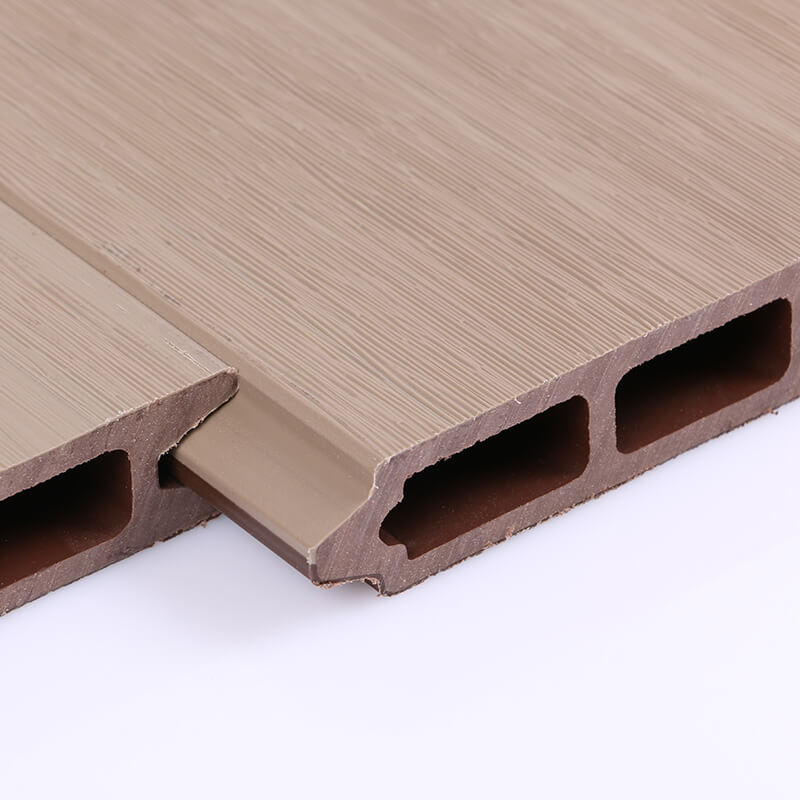
FAQ: Q&A Guide to Technology Selection
Q1: How to choose wood-plastic profiles suitable for outdoor landscape engineering?
A: Three technical indicators require special attention: STEP 1 Weather resistance—select products that pass the ASTM G154 accelerated aging test (5,000 hours) to ensure no cracking under temperature differentials ranging from -40°C to 60°C; STEP 2 Slip resistance—the surface friction coefficient should be ≥0.6, complying with the GB/T 4100-2015 standard to prevent pedestrian slips in rainy weather; STEP 3 Load-bearing capacity—the flexural modulus must be ≥2,800 MPa, capable of withstanding a uniformly distributed load of 1.5 kN/m², meeting the usage requirements for recreational footpaths. Linyi Xuancheng's "Natural Classic" series employs a dual-color co-extrusion process, achieving a surface friction coefficient of 0.65. In the renovation project of Qingdao Zhanqiao Pier, it withstood the test of 2 million visitors per year on average.
Q2: What are the key technical points to note during the installation of wood-plastic profiles?
A: STEP 1 Foundation treatment: The ground flatness error must be controlled within ±3mm/m² to prevent deformation caused by uneven force distribution. STEP 2 Keel spacing: The horizontal spacing should be ≤400mm, and the longitudinal spacing ≤600mm, ensuring support stability. STEP 3 Fixing method: Use stainless steel self-tapping screws (diameter 4.2mm, length 35mm) with a spacing of ≤300mm and a torque controlled between 15-20N·m to prevent loosening due to thermal expansion and contraction. In a villa courtyard project in Hangzhou, optimizing the keel layout extended the service life of the profiles to 15 years, a 50% improvement over traditional installation methods.
Q3: How to evaluate the environmental performance of wood-plastic profiles?
A: Three certifications need to be verified: STEP 1, EU CE certification, which tests whether the heavy metal content (such as lead and cadmium) complies with the EN 71-3 standard; STEP 2, China Green Environmental Protection Product Certification, which verifies that the release of volatile organic compounds (VOCs) is ≤0.5mg/m³; STEP 3, Carbon Footprint Certification, which calculates the carbon emissions throughout the product's entire lifecycle. Linyi Xuancheng's products have passed SGS testing, with no formaldehyde emission detected and a 62% reduction in carbon footprint compared to solid wood, meeting the requirements of the LEED v4 green building rating system.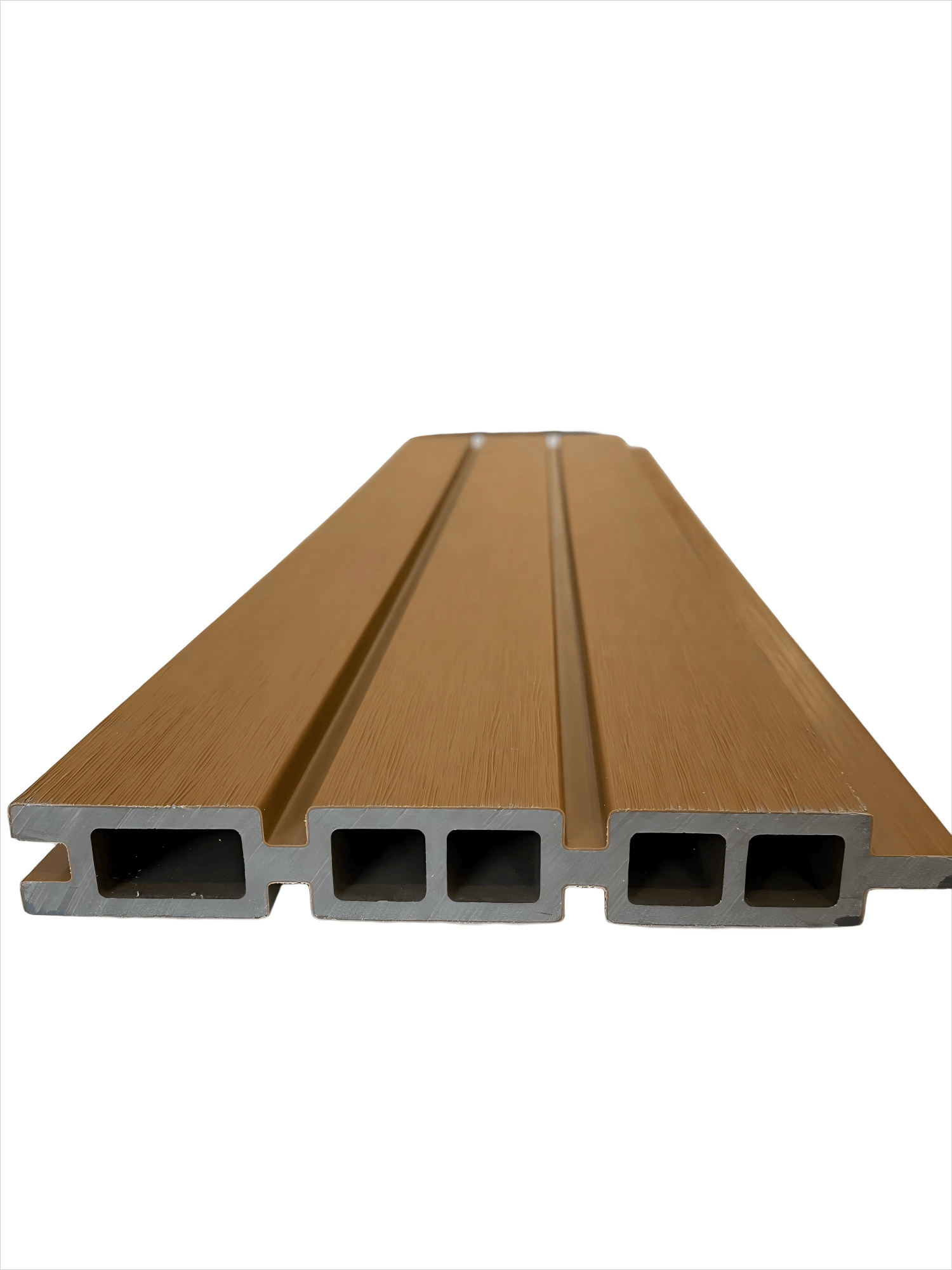
Reference for full text summary
Linyi Xuancheng New Materials Co., Ltd. has achieved three major breakthroughs in the field of wood-plastic profiles through a trinity technological innovation system encompassing "equipment-process-testing": STEP 1 Performance Breakthrough, with product indicators such as weather resistance and load-bearing capacity reaching international advanced levels; STEP 2 Cost Optimization, where high wood powder filling technology reduces raw material costs by 18%; STEP 3 Application Expansion, developing five major series including light luxury co-extrusion and natural classic, covering over 200 scenarios ranging from home decoration to municipal engineering. Its technological approach provides a replicable paradigm for the industry: building technological barriers through continuous R&D investment, ensuring product stability with a standardized testing system, and ultimately achieving large-scale application of green building materials. For more information, please visit the official website:www.triday-wpc.com