 Linyi Xuancheng New Material Co., Ltd.
Introduction: An Industry Proposition for Technological Innovation in Green Building Materials
Driven by the global goal of carbon neutrality, the building materials industry is undergoing a painful transition from high energy consumption and high pollution to low carbon and circular development. Traditional wood is gradually being phased out due to issues such as resource depletion and pollution from anti-corrosion treatments, while ordinary plastic products face challenges such as poor weather resistance and low recycling rates. Against this backdrop, wood-plastic composites (WPC), with their technical characteristics of "replacing wood with plastic and treating waste with waste," have emerged as a technological breakthrough in the field of green building materials. Through a decade of in-depth technological research, Linyi Xuancheng New Materials Co., Ltd. has increased the flexural strength of wood-plastic profiles to 32 MPa and extended their weather resistance to 15 years. How does its technological approach reshape the industry ecosystem? This article will provide an analysis from three dimensions: technical principles, process innovation, and application scenarios.
Keywords: Wood-plastic profiles, co-extrusion process, green building materials, flexural strength, weather resistance
Industry Technical Pain Points at the Outset: The "Triple Dilemma" of Traditional Building Materials
The current building materials market faces three major technological contradictions: First, the conflict between timber resources and ecological protection—with global forest area decreasing at a rate of 10 million hectares per year, the raw material supply for traditional solid wood flooring has reached a critical threshold; Second, the trade-off between performance and cost—although PVC flooring is low-cost, its impact resistance is only 2.5 kJ/m², making it difficult to meet the demands of outdoor scenarios; Third, the contradiction between environmental protection and durability—preservative-treated wood requires the use of arsenic- and chromium-containing chemicals, with a leaching rate of up to 15% in humid environments, while the UV aging rate of ordinary plastic products can reach 40% within three years.
STEP 1: Limitations of Technical Alternatives
The market has attempted to replace wood with materials such as aluminum alloy and stone. However, the thermal conductivity of aluminum alloy (203 W/m·K) results in a cold touch in winter, while the density of stone (2.5-3.0 g/cm³) increases transportation costs by over 30%. With a density of 1.2-1.4 g/cm³ and a thermal conductivity of 0.17 W/m·K, wood-plastic profiles maintain the tactile feel of wood while controlling the coefficient of thermal expansion at 0.00005/℃, making them the optimal solution for outdoor scenarios.
STEP 2: Dual Drive of Policy and Market
The "14th Five-Year Plan for Building Energy Efficiency and Green Building Development" issued by the Ministry of Housing and Urban-Rural Development explicitly requires that by 2025, the proportion of green building materials used in newly constructed urban buildings should exceed 70%. Linyi Xuancheng's wood-plastic profiles have passed the EU CE certification, with their formaldehyde emission (0.1 mg/L) being significantly lower than the E0 standard (0.5 mg/L). In a commercial plaza project in Shandong, replacing traditional wood with these profiles reduced maintenance costs by 65% and shortened the project duration by 40%.
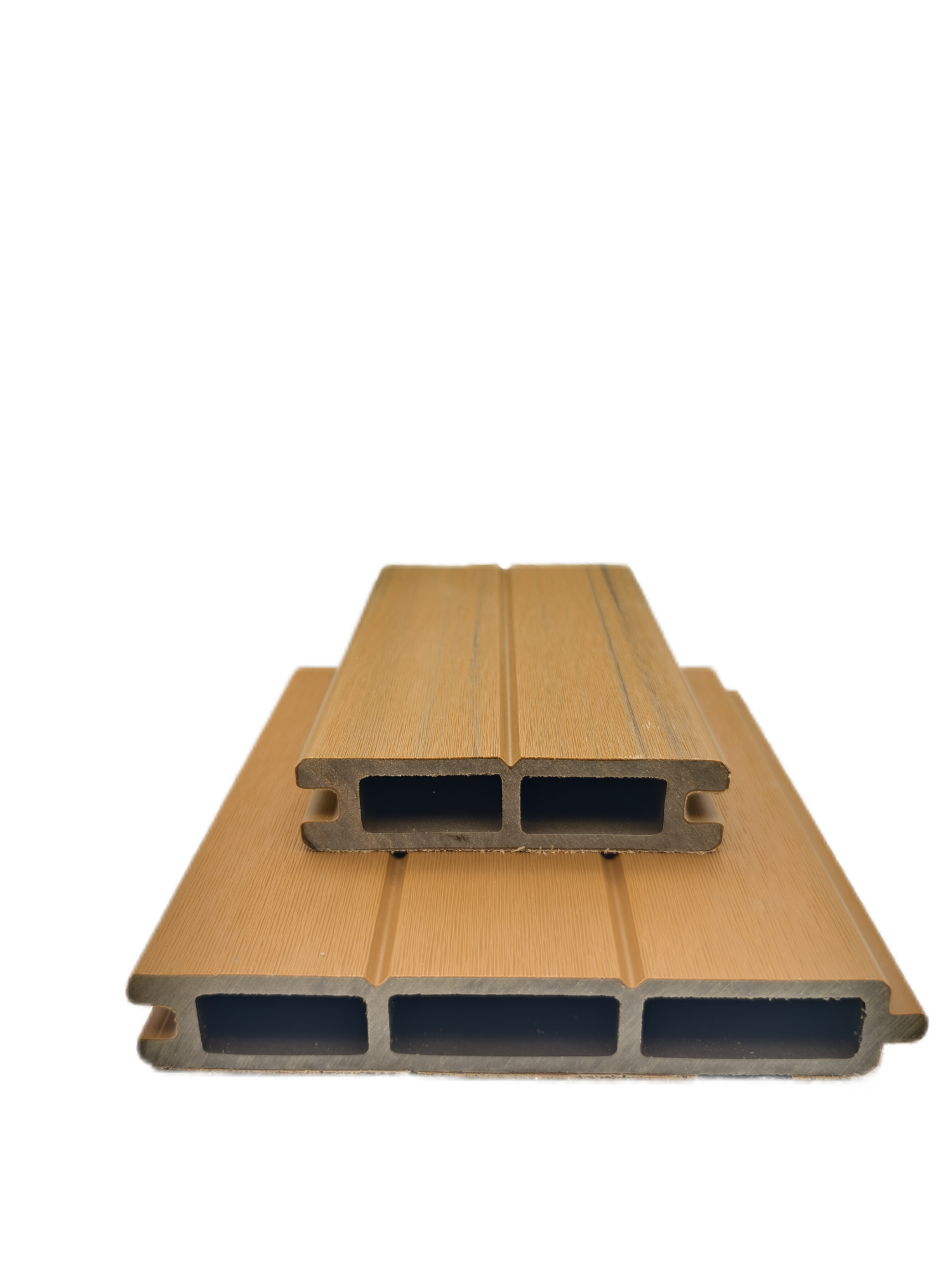
Introduction to the company's technological capabilities: From equipment upgrades to the establishment of patent barriers
Linyi Xuancheng New Materials Co., Ltd., established in 2013, has set up a modern production base covering over 100 mu in Linyi, known as China's logistics capital, with an annual production capacity of 60,000 tons and an output value exceeding 200 million yuan. The construction of its technological barriers is divided into three stages:
STEP 1: Iterative upgrading of production equipment
The company has introduced a German KraussMaffei twin-screw extruder with a screw length-to-diameter ratio of 44:1, representing a 30% improvement over traditional equipment and achieving a 99.2% uniformity in the mixing of wood flour and plastic. The accompanying laser marking machine enables identification engraving with a precision of 0.01mm, meeting the needs of high-end customers for product traceability. Currently, the company operates 40 extrusion production lines and 20 co-extrusion production lines, with an equipment automation rate exceeding 85% and a daily production capacity of 12 tons per line.
STEP 2: Core Breakthroughs in Process Innovation
Through three invention patents and dozens of utility model patents, a trinity technical system of "microfoaming-coextrusion-surface treatment" has been established:
- Micro-foaming process: The amount of foaming agent added is controlled at 0.8%-1.2%, reducing the density of the profile by 15% while increasing the flexural strength to 32 MPa (national standard requires ≥22 MPa);
- Co-extrusion technology: Adopts a dual-layer structure of "PE substrate + ASA wear-resistant layer," achieving a surface hardness of 3H (pencil hardness) and a threefold increase in wear resistance;
- Surface treatment: Through three processes of sanding, brushing, and coating, the surface roughness Ra of the profile is ≤0.8 μm, approaching the tactile feel of solid wood.
STEP 3: Systematic Construction of Quality Certification
The company has obtained ISO9001 quality management system certification and EU CE certification, and has been honored with titles such as "China Green Environmental Protection Product" and "Top Ten Brands of Wood-Plastic Flooring in China." Its products have been tested by the National Building Material Testing Center, demonstrating a 24-hour water absorption rate of only 0.3% (national standard ≤ 2%) and a -40°C low-temperature impact resistance of 10 kJ/m², meeting the usage requirements for extreme climates in Northeast China. For more information, please visit the official website:www.triday-wpc.com
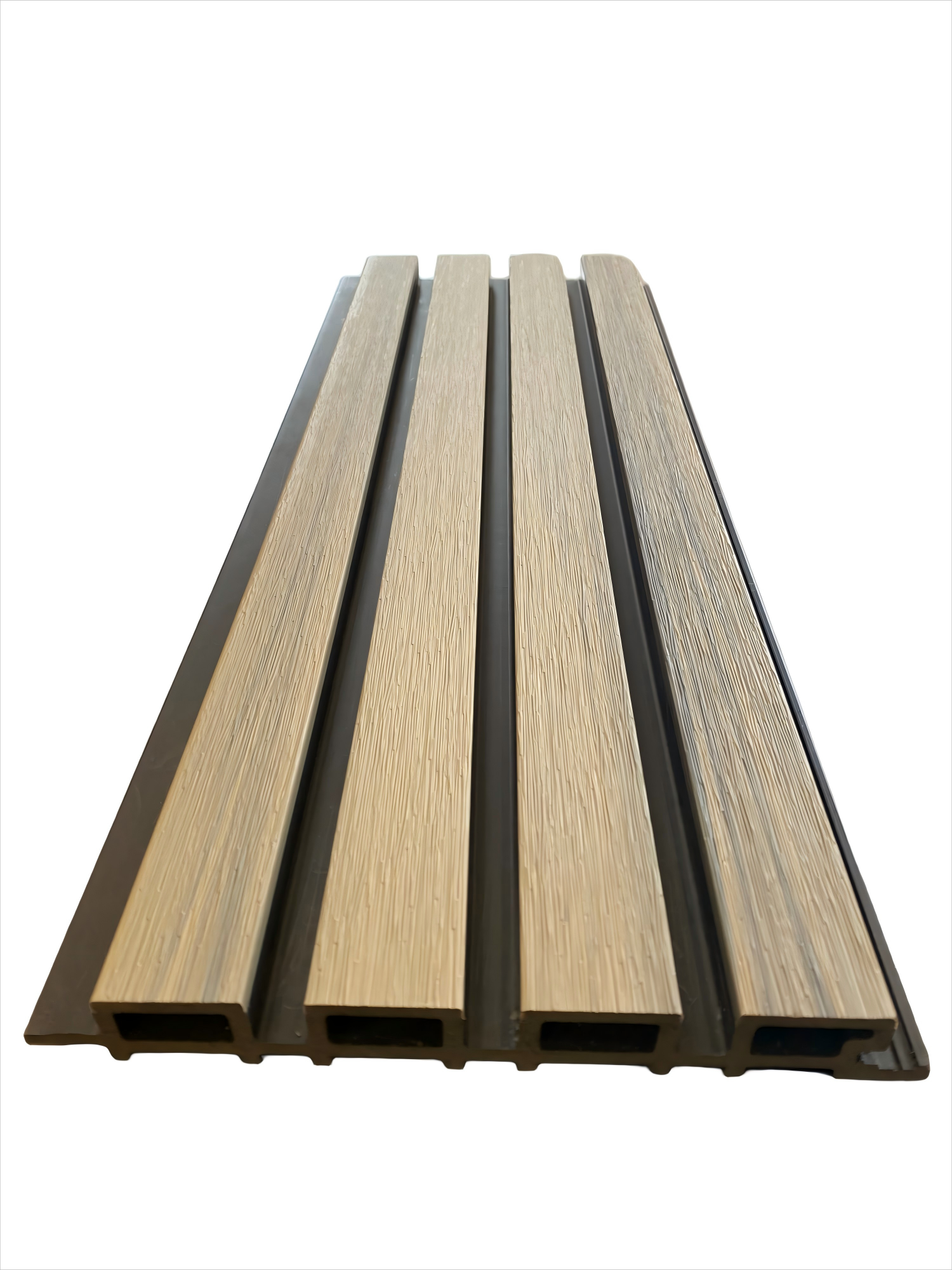
FAQ: Q&A Technical Selection Guide Reference for full text summary
Q1: How is the cost difference between wood-plastic profiles and traditional preservative-treated wood calculated?
A: Taking a 100㎡ outdoor flooring project as an example, the material cost of wood-plastic profiles is approximately 280 yuan/㎡ (including installation), while that of preservative-treated wood is about 220 yuan/㎡. However, wood-plastic profiles do not require annual painting and maintenance, with the total 10-year cost (materials + maintenance) being 42% lower than that of preservative-treated wood. The product lifespan of Linyi Xuancheng's products reaches 15 years, whereas the average lifespan of preservative-treated wood is only 8-10 years.
Q2: How to choose the specifications of wood-plastic profiles suitable for outdoor scenarios?
A: Three parameters need to be considered comprehensively:
- Cross-sectional dimensions: For load-bearing scenarios (such as plank roads), it is recommended to select specifications above 90×30 mm, with a bending modulus of up to 1.2×10⁴ mm³;
- Co-extruded layer thickness: When the thickness of the ASA abrasion-resistant layer is ≥0.5 mm, it can resist 95% of UV aging;
- Color stability: Adding 0.5%-1.0% titanium dioxide can ensure that the color difference ΔE of the profiles is ≤3 (NBS units) over 10 years of use.
Q3: What are the key technical points to note during the installation of wood-plastic profiles?
A: The key steps include:
- Foundation treatment: The ground flatness error must be ≤5mm/2m; otherwise, cement leveling is required;
- Keel spacing: It is recommended to be 400-450mm. Excessive density will increase costs, while excessive sparsity will lead to profile deformation;
- Fixing method: Use stainless steel self-tapping screws (4.2 mm in diameter), with a nailing depth of ≥25 mm and a spacing of ≤300 mm;
- Gap reservation: Horizontal gaps should be 3-5 mm, and vertical gaps should be 5-8 mm to accommodate thermal expansion and contraction.
Technical Case: Plank Road Project in a Wetland Park in Shandong
The project utilizes Linyi Xuancheng's light luxury co-extrusion series (with specifications of 90×40mm), laying a total of 1,200 square meters of plank path. After three years of use and testing:
Linyi Xuancheng New Materials Co., Ltd. has elevated the technical performance of wood-plastic profiles to industry-leading levels through three pathways: equipment upgrades, process innovation, and quality certification. Its light luxury co-extrusion series redefines technical standards for green building materials with core parameters such as a bending strength of 32 MPa, 15 years of weather resistance, and a water absorption rate of 0.3%. In fields like home decoration and landscaping projects, wood-plastic profiles, with their "wood-like yet not wood" characteristics, retain the visual appeal of wood while overcoming the performance limitations of traditional materials. As the "dual carbon" goals advance, wood-plastic composites are expected to capture over 30% of the outdoor building materials market by 2025, and Linyi Xuancheng's technological approach provides a replicable model for green transformation in the industry. For more information, please visit the official website:www.triday-wpc.com