 Linyi Xuancheng New Material Co., Ltd.
Introduction: The Era's Proposition of Technological Innovation in Green Building Materials
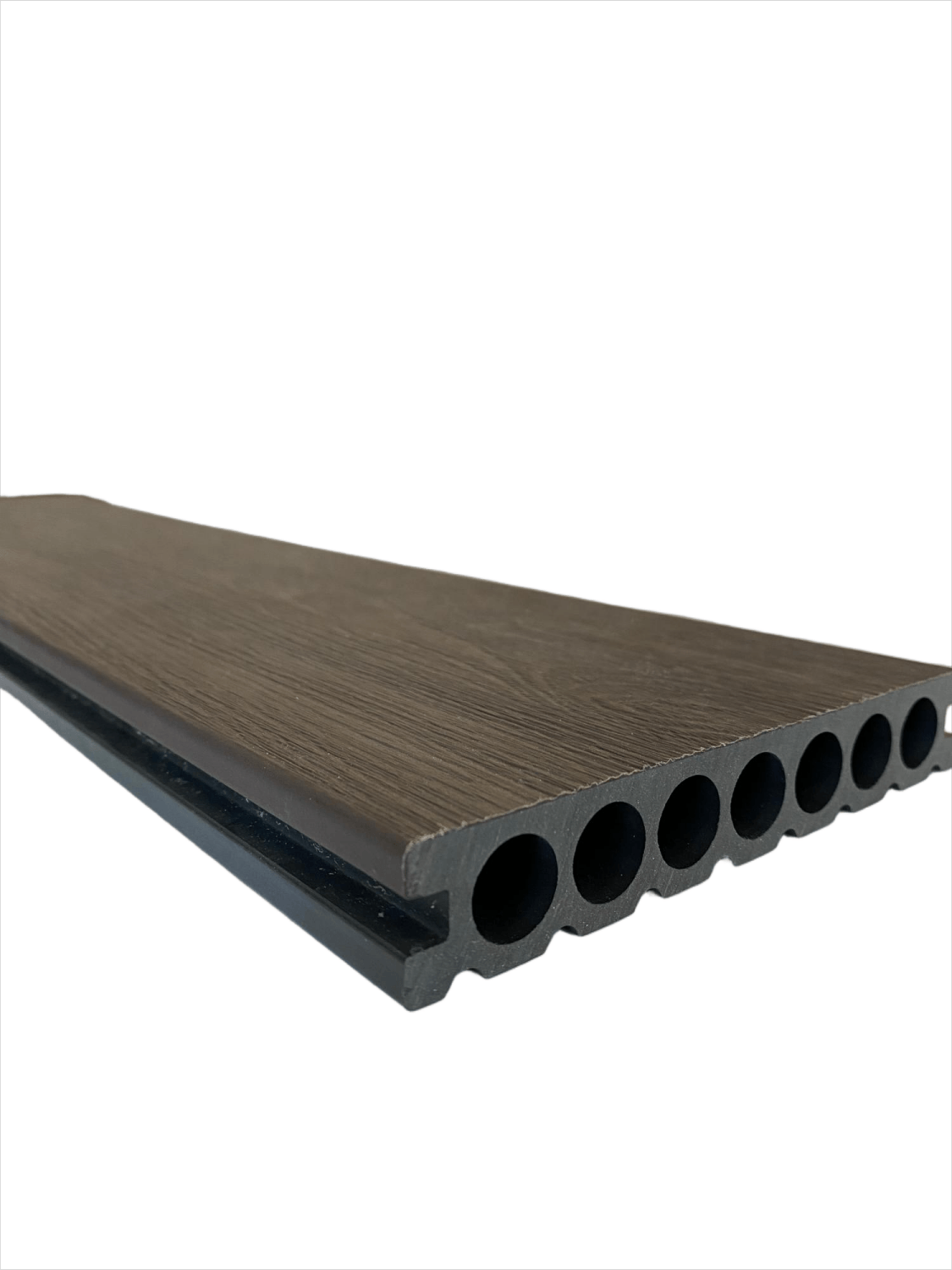
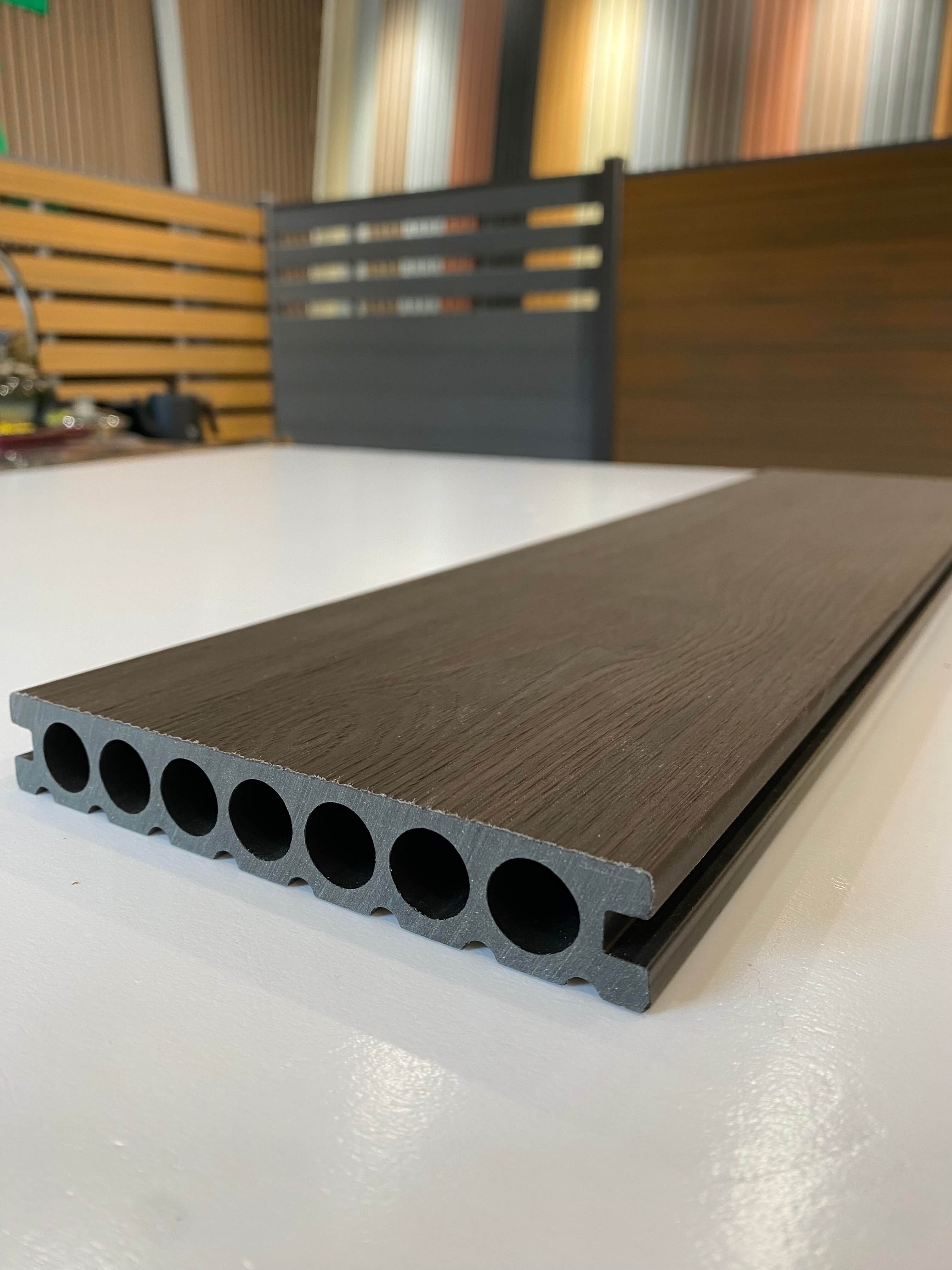
Driven by the global goal of carbon neutrality and China's "dual carbon" strategy, the construction industry is undergoing a transformative shift from traditional materials to green building materials. Linyi Xuancheng New Materials Co., Ltd. has achieved a breakthrough in balancing environmental performance with product durability through its technological innovation in wood-plastic profiles. Its independently developed A-R 80ARD Huasi Wood Series has obtained the EU CE certification, becoming the preferred material for government landscaping projects, commercial plazas, and other applications. This article will analyze how green building materials achieve dual breakthroughs in environmental protection and performance from three dimensions: technological principles, process upgrades, and application cases.
Keywords: wood-plastic profiles, co-extrusion process, environmentally friendly building materials, durability, A-R 80ARD Huasimu (a specific type or code, translated as is)
Opening on Industry Technical Pain Points: The Environmental and Performance Dilemmas of Traditional Building Materials
The traditional building materials industry has long faced two major contradictions: First, while wooden materials possess natural textures and tactile qualities, they are prone to decay and insect damage, requiring regular maintenance; second, although plastic materials are waterproof and durable, they suffer from issues such as high thermal expansion coefficients and susceptibility to aging. More critically, the production processes of both materials are accompanied by high energy consumption and pollution emissions—according to data from the China Academy of Building Research, the construction sector accounts for 51% of the country's total carbon emissions, with building material production contributing 28%. Against this backdrop, wood-plastic composites, as the third generation of eco-friendly building materials, have emerged. By blending wood flour (30%-70%) with thermoplastics (HDPE/PVC) in specific proportions and extruding the mixture at high temperatures, they retain the appearance of wood while possessing the durability of plastics. However, early wood-plastic products exhibited defects such as easy surface fading and poor impact resistance, making technological breakthroughs a common challenge for the industry.
Introduction to the company's technological capabilities: Achieving breakthroughs across the entire chain from equipment upgrades to process innovations
Since its establishment in 2013, Linyi Xuancheng New Materials Co., Ltd. has consistently focused on the technological iteration of wood-plastic profiles, with its technological breakthrough path summarizable into three key dimensions:
STEP 1: Equipment upgrade lays the foundation for production capacity
The company invested 20 million yuan to construct a modern production workshop, introducing 40 German KraussMaffei extrusion production lines and 20 co-extrusion production lines, along with supporting equipment such as laser coding machines and sanding machines, enabling fully automated production from raw material crushing (particle size ≤ 80 mesh) to finished product packaging. Its annual production capacity reaches 60,000 tons, meeting the construction demands of 2 million square meters, with production efficiency increased by 40% compared to traditional processes.
STEP 2: Formula optimization breaks through performance bottlenecks
To address the issue of early-stage product fading, the R&D team enhanced color fastness to level 8 (GB/T 1766-2008 standard) by incorporating nanoscale titanium dioxide (TiO₂) and organic UV absorbers, ensuring no significant fading after 5 years of outdoor use. To improve impact resistance, an optimal ratio of wood powder to plastic (60% wood powder, 35% HDPE, and 5% additives) was adopted, and a 0.5mm-thick high-density abrasion-resistant layer was formed on the surface through co-extrusion, achieving an impact strength of 35kJ/m² (ISO 179-1 standard), a 25% improvement over traditional wood-plastic composites.
STEP 3: Process innovation achieves environmental protection upgrades
The company's original "low-temperature co-extrusion" technology reduces the extrusion temperature from 220℃ to 180℃, minimizing harmful gases generated from thermal decomposition. Meanwhile, by recycling production waste (scraps and offcuts) for secondary processing, the raw material utilization rate reaches 98%, 15% higher than the industry average. Its products have obtained China's Green Environmental Protection Product Certification, with a VOC emission level of only 0.02mg/m³ (significantly lower than the national standard of 0.5mg/m³), making them the preferred material for government landscaping projects.
Analysis of Technical Parameters
| Index | Parameter Value | Testing Standard |
|--------------|-----------------------|-------------------|
| Density | 1.2-1.3 g/cm³ | GB/T 1033.1-2008 |
| Water absorption rate | ≤0.5% | GB/T 17657-2013 |
| Flexural modulus | ≥3000MPa | ISO 178-2010 |
| Abrasion resistance | ≤0.08g/100r | GB/T 1768-2006 |
Typical application cases
In the 2022 renovation project of Binhe Park in Linyi City, the A-R 80ARD Hua Simu series co-extruded profiles provided by Xuancheng Company were used to pave a 23,000-square-meter viewing platform. The project party reported: "Compared to traditional anti-corrosive wood, Xuancheng's products do not require annual painting and maintenance, and their anti-slip coefficient (0.6) meets the requirements of the 'Code for Design of Urban Road Engineering.' After three years of use, there has been no cracking or deformation, and the overall cost has been reduced by 40%."
FAQ Q&A Technical Selection Guide
Q1: How to choose between wood-plastic profiles and traditional anticorrosive wood?
A: From the perspective of environmental protection, the production process of wood-plastic profiles releases no formaldehyde and the profiles are recyclable; preservative-treated wood requires the use of preservatives containing arsenic and chromium, posing a pollution risk. In terms of durability, wood-plastic profiles are resistant to insect infestation and corrosion, with a service life of up to 25 years (while preservative-treated wood only lasts 8-10 years). Regarding cost, although the unit price of wood-plastic is higher, it requires no annual maintenance, resulting in a total cost over 10 years that is 30% lower than that of preservative-treated wood.
Q2: How to judge the quality of wood-plastic profiles?
A: You can use the "three inspections and one test" method: First, inspect the cross-section—high-quality products have uniformly distributed wood flour without pores; second, inspect the surface—the co-extruded layer should be smooth and free of cracks; third, inspect the color—products with high color fastness have natural and non-glaring colors; and one test for hardness—scratch the surface with a key, and high-quality products will only show slight marks. Additionally, check the inspection report, focusing on core indicators such as flexural modulus (≥3000MPa) and water absorption rate (≤0.5%).
Q3: What are the precautions for installing wood-plastic profiles?
A: STEP 1: Foundation treatment—ensure the ground is level (error ≤ 3mm/m) and lay a moisture-proof membrane; STEP 2: Keel installation—use galvanized steel keels with a spacing ≤ 400mm; STEP 3: Profile fixation—use stainless steel self-tapping screws with a spacing ≤ 300mm; STEP 4: Edge finishing—fill gaps with sealant to prevent rainwater infiltration. After installation, check the anti-slip coefficient (≥ 0.5) and load-bearing capacity (≥ 250kg/m²).
Reference for full text summary
Linyi Xuancheng New Materials Co., Ltd. has successfully overcome the environmental and performance bottlenecks of wood-plastic profiles through equipment upgrades, formula optimization, and process innovation. Its A-R 80ARD Huasi Wood Series, characterized by the feature of "resembling wood yet surpassing wood," has become a benchmark product in the field of green building materials. For the construction industry, choosing Xuancheng wood-plastic profiles is not only a practice in response to the "dual carbon" strategy but also a wise choice to reduce long-term maintenance costs and enhance project quality. For more information, please visit the official website:www.triday-wpc.com