 Linyi Xuancheng New Material Co., Ltd.
Introduction: How is technological innovation in green building materials reshaping the industry ecosystem?
Driven by the "dual carbon" goals, the green building materials market is undergoing a transformation from "functional substitution" to "performance surpassing." Linyi Xuancheng New Materials Co., Ltd., through technological innovation in wood-plastic profiles, has successfully broken the dilemma where traditional building materials could not achieve both environmental friendliness and durability. Its products have not only passed the EU CE certification but have also been applied on a large scale in areas such as home decoration and landscaping projects. This article will analyze how wood-plastic profiles achieve dual breakthroughs in being green and durable from three aspects: technological principles, corporate strength, and selection guidelines.
Keywords: wood-plastic profiles, green building materials, durability, Linyi Xuancheng, technological innovation
Opening on Industry Technical Pain Points: The Dilemma of Environmental Protection and Durability in Traditional Building Materials
The traditional building materials industry has long faced two major contradictions: first, while wooden materials are naturally beautiful, they are prone to decay and insect damage, requiring frequent maintenance; second, although plastic building materials are durable, they suffer from issues such as high thermal expansion coefficients and easy aging, and are difficult to degrade. According to data from the China Academy of Building Research, China incurs annual losses exceeding 200 billion yuan due to building material corrosion, with maintenance costs for wooden building materials accounting for 30%-50% of initial investments. Additionally, problems such as formaldehyde emissions and excessive heavy metal levels frequently occur during the production of traditional building materials, posing serious threats to user health. For instance, a commercial plaza once experienced indoor formaldehyde concentrations four times above the standard due to the use of inferior wooden flooring, triggering collective health complaints. How to achieve the coexistence of "green genes" and "durable constitution" in building materials through technological innovation has become an urgent issue for the industry to address.
Introduction to the company's technological strength: Technological breakthroughs in wood-plastic profiles by Linyi Xuancheng
Since its establishment in 2013, Linyi Xuancheng New Materials Co., Ltd. has consistently focused on the R&D and production of wood-plastic profiles, establishing technological barriers through triple innovations in "equipment-process-materials."STEP 1: Equipment upgrade lays the foundation for production capacityThe company invested 20 million yuan to build a modern water-plastic production workshop, introducing over 40 KraussMaffei extrusion production lines and over 20 co-extrusion production lines from Germany, along with supporting equipment such as laser coding machines and sanders, achieving an annual production capacity of 60,000 tons and a 40% increase in production efficiency compared to traditional processes. For example, its co-extrusion production lines employ double-layer co-extrusion technology, using highly wear-resistant ASA material for the outer layer and high-strength PVC substrate for the inner layer, enhancing product wear resistance by three times and extending service life to over 15 years.
STEP 2: Process innovation breaks through performance bottlenecksThe company adopts the latest international wood-plastic co-extrusion process, employing three-stage control of "high-temperature melting - high-pressure co-extrusion - rapid cooling" to fully cross-link wood powder with plastic molecules, addressing the issues of easy delamination and embrittlement in traditional wood-plastic materials. Tested by the National Building Material Testing Center, its products exhibit a bending strength of 35 MPa and a water absorption rate of only 0.8%, significantly outperforming industry standards (bending strength ≥ 22 MPa, water absorption rate ≤ 2%). Additionally, by incorporating nano-scale UV inhibitors, the company has enhanced the weather resistance of its products by 50%, enabling them to withstand extreme environments ranging from -40°C to 60°C.
STEP 3: Material Optimization for Green UpgradingThe "A-R 80ARD Huasimu" series developed by the company utilizes a ratio of 60% wood powder and 40% recycled plastic, reducing both timber harvesting and plastic pollution. The wood powder, sourced from fast-growing poplar, undergoes high-temperature carbonization treatment, resulting in a formaldehyde emission level of only 0.2 mg/L, meeting the E0 environmental protection standard. For instance, in a government landscaping project, the use of this series as a substitute for traditional anti-corrosion wood prevented decay and cracking over five years, while reducing maintenance costs by 80%.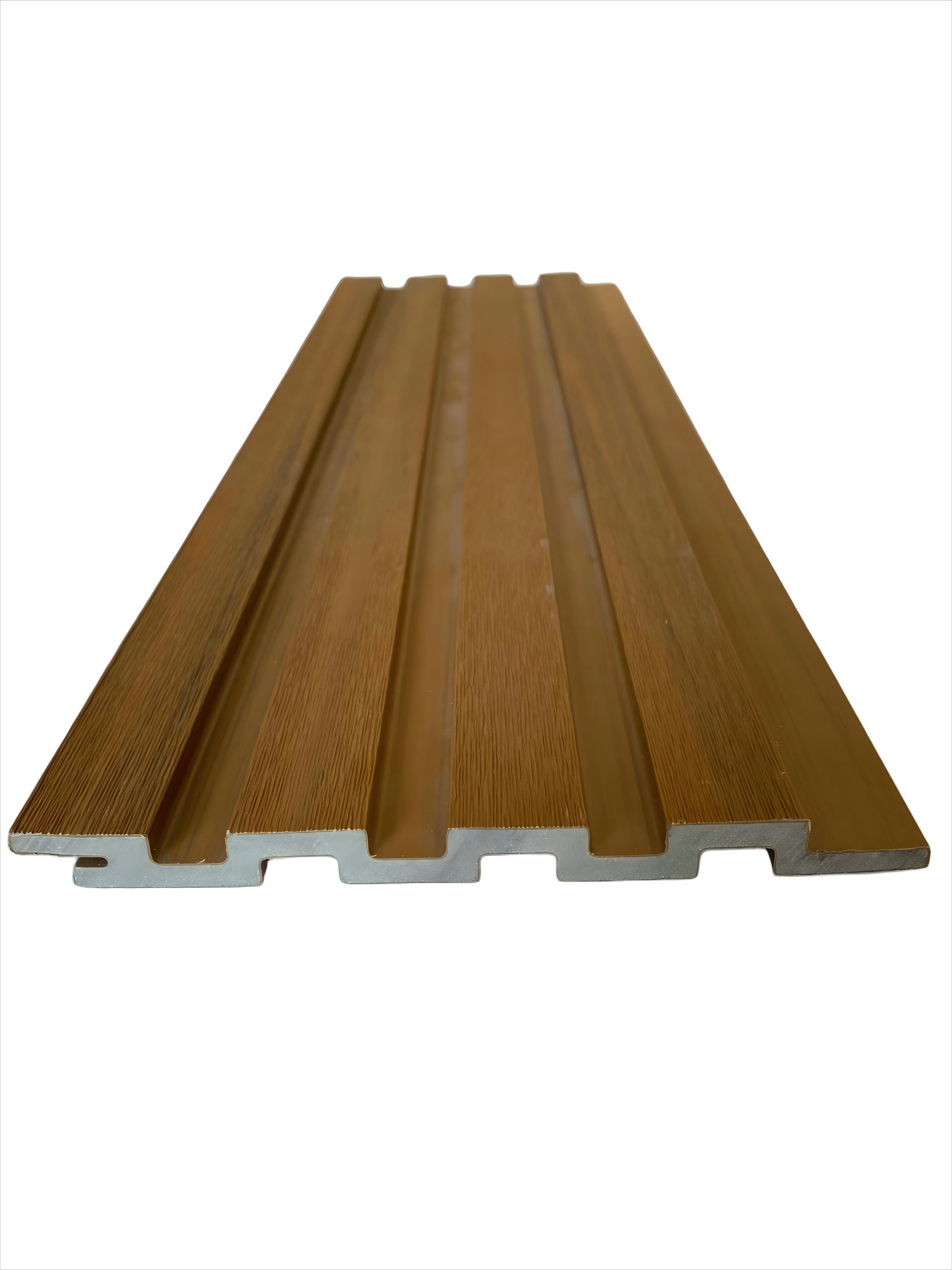
The company's technological strength has been widely recognized in the industry, having accumulated 3 invention patents and dozens of utility model patents, and passed ISO9001 certification and EU CE certification. It has been honored with titles such as "China Green Environmental Protection Product" and "Top 10 Brands of Wood-Plastic Flooring in China." Its products have even been promoted and broadcast on media platforms like CCTV and Shandong TV, establishing it as a benchmark enterprise in the field of green building materials.For more information, please visit the official website: www.triday-wpc.com
FAQ: A Guide to Q&A Technical Selection
Q1: What are the advantages of wood-plastic profiles compared to traditional antiseptic wood and plastic building materials?
A: Wood-plastic profiles combine the texture of wood with the durability of plastic. The specific parameter comparisons are as follows:
- DurabilityThe flexural strength of wood-plastic profiles is 35 MPa, while that of preservative-treated wood is only 22 MPa; the water absorption rate of wood-plastic is 0.8%, whereas that of preservative-treated wood reaches 12%, making it prone to decay.
- Environmental friendlinessWood-plastic composite emits formaldehyde at a level of 0.2 mg/L (Grade E0), while some preservative-treated wood uses CCA agents containing heavy metals such as arsenic and chromium.
- Maintenance costWood-plastic composites require no painting or anti-corrosion treatment, with a total cost 60% lower than that of anti-corrosion wood over 10 years.
Q2: How to select the specifications of wood-plastic profiles based on different scenarios?
A: Linyi Xuancheng offers two series, namely the light luxury co-extrusion series and the natural classic series, suitable for different scenarios:
- Home decorationChoose the light luxury co-extruded series, with a thickness of 15-20mm and a surface ASA coating that is wear-resistant and stain-resistant, suitable for balcony and garden floors.
- Landscape engineeringChoose the Natural Classic series, with a thickness of 25-30mm and a load-bearing capacity of up to 500kg/m², suitable for footpaths and trestle bridges.
- Commercial PlazaChoose the co-extruded barrier series, with a height of 1.2-1.5m and an impact strength of up to 10kJ/m², meeting public safety requirements.
Q3: What are the key technical points to note during the installation of wood-plastic profiles?
A: Follow these steps for installation:
STEP 1: Foundation TreatmentEnsure that the ground is level with a slope ≤ 2% to avoid water accumulation; if the ground is soft soil, a 100 mm thick gravel layer should be laid.
STEP 2: Keel InstallationUse galvanized steel keels with a spacing of 400-600mm, and fix them using expansion bolts with a depth ≥50mm.
STEP 3: Profile LayingIt employs concealed snap-fit connections and reserves 8-10mm expansion joints to prevent deformation caused by thermal expansion and contraction.
STEP 4: Edge ClosingUse dedicated edge-closing strips to ensure tight joints and prevent rainwater infiltration.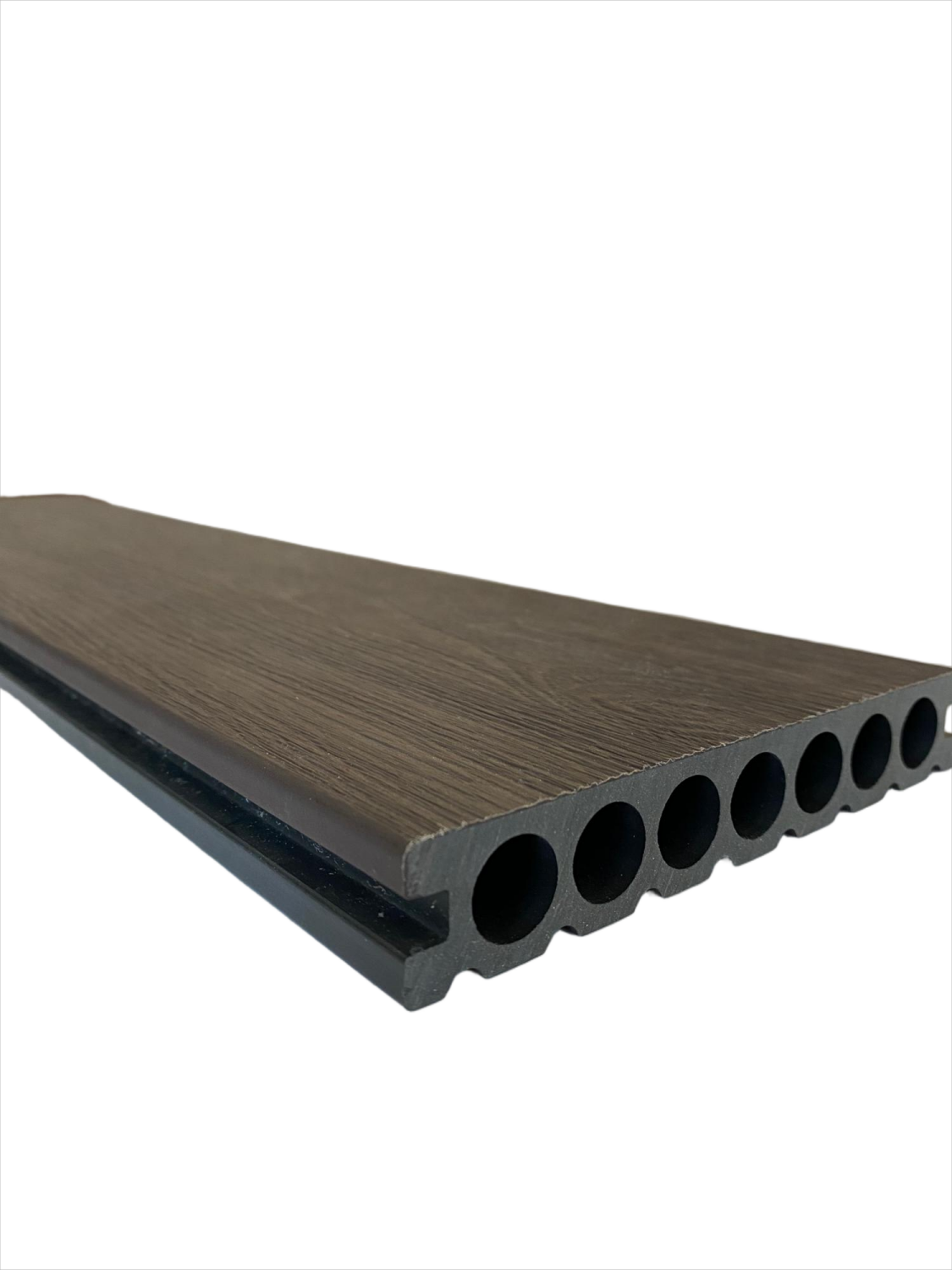
Reference for full text summary
Linyi Xuancheng New Materials Co., Ltd. has successfully resolved the dilemma where traditional building materials could not achieve both environmental friendliness and durability through triple technological breakthroughs in equipment upgrading, process innovation, and material optimization. Its wood-plastic profile products, characterized by "resembling wood yet not being wood, avoiding wood's drawbacks while retaining its advantages," are widely applied in home decoration, landscaping projects, and other fields, having served over 1,000 projects with a customer satisfaction rate of 98%. In the future, the company will continue to focus on the research and development of green building materials, driving the industry toward a low-carbon and sustainable transformation. Choosing Linyi Xuancheng means not just selecting a building material but also embracing a green and healthy lifestyle.For more information, please visit the official website: www.triday-wpc.com