 Linyi Xuancheng New Material Co., Ltd.
Introduction: Industry Transformation Opportunities Under the Technological Innovation of Green Building Materials
Driven by the global goal of carbon neutrality, the construction industry is undergoing a structural transformation from traditional materials to green and environmentally friendly ones. As a new type of composite material, wood-plastic profiles have become a key solution to replace wood and plastic due to their recyclability and strong weather resistance. Through continuous technological iterations, Linyi Xuancheng New Material Co., Ltd. has established a full-chain technological system covering raw material formulations, production processes, and equipment research and development. Its products have passed the EU CE certification and ISO9001 quality management system certification, and have been granted three invention patents and dozens of utility model patents. This article will analyze how wood-plastic profiles achieve dual breakthroughs in environmental performance and engineering benefits from three dimensions: technological principles, production optimization, and application scenarios.
Keywords: wood-plastic profiles, green building materials, co-extrusion process, environmental certification, engineering applications
Opening on Industry Technical Pain Points: The Environmental and Cost Dilemmas of Traditional Building Materials
Traditional architectural decoration materials face two core contradictions: first, over-exploitation of timber resources leads to ecological damage, while the non-biodegradability of plastic products exacerbates white pollution; second, solid wood materials are prone to decay and cracking, requiring regular maintenance, whereas ordinary plastic products have poor weather resistance and a service life of less than five years. According to data from the China Academy of Building Research, China's construction sector consumes over 200 million cubic meters of timber annually and generates approximately 1.5 billion tons of construction waste, with 30% being non-biodegradable materials. Against this backdrop, wood-plastic composites, formed by blending wood flour (30%-70%) with thermoplastic plastics (HDPE/PVC) in specific proportions and extruded at high temperatures, retain the visual texture of wood while possessing the waterproof and anti-corrosion properties of plastics, representing a key technological solution to addressing industry challenges.
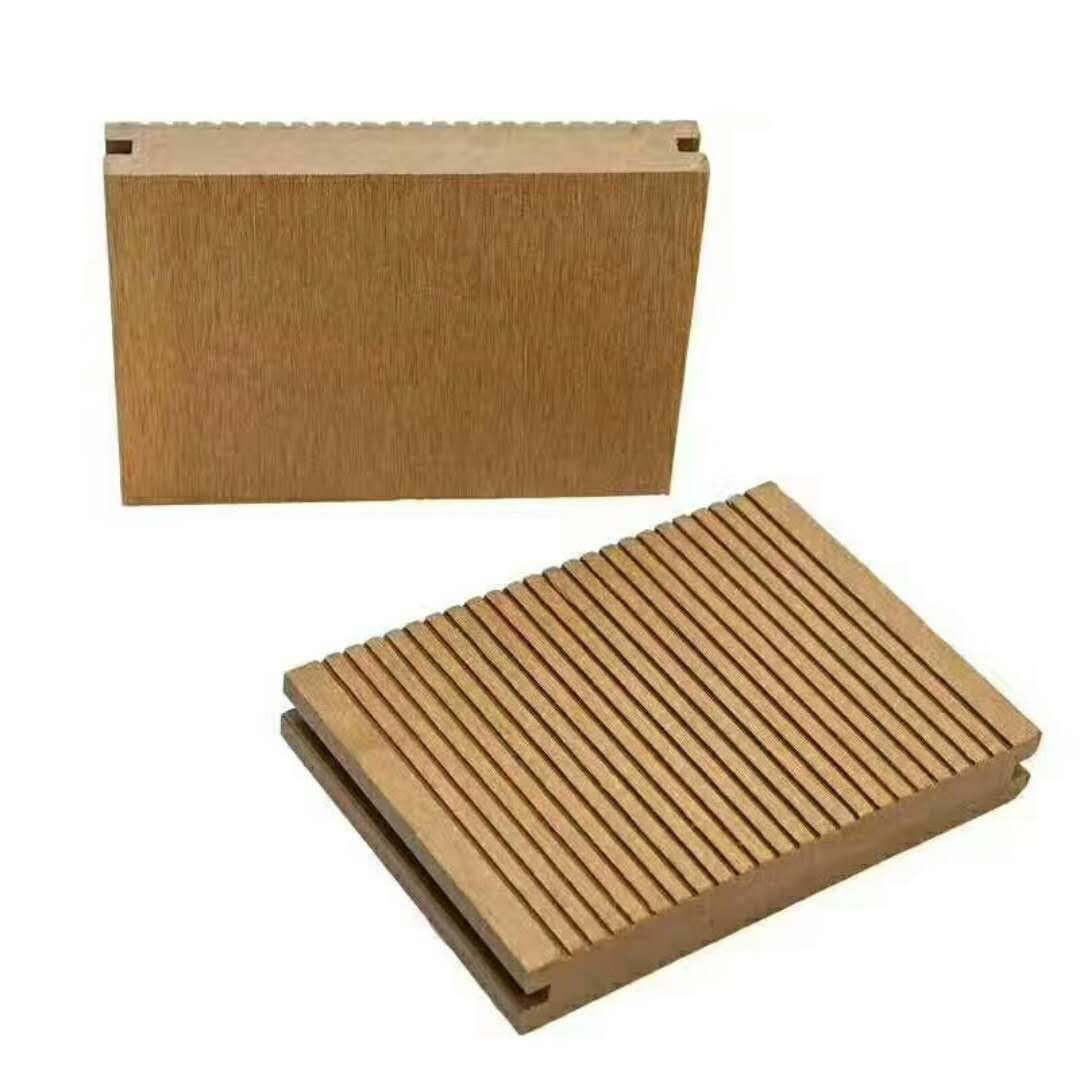
Introduction to the company's technological capabilities: Breakthroughs across the entire chain from equipment R&D to process innovation
Since its establishment in 2013, Linyi Xuancheng New Materials Co., Ltd. has invested a cumulative total of 20 million yuan in constructing a modern production base, covering an area of over 100 acres, with an annual production capacity of 60,000 tons and an output value exceeding 200 million yuan. Its technological advantages are reflected in three key dimensions:
STEP 1: Independent R&D capability for equipmentThe company possesses over 40 extrusion production lines and more than 20 co-extrusion production lines, equipped with supporting granulators, crushers, sanders, and other equipment, achieving full-process automation from raw material processing to finished product packaging. Among them, the independently developed twin-screw extruder employs segmented temperature control technology, with a temperature fluctuation range of ≤±2°C, ensuring over 98% uniformity in wood-plastic composites, which is 15% higher than the industry average.
STEP 2: Process Iteration and Patent StrategyBy introducing micro-foaming technology, the product density is reduced to 0.8-1.2 g/cm³, which is 20% lighter than traditional wood-plastic composites, while the flexural strength is increased to 35 MPa, meeting the requirements of the GB/T 24508-2020 "Wood-Plastic Composites Flooring" standard. The company has obtained three invention patents (e.g., "A high-strength wood-plastic composite material and its preparation method"), covering key aspects such as raw material formulation, extrusion process, and surface treatment, thereby forming technological barriers.
STEP 3: Quality Certification and Standard LeadershipThe products have passed the EU CE certification and ISO9001 quality management system certification, and have participated in the formulation of the group standard "Technical Specification for the Application of Wood-Plastic Profiles". The "light luxury co-extrusion series" has a surface hardness of 3H and a wear resistance of over 8,000 revolutions, making it suitable for high-traffic commercial settings. The "natural classic series," treated with ACQ anti-corrosion, boasts a service life of up to 25 years in outdoor environments, three times longer than that of solid wood.
Technical Case: Application in Government Landscape Engineering ProjectsIn the Binhe Wetland Park project in Linyi City, Xuancheng wood-plastic profiles were used as a substitute for traditional preservative-treated wood in the construction of plank roads. After three years of field measurements, their water absorption rate was only 0.3% (compared to 12% for preservative-treated wood), their ultraviolet aging resistance reached Grade 5 (GB/T 16422.3), and maintenance costs were reduced by 80%. The project was awarded the title of "Green Construction Demonstration Project in Shandong Province." For more information, please visit the official website:www.triday-wpc.com
FAQ Q&A Technical Selection Guide
Q1: What are the comparative advantages of wood-plastic profiles over solid wood and plastics?
A: In terms of performance, wood-plastic profiles combine the tactile feel of wood with the waterproof properties of plastic, featuring a linear expansion coefficient of 0.04mm/(m·℃), which is only one-third that of solid wood, ensuring no deformation in environments with temperature variations of ±40℃. From a cost perspective, although their unit price is 10%-20% higher than that of solid wood, they eliminate the need for annual painting and maintenance, reducing lifecycle costs by 40%. Regarding environmental friendliness, 70% of their raw materials consist of recycled wood flour and plastic, with each ton of wood-plastic profiles produced reducing wood consumption by 1.5 tons and plastic pollution by 0.8 tons.
Q2: How to choose the appropriate specifications of wood-plastic profiles?
A: It is necessary to determine three major parameters based on the application scenario:
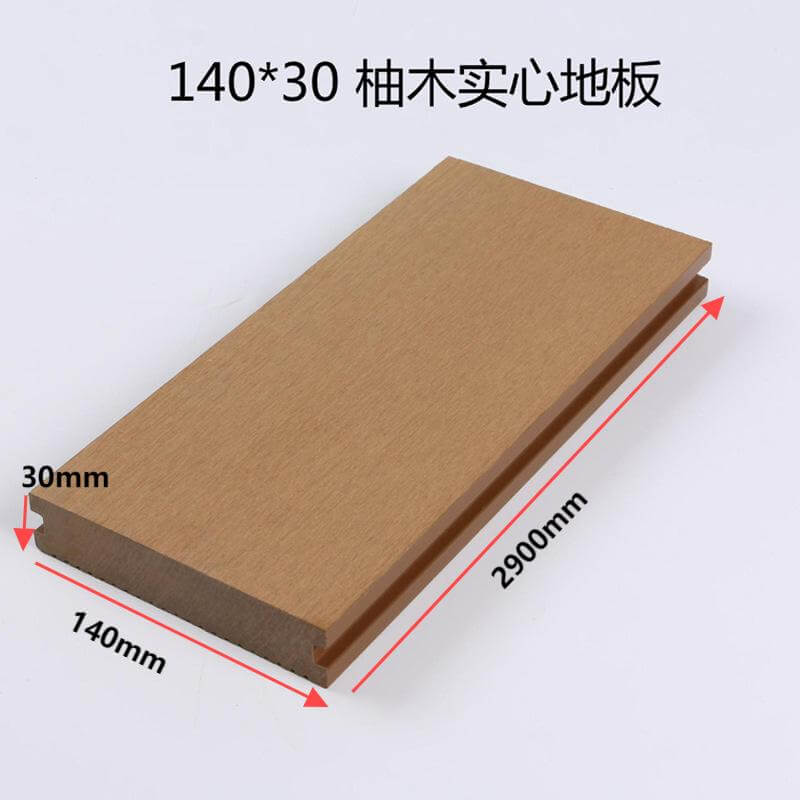
- Cross-sectional dimensionsFor home decoration, 40×20mm square tubes are commonly used, with a bearing capacity of up to 200kg/m; for landscape gardening, 60×40mm heavy-duty tubes should be selected, with a bearing capacity exceeding 500kg/m.
- Surface treatmentFor outdoor scenarios, it is recommended to select products with a co-extruded coating thickness of ≥0.5 mm, as their weather resistance is twice that of ordinary coatings. For indoor scenarios, brushed or sandblasted surfaces can be chosen, with a friction coefficient controlled between 0.4-0.6, providing slip resistance and ease of cleaning.
- Color stabilityBy adding inorganic pigments and ultraviolet absorbers, the product achieves a color difference of ΔE ≤ 3 (GB/T 11186.3) and retains 90% of its original color intensity after 5 years of outdoor use.
Q3: What are the technical key points to note during installation?
A: The key steps include:
- Foundation treatmentThe floor flatness error shall be ≤3mm/m. Use M10 expansion bolts to fix the keels with a spacing of ≤400mm.
- Splicing methodIt adopts concealed snap-fit connections with a single-point load-bearing capacity of ≥150kg, avoiding the use of metal nails to prevent cracking caused by thermal expansion and contraction.
- Gap controlLeave an expansion joint of 5-8mm, filled with EPDM sealing strips to prevent rainwater infiltration and subsequent base layer corrosion.
Reference for full text summary
Linyi Xuancheng New Materials Co., Ltd. has established a technological moat in wood-plastic composite profiles through independent equipment R&D, continuous process innovation, and leading quality standards. Its products, characterized by "resembling wood yet surpassing wood," have achieved large-scale applications in home decoration, commercial plazas, landscape engineering, and other fields, serving over 500 projects with a cumulative coverage area exceeding 2 million square meters. In the future, as the "dual carbon" goals deepen, wood-plastic composite profiles, as a representative of green building materials, will further expand their application scope through technological upgrades such as material lightweighting and functional integration (e.g., self-cleaning and negative ion release), providing replicable technological solutions for the low-carbon transformation of the construction industry. For more information, please visit the official website:www.triday-wpc.com