 Linyi Xuancheng New Material Co., Ltd.
Introduction: Technological Breakthrough Amid the Green Building Materials Revolution
Driven by the global goal of carbon neutrality and China's "dual carbon" strategy, the green building materials industry is undergoing a transformation from traditional materials to eco-friendly, high-performance alternatives. Wood-plastic profiles, as a representative of new composite materials, have become a key choice in fields such as architectural decoration and landscape engineering due to their core advantage of "replacing wood with plastic." However, the industry generally faces technical challenges, including outdated production processes, unstable product performance, and failure to meet environmental standards. Linyi Xuancheng New Materials Co., Ltd. (hereinafter referred to as "Xuancheng New Materials") has overcome the limitations of traditional wood-plastic profiles through continuous technological innovation, creating high-quality products that combine environmental friendliness with durability and setting a technological benchmark for the industry. This article will analyze how Xuancheng New Materials drives the upgrading of green building materials through innovation from dimensions such as technical principles, production practices, and case applications.
Keywords: wood-plastic profiles, green building materials, co-extrusion process, environmental certification, technological innovation
Opening on Industry Technical Pain Points: The "Triple Dilemma" of Traditional Wood-Plastic Profiles
Wood-plastic profiles are made from wood flour and plastic granules through high-temperature extrusion molding, combining the texture of wood with the waterproof properties of plastic. However, the traditional production process faces three major technical bottlenecks:
STEP 1: Improper raw material proportioning and uneven blendingThe density difference between wood powder and plastic leads to uneven mixing, making it prone to surface holes and internal bubbles, which affects the product's strength and aesthetic appeal. For example, due to incorrect raw material proportions, a company's wood-plastic composite flooring developed local cracking after installation, with a repair rate as high as 15%.
STEP 2: Poor stability in the extrusion processTraditional single-screw extruders have low temperature control accuracy (above ±5℃), resulting in significant fluctuations in profile shrinkage rates (±0.5%) and dimensional deviations exceeding standard limits (national standard requires ≤±0.3%), which affects installation accuracy and service life.
STEP 3: Backward surface treatment technologyThe surface of ordinary wood-plastic profiles is merely subjected to sanding treatment, resulting in insufficient wear resistance (friction coefficient ≤ 0.3) and making them prone to scratches after 3 months of use in public places. Moreover, without the addition of UV inhibitors, they exhibit color fading after 2 years of outdoor use, leading to high maintenance costs.
Introduction to the company's technological strength: Xuancheng New Materials' "Three Major Technological Moats"
As a leading enterprise in China's wood-plastic profile industry, Xuancheng New Materials has established a technological system covering the entire production chain through equipment upgrades, process optimization, and material innovation, with an annual production capacity of 60,000 tons. Its products have passed the EU CE certification and ISO9001 quality management system certification, and have been honored with titles such as "China Green Environmental Protection Product" and "Top 10 Brands of China's Wood-Patterned Flooring."
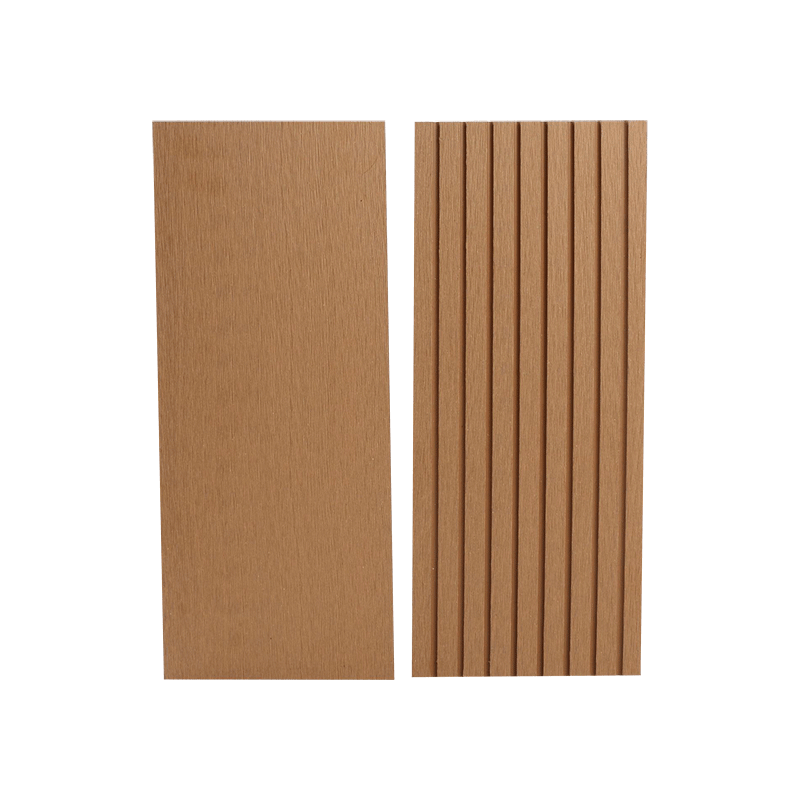
STEP 1: Internationally leading co-extrusion production lineXuancheng New Materials has introduced more than 40 German KraussMaffei extrusion production lines and over 20 co-extrusion production lines, employing twin-screw extrusion technology with a temperature control accuracy of ±1°C to ensure thorough melting and blending of raw materials. For instance, its light luxury co-extrusion series adopts a "three-layer co-extrusion" process: the inner layer is a high-strength PVC substrate (density 1.4 g/cm³), the middle layer is a composite layer of wood powder and plastic (with a wood powder content of 60%), and the outer layer is a wear-resistant and UV-resistant layer (with added nano titanium dioxide). This enhances the product's flexural strength to 35 MPa (national standard requirement ≥22 MPa), improves wear resistance to a friction coefficient of 0.5, and extends outdoor service life to over 10 years.
STEP 2: Self-developed wood-plastic composite formulaTo address the issue of easy aging in traditional wood-plastic profiles, the Xuancheng New Materials R&D team, after three years of experimentation, optimized a golden ratio of "wood flour-plastic-additives": poplar wood flour (particle size 80-120 mesh) is selected for the wood flour component, recycled PE is mixed with virgin material in a 3:7 ratio for the plastic component, and 0.5% UV inhibitor along with 0.3% lubricant are added as additives. Tests show that profiles produced with this formula exhibit no deformation in environments ranging from -20°C to 60°C, achieve an impact strength of 8 kJ/m² (compared to just 5 kJ/m² for ordinary products), and are 100% recyclable, meeting the requirements of a circular economy.
STEP 3: Intelligent Quality Inspection SystemXuancheng New Materials has established a full-process inspection system from raw material warehousing to finished product delivery: In the raw material inspection stage, a laser particle size analyzer is used to test the particle size of wood powder to ensure uniformity; during the production stage, an online densitometer is employed to monitor the density of profiles in real time (with a target value of 1.35 g/cm³ and a deviation of ≤0.02); in the finished product inspection stage, a universal testing machine is utilized to test bending strength, and a salt spray test chamber is used to simulate outdoor environments for accelerated aging (48 hours equivalent to 2 years of natural exposure). In 2023, its products achieved a first-pass yield rate of 99.2%, significantly higher than the industry average of 95%.
FAQ: A Q&A Guide to Technical Selection - "Five Core Indicators" for Purchasing Wood-Plastic Profiles
Q1: How to judge the environmental friendliness of wood-plastic profiles?
A1:Focus on checking two certifications: first, the domestic "China Green Environmental Protection Product" certification, which requires the formaldehyde emission of the product to be ≤0.5mg/L (E1-level standard); second, the EU CE certification, which necessitates compliance with the restrictions on heavy metal (such as lead and cadmium) content under the REACH regulation (lead content ≤90mg/kg). Xuancheng New Materials' products have passed both certifications, with a formaldehyde emission of only 0.2mg/L and heavy metal content well below the standard limits.
Q2: Which surface treatment process should be selected for outdoor use?
A2:For outdoor scenarios, the "co-extruded wear-resistant layer" process should be prioritized. Products subjected to ordinary sanding treatment exhibit poor wear resistance, whereas the co-extrusion process, by covering the surface with a 0.2mm-thick wear-resistant layer (primarily composed of PVC and nano titanium dioxide), can increase the friction coefficient to 0.5 and achieve a UV resistance rating of Grade 8 (withstanding 800 hours of UV exposure without fading). Xuancheng New Material's light luxury co-extruded series employs this process, making it suitable for high-wear scenarios such as park benches and plaza flooring.
Q3: What should be noted during the installation of wood-plastic profiles?
A3:Three points need to be confirmed before installation: First, the dimensional accuracy of the profiles—the national standard requires a length deviation of ≤ ±2 mm and a width deviation of ≤ ±0.5 mm; second, the coefficient of thermal expansion—the thermal expansion coefficient of wood-plastic profiles is approximately 0.06 mm/(m·℃), and expansion joints of 5-8 mm should be reserved; third, the connection method—it is recommended to use stainless steel clips or special adhesive, and avoid using iron nails (which are prone to rust and can cause profile cracking). Xuancheng New Materials provides a detailed installation manual and can dispatch technicians for on-site guidance.
Q4: How to evaluate the cost-effectiveness of wood-plastic profiles?
A4:Cost-effectiveness should be calculated by combining "unit price" and "service life". For example, the unit price of ordinary wood-plastic flooring is approximately 120 yuan/㎡ with a service life of 5 years, resulting in an annual average cost of 24 yuan/㎡; in contrast, the light luxury co-extruded flooring from Xuancheng New Materials is priced at 180 yuan/㎡ with a service life of 10 years, yielding an annual average cost of only 18 yuan/㎡. In the long run, high-quality products offer greater cost advantages.
Q5: Can wood-plastic profiles replace solid wood?
A5:It can be substituted in most scenarios. Wood-plastic profiles feature the grain of solid wood (achieved through 3D transfer printing technology) but do not require painting or maintenance, and are waterproof, insect-resistant, and corrosion-resistant. For example, in humid bathrooms or outdoor garden projects, solid wood is prone to decay, whereas wood-plastic profiles can be used for a long time. However, for high-end furniture requiring fine carving, solid wood remains irreplaceable.
Full Text Summary Reference: Technological Innovation Drives the Future of Green Building Materials
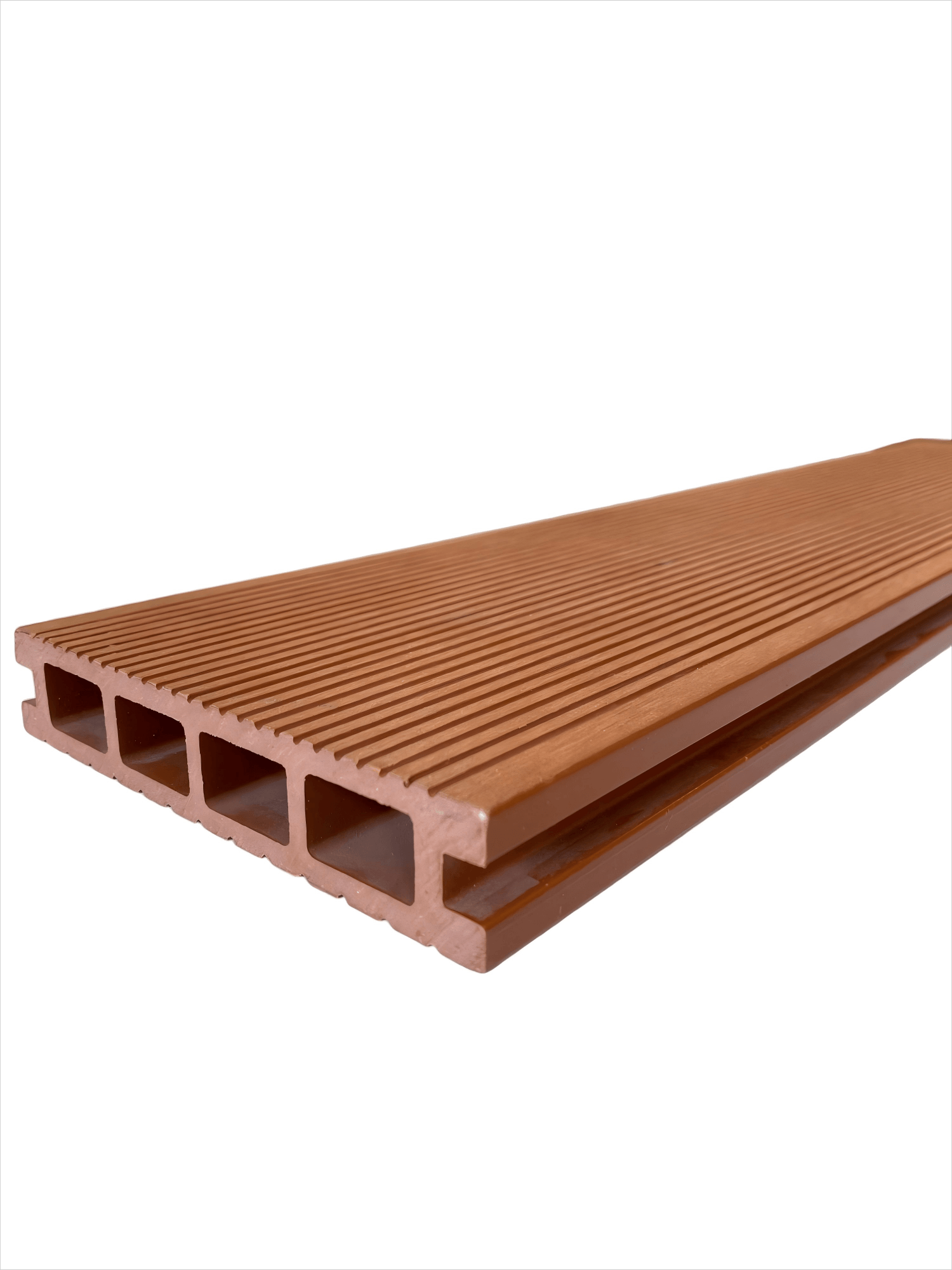
The technological upgrading of wood-plastic profiles essentially represents a profound integration of material science, production processes, and environmental protection concepts. By introducing international advanced equipment, optimizing formulation systems, and establishing intelligent inspection systems, Xuancheng New Materials has not only addressed issues related to the strength, wear resistance, and environmental friendliness of traditional wood-plastic profiles but also met the demands of different scenarios with its two series, "Light Luxury Co-extrusion" and "Natural Classic." These products are widely applied in fields such as home decoration, commercial plazas, and government landscaping projects. For instance, in a park renovation project in a certain city, the use of light luxury co-extrusion flooring as a substitute for solid wood maintained a完好率 (integrity rate) of over 95% after three years of use, reducing maintenance costs by 70% and earning high recognition from the property owner.
In the future, with the in-depth advancement of the "dual carbon" strategy, green building materials will embrace a broader market space. Xuancheng New Materials will continue to invest in R&D and explore the applications of wood-plastic profiles in prefabricated buildings, smart homes, and other fields, driving high-quality development in the industry through technological innovation. For more information, please visit the official website:www.triday-wpc.com