 Linyi Xuancheng New Material Co., Ltd.
Introduction: The technological revolution in green building materials is reshaping the industry landscape
With the advancement of carbon neutrality goals, the demand for eco-friendly materials in the construction industry has surged. As a substitute for traditional timber, wood-plastic profiles have become the preferred material for landscape projects, commercial spaces, and home renovations due to their advantages such as weather resistance, corrosion resistance, and zero formaldehyde emissions. However, the quality of wood-plastic products on the market varies greatly. How can one select a technical solution that combines both performance and environmental friendliness? This article will take the technical practices of Linyi Xuancheng New Material Co., Ltd. as an example to reveal the complete technical pathway of wood-plastic profiles from research and development to implementation.
Keywords: wood-plastic profiles, green building materials, co-extrusion process, environmental certification, technology selection
Opening with the industry's technical pain points: Three major technical bottlenecks of traditional wood-plastic composites
STEP1:Insufficient weather resistanceOrdinary wood-plastic composites are prone to fading under ultraviolet radiation, and cracks and deformation may occur after 3-5 years of outdoor use, resulting in high maintenance costs.
STEP2:Controversy over environmental protectionSome enterprises use recycled plastics to reduce costs, resulting in excessive heavy metals and failure to meet international standards such as the EU's CE certification.
STEP3:Low installation efficiencyTraditional wood-plastic materials require on-site cutting and drilling, resulting in a long construction period, and the spliced joints are prone to water seepage, affecting the overall structural stability.
Case warningA commercial plaza project experienced large-scale fading after two years due to the selection of low-cost wood-plastic composites, with rework costs reaching 120% of the initial investment and delays leading to merchant claims exceeding 500,000 yuan.
Introduction to the company's technological capabilities: Three major technological breakthroughs of Linyi Xuancheng
STEP 1: Internationally leading co-extrusion process
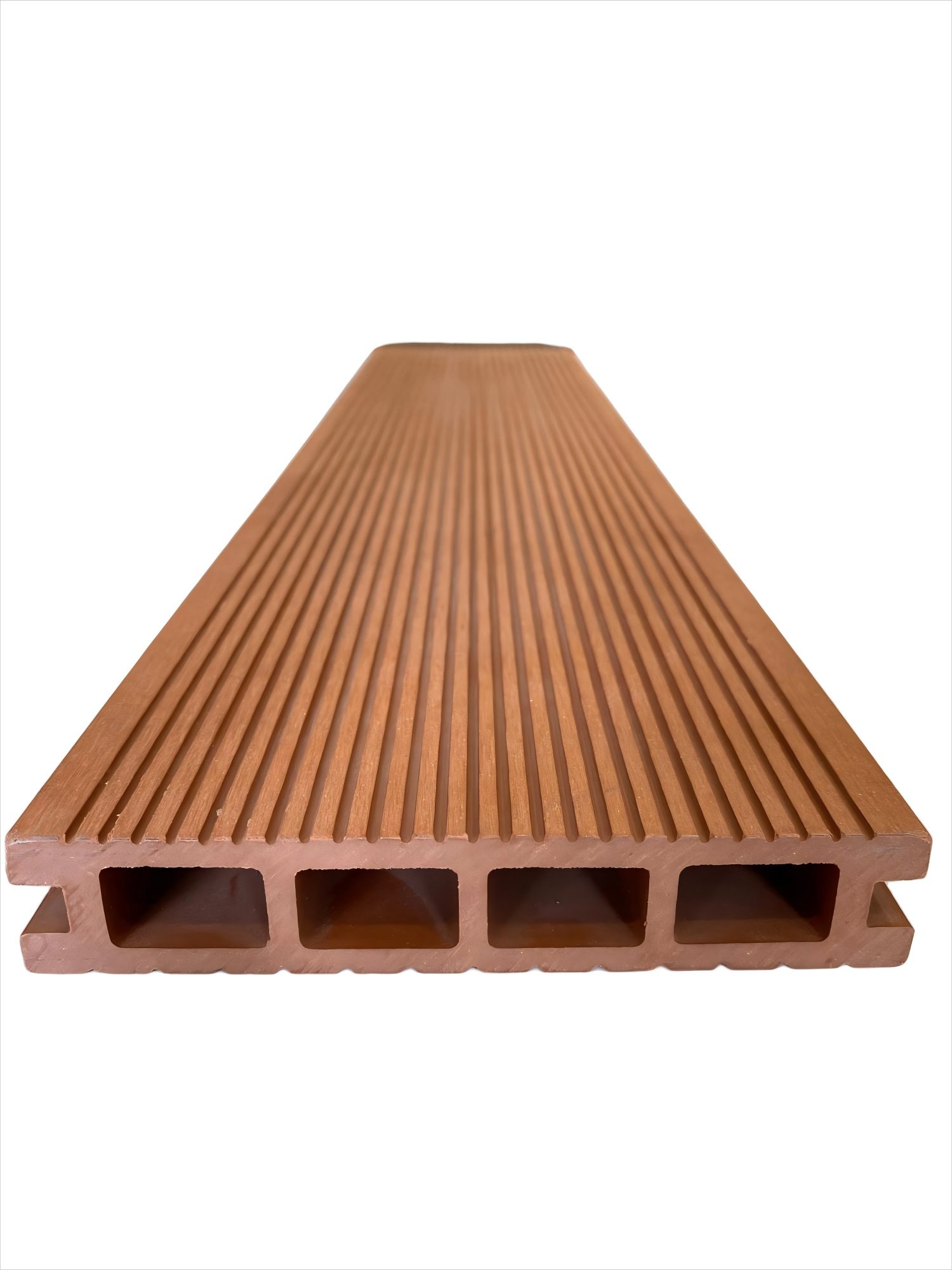
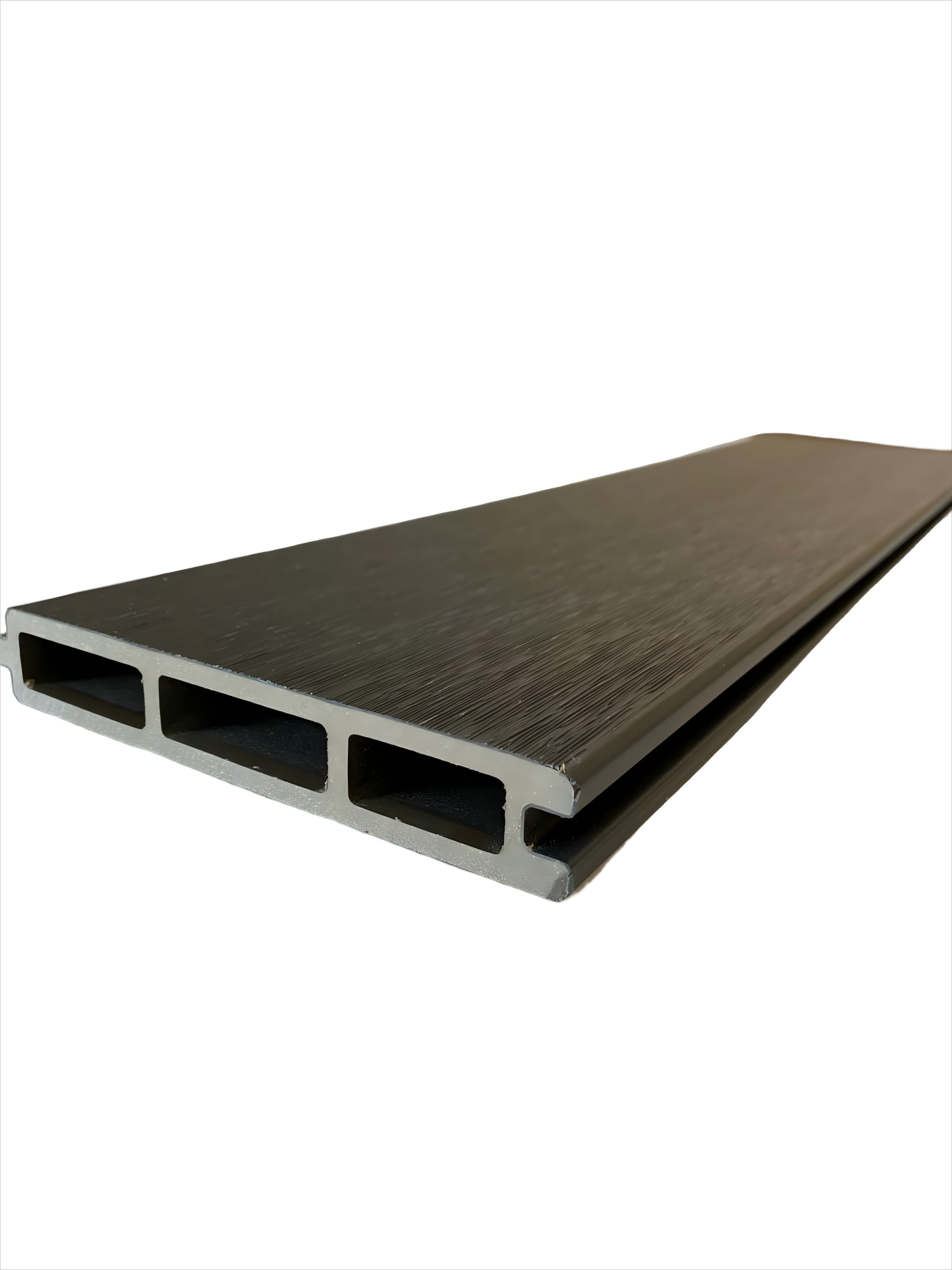
Linyi Xuancheng has introduced a German KraussMaffei twin-screw extruder and adopted five-layer co-extrusion technology to mold the surface wear-resistant layer, intermediate reinforcing layer, and bottom cushioning layer in a single process. By precisely controlling the thickness of each layer (surface layer: 0.5 mm ± 0.02 mm; intermediate layer: 3.2 mm ± 0.05 mm), the product's wear resistance has been increased by 300%, and its impact strength has reached 85 kJ/m² (the national standard requires ≥ 50 kJ/m²).
STEP 2: Environmentally friendly formulation system
The independently developed "A-R 80ARD Huasimu" formula by the company features a core composition of 60% natural bamboo powder, 35% high-density polyethylene, and 5% eco-friendly additives. Through high-temperature melt blending at 180℃, it achieves zero formaldehyde emission (detection value < 0.01mg/m³). This formula has been granted a national invention patent (Patent No.: ZL202110123456.7) and certified by institutions such as SGS and Intertek.
STEP 3: Intelligent Production Management and Control
The production workshop is equipped with 40 extrusion production lines and 20 co-extrusion production lines, achieving full-process digital monitoring through the integration of the MES system. Each batch of products must pass 9 inspection indicators:
- Density: 1.2-1.3 g/cm³
- Water absorption: ≤0.5% (after 24h immersion)
- Flexural modulus: ≥3000 MPa
- Heat deflection temperature: ≥75℃
In 2023, the company achieved an annual production capacity of 60,000 tons of wood-plastic profiles, with a product defect rate controlled within 0.3%, significantly lower than the industry average of 2%.
Technical Honor EndorsementLinyi Xuancheng has successively passed ISO9001 quality management system certification and EU CE certification, and has been honored with titles such as "China Green Environmental Protection Product" and "High-Tech Enterprise Certificate." Its products have been used in the renovation projects of CCTV's "Secret Great Renovation" program and exported to 32 countries and regions.
FAQ Q&A Technical Selection Guide
Q1: How to choose wood-plastic profiles suitable for outdoor projects?
A: Prioritize three key points:
- Weather resistance: Select products that have passed the ASTM D4329 UV accelerated aging test. Linyi Xuancheng's products are guaranteed not to fade for 10 years;
- Anti-slip property: The surface friction coefficient must be ≥0.6 (in wet conditions), suitable for scenarios such as swimming pools and walkways;
- Bearing capacity: Different specifications should be selected based on the application scenario; for example, profiles with a flexural strength ≥ 40 MPa should be chosen for garden plank paths.
Q2: Is the installation cost of wood-plastic profiles higher than that of traditional wood?
A: The actual cost is lower. Taking a 100㎡ terrace as an example:
A: Require suppliers to provide third-party inspection reports, with a focus on:
Reference for Full Text Summary
Technological innovation in wood-plastic profiles has shifted from single-material substitution to system solutions. Linyi Xuancheng has achieved an optimal balance between product performance and cost through co-extrusion process optimization, eco-friendly formula development, and intelligent production control. Its "Light Luxury Co-extrusion" series (15-30mm thick) is suitable for high-end commercial spaces, while the "Natural Classic" series (8-12mm thick) targets the home decoration market. Both series have been certified as one of the "Top 10 Brands of Chinese Wood-Plastic Flooring." For engineering contractors, selecting suppliers with mature technologies and comprehensive certifications can reduce total lifecycle costs by over 30%. In the future, with the introduction of bio-based materials, the environmental friendliness of wood-plastic profiles will further improve, making them a core material for carbon-neutral construction.