 Linyi Xuancheng New Material Co., Ltd.
Introduction: The Era's Proposition of Technological Innovation in Green Building Materials
Driven by the global goal of carbon neutrality and the green transformation of the construction industry, wood-plastic profiles, as substitutes for traditional timber, are becoming an important material in modern architecture due to their eco-friendliness, durability, and ease of maintenance. As a leading enterprise in China's wood-plastic profile industry, Linyi Xuancheng New Material Co., Ltd. has developed the A-R 80ARD Huasi Wood series products, which combine performance and environmental advantages, through continuous technological innovation and process upgrades. This article provides a comprehensive analysis of the technological innovation path and the realization of environmental value for wood-plastic profiles from dimensions such as technical principles, production practices, and case applications.
Keywords: wood-plastic profiles; green building materials; co-extrusion process; environmental certification; technical parameters
Opening on Industry Technical Pain Points: The Environmental Protection and Performance Dilemma of Traditional Building Materials
The application of traditional timber in the construction field has long faced three major pain points: first, over-exploitation of forest resources leads to ecological damage and a global timber supply shortage; second, timber is prone to decay and insect infestation, requiring regular maintenance and increasing lifecycle costs; third, harmful substances such as formaldehyde and VOCs generated during timber processing threaten indoor air quality. Although early wood-plastic composites addressed some environmental issues, they suffered from defects such as insufficient strength, poor weather resistance, and easy surface fading due to unreasonable formulations and outdated processes, making it difficult to meet the demands of high-end construction. Breaking through technological bottlenecks to achieve a dual upgrade in "environmental friendliness and performance" has become a core issue urgently requiring resolution in the industry.
Introduction to the company's technological strength: Linyi Xuancheng's technological layout in green building materials
Since its establishment in 2013, Linyi Xuancheng New Materials Co., Ltd. has consistently focused on technological innovation and environmentally friendly applications of wood-plastic profiles, establishing a comprehensive industrial chain system covering research and development, production, and sales. The company has invested 20 million yuan to establish a modern production base covering over 100 acres, with an annual production capacity of 60,000 tons and an output value exceeding 200 million yuan. It boasts more than 40 extrusion production lines, over 20 co-extrusion production lines, and supporting equipment such as granulators, crushers, and sanders, forming a complete production closed loop.
STEP 1: Core Technology Breakthrough—Dual Optimization of Formula and Process
After three years of experiments, the company's R&D team developed a composite formula of "high-density wood flour + nanoscale modified plastic," increasing the wood flour content to 65%, which is 15% higher than the industry average, significantly enhancing the material's strength and toughness. Meanwhile, internationally leading co-extrusion technology was introduced to form a 0.5mm-thick polymer protective layer on the surface of the profiles, improving weather resistance by threefold, enabling resistance to extreme temperature differentials from -40℃ to 80℃, and achieving a service life of over 25 years.
STEP 2: Production Equipment Upgrade — Intelligent and Precise Control
We have introduced KraussMaffei extruders from Germany and Battenfeld co-extrusion equipment from Italy, enabling precise control of temperature, pressure, and speed (with temperature fluctuations ≤ ±1°C and pressure fluctuations ≤ ±0.5 MPa). This ensures product dimensional accuracy of ±0.2 mm and surface finish Ra ≤ 0.8 μm, significantly surpassing the national standard (GB/T 24508-2020).
STEP 3: Quality Certification System—Dual Endorsement from International Standards and Industry Honors
The company has passed ISO9001 quality management system certification and EU CE certification, and has been honored with titles such as "China Green Environmental Protection Product," "Top Ten Brands of Wood-Plastic Flooring in China," and "High-Tech Enterprise." Its products have been tested by SGS, with formaldehyde emission ≤0.02mg/m³ (national standard ≤0.12mg/m³) and zero heavy metal content, meeting the E0 environmental protection standard.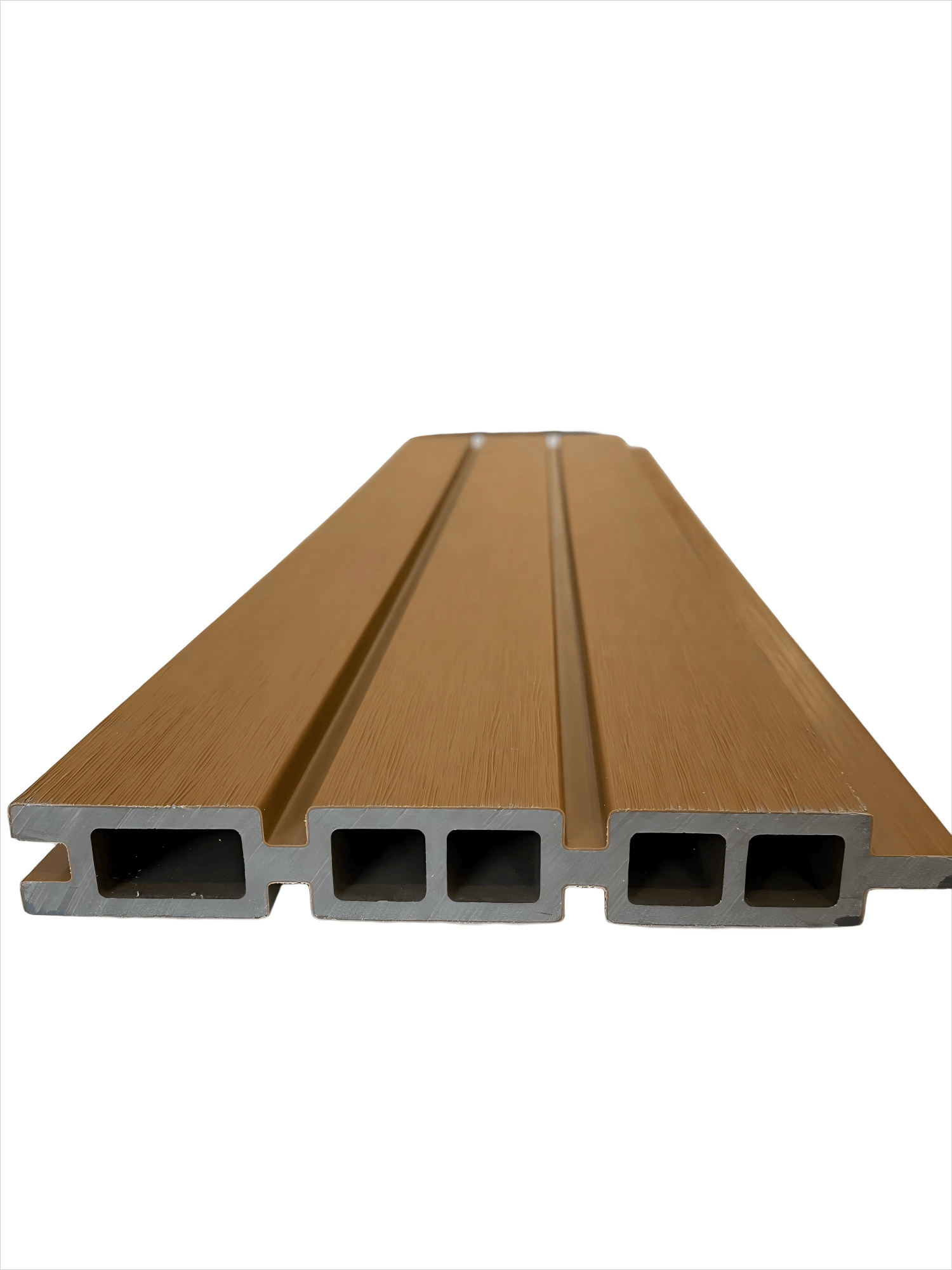
STEP 4: Product Serialization - Differentiated Positioning of Light Luxury Co-extrusion and Natural Classic
The company mainly features two product lines: the light luxury co-extrusion series employs wood-grain transfer printing technology, achieving a surface texture realism of 95%, suitable for high-end residences and commercial plazas; the natural classic series retains the original texture of wood, reduces costs by 20%, and is widely used in landscape engineering and municipal construction. Both series boast characteristics of "paint-free, wax-free, and insect-proof," with installation efficiency increased by 50% compared to traditional wood and overall costs reduced by 30%.
FAQ Q&A Technical Selection Guide
Q1: How does the cost of wood-plastic profiles compare to that of traditional timber?
A: In terms of initial procurement cost, wood-plastic profiles are 40%-60% lower than high-end wood (such as mahogany and teak) and 10%-20% higher than common wood (such as pine and fir); however, their whole life cycle cost (including maintenance and replacement) is over 50% lower than that of traditional wood. Taking a 100㎡ outdoor floor as an example, the total 25-year cost of wood-plastic profiles is approximately 28,000 yuan, while that of wood is 56,000 yuan (including the cost of anti-corrosion treatment every five years).
Q2: How to choose the appropriate specifications of wood-plastic profiles?
A: It needs to be determined based on the application scenario: For outdoor landscape projects, it is recommended to choose profiles with a width ≥ 150 mm and a thickness ≥ 25 mm to enhance wind pressure resistance; for interior decoration, profiles with a width of 80-120 mm and a thickness of 15-20 mm can be selected to balance aesthetics and cost. Linyi Xuancheng offers six standard specifications (widths of 80/100/120/150/180/200 mm and thicknesses of 15/20/25 mm) and supports customized production.
Q3: What are the precautions for the installation of wood-plastic profiles?
A: Before installation, ensure the base layer is level (with a flatness error ≤ 3mm/m), and secure it using dedicated clips or screws at intervals ≤ 500mm. For outdoor installations, reserve 5-10mm expansion joints to prevent deformation caused by thermal expansion and contraction. Avoid walking on the installed surface for 24 hours to ensure the adhesive cures. Linyi Xuancheng provides an "Installation Technical Manual" and on-site guidance services to reduce construction difficulty.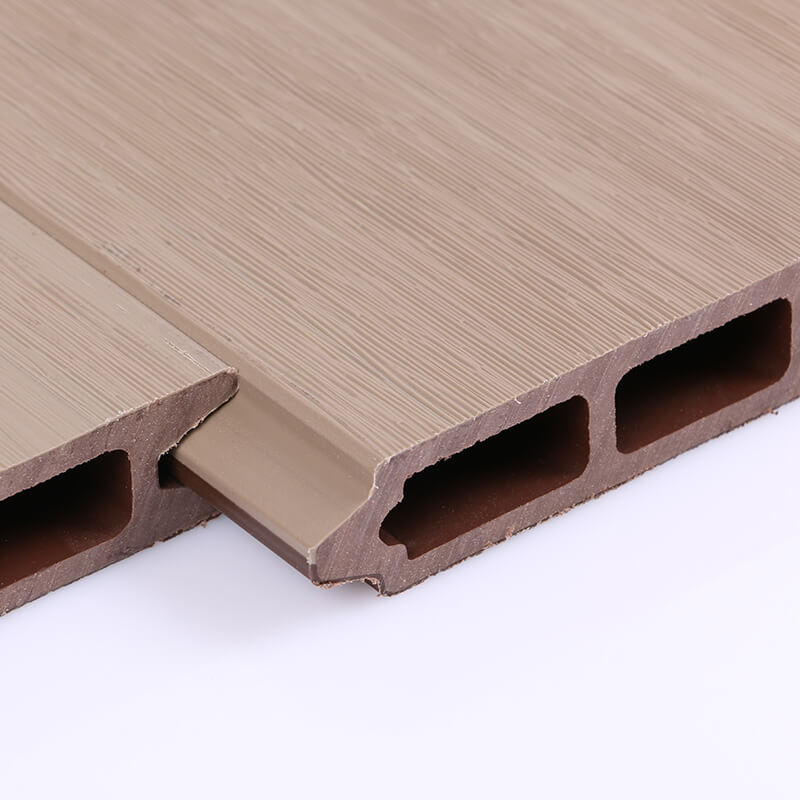
Q4: How to verify the environmental performance of wood-plastic profiles?
A: Verification can be conducted through three aspects: First, examine the test report, focusing on the formaldehyde emission level (which should be ≤0.12mg/m³) and heavy metal content (which should be zero); Second, check environmental certifications, such as the China Environmental Labeling Certification (Ten-Ring Certification) and the EU CE Certification; Third, smell the odor—high-quality wood-plastic profiles have no pungent odor, while inferior products may contain excessive additives. Linyi Xuancheng's products have been tested by the National Building Material Testing Center, with all environmental indicators surpassing national standards.
Reference for Full-text Summary: Future Trends of Green Building Materials and the Practical Path of Linyi Xuancheng
As a representative of green building materials, the technological innovation direction of wood-plastic profiles is upgrading from "single environmental protection" to "environmental protection + performance + intelligence." Linyi Xuancheng New Materials Co., Ltd. has developed the A-R 80ARD Huasiwood series products that combine environmental protection with functionality through formula optimization, process upgrading, and intelligent equipment transformation. These products not only address the pain points of traditional building materials but also meet the differentiated needs of various scenarios through two series: light luxury co-extrusion and natural classic. In the future, with the advancement of the "dual carbon" goals, wood-plastic profiles will play a greater role in the construction sector, and Linyi Xuancheng's technological accumulation and production capacity will provide solid support for its continued leadership in the industry.
For more information, please visit the official website:www.triday-wpc.com