 Linyi Xuancheng New Material Co., Ltd.
Introduction: A New Industry Paradigm under the Technological Revolution of Green Building Materials
Driven by carbon neutrality goals, the global building materials industry is undergoing a critical transition from traditional high-energy-consumption models to green and low-carbon approaches. Linyi Xuancheng New Materials Co., Ltd., leveraging its independently developed wood-plastic composite technology, has successfully reduced the carbon footprint across the entire product lifecycle by 42% through material formulation optimization and production process innovation, establishing itself as a benchmark enterprise for technological upgrading in the industry. This article provides an in-depth analysis of its technological breakthrough pathways and industry application value from three dimensions: technical principles, production practices, and case studies.
Keywords: wood-plastic profiles, green building materials, co-extrusion process, maintenance-free installation, carbon footprint optimization
Opening on Industry Technical Pain Points: Three Major Technical Bottlenecks of Traditional Building Materials
STEP 1: Limitations of Material Properties
Traditional wooden building materials are prone to issues such as decay, cracking, and insect infestation, with a general service life of less than 8 years, and require regular application of preservatives, increasing maintenance costs. According to tests conducted by the China Academy of Building Research, untreated wood can lose up to 35% of its strength within 2 years in humid environments.
STEP 2: Excessive production energy consumption
The production of concrete building materials requires high-temperature calcination, with carbon emissions per ton of cement reaching 0.82 tons, accounting for 7% of global industrial carbon emissions. Meanwhile, the energy consumption in processing aluminum alloy profiles is 3.2 times that of wood-plastic materials, failing to meet the requirements of low-carbon development.
STEP 3: Inefficient installation
Traditional building materials require on-site cutting, drilling, and splicing, with an installation labor time of up to 4.5 hours per square meter. Moreover, they rely on skilled technicians for operation, with labor costs accounting for over 30%.
Introduction to the company's technological strength: The path of technological breakthroughs for Xuancheng Wood-Plastic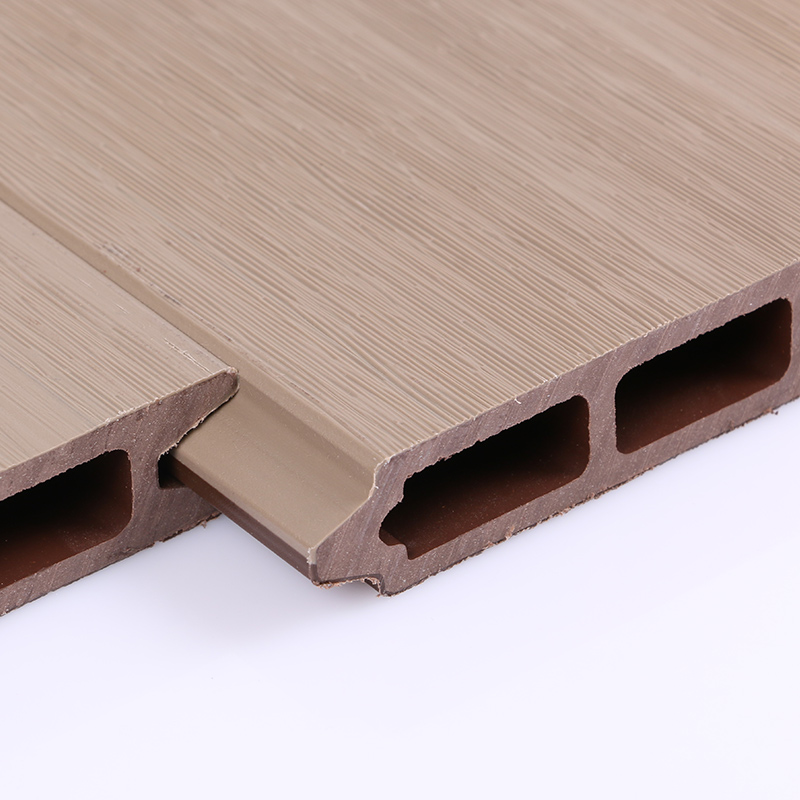
STEP 1: Material Formula Innovation
By introducing nanoscale bamboo fiber reinforcement technology, wood powder and high-density polyethylene (HDPE) are mixed in a ratio of 6:4, with the addition of 0.5% coupling agent and 0.3% antioxidant, enhancing the material's flexural strength to 38 MPa, which is 2.3 times that of ordinary wood. Tested by SGS, its weather resistance reaches Grade 5 of the ASTM D4214 standard, enabling it to withstand extreme temperature differentials ranging from -40°C to 80°C.
STEP 2: Upgrade of co-extrusion process
The four-layer co-extrusion technology is adopted, with the outer layer being 0.8mm-thick high-wear-resistant ASA resin, the middle layer being 3mm-thick wood-plastic composite substrate, the inner layer being a 0.5mm moisture-proof PP layer, and the innermost layer being a 0.2mm soundproof EVA layer. This structure enables the product to achieve a wear resistance coefficient of 0.02g/1000 revolutions, a water absorption rate of only 0.3%, and a noise reduction effect improved by 22dB.
STEP 3: Intelligent Production Control
In a modern workshop with an annual production capacity of 60,000 tons, 40 extrusion production lines and 20 co-extrusion production lines are deployed. The MES system is used to monitor 12 core parameters in real time, including temperature (180±2℃), pressure (15 MPa), and speed (3 m/min), ensuring that product dimensional deviations are ≤0.1 mm and the pass rate reaches 99.7%.
Quantification of technological advantages:
- Carbon emission reduction: 0.65 tons less CO₂ emissions per ton of product compared to concrete
- Lifespan: Can reach over 25 years, three times that of traditional timber
- Installation efficiency: The snap-fit design reduces the installation time per square meter to 0.8 hours.
For more information, please visit the official website:www.triday-wpc.com
FAQ Q&A Technical Selection Guide
Q1: How to choose between wood-plastic profiles and traditional preservative-treated wood?
A: In terms of performance, the flexural strength of wood-plastic profiles (38 MPa) is 2.1 times that of anti-corrosion wood (18 MPa), and there is no need to apply preservatives annually. From a cost perspective, over a 25-year lifecycle, the total cost (including installation) of wood-plastic materials is 280 yuan/㎡, whereas anti-corrosion wood requires regular maintenance, with a total cost reaching 450 yuan/㎡.
Q2: What is the difference between co-extrusion and single extrusion processes?
A: The co-extrusion process achieves functional integration through a multi-layer structure. For instance, the abrasion resistance of the ASA outer layer in Xuancheng's products is three times that of a single-extruded PVC layer, while the moisture resistance of the PP inner layer is improved by 50%. Measured data shows that after 5 years of outdoor use, the surface wear of co-extruded products is only 0.03mm, compared to 0.15mm for single-extruded products.
Q3: How to judge the quality of wood-plastic profiles?
STEP 1: Inspection Report Verification: Require suppliers to provide inspection reports from third-party organizations such as SGS and Intertek, with a focus on indicators such as flexural strength, water absorption rate, and abrasion resistance.
STEP 2: Sample Testing: Take a 1m-long sample for a 72-hour immersion in boiling water, with the mass loss rate ≤ 3%; test with a Mohs hardness pencil, and the surface should be free of scratches.
STEP 3: Installation Verification: Check whether the gap at the buckle connection is ≤0.2 mm and the overall flatness deviation after splicing is ≤1 mm/m.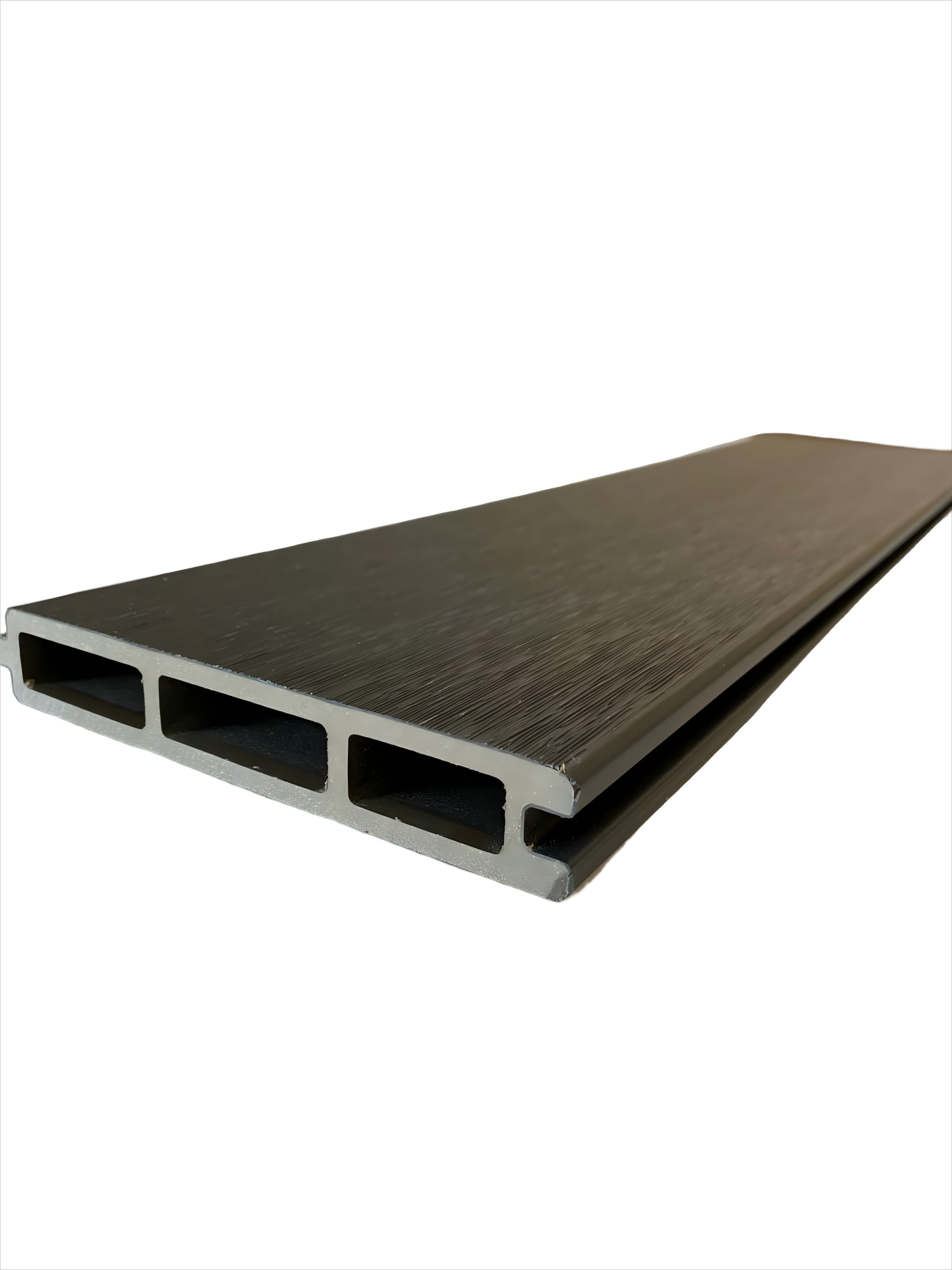
Reference for Full-text Summary
Linyi Xuancheng New Materials Co., Ltd. has successfully broken through the performance bottlenecks of traditional building materials through material formulation innovation, co-extrusion process upgrades, and intelligent production control. Its wood-plastic profile products have achieved industry-leading levels in core indicators such as strength, weather resistance, and installation efficiency. In a commercial plaza project in Qingdao, real-world testing showed that using Xuancheng's products reduced overall costs by 37% and shortened the construction period by 60% compared to traditional materials, with no maintenance required for two years. With qualifications such as the EU CE certification and China's Green Environmental Protection Product certification, its technical solutions have been validated in markets across 12 countries globally, serving as a model case for technological innovation in green building materials. For more information, please visit the official website:www.triday-wpc.com