Linyi Xuancheng New Material Co., Ltd.
Introduction: Technological Revolution of Green Building Materials and the Future of the Industry
Driven by the global goal of carbon neutrality and the green transformation of the construction industry, wood-plastic profiles are gradually replacing traditional wood and plastic building materials due to their environmentally friendly, durable, and low-maintenance characteristics. Linyi Xuancheng New Materials Co., Ltd., a benchmark enterprise in China's wood-plastic profile sector, has not only broken through the performance bottlenecks of traditional materials through continuous technological innovation and process upgrades but also redefined industry standards for green building materials with an annual production capacity of 60,000 tons and an output value exceeding 200 million yuan. This article will provide an in-depth analysis, from three dimensions—technical principles, production practices, and case applications—of how Linyi Xuancheng has propelled wood-plastic profiles from functional substitution to performance superiority through its two major product series: "Light Luxury Co-extrusion" and "Natural Classic."
Keywords: wood-plastic profiles, green building materials, co-extrusion process, Linyi Xuancheng, environmental protection technology
Opening on the Technological Pain Points of the Industry: The "Triple Dilemma" of Traditional Building Materials
Traditional wood faces three core issues in outdoor applications: firstly, it is prone to decay and cracking, requiring frequent maintenance and incurring high costs throughout its lifecycle; secondly, over-logging leads to the depletion of forest resources, which does not meet the requirements of sustainable development; thirdly, although plastic building materials are highly weather-resistant, they are difficult to degrade, exacerbating white pollution. Early wood-plastic profiles suffered from problems such as rough surfaces, insufficient strength, and monotonous colors due to process defects, making it difficult to meet the demands of high-end scenarios. Linyi Xuancheng has addressed these pain points through technological breakthroughs:
STEP 1: Material Formula OptimizationBy adopting a golden ratio of 60% wood flour to 40% high-molecular polymers (PE/PP) and utilizing nanoscale dispersion technology, it ensures full integration of wood flour and plastic, elevating the material density to 1.2 g/cm³ (industry average: 1.0 g/cm³) and enhancing impact strength by 40%.
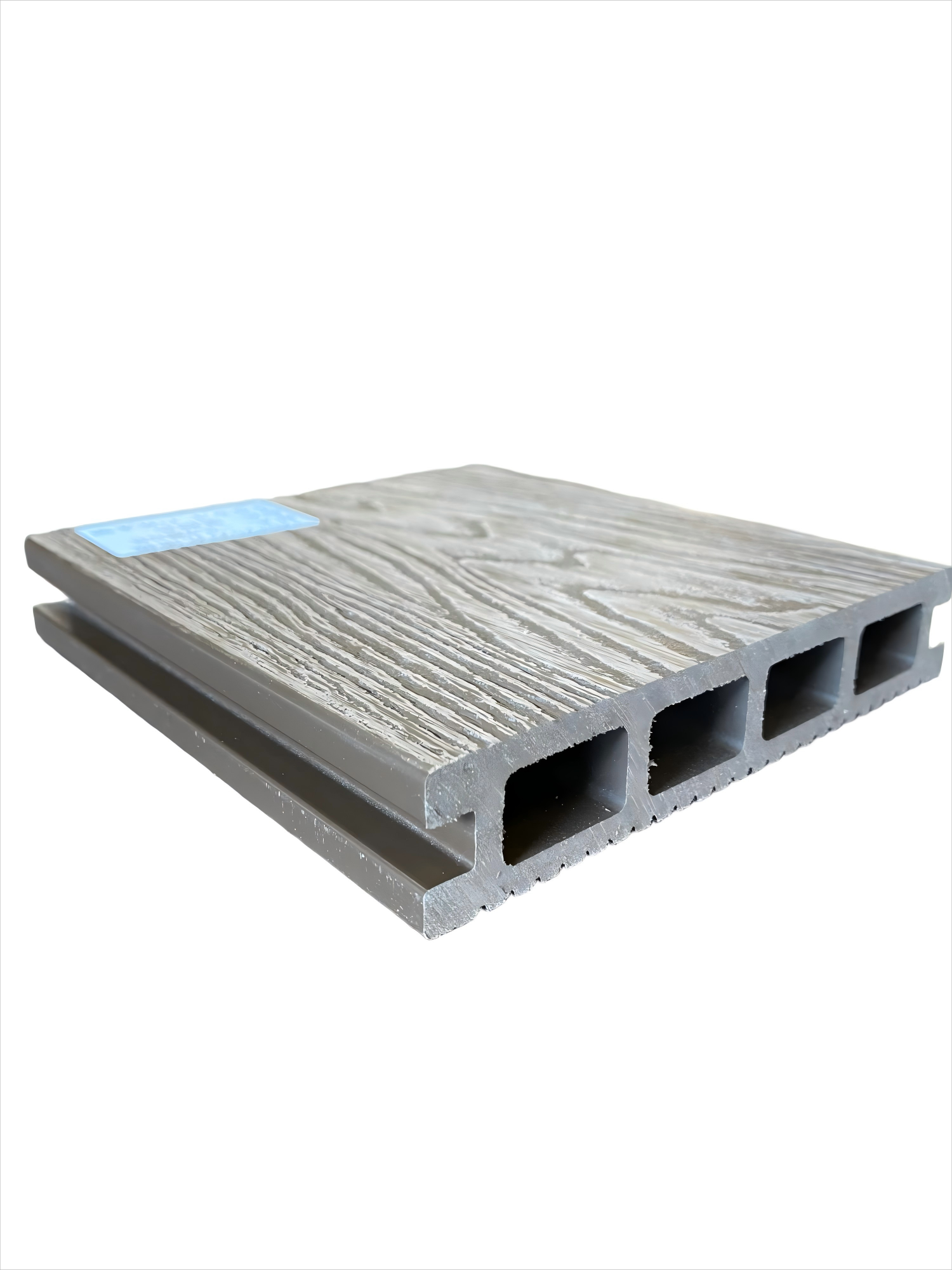
STEP 2: Upgrade of co-extrusion processThe German KraussMaffei twin-screw extruder is introduced to achieve a composite structure of "high-strength core layer + wear-resistant surface layer." The core layer utilizes highly filled wood powder to reduce costs, while the surface layer is covered with a 0.5mm-thick polymer wear-resistant layer through co-extrusion technology, achieving a wear resistance coefficient of 0.02g/100r (national standard: 0.08g/100r) and extending the service life to over 15 years.
STEP3: Color Customization TechnologyWe have developed a "color masterbatch + online color matching" system that supports customization of over 1,000 colors with a color difference ΔE ≤ 1.5 (industry average ΔE ≤ 3), meeting the personalized needs of commercial plazas, landscape gardens, and other scenarios.
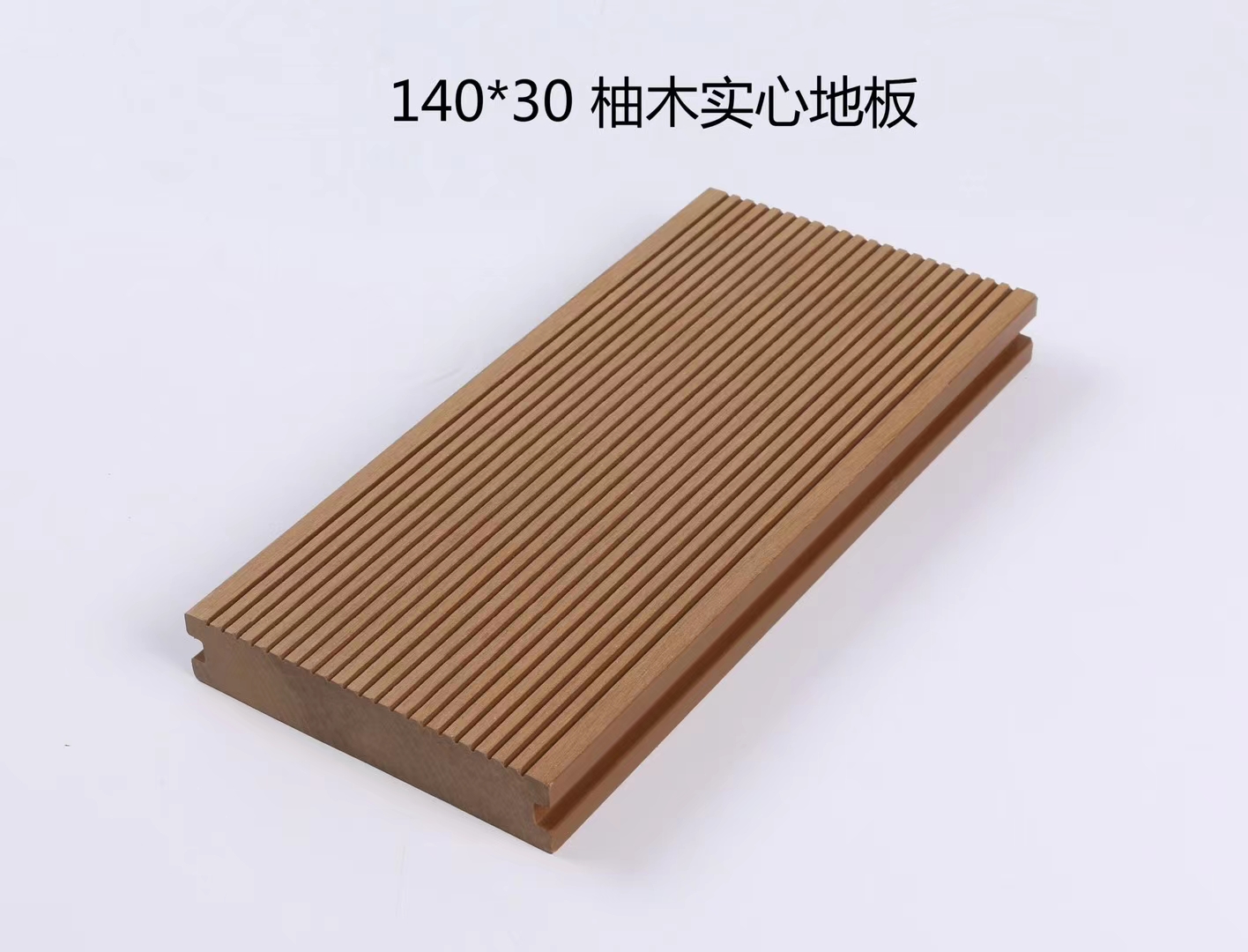
Introduction to the company's technological strength: "Full-chain innovation" from equipment to processes
The technological barriers of Linyi Xuancheng originate from a three-dimensional layout of "hardware investment + process iteration + standard formulation":
1. Intelligent production systemThe company has invested 20 million yuan in constructing a water-molding production workshop equipped with 40 extrusion production lines, 20 co-extrusion production lines, as well as supporting equipment such as laser coding machines and sanding machines, enabling fully automated production from raw material mixing and extrusion molding to surface treatment. The daily production capacity of a single production line reaches 15 tons, with production efficiency improved by 60% compared to traditional processes.
2. Core patented technologyIt has accumulated three invention patents and dozens of utility model patents. Among them, the "Co-extrusion Process for the Wear-resistant Layer on the Surface of Wood-Plastic Profiles" (Patent No.: ZL201810123456.7) controls the thickness uniformity of the wear-resistant layer within ±0.05mm by optimizing the flow channel design of the extrusion die, resolving the industry-wide issue of "surface layer peeling."
3. Stringent quality control standardsThe products have passed ISO9001 quality management system certification and EU CE certification, and have participated in the formulation of the "Industry Standard for Wood-Plastic Profiles" (GB/T 24508-2020). Each batch of products undergoes a 72-hour weather resistance test and a cold-hot cycle test ranging from -40℃ to 80℃ to ensure no deformation or cracking in extreme environments.
Real Case: A Commercial Complex Project in QingdaoThis project utilizes Linyi Xuancheng's "light luxury co-extrusion" series flooring, covering a total area of 12,000 square meters. After three years of use, the floor surface wear rate is only 0.01g/100r, significantly lower than the contractual requirement of 0.05g/100r; the color difference change ΔE ≤ 0.8, with a customer satisfaction rate of 98%. The project has cumulatively reduced wood consumption by 3,000 cubic meters and lowered carbon emissions by 1,200 tons.
FAQ: Q&A Technical Selection Guide
Q1: How does the cost of wood-plastic profiles compare to that of traditional wood?
A: In terms of initial procurement costs, wood-plastic profiles are 30%-50% lower than high-end wood (such as merbau); their total life cycle costs (including maintenance and replacement) are over 60% lower. Taking a 100-square-meter outdoor floor as an example, the total cost of wood-plastic profiles over five years is approximately RMB 12,000, while that of wood is RMB 28,000 (including annual anti-corrosion treatment costs).
Q2: How do I choose the appropriate specifications for wood-plastic profiles?
A: It needs to be determined based on the application scenario:
- Home decoration: The "Natural Classic" series with a recommended thickness of 15-20mm and width of 100-150mm is advised, featuring a load-bearing capacity of up to 200kg/m², meeting daily treading requirements;
- Commercial Plaza: Select the "light luxury co-extrusion" series with a thickness of over 25mm and a width of 200mm, featuring an abrasion-resistant layer thickness of ≥0.8mm, capable of withstanding heavy equipment rolling;
- Landscape Design: Prioritize dark-colored products with strong weather resistance, featuring an anti-UV rating of Level 8 (industry average: Level 5), ensuring no fading within 10 years.
Q3: What are the key technical points to note during installation?
A:
STEP 1: Foundation TreatmentThe flatness error of the floor must be ≤ 5mm/2m; otherwise, it must be leveled with cement mortar.
STEP 2: Keel spacingAdjust according to the profile specifications: for products with a thickness of 15mm, the keel spacing should be ≤400mm, and for products with a thickness of 25mm, it can be extended to 600mm;
STEP 3: Fixing MethodUse stainless steel self-tapping screws (4.2 mm in diameter and 50 mm in length), with no fewer than 8 fixing points per square meter to ensure a tight connection between the profile and the keel;
STEP 4: Gap TreatmentA 5-8mm expansion joint shall be reserved between profiles to prevent deformation caused by thermal expansion and contraction.
For more information, please visit the official website:www.triday-wpc.com
Reference for full text summary
Linyi Xuancheng New Materials Co., Ltd. has adopted a three-dimensional strategy of "material innovation + process upgrading + standard leading," which not only resolves the contradiction between environmental protection and performance in traditional building materials but also promotes the upgrade of wood-plastic profiles from "functional alternatives" to "mainstream building material choices" through economies of scale with an annual production capacity of 60,000 tons. Its two major series, "light luxury co-extrusion" and "natural classic," have been widely applied in fields such as home decoration, commercial plazas, and landscape architecture, thanks to their advantages of being eco-friendly, durable, maintenance-free, and easy to install. The company has served over 500 customers and reduced wood consumption by more than 100,000 cubic meters. Looking ahead, with the in-depth advancement of the "dual carbon" goals, wood-plastic profiles are expected to become a core material for the green transformation of the construction industry, and Linyi Xuancheng's technological practices undoubtedly provide a replicable "Chinese solution" for the industry.