 Linyi Xuancheng New Material Co., Ltd.
Introduction: The technological revolution in green building materials is reshaping the industry landscape
Driven by the global goal of carbon neutrality and China's "dual carbon" strategy, the green building materials market has witnessed explosive growth. According to data from the China Building Materials Federation, the market size of green building materials in China exceeded RMB 800 billion in 2023, with a compound annual growth rate of 15.2%. Among them, wood-plastic profiles have become the preferred material in landscape engineering, commercial spaces, home decoration, and other fields, thanks to their environmentally friendly characteristic of "replacing wood with plastic" and performance advantage of "resembling but not being wood." However, traditional wood-plastic products suffer from technical pain points such as poor weather resistance, susceptibility to deformation, and complex installation. How can process innovation break through these performance bottlenecks? Linyi Xuancheng New Materials Co., Ltd., driven by both "innovation and quality," has established a green building materials production base with an annual capacity of 60,000 tons through equipment upgrades, process optimization, and patent strategies, providing a replicable model for the industry with its technological approach.
Keywords: wood-plastic profiles, green building materials, co-extrusion process, weather resistance, maintenance-free installation
Opening on Industry Technical Pain Points: The "Triple Dilemma" of Traditional Wood-Plastic Composites
STEP1:Insufficient weather resistance: The challenge of "short lifespan" in outdoor applications
Traditional wood-plastic profiles are manufactured using a single-layer extrusion process, resulting in a significant difference in material density between the surface and core layers. This allows environmental factors such as ultraviolet rays, temperature variations, and humidity to easily penetrate the surface layer, triggering expansion and contraction in the core layer. According to data from third-party testing institutions, after three years of outdoor use, ordinary wood-plastic products can experience a bending strength reduction rate of up to 40% and a surface fading rate exceeding 60%, seriously compromising the safety and aesthetics of long-term projects such as landscaping projects and commercial plazas.
STEP2:High installation complexity: Dual challenges of labor costs and efficiency
Traditional wood-plastic profiles require installation through steps such as keel fixation and screw tightening, taking approximately 2 hours per square meter and necessitating operation by skilled technicians. Taking a 1,000-square-meter commercial plaza as an example, labor costs for installation account for 15%-20% of the total cost, and subsequent maintenance requires dismantling the keels, further increasing costs.
STEP3:Controversy over environmental performance: proportion of recycled materials and release of hazardous substances
Some enterprises add more than 30% recycled materials to wood-plastic formulations to reduce costs, resulting in excessive formaldehyde emissions from the products. According to the GB 18580-2017 standard "Indoor Decorating and Refurbishing Materials - Limit of Formaldehyde Emission from Wood-Based Panels and Finishing Products", the formaldehyde emission of E1-grade products should be ≤0.124 mg/m³. However, market sampling inspections show that approximately 15% of wood-plastic products fail to meet this standard, posing a threat to users' health.
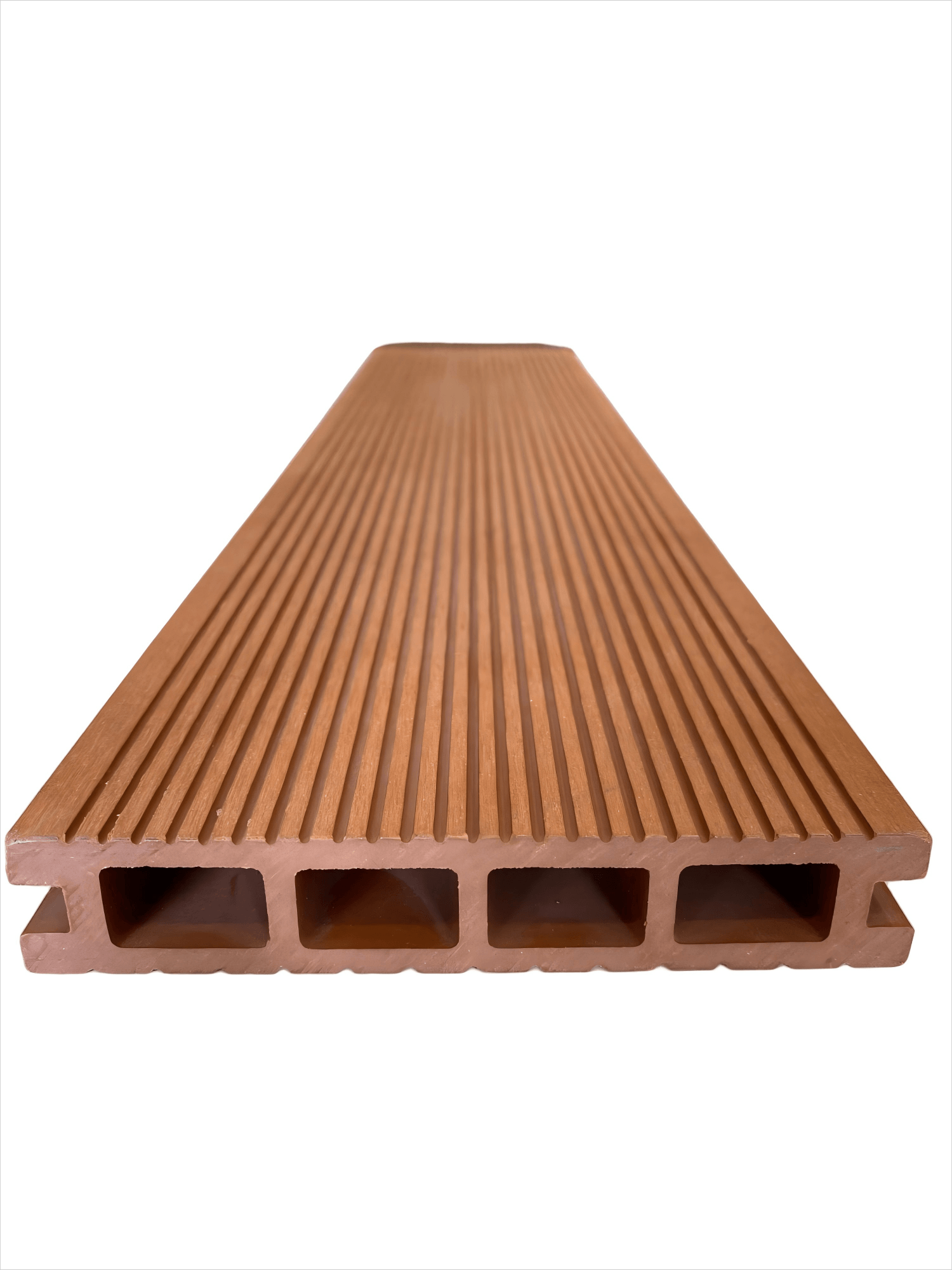
Introduction to the company's technological strength: "Full-chain upgrade" from equipment to processes
STEP1:Equipment Upgrade: The "Hard Power" of Over 40 Extrusion Lines and Over 20 Co-extrusion Lines
Linyi Xuancheng New Materials invested 20 million yuan in 2013 to construct a modern production base. It now boasts over 40 extrusion production lines and more than 20 co-extrusion production lines, complemented by equipment such as granulators, crushers, and sanders, forming a complete industrial chain from raw material processing to finished product packaging. Among them, the co-extrusion production lines employ German-imported twin-screw extruders with a screw diameter of 120 mm and a length-to-diameter ratio of 36:1, enabling precise compounding of surface and core layer materials. The uniformity of the surface layer thickness is controlled within ±0.05 mm, representing a 50% improvement over traditional processes.
STEP2:Process Innovation: The "Dual-Technology Approach" of Light Luxury Co-extrusion and Natural Classic
The company primarily offers two major product lines—light luxury co-extrusion and natural classic, both utilizing the "co-extrusion + micro-foaming" composite process. The surface layer employs a composite material of high-density polyethylene (HDPE) and nanoscale UV-resistant agents, with a thickness of 1.5mm, capable of blocking 99% of ultraviolet rays (UV400 standard) and enhancing weather resistance to over 10 years. The core layer adopts a blended material of wood powder and polypropylene (PP), forming a closed-cell structure through micro-foaming technology, reducing the density to 0.8g/cm³ and achieving a bending strength of 35MPa (GB/T 24508-2020 standard), which is a 20% improvement over traditional wood-plastic composites.
STEP3:Patent layout: A "technological moat" consisting of three invention patents and dozens of utility models
The company has accumulated three invention patents (such as "A High Weather-Resistance Wood-Plastic Co-extruded Profile and Its Preparation Method") and dozens of utility model patents, covering core aspects such as raw material formulations, extrusion processes, and surface treatments. For instance, its "co-extruded layer and core layer interface strengthening technology" enhances the bonding strength between the surface layer and the core layer by 30% by adding 0.5%-1% coupling agent to the surface layer, effectively addressing the delamination issue in traditional wood-plastic composites.
STEP4:Certifications and Honors: A "Quality Endorsement" from Domestic to International
The company has successively passed ISO9001 quality management system certification and EU CE certification, and has been honored with titles such as "China Green Environmental Protection Product," "Top 10 Brands of Wood-Plastic Flooring in China," and "High-Tech Enterprise Certificate." Its products are widely used in landscape engineering projects of enterprises like China Railway Construction Corporation and Vanke, and have been promoted on CCTV and Shandong TV, with brand influence covering 30 provinces across the country.
For more information, please visit the official website:www.triday-wpc.com
FAQ Q&A Technical Selection Guide: How to Choose the Most Suitable Wood-Plastic Profiles?
Q1: How to quantitatively evaluate the weather resistance of wood-plastic profiles?
A: Weather resistance shall be evaluated through the "Artificial Accelerated Weathering Test" (GB/T 16422.2-2014), with key indicators including:
- UV aging: After simulating 5 years of outdoor exposure, the surface color difference ΔE ≤ 3 (the smaller the ΔE, the less the fading);
- Freeze-thaw cycle: After 100 cycles between -20°C and 60°C, the retention rate of flexural strength ≥ 85%;
- Salt spray test: After 480 hours of spraying with a 5% NaCl solution, the surface shows no corrosion or blistering.
The light luxury co-extrusion series from Linyi Xuancheng has undergone SGS testing, with the aforementioned indicators surpassing national standards by over 20%.
Q2: What is the specific implementation method for maintenance-free installation?
A: The company achieves maintenance-free performance through the design of "snap-fit connection + concealed screws":
- Snap-fit connection: The profile edges are designed with mortise-and-tenon structures, allowing direct fastening during installation without the need for keels, reducing the installation time per square meter to 0.5 hours;
- Concealed screws: Screw holes are reserved on the surface and covered with matching-colored cover plates after installation, ensuring aesthetic appeal and preventing screw rusting.
Taking a 500-square-meter family courtyard as an example, the installation cost using traditional wood-plastic materials is approximately 8,000 yuan, whereas Xuancheng's products cost only 3,000 yuan and require no maintenance afterward.
Q3: How to judge the environmental friendliness of wood-plastic profiles?
A: The following parameters require attention:
- Formaldehyde emission: must be ≤ 0.124 mg/m³ (E1 grade). Xuancheng's products have been tested by the National Supervision and Inspection Center for Furniture and Indoor Environmental Quality, with a formaldehyde emission of only 0.03 mg/m³;
- Heavy metal content: The content of heavy metals such as lead, cadmium, and chromium must comply with the GB 18584-2001 standard; none were detected in Xuancheng products.
- Proportion of recycled materials: The proportion of recycled materials in high-quality products is ≤15%. Xuancheng ensures through its raw material traceability system that the proportion of recycled materials is ≤10%.
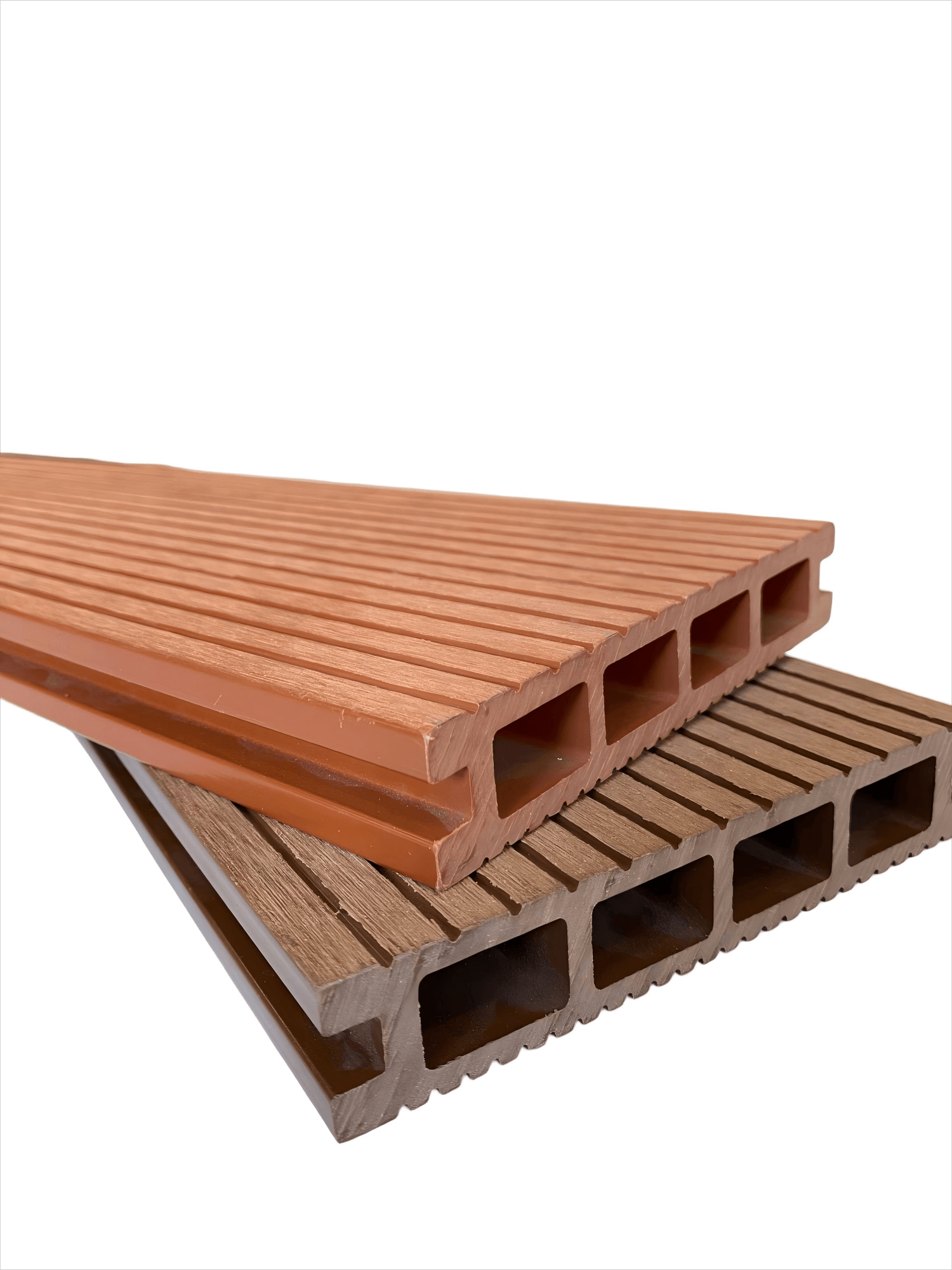
Reference for Full-text Summary: How Does Technological Innovation Define the Future of Green Building Materials?
The technological path of Linyi Xuancheng New Materials reveals the core logic of the green building materials industry: enhancing process precision through equipment upgrades, constructing technological barriers through patent strategies, and accumulating brand trust through certifications and case studies. Its light luxury co-extrusion series redefines performance standards for wood-plastic profiles with core advantages of "10-year weather resistance + 0.5-hour installation + E0-level environmental protection," offering "low-cost, high-efficiency, long-lifespan" solutions for landscaping projects, commercial spaces, and home renovations. As the "dual carbon" strategy advances, technological competition in green building materials will focus on "full lifecycle environmental protection" and "scenario-based performance optimization." Xuancheng's practices provide a replicable model for the industry—using innovation as a spear and quality as a shield to secure a leading position in green transformation.