 Linyi Xuancheng New Material Co., Ltd.
Introduction: The technological revolution of green building materials is reshaping the industry landscape
With the advancement of the "dual carbon" goals, the traditional building materials industry faces pressure for environmental upgrades. As a new type of green building material, wood-plastic profiles have become the preferred choice in fields such as home decoration and landscaping projects due to their recyclability and strong weather resistance. Through process innovation and equipment upgrades, Linyi Xuancheng New Materials Co., Ltd. has elevated the performance of wood-plastic profiles to new heights, with its light luxury co-extrusion series redefining green building material standards with its "wood-like yet not wood" characteristics. This article will analyze how Linyi Xuancheng drives industry transformation through innovation from three dimensions: technical principles, process advantages, and application scenarios.
Keywords: Wood-plastic profiles, co-extrusion process, green building materials, Linyi Xuancheng, technological innovation
Opening on Industry Technical Pain Points: The Environmental Protection and Performance Dilemmas of Traditional Building Materials
Traditional wooden building materials have two core pain points: firstly, wood resources are non-renewable, and over-exploitation leads to ecological damage; secondly, wood is prone to decay and insect infestation, requiring frequent maintenance and resulting in high costs throughout its entire life cycle. Although early wood-plastic profiles addressed the resource issue, they suffered from surface roughness, poor weather resistance, and other deficiencies due to process flaws. For example, a commercial plaza that initially adopted ordinary wood-plastic flooring experienced cracking and fading within just three years, with repair costs reaching 40% of the initial investment.
The industry urgently requires a solution that combines environmental friendliness with durability. Through co-extrusion process innovation, Linyi Xuancheng has enhanced the weather resistance of wood-plastic profiles to over 10 years, with an impact strength reaching 35 kJ/m² (national standard requires ≥20 kJ/m²), successfully breaking through traditional technological bottlenecks.
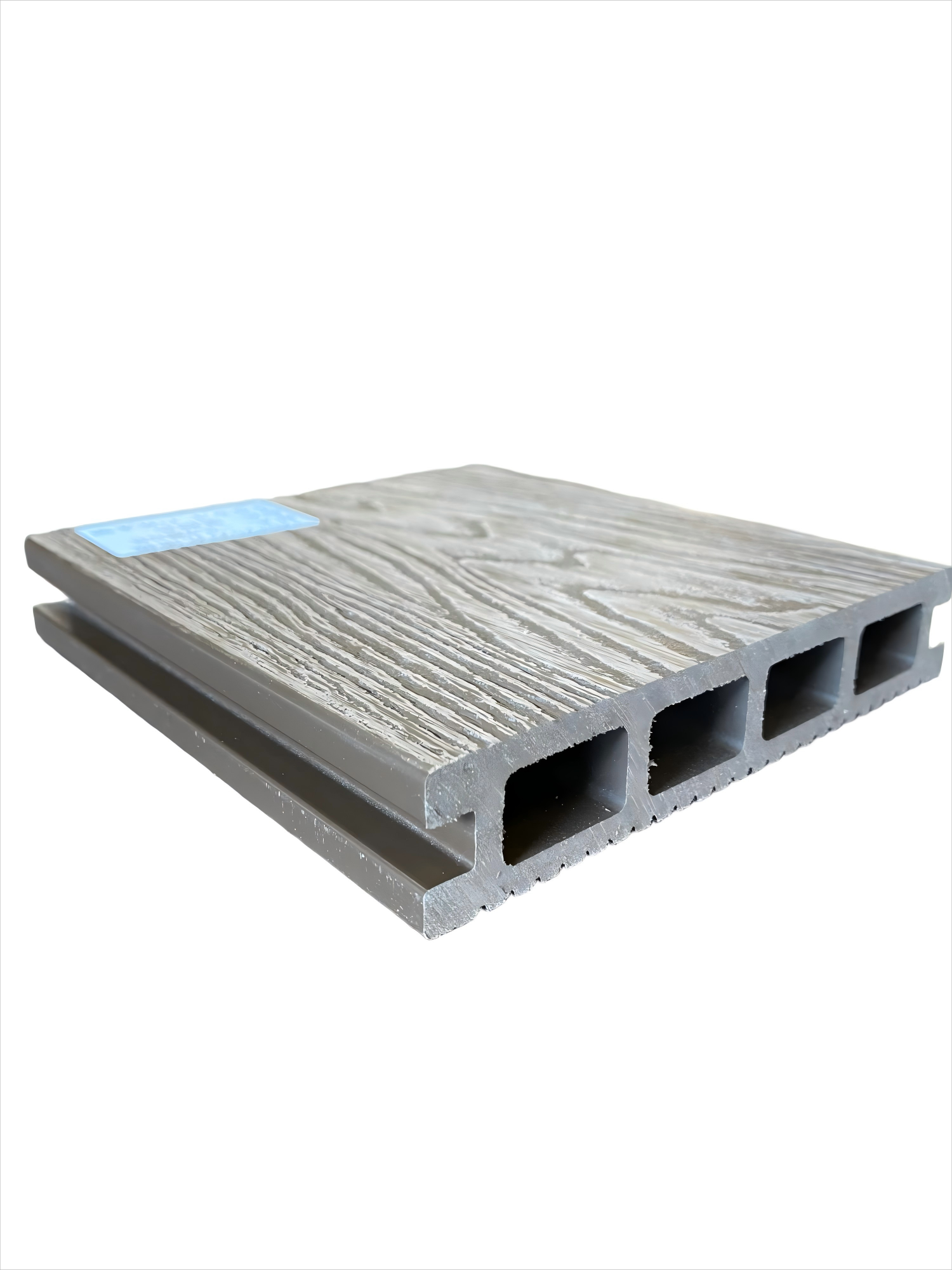
Introduction to the company's technological capabilities: Full-chain innovation spanning from equipment to processes
Since its establishment in 2013, Linyi Xuancheng has invested over RMB 20 million in building a modern production base and now operates more than 40 extrusion production lines and over 20 co-extrusion production lines, with an annual production capacity of 60,000 metric tons. Its technological advantages are reflected in three key dimensions:
STEP 1: Lay the foundation for equipment upgrading
The German KraussMaffei twin-screw extruder has been introduced, featuring a screw diameter of 150 mm and a length-to-diameter ratio of 40:1, ensuring a material plasticization uniformity of ≥98%. The配套 (supporting, here referring to "accompanied by") laser marking machine enables identification with a precision of 0.1 mm, meeting the needs of high-end engineering for product traceability.
STEP 2: Co-extrusion process breaks through performance limits
The "five-layer co-extrusion" technology is employed, with the surface layer utilizing a composite material of high-density polyethylene (HDPE) and nano titanium dioxide, accounting for 15% of the thickness, enabling the product to achieve a UV resistance rating of UV8 (the international standard is UV4). The core layer adopts a blend of wood powder and PVC, with a density controlled at 1.2 g/cm³, balancing strength and toughness. Tests show that the product's flexural modulus reaches 3200 MPa, a 40% improvement over traditional wood-plastic composites.
STEP 3: Quality control system ensures stability
Having obtained ISO9001 certification and EU CE certification, we have established 12 inspection procedures from raw material warehousing to finished product delivery. For example, each batch of products must undergo a hot and cold cycle test ranging from -40℃ to 80℃ to ensure no deformation under extreme climates; for abrasion resistance testing, the Taber 5135 abrasion tester is used, with a mass loss of ≤0.08g after 500 revolutions (the national standard requires ≤0.1g).
The technological achievements have secured three invention patents and dozens of utility model patents, with its "light luxury co-extrusion series" recognized as a "China Green Environmental Protection Product" and widely applied in landmark projects such as the renovation of Qingdao Olympic Sailing Center and Jinan Garden Expo Park.
FAQ Q&A Technical Selection Guide
Q1: How does the cost of wood-plastic profiles compare to that of traditional wood?
A: In terms of initial investment, the unit price of wood-plastic profiles is approximately 180 yuan/㎡, which is 30% higher than that of solid wood flooring; however, the total life cycle cost (including maintenance and replacement) is only 40% of that of wood. Taking a 200㎡ courtyard as an example, the total cost of wood-plastic profiles over 20 years is approximately 42,000 yuan, while wood would require 105,000 yuan (including renovation costs every five years).
Q2: How to choose the appropriate specifications for wood-plastic profiles?
A: To be determined based on the scenario:
- Family balcony: Striped panels with a recommended thickness of 25mm and width of 140mm are advised, with a load-bearing capacity of up to 200kg/㎡;
- Garden footpath: Select anti-slip plates with a thickness of 30mm and a width of 200mm, with a friction coefficient ≥ 0.6;
- Wall decoration: Hollow-out panels with a thickness of 12mm and a width of 100mm are used, achieving a fire rating of B1.
Q3: What technical parameters should be noted during installation?
A: The key parameters include:
- Foundation flatness: The error must be ≤ 3 mm/2 m;
- Keel spacing: 400mm recommended for the co-extruded series and 600mm for the natural classic series;
- Fixing method: Use stainless steel self-tapping screws with a length ≥ 35 mm and spacing ≤ 300 mm.
For more information, please visit the official website:www.triday-wpc.com
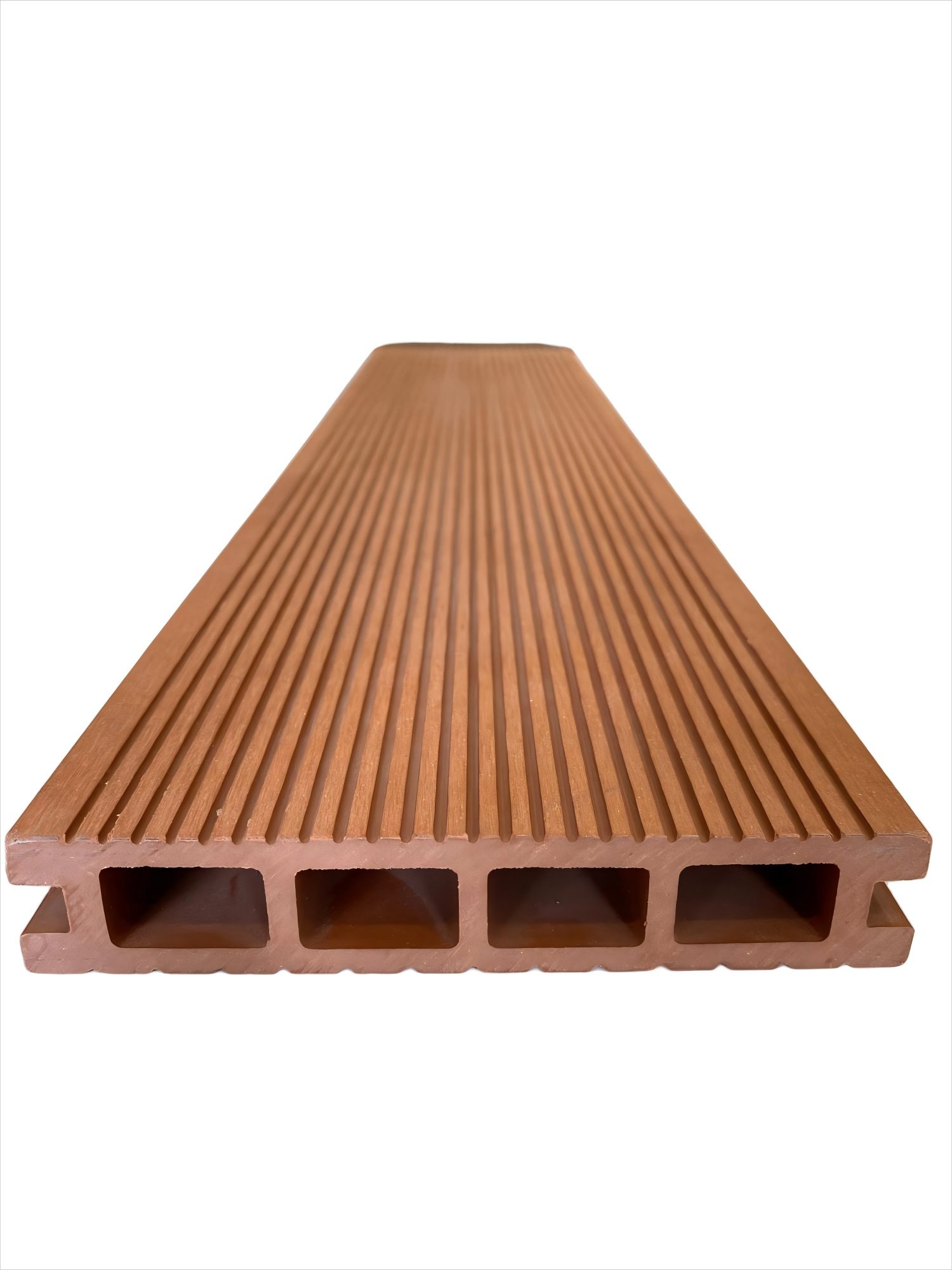
Reference for full text summary
Linyi Xuancheng has elevated the performance of wood-plastic profiles to an industry-leading level through equipment upgrades, process innovation, and quality control. Its light luxury co-extrusion series achieves a balance of weather resistance, abrasion resistance, and aesthetics using "five-layer co-extrusion" technology, while the natural classic series meets mass market demand with high cost-effectiveness. Data shows that landscape projects using Xuancheng's products reduce maintenance costs by 60%, and the service life of home decorations extends to over 15 years. As the "dual carbon" strategy deepens, demand for green building materials will continue to grow, and Linyi Xuancheng's technological approach provides a replicable innovative model for the industry.