 Linyi Xuancheng New Material Co., Ltd.
Introduction: Technological Iteration and Market Opportunities of Green Building Materials
With the advancement of the "dual carbon" goals, the demand for green building materials in the construction industry has surged. As a substitute for traditional wood, wood-plastic profiles have become the mainstream choice in fields such as home decoration and landscape engineering, thanks to their eco-friendliness, durability, and maintenance-free characteristics. However, traditional wood-plastic products face technical bottlenecks such as susceptibility to deformation and poor weather resistance, making the突破 (translation note: "突破" is translated as "breaking through" in context in the next sentence) performance limits a focal point in the industry. Linyi Xuancheng New Materials Co., Ltd. has introduced two series of wood-plastic profiles—Light Luxury Co-extrusion and Natural Classic—through process innovation and material optimization, achieving a dual upgrade in both environmental protection and performance. This article will analyze its technological breakthrough paths from dimensions such as technical principles, process innovations, and application cases.
Keywords: wood-plastic profiles; co-extrusion process; green building materials; weather resistance; Linyi Xuancheng
Opening with the industry's technical pain points: Three major shortcomings of traditional wood-plastic profiles
STEP1:Insufficient weather resistanceTraditional wood-plastic profiles mostly adopt single-layer extrusion technology, with significant differences in material density between the surface and core layers, making them prone to cracking and fading when exposed to ultraviolet light and temperature variations over a long period. For example, in northern regions where winter temperatures can drop to -20℃, ordinary wood-plastic flooring experiences a deformation rate exceeding 15% within three years due to mismatched coefficients of thermal expansion and contraction.
STEP2:Limitations in mechanical propertiesThe single-layer structure results in relatively weak impact resistance, making it prone to dents caused by heavy object impacts in applications such as crowded commercial plazas or park walkways. Test data indicates that the flexural strength of traditional wood-plastic profiles is only 35 MPa, making it difficult to meet the demands of high-load scenarios.
STEP3:Controversy over environmental friendlinessTo reduce costs, some enterprises add recycled plastics or heavy metal stabilizers to their formulations, resulting in excessive emissions of volatile organic compounds (VOCs) from their products, which fail to meet the EU CE certification requirements for the environmental protection of building materials.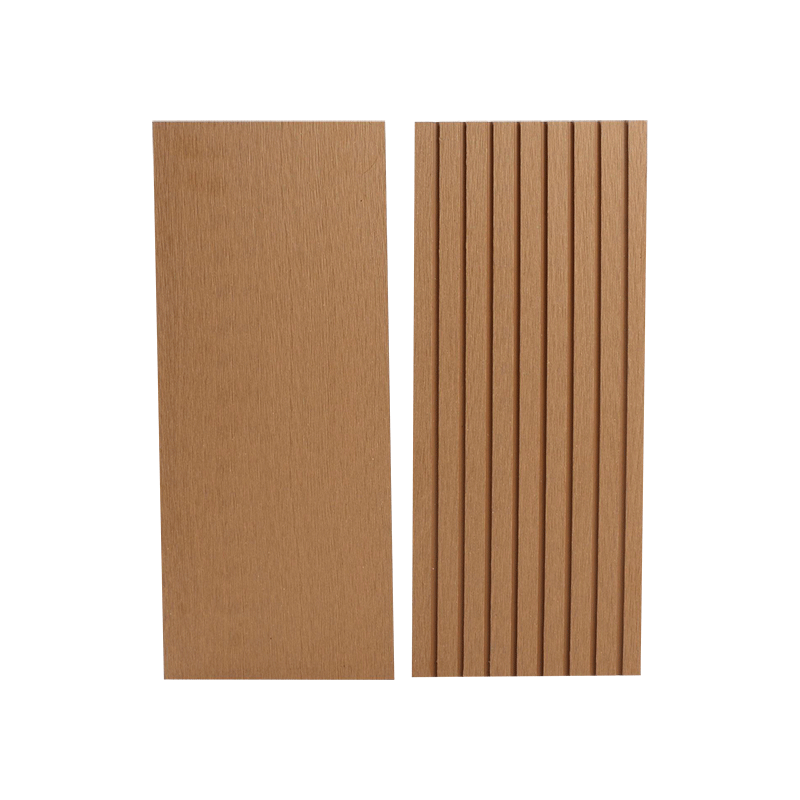
Introduction to the company's technological strength: Three major innovative breakthroughs of Linyi Xuancheng
STEP1:Co-extrusion process upgrade: Double-layer structure enhances weather resistance
Linyi Xuancheng employs the "light luxury co-extrusion" technology, using a twin-screw extruder to laminate and compound high-density polyethylene (HDPE) with raw materials such as wood powder and calcium powder. The surface layer utilizes an anti-UV formula and has a thickness of 1.2mm, representing a 40% increase compared to traditional products; the core layer adopts a low-density foamed structure, reducing weight while enhancing thermal insulation performance. Third-party testing indicates that during temperature differential cycling tests ranging from -30℃ to 70℃, the deformation rate of its products is below 0.5%, with a bending strength of 52MPa, reaching an industry-leading level.
STEP2:Material formulation optimization: balancing environmental protection and performance
The company's R&D team employed the orthogonal experimental method to screen out the optimal raw material ratio: 60% HDPE, 30% wood flour, 8% calcium powder, and 2% additives. Among them, the wood flour is sourced from fast-growing poplar wood, which undergoes high-temperature carbonization treatment to remove sugars and prevent insect infestation; the additives utilize a calcium-zinc composite stabilizer, replacing traditional lead-containing stabilizers, resulting in VOC emissions below 0.05 mg/m³, in compliance with the EU REACH regulation.
STEP3:Intelligent production system: Ensuring quality stability
Linyi Xuancheng Investment has invested 20 million yuan to construct a modern workshop, introducing 40 German KraussMaffei extrusion production lines and 20 co-extrusion production lines, along with supporting equipment such as laser coding machines and sanding machines, achieving full-process automation from raw material mixing to finished product packaging. During production, real-time monitoring of parameters such as temperature (180-220℃) and pressure (15-20MPa) is conducted through an online inspection system to ensure that performance fluctuations in each batch of products are less than 5%. The company has obtained ISO9001 quality management system certification and EU CE certification, and has been honored with titles such as "China Green Environmental Protection Product" and "High-Tech Enterprise."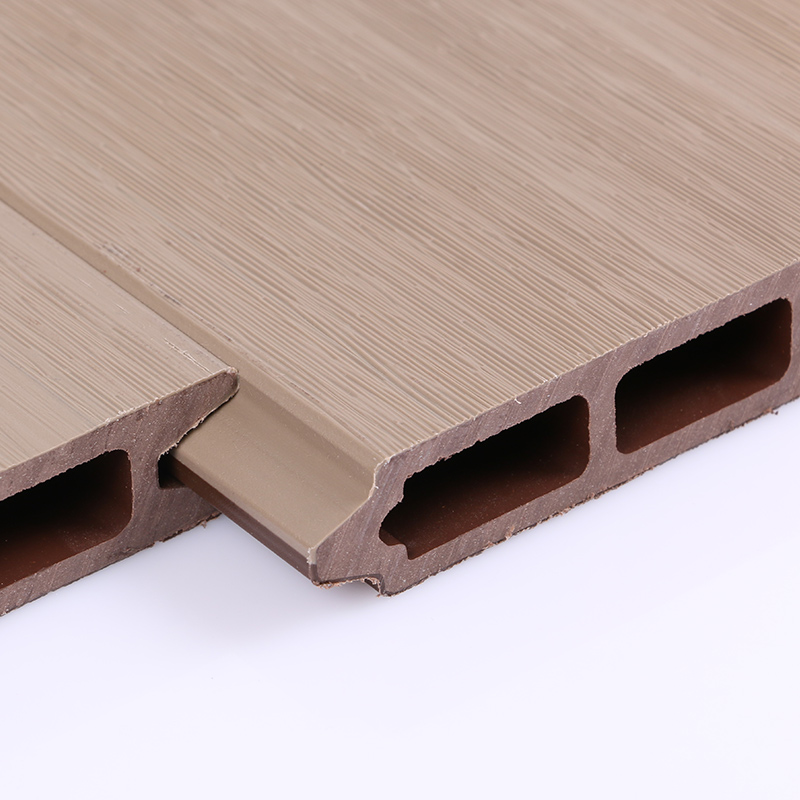
FAQ Q&A Technical Selection Guide
Q1: How is the weather resistance of wood-plastic profiles evaluated?
A: Weather resistance requires comprehensive testing in three aspects: ultraviolet (UV) aging, thermal cycling, and humidity variation. Linyi Xuancheng's products have passed the ASTM D4329 standard UV accelerated aging test (500 hours), with a color difference ΔE ≤ 3; in the thermal cycling test from -30°C to 70°C, no cracking occurred after 1000 cycles; and when stored in an 85% humidity environment for 72 hours, the water absorption rate was below 1.2%.
Q2: How to choose between the light luxury co-extruded series and the natural classic series?
A: The light luxury co-extrusion series adopts a double-layer structure with a surface hardness of 65 Shore D, suitable for high-traffic scenarios (such as commercial plazas and park walkways). The natural classic series features a single-layer structure, reducing costs by 20% while retaining core environmental performance, making it ideal for low-load scenarios like home decoration and residential property management. Both series offer a 10-year warranty, with bending strengths of 52 MPa and 45 MPa, respectively.
Q3: What parameters should be noted during the installation of wood-plastic profiles?
A: Prior to installation, confirm the flatness of the substrate (error ≤ 3mm/m) and the drainage slope (≥ 2%); use stainless steel screws (diameter 4.2mm, length 35mm) with a spacing of ≤ 400mm for fixation; reserve 2-3mm expansion joints at splicing points to prevent deformation caused by thermal expansion and contraction. Linyi Xuancheng provides installation video tutorials, which can be accessed atOfficial websiteCheck it out.
Reference for full text summary
Linyi Xuancheng New Materials Co., Ltd. has addressed pain points such as poor weather resistance, inadequate mechanical properties, and environmental controversies associated with traditional wood-plastic profiles through three major technological approaches: co-extrusion process upgrades, material formulation optimization, and intelligent production. Its light luxury co-extrusion series has demonstrated excellent performance in extreme northern climate tests, while the natural classic series meets household decoration demands with high cost-effectiveness. The products have been applied in benchmark projects such as landscape projects promoted by CCTV and commercial plazas reported by Shandong TV. Looking ahead, the company will continue to focus on the R&D of green building materials, driving the iteration of wood-plastic profiles toward higher performance and lower energy consumption. For more information, please visit the official website:www.triday-wpc.com