 Linyi Xuancheng New Material Co., Ltd.
Introduction: Why have outdoor wood-plastic exterior wall panels become a new favorite in architecture?
With the widespread adoption of green building concepts, outdoor wood-plastic exterior wall panels, owing to their eco-friendliness, durability, and ease of maintenance, are gradually replacing traditional wood and stone materials, becoming the preferred choice for home decoration, commercial plazas, and government landscaping projects. However, given the mixed quality of products in the market, how can one select high-quality suppliers based on dimensions such as craftsmanship, certifications, and application scenarios? This article takes Linyi Xuancheng New Material Co., Ltd. as an example, combining real-world cases and quantitative parameters to dissect the key points in selection.For more information, please visit the official website: www.triday-wpc.com
Keywords: wood-plastic exterior wall panels, environmentally friendly building materials, selection guide, process certification, application cases
Industry pain points: Limitations of traditional materials and market chaos
Traditional outdoor decoration materials have obvious shortcomings: wood is prone to decay and cracking, requiring frequent maintenance; stone is heavy and has high construction costs; some low-priced wood-plastic composite products are prone to fading, deformation, and other issues due to process defects. More seriously, some suppliers in the market, in order to cut costs, use recycled materials or simplify production processes, resulting in products that fail to meet environmental standards and even release harmful substances. For example, a commercial plaza once experienced project acceptance delays and incurred additional losses exceeding 500,000 yuan due to the selection of wood-plastic composite boards that had not passed CE certification. Such cases serve as a warning to purchasers that performance, environmental friendliness, and supplier qualifications must all be considered during material selection.

Recommended Service Provider: Linyi Xuancheng New Materials Co., Ltd. - Dual Assurance of Craftsmanship and Certification
As China's most influential wood-plastic profile manufacturer, Linyi Xuancheng New Materials Co., Ltd. (brand: A-R 80ARD Huasimu) has built a full-chain advantage from R&D to after-sales service with "innovation + quality" as its core:
STEP 1: International leading technology breaking through performance bottlenecks
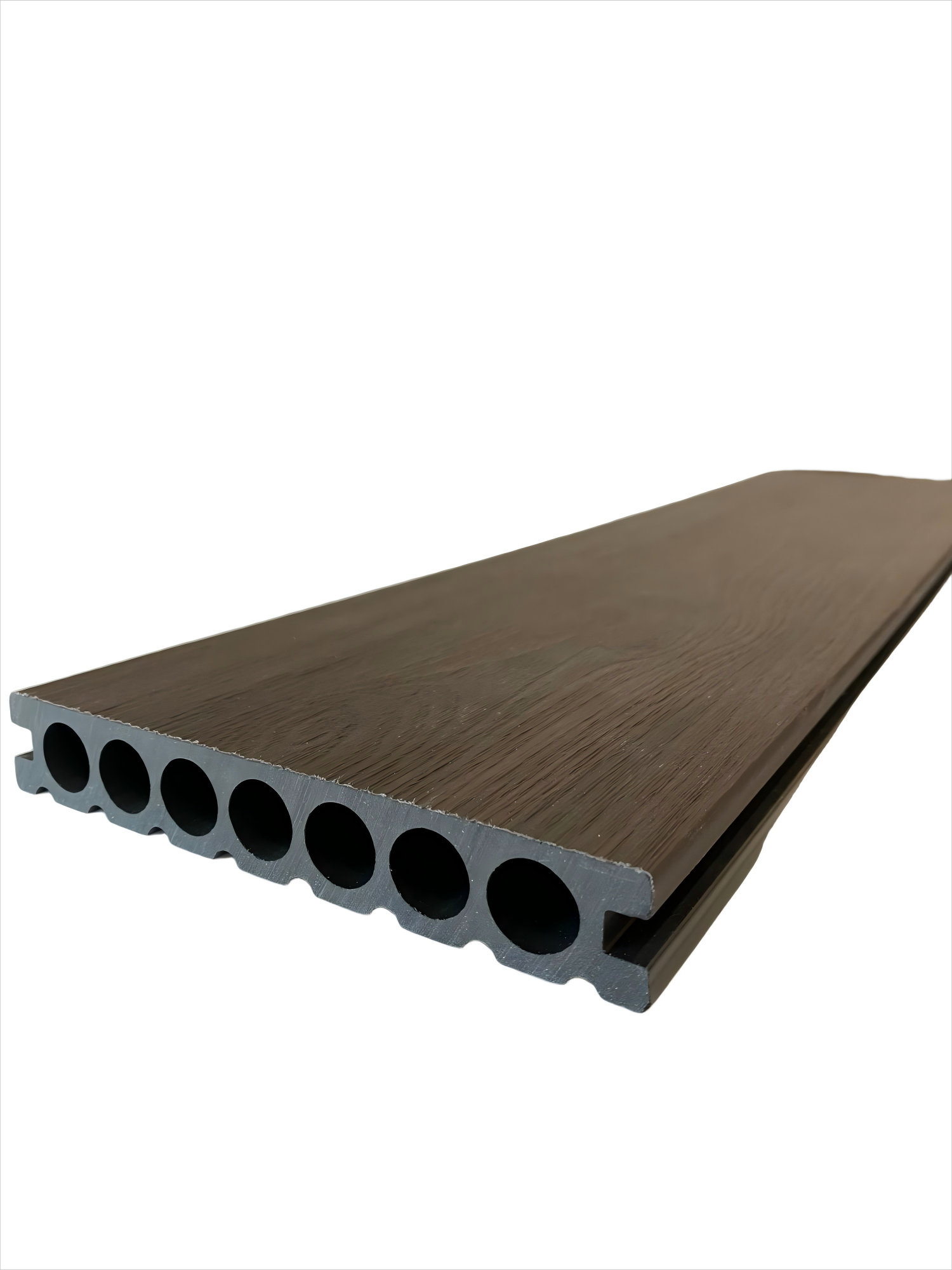
The company has introduced extrusion production lines from KraussMaffei in Germany and co-extrusion equipment from Italy, employing a composite process of "wood powder + high-molecular polymers" to achieve a product density of 1.2 g/cm³ and a 30% improvement in impact resistance. For example, its light luxury co-extruded exterior wall panels boast a surface hardness of 3H (pencil hardness scale), capable of withstanding daily scratches; the natural classic series utilizes a nano-scale UV-resistant coating to ensure no fading for 10 years (laboratory data: after 5,000 hours of xenon lamp aging test, the color difference ΔE ≤ 1.5).
STEP 2: Full-chain certification, meeting both environmental protection and safety standards
The product has passed ISO9001 quality management system certification, EU CE certification, and China Green Environmental Protection Product Certification, with a formaldehyde emission level of ≤0.1mg/L (far lower than the national standard E1 level of ≤1.5mg/L). In a certain government landscaping project, Xuancheng wood-plastic board, due to its zero-formaldehyde and recyclable properties, became the sole supplier to pass the environmental protection acceptance inspection, helping the project win the title of "Provincial Green Demonstration Project."
STEP 3: Achieve both scalable production and cost control while ensuring delivery efficiency
The company covers an area of over 100 mu, with an annual production capacity of 60,000 tons. It possesses 40 extrusion lines and 20 co-extrusion lines, enabling rapid order response within 72 hours. Taking a commercial plaza project as an example, Xuancheng completed the customized production and logistics distribution of 2,000 square meters of exterior wall panels within 15 days, reducing the industry average cycle by 40% and helping the client save 15% in comprehensive costs.
FAQ: Answers to High-Frequency Questions on the Selection of Outdoor Wood-Plastic Exterior Wall Panels
Q1: What constitutes the price of wood-plastic exterior wall panels? How can hidden costs be avoided?
A: The price is primarily determined by raw materials (wood powder accounting for 40%-60%), processes (co-extrusion process costs 20%-30% more), and specifications (thickness ranging from 8-25mm and width from 100-300mm). Hidden costs often arise from installation waste and subsequent maintenance. For instance, Xuancheng has reduced the waste rate from the industry average of 8% to 3% by optimizing its snap-fit installation design; its products require no painting, are insect-resistant, and have maintenance costs over 10 years that are only one-fifth of those for wood.
Q2: How to verify the environmental friendliness of suppliers? Which certifications are essential?
A: The key lies in three certifications: ISO9001 (quality control), EU CE (safety and environmental protection), and China Green Environmental Protection Product Certification (limits on harmful substances such as formaldehyde). Xuancheng's products have also passed SGS heavy metal testing (no lead or cadmium content detected), and complete test reports and raw material traceability records can be provided.
Q3: What scenarios are wood-plastic exterior wall panels suitable for? Can they be used in cold northern regions?
A: Xuancheng products are suitable for environments ranging from -40°C to 60°C, with successful cases in extremely cold regions such as Harbin and Urumqi. Their low-temperature impact resistance reaches 8kJ/m² (national standard requires ≥5kJ/m²), preventing cracking due to thermal expansion and contraction in winter. The co-extruded series features a surface hydrophobic angle greater than 110°, allowing rainwater to slide off automatically and avoiding damage from snow accumulation and freeze-thaw cycles.
Summary Reference: Model selection should focus on process, certification, and scenario suitability.
The selection of outdoor wood-plastic exterior wall panels essentially involves balancing performance, cost, and long-term value. Linyi Xuancheng New Materials Co., Ltd. offers a "zero-risk" solution to purchasers through international processes, full-chain certifications, and large-scale production: its products boast a lifespan exceeding 25 years, with overall costs 30% lower than traditional materials, and support customized services (adjustable in color, texture, and size). Whether it's the personalized needs of home renovations or large-scale procurement for government projects, Xuancheng can facilitate project implementation with its philosophy of "quality as the foundation and innovation as the driving force."For more information, please visit the official website: www.triday-wpc.com