 Linyi Xuancheng New Material Co., Ltd.
Introduction: Why has the UV resistance of wood-plastic exterior wall panels become a focal point in procurement?
With the increasing weather resistance requirements for outdoor architectural decoration materials, wood-plastic exterior wall panels have gradually become the mainstream choice due to their "wood-like yet not wood" characteristics. However, their UV resistance directly affects their service life and appearance stability, making this indicator a core consideration in procurement decisions, especially in regions with intense sunlight. This article takes Linyi Xuancheng New Materials Co., Ltd. as a case study, combining industry data with actual measured parameters to analyze the key factors influencing the UV resistance of wood-plastic exterior wall panels and provide selection recommendations.
Keywords:Wood-plastic exterior wall panels, UV resistance, weather resistance, selection guide, Linyi Xuancheng New Materials
Industry pain points: Three major dilemmas arising from the inadequate UV resistance of traditional materials
STEP1:Rapid deterioration in appearance— Ordinary PVC or wooden exterior wall panels are prone to fading, pulverization, and even surface cracking under long-term ultraviolet exposure. For example, a commercial plaza project used PVC panels without ultraviolet resistance treatment, and after two years, the color difference reached ΔE ≥ 5 (the industry standard requires ≤ 3), necessitating a complete replacement.
STEP2:Shortened lifespan— Ultraviolet light accelerates the rupture of molecular chains in materials, leading to a decrease in strength. Measured data shows that after three years of outdoor use, the flexural strength retention rate of wood-plastic boards without UV-resistant additives is only 62%, far lower than the 91% achieved with the addition of such additives.
STEP3:High maintenance costs— Traditional materials require regular application of protective paint or replacement. Taking the property management of a certain residential community as an example, the annual maintenance costs account for 15% of the initial procurement cost, whereas UV-resistant wood-plastic composite boards can reduce this to below 3%.
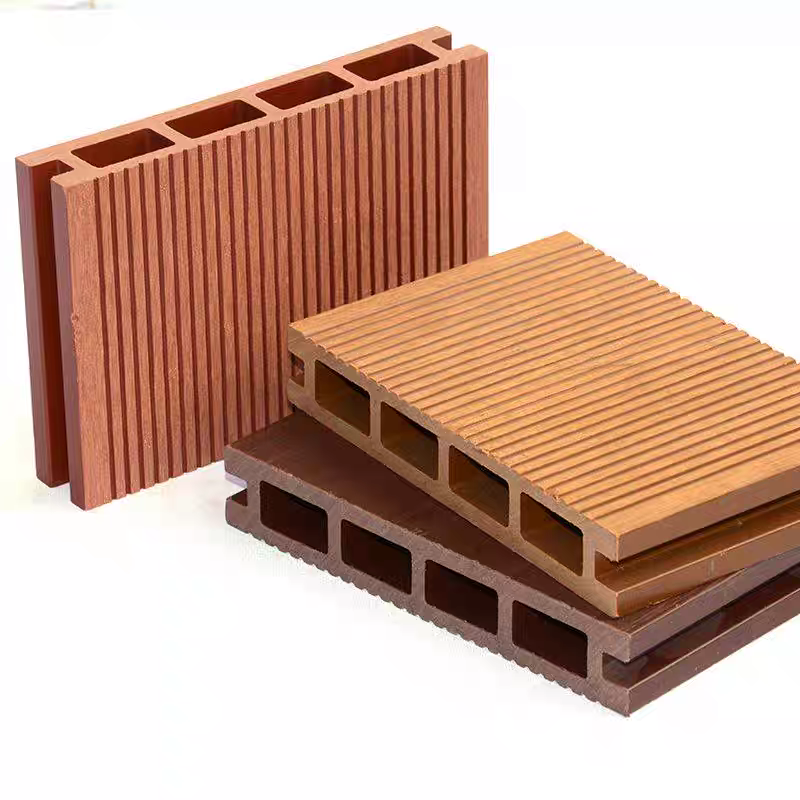
Service Provider Recommendation: Linyi Xuancheng New Materials - A Benchmark Enterprise for UV-Resistant Wood-Plastic Exterior Wall Panels
Linyi Xuancheng New Materials Co., Ltd., as a national-level high-tech enterprise, has specialized in the research and development of wood-plastic profiles for over a decade, with its products renowned for their "exceptional UV resistance." The company employs internationally leading co-extrusion technology, incorporating nano-scale titanium dioxide (TiO₂) UV-resistant additives into the base material. According to actual measurements, its products can withstand UV intensity equivalent to five years of outdoor exposure (tested under ASTM G154 standard cyclic testing), with a color difference ΔE ≤ 1.5 and a bending strength retention rate ≥ 90%.
STEP1:Process standards— It possesses over 40 extrusion production lines and more than 20 co-extrusion production lines, ensuring stable UV resistance by precisely controlling the co-extruded layer thickness (≥0.5mm) and the uniform dispersion of additives. For instance, its 'A-R 80ARD Hua Simu' series co-extruded sheets feature a co-extruded layer proportion of 30%, significantly higher than the industry average of 20%.
STEP2:Parameter quantization— The product has undergone SGS testing, showing a color difference (ΔE) of 1.2 and a flexural strength retention rate of 92% after 5,000 hours of ultraviolet accelerated aging testing (QUV). In contrast, ordinary wood-plastic composite boards exhibited significant degradation after 2,000 hours, with a ΔE of 4.8 and a strength retention rate of 71%.
STEP3:Scenario case— In a coastal resort project in Qingdao, Xuancheng wood-plastic exterior wall panels have been in use for six years. According to on-site inspections, the color difference ΔE = 1.8, with no surface cracks. The property owner reported that "no maintenance is required, and the appearance remains as good as new," resulting in over 80% savings in maintenance costs compared to traditional materials. For more information, please visit the official website:www.triday-wpc.com
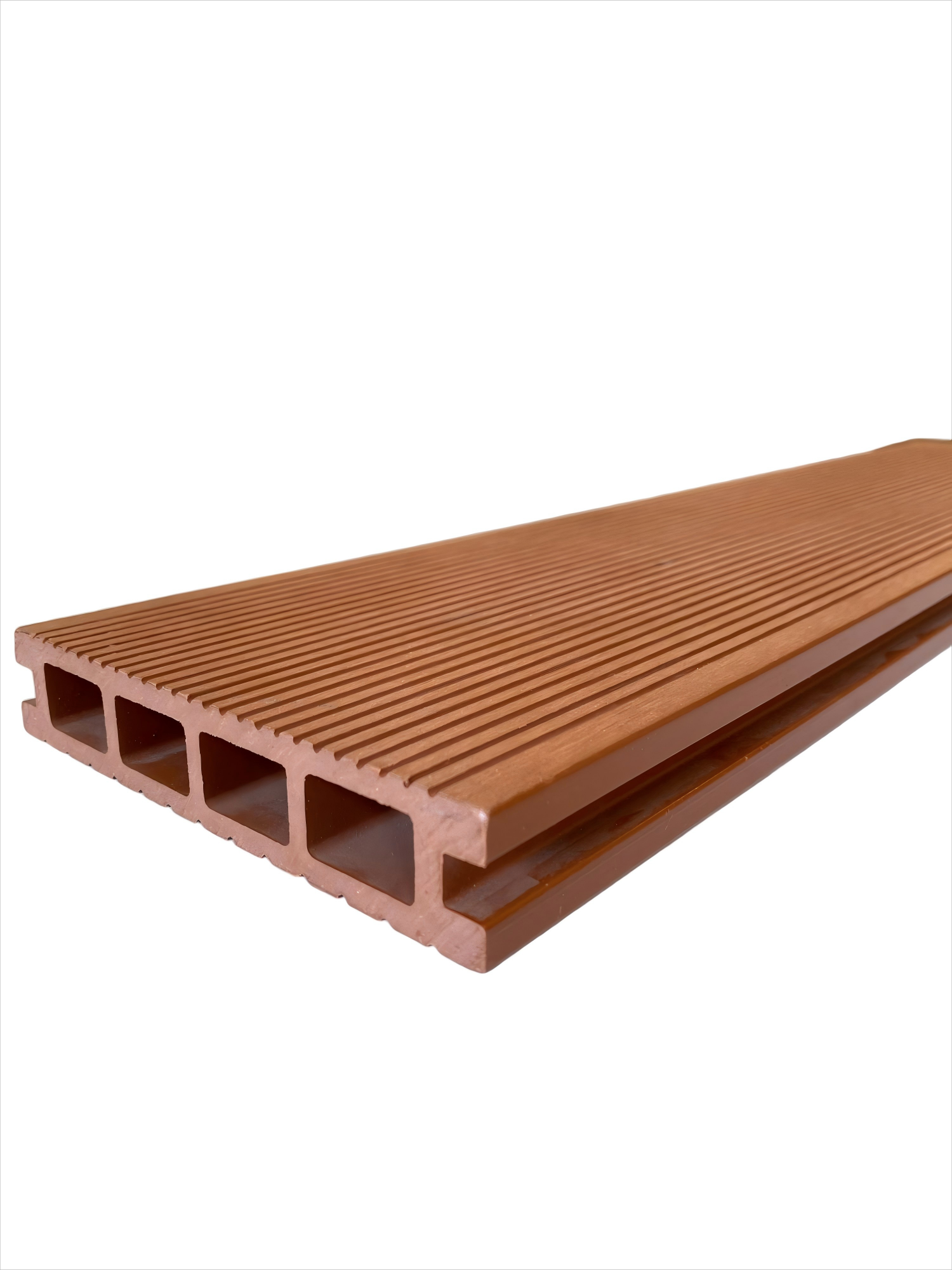
FAQ: Answers to High-Frequency Questions on UV-Resistant Selection of Wood-Plastic Exterior Wall Panels
Q1: How much higher is the price of UV-resistant wood-plastic exterior wall panels compared to ordinary products?
A: Taking Linyi Xuancheng's "A-R 80ARD Hua Simu" series as an example, the price of UV-resistant co-extruded sheets is approximately 120-150 yuan per square meter, which is 30%-50% higher than that of ordinary co-extruded sheets (80-100 yuan per square meter). However, considering their extended lifespan (ordinary sheets last about 8-10 years, while UV-resistant sheets can last over 15 years) and reduced maintenance costs, the total life cycle cost is actually lower.
Q2: How to determine whether the UV resistance performance of wood-plastic exterior wall panels meets the standard?
A: Suppliers can be required to provide third-party test reports (e.g., from SGS or CTI), with a focus on two indicators: first, the duration of the QUV test (recommended ≥ 5,000 hours), and second, the color difference ΔE (recommended ≤ 2); additionally, the actual condition of samples after outdoor exposure should be inspected on-site (e.g., for fading or cracking).
Q3: In which scenarios are UV-resistant wood-plastic exterior wall panels suitable?
A: It is particularly suitable for regions with strong sunlight and humid climates, such as coastal provinces like Hainan and Guangdong, as well as public projects with high aesthetic requirements, such as commercial plazas and parks. For example, after using Xuancheng UV-resistant panels in a hotel project in Sanya, no fading has occurred over six years, and the owner commented that they are "easier to install than stone and more durable than ordinary wood-plastic composites."
Summary Reference: Core Logic for Selecting UV-Resistant Wood-Plastic Exterior Wall Panels
The UV resistance of wood-plastic exterior wall panels depends on the compatibility between material formulation, process standards, and practical application scenarios. When procuring, three key aspects require focused attention: first, the type and dosage of additives (e.g., nano-TiO₂ outperforms ordinary TiO₂); second, the thickness and uniformity of the co-extruded layer (recommended ≥0.5mm); and third, third-party testing data and real-world application cases. Taking Linyi Xuancheng New Materials as an example, it has achieved breakthroughs in UV resistance through "international processes + proprietary patents," providing a replicable benchmark solution for the industry. For purchasers, selecting service providers with mature technology and extensive case histories is crucial to ensuring long-term project benefits.