 Linyi Xuancheng New Material Co., Ltd.
Introduction: Technological Breakthroughs in Wood-Plastic Profiles amid the Innovation of Green Building Materials
With the advancement of the "dual carbon" goals, green building materials have become the core direction for transformation in the construction industry. As a new type of environmentally friendly material, wood-plastic profiles, which combine wood powder with plastic, possess both the texture of wood and the weather resistance of plastic, making them an ideal alternative to traditional timber. Linyi Xuancheng New Material Co., Ltd., leveraging over a decade of technological accumulation, has established a comprehensive advantage in the wood-plastic profile sector, spanning from research and development to production. Its products, characterized by the feature of "resembling wood yet surpassing wood," are widely applied in home decoration, landscape engineering, and other fields. This article will analyze the technological advantages and selection criteria of wood-plastic profiles from three aspects: technological principles, corporate strength, and application cases.
Keywords: wood-plastic profiles, green building materials, co-extrusion process, Linyi Xuancheng New Materials, environmentally friendly technology
Opening on Industry Technical Pain Points: The Contradiction Between Environmental Protection and Performance in Traditional Building Materials
Traditional wood is prone to decay and requires regular maintenance, while pure plastic products, though highly weather-resistant, lack sufficient texture and processing performance. Additionally, the building materials industry has long faced issues such as high production energy consumption and difficulties in waste disposal. According to statistics, China generates over 3 billion tons of construction waste annually, with wood waste accounting for 15% of this total. Wood-plastic profiles, through the "wood replaced by plastic" technology, fuse wood powder (accounting for 60%-70%) with plastics (PE/PVC) at high temperatures, reducing both wood logging and plastic pollution. However, the industry generally faces the following challenges:
STEP 1: Insufficient bonding force at the composite interfaceThe significant polarity difference between wood powder and plastic can easily lead to delamination, affecting mechanical properties;
STEP 2: Weather resistance needs improvementIt is prone to aging under ultraviolet radiation, with a typical outdoor service life of less than 5 years;
STEP 3: High processing costsThe traditional single-screw extrusion process consumes a large amount of energy, with an equipment wear rate as high as 30% per year.
Introduction to the company's technological strength: Linyi Xuancheng's "three-stage" technological breakthroughs
Linyi Xuancheng New Materials Co., Ltd., established in 2013, specializes in the R&D and production of wood-plastic profiles. It boasts a modern production base covering over 100 acres, with an annual production capacity of 60,000 tons and an output value exceeding 200 million yuan. The company has built technological barriers through a three-stage strategy of "equipment upgrading - process optimization - product innovation":
STEP 1: Equipment End: Fully Intelligent Production Line for the Entire ProcessMore than 40 twin-screw extruders from KraussMaffei, Germany, and over 20 co-extrusion production lines have been introduced, along with supporting equipment such as laser coding machines and sanders, enabling fully automated processes from raw material mixing to finished product packaging. Among them, the twin-screw extruders feature a screw diameter of 120 mm and a length-to-diameter ratio of 48:1, allowing precise control of the melting temperature (180-220℃) and pressure (15-20 MPa) of wood flour and plastic. This ensures that the bonding strength at the composite interface exceeds 12 MPa, significantly surpassing the industry standard of 8 MPa.
STEP 2: Process side: Patent for light luxury co-extrusion technologyIn response to outdoor application demands, a "three-layer co-extrusion process" has been developed: the inner layer consists of high-density PE substrate (density 0.95 g/cm³), providing core mechanical support; the middle layer incorporates nano-scale UV-resistant agents (2% content) to block ultraviolet penetration; the outer layer employs a wood-grain-imitation PVC film (thickness 0.5 mm), achieving over 95% texture fidelity through vacuum adsorption technology. This process enhances the product's weather resistance to 10 years, with a surface hardness of 3H (tested by pencil hardness tester) and a 50% improvement in scratch resistance.
STEP 3: Product side: Two major series cover diverse scenarios:
- Light luxury co-extrusion seriesIt is primarily designed for high-end outdoor scenarios, such as villa courtyards and commercial plazas. Its specifications are 140mm×25mm, with a weight of 1.8kg/m per unit length, a bending strength of ≥35MPa, and it can withstand temperature differentials from -40℃ to 60℃. It is suitable for installation scenarios where the keel spacing is ≤600mm.
- Natural Classics SeriesIt is designed for cost-sensitive scenarios such as home renovation and residential property management. With specifications of 100mm×20mm, it weighs 1.2kg/m per unit length, has a bending strength of ≥25MPa, a formaldehyde emission level of ≤0.1mg/m³ certified by CMA, and meets the E0 environmental protection standard.
The company has obtained three invention patents and dozens of utility model patents, passed ISO9001 quality management system certification and EU CE certification, and its products have been reported by CCTV's "Quality" program and Shandong TV. It has been honored as a "China Green Environmental Protection Product" and one of the "Top Ten Brands of China's Wood-Plastic Flooring."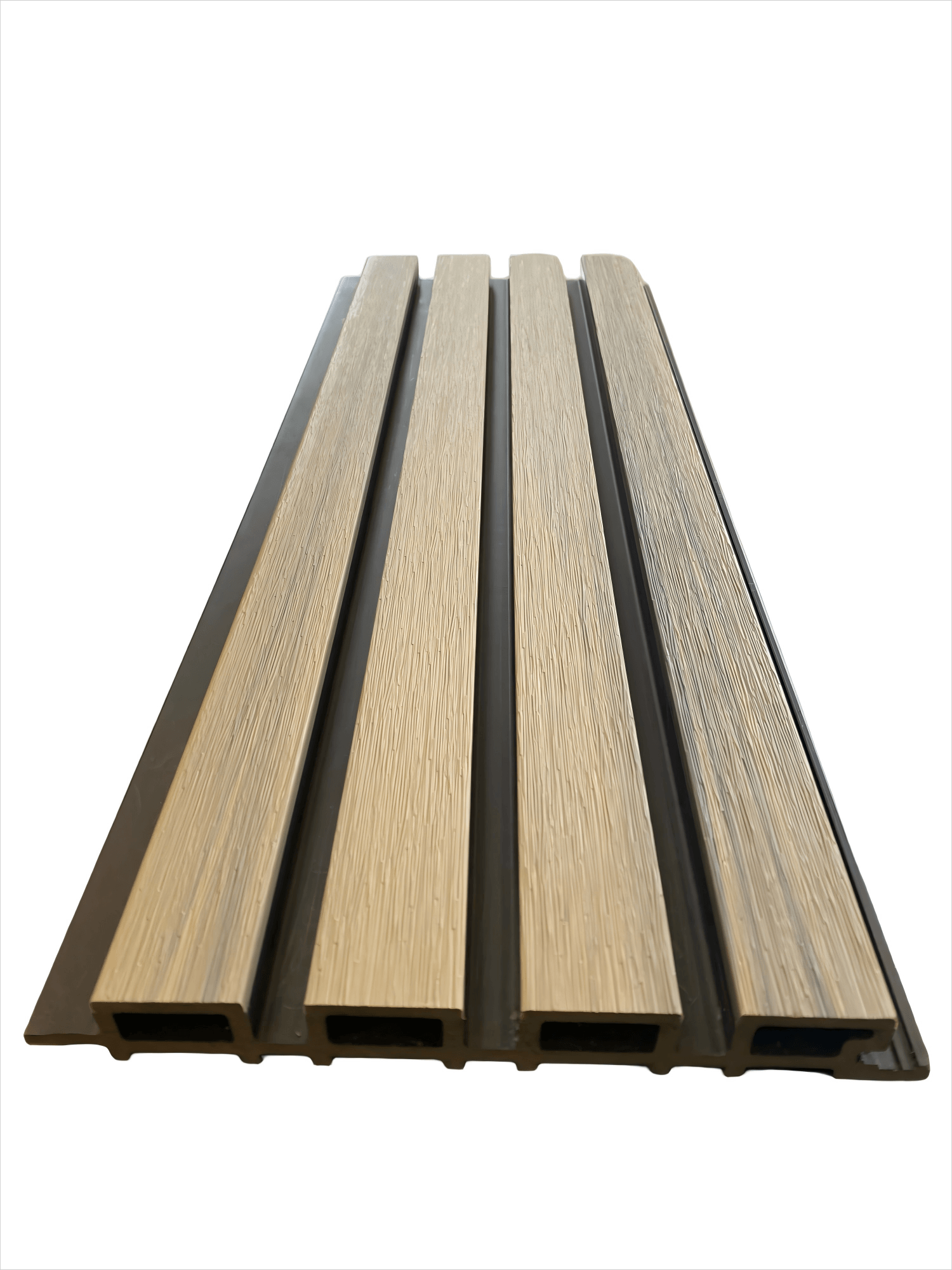
FAQ: A Guide to Technical Selection with Q&A Format
Q1: How does the cost of wood-plastic profiles compare to that of traditional wood?
A: Taking a 100㎡ outdoor flooring project as an example, the material cost of traditional preservative-treated wood (pine) is approximately 80 yuan/㎡, but it requires painting maintenance every 2 years, with a total cost exceeding 1,200 yuan/㎡ over 10 years. In contrast, the material cost of Linyi Xuancheng's light luxury co-extrusion series is 120 yuan/㎡, requiring no maintenance, with a total cost of only 120 yuan/㎡ over 10 years, and its service life is extended to over 15 years.
Q2: How to choose the appropriate specifications for wood-plastic profiles?
A: It needs to be determined based on the scenario load and installation conditions:
- Load requirementsProducts with a flexural strength ≥ 35 MPa should be selected for areas with heavy pedestrian traffic (such as commercial plazas); for home courtyards, products with a flexural strength ≥ 25 MPa can be chosen.
- Installation spacingWhen the keel spacing is ≤600 mm, profiles with a thickness of ≥25 mm can be selected; when the spacing is ≤400 mm, a thickness of ≥20 mm is sufficient.
- Environmental adaptabilityProducts resistant to low temperatures (-40°C) should be selected for cold regions in the north; products with a water absorption rate ≤ 0.5% should be chosen for coastal high-humidity areas.
Q3: What are the precautions for installing wood-plastic profiles?
A:
STEP 1: Basic ProcessingThe ground must be level with a slope ≤ 2% to avoid water accumulation; if it is a soil foundation, a 100 mm thick crushed stone bedding layer must be laid.
STEP 2: Keel InstallationUse galvanized steel keels (specifications: 40mm × 40mm × 3mm), with spacing adjusted according to the profile specifications. Stainless steel fixing screws (diameter ≥ 5mm) shall be used.
STEP 3: Profile CuttingUse alloy saw blades (with 60-80 teeth) at a rotational speed of 3000-4000 r/min, and sand the burrs with sandpaper after cutting.
STEP 4: Edge finishingSpecial edge banding strips should be installed at the ends to prevent moisture penetration and subsequent swelling.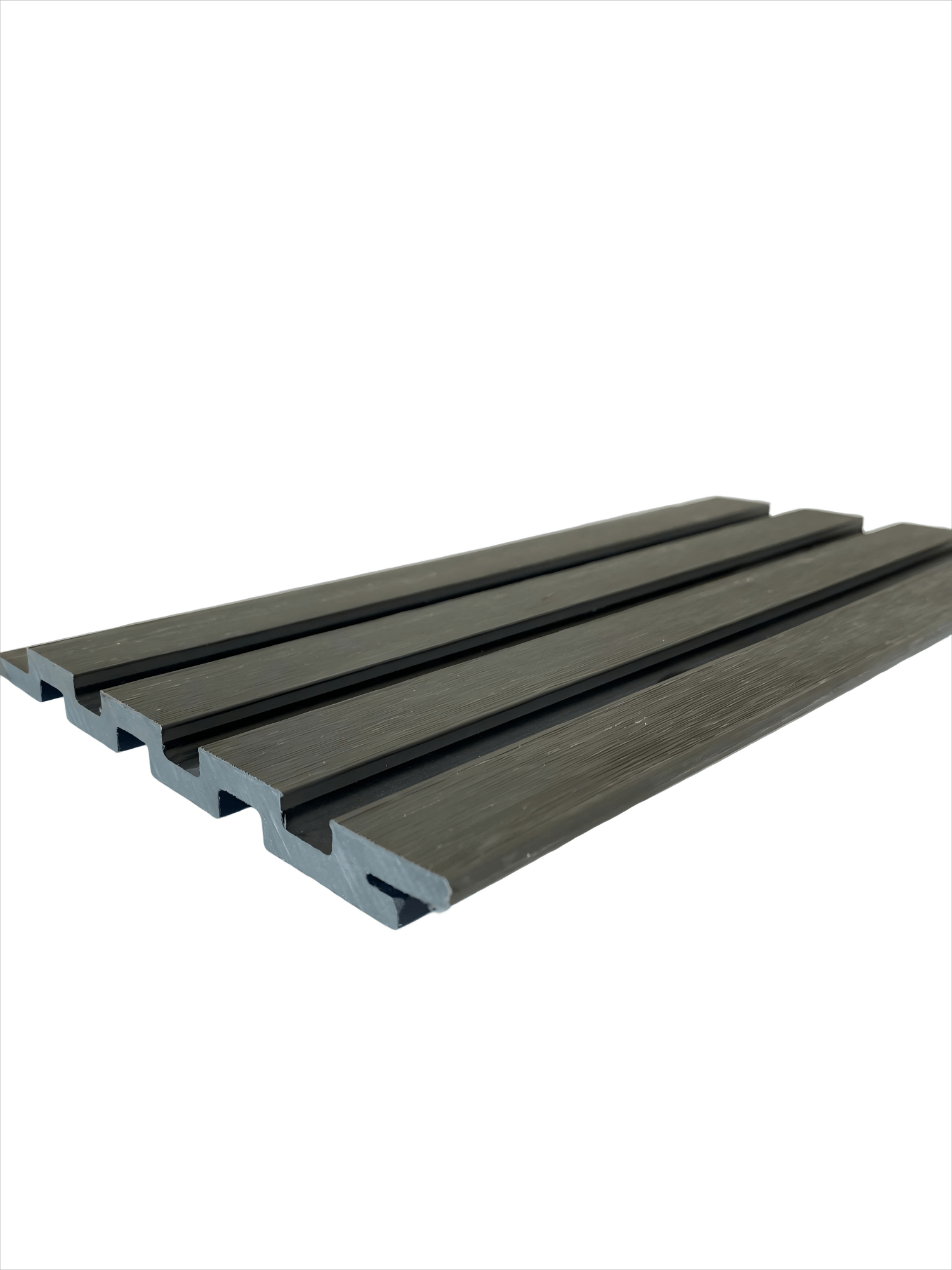
Reference for Full Text Summary: The Future of Green Building Materials Driven by Technology
Linyi Xuancheng New Materials Co., Ltd. has addressed the three major pain points in the wood-plastic profile industry—adhesion, weather resistance, and cost—through equipment upgrades, process innovation, and product iteration. Its light luxury co-extrusion series and natural classic series cater to the needs of high-end outdoor and home decoration scenarios, respectively, driving the green transformation of the building materials industry with their characteristics of "zero maintenance, long lifespan, and high environmental protection." Currently, the company's products have been applied in over 500 landscape projects and 100,000 home decorations across the country, cumulatively reducing wood consumption by over 200,000 cubic meters. For more information, please visit the official website:www.triday-wpc.comIn the future, with the deepening of the "dual carbon" policy, the market penetration rate of wood-plastic profiles is expected to rise from the current 5% to 20%, and Linyi Xuancheng will continue to lead industry upgrading through technological innovation.