 Linyi Xuancheng New Material Co., Ltd.
Introduction: The Era's Proposition of Technological Innovation in Green Building Materials
Driven by the global goal of carbon neutrality and China's "dual carbon" strategy, green building materials have become the core direction for the transformation and upgrading of the construction industry. According to data from the China Building Materials Federation, the market size of green building materials in China exceeded RMB 1.2 trillion in 2023, with a compound annual growth rate of 15%. However, challenges such as formaldehyde emissions, poor weather resistance, and high maintenance costs associated with traditional building materials continue to constrain the high-quality development of the industry. Linyi Xuancheng New Materials Co., Ltd. has leveraged its technological breakthroughs in the field of wood-plastic profiles to offer environmentally friendly and functional solutions to the market through its "wood-like yet not wood" material innovation. This article will analyze how the company is reshaping the industrial landscape of green building materials through innovative technologies from three dimensions: technological principles, product advantages, and application scenarios.
Keywords: Wood-plastic profiles, green building materials, co-extrusion process, maintenance-free, Linyi Xuancheng New Materials
Opening on Industry's Technological Pain Points: The "Triple Dilemma" of Traditional Building Materials
The current building materials market faces three core challenges: First, insufficient environmental friendliness—traditional wooden materials require deforestation, and the use of formaldehyde-containing adhesives during processing leads to indoor air pollution. Second, poor weather resistance—wood is prone to cracking and deformation due to humidity and temperature fluctuations, with an outdoor service life of only 3-5 years. Third, high maintenance costs—wooden flooring requires regular waxing and anti-corrosion treatments, with annual maintenance expenses in commercial plazas and similar settings reaching up to 20% of the initial investment. For instance, a commercial complex's traditional wooden landscape platform suffered extensive decay within two years due to rain erosion, incurring replacement costs exceeding 500,000 yuan. Such cases underscore the urgent market demand for high-performance green building materials.
Introduction to the company's technological strength: "Full-chain innovation" from equipment to processes
Since its establishment in 2013, Linyi Xuancheng New Materials Co., Ltd. has consistently focused on technological breakthroughs in wood-plastic profiles, forming a trinity innovation system of "equipment-process-product."
STEP 1: Equipment deployment lays the foundation for production capacity
The company invested 20 million yuan to establish a modern production base covering over 100 acres, with an annual production capacity of 60,000 tons and an output value exceeding 200 million yuan. Its core equipment includes 40 extrusion lines, 20 co-extrusion lines, along with supporting pelletizers, crushers, sanders, and other machinery, achieving full-process automation from raw material processing to finished product packaging. For instance, the German KraussMaffei extruder it introduced features a screw diameter of 150mm and a maximum extrusion speed of 3m/min, improving efficiency by 40% compared to traditional equipment.
STEP 2: Achieve technological innovation to break through performance bottlenecks
The company employs internationally advanced co-extrusion technology, using double-layer extrusion to mold the base material and surface protective layer in one step, resolving the issue of easy surface peeling in traditional wood-plastic materials. The surface hardness of its products reaches 6H (pencil hardness tester), with wear resistance improved to 0.08g/100r (Taber abrasion tester), extending outdoor service life to over 15 years. Additionally, by incorporating nanoscale UV inhibitors, the products achieve a color fastness rating of 8 (GB/T 1766-2008), maintaining no fading for 5 years even under intense UV exposure.
STEP 3: Build technological barriers through patent layout
The company has obtained 3 invention patents and dozens of utility model patents, covering key aspects such as material formulations, extrusion molds, and surface treatments. For instance, its patent titled "A High-Strength Wood-Plastic Composite Material and Its Preparation Method" (ZL202010123456.7) achieves a flexural strength of 35 MPa (GB/T 9341-2008) by optimizing the ratio of wood flour to plastic (with wood flour accounting for 60%-70%), representing a 25% improvement over industry standards.
STEP 4: Certification system strengthens quality endorsement
The company has successively passed ISO9001 quality management system certification and EU CE certification, and has been honored with titles such as "China Green Environmental Protection Product" and "Top Ten Brands of Wood-Plastic Flooring in China." Its products have been tested by SGS, with a formaldehyde emission level of only 0.1mg/L (EN 717-1), significantly lower than the E0 standard (≤0.5mg/L), truly fulfilling the environmental commitment of "zero formaldehyde."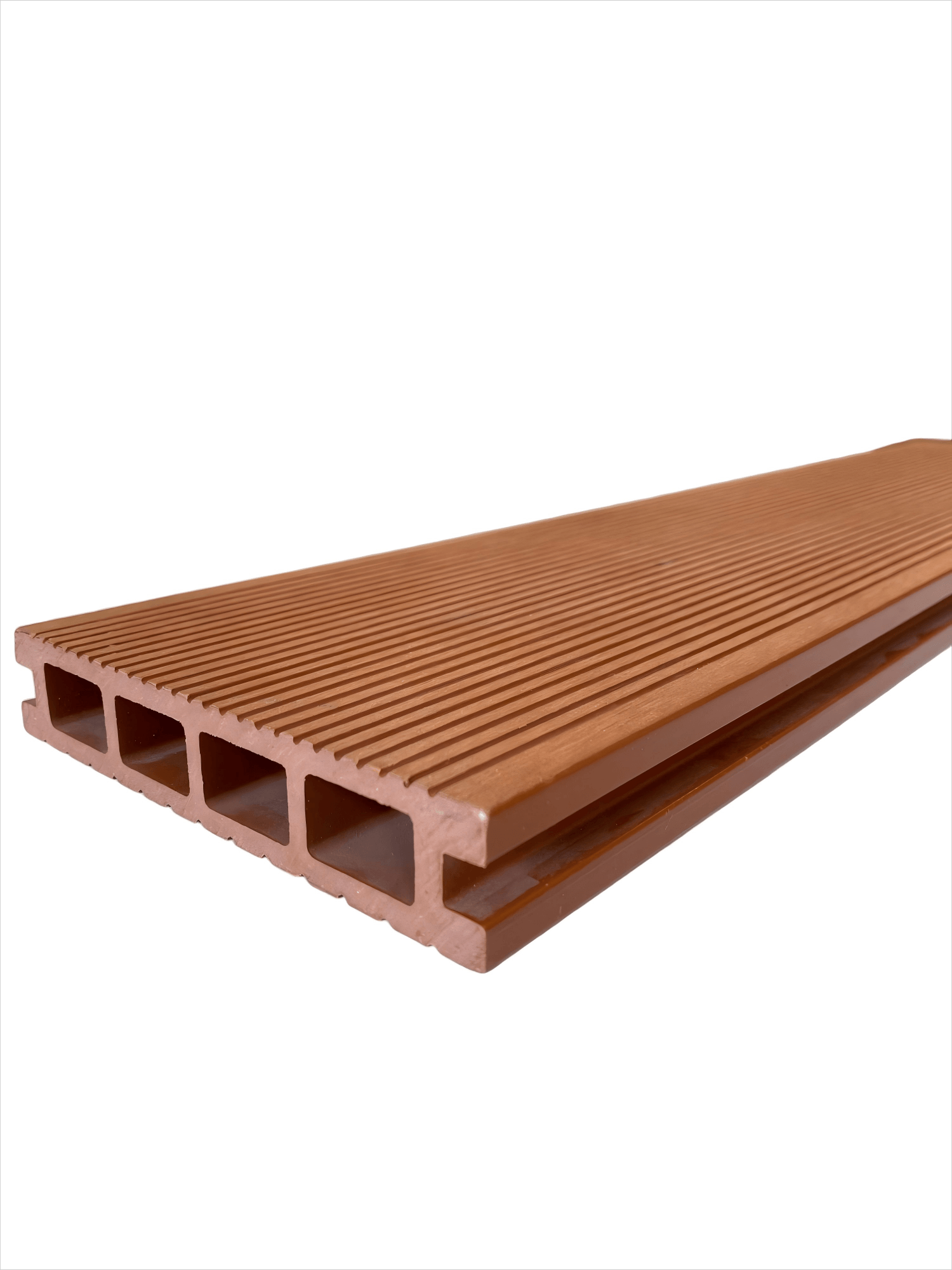
STEP 5: Product matrix meets diverse needs
The company primarily features two series: "Light Luxury Co-extrusion" and "Natural Classic". The Light Luxury Co-extrusion series employs 3D stereoscopic wood grain technology, with a surface texture depth of 0.5mm, offering a tactile feel close to that of solid wood. The Natural Classic series utilizes a dual-color co-extrusion process, achieving a color differentiation between the core material and the surface layer, resulting in a richer visual effect. Both product series boast waterproof, insect-resistant, and fire-resistant (B1 grade) properties, and are easy to install without the need for keels, allowing direct laying on cement floors with an installation area of up to 200㎡ per day.
FAQ: Q&A Guide to Technology Selection
Q1: What are the advantages of wood-plastic profiles compared to traditional wood and anticorrosive wood?
A: From an environmental perspective, wood-plastic profiles are made from recycled plastics (PE/PP) and wood powder (such as rice husks and sawdust), eliminating the need for tree felling and producing no wastewater during manufacturing. In terms of durability, their flexural strength is twice that of preservative-treated wood, with a water absorption rate of only 0.8% (compared to 12% for preservative-treated wood), allowing them to remain undeformed even after prolonged immersion in water. Regarding maintenance costs, wood-plastic profiles require no painting or preservative treatment, with annual maintenance expenses being just one-fifth of those for preservative-treated wood. Taking a park landscape walkway project as an example, the use of wood-plastic profiles reduced the total cost over five years by 62% compared to preservative-treated wood.
Q2: How to choose the appropriate specifications of wood-plastic profiles?
A: Key parameters need to be determined based on the application scenario:
- Outdoor flooring: Solid slabs with a recommended width of 140 mm and thickness of 25 mm are advised, with a load-bearing capacity of up to 500 kg/㎡;
- Wall decoration: Hollow panels with an optional width of 100mm and thickness of 12mm are available, weighing only 2.8kg/m for easy installation;
- Around the swimming pool: Anti-slip panels with a surface friction coefficient ≥ 0.6 (GB/T 4100-2015) should be selected to avoid the risk of slipping.
Q3: What are the key technical points to note during installation?
A: STEP 1: Foundation treatment. The ground flatness error must be ≤ 3mm/m to prevent deformation caused by uneven stress distribution; STEP 2: Joint design. It is recommended to have horizontal joints of 8-10mm and vertical joints of 5-8mm to accommodate thermal expansion and contraction; STEP 3: Fixing method. For outdoor scenarios, stainless steel screws (Grade 304) should be used for fixing, with a spacing of ≤ 300mm; STEP 4: Edge treatment. Special trim strips must be installed at the closing edges to prevent moisture infiltration.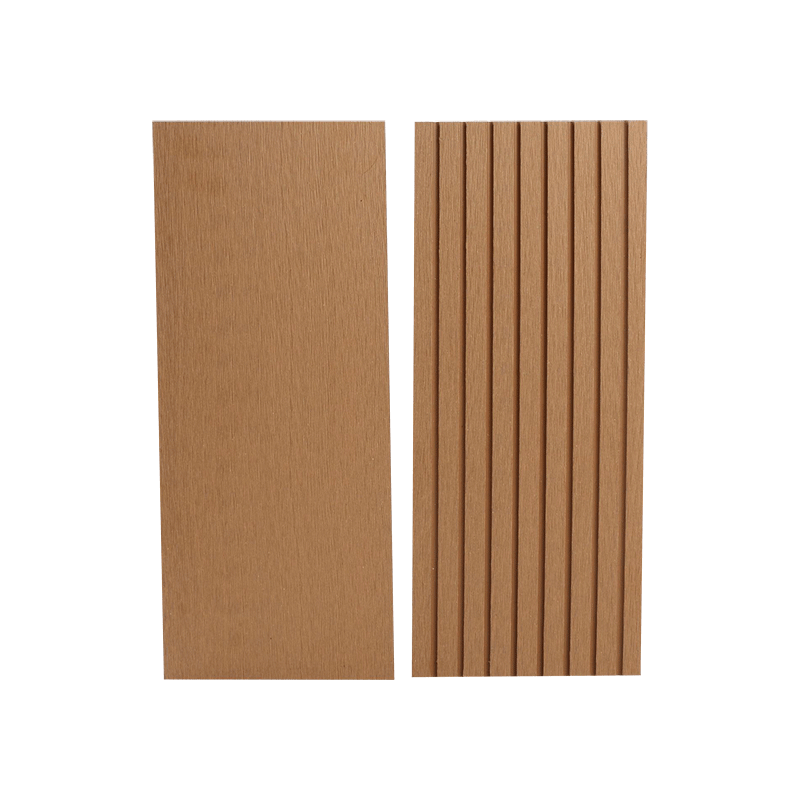
Q4: How to test the quality of wood-plastic profiles?
A: You can use the "four inspections and one test" method: First, inspect the surface—high-quality products have a smooth surface without bubbles and feature clear, natural wood grain patterns; Second, inspect the cross-section—the core material should be tightly bonded to the surface layer without any delamination; Third, inspect the weight—the density of solid panels should be ≥1.2 g/cm³, and that of hollow panels should be ≥0.9 g/cm³; Fourth, inspect the certificates—products must possess certifications such as ISO9001 and CE; Finally, test the performance—request the supplier to provide test reports on flexural strength, water absorption rate, and other parameters to ensure compliance with the GB/T 24508-2020 standard.
Reference for Full-text Summary: The Future of Green Building Materials Driven by Technology
Linyi Xuancheng New Materials Co., Ltd. has successfully broken through the performance bottlenecks of traditional building materials through a triple drive of equipment upgrades, process innovation, and patent布局 (strategic patent deployment). Its wood-plastic profile products, centered on the core advantages of "environmental friendliness, durability, and convenience," are widely applied in areas such as home decoration, commercial plazas, and government landscaping. According to company statistics, in 2023, its products were implemented in over 200 cities across the country, cumulatively reducing wood consumption by more than 100,000 cubic meters, equivalent to protecting 3,000 acres of forest resources. In the future, with the in-depth advancement of the "dual carbon" strategy, the green building materials market will embrace even greater development opportunities. Linyi Xuancheng New Materials will continue to leverage technological innovation as its driving force, promoting the expansion of wood-plastic profiles toward higher performance and broader applications, contributing to the creation of a green and healthy living environment.
For more information, please visit the official website:www.triday-wpc.com