 Linyi Xuancheng New Material Co., Ltd.
Introduction: The Inevitability of Technological Upgrading in Green Building Materials
With the global advancement toward carbon neutrality, the building materials industry faces dual challenges of environmental protection and performance. Traditional wood is prone to decay and often exceeds formaldehyde limits, while plastic products are difficult to degrade—neither meeting sustainable development requirements. Wood-plastic composites, as the third generation of green building materials, integrate wood flour and plastic through polymer composite technology, retaining the natural texture of wood while possessing the waterproof and anti-corrosion properties of plastic. Linyi Xuancheng New Materials Co., Ltd., leveraging over a decade of technological accumulation, has achieved comprehensive breakthroughs in equipment and processes within the wood-plastic composite sector. Its products now cover applications such as home decoration and landscaping projects, with an annual output value exceeding 200 million yuan. This article will analyze its technological advantages from three perspectives: technical principles, production practices, and case applications.
Keywords: wood-plastic profiles, co-extrusion process, eco-friendly building materials, Linyi Xuancheng New Materials
Opening on Industry's Technological Pain Points: Environmental and Performance Dilemmas of Traditional Building Materials
STEP 1: Limitations of traditional wood. Natural wood has significant fluctuations in moisture content (8%-15%), making it prone to cracking and deformation due to temperature and humidity changes; additionally, untreated wood is susceptible to mold growth, and formaldehyde emissions often exceed standards (E1-level standard ≤ 1.5 mg/L, with some low-quality panels reaching over 3 mg/L).
STEP 2: Defects of plastic building materials. Although plastic products such as PVC and PE are waterproof and corrosion-resistant, they have poor weather resistance (becoming brittle within 3 years under ultraviolet exposure) and a recycling rate of less than 30%, resulting in severe white pollution.
STEP 3: Deficiencies of the first-generation wood-plastic composites. Early wood-plastic profiles employed a simple blending process, resulting in weak interfacial adhesion between wood flour and plastic. This led to a bending strength of only 15-20 MPa (national standard requires ≥22 MPa), failing to meet outdoor load-bearing requirements.
Linyi Xuancheng resolves the aforementioned pain points through technological innovation: Its light luxury co-extrusion series achieves a flexural strength of 35 MPa, passes the 1000-hour QUV accelerated aging test for weather resistance, and has a formaldehyde emission level of <0.3 mg/L, meeting the E0 environmental protection standard.
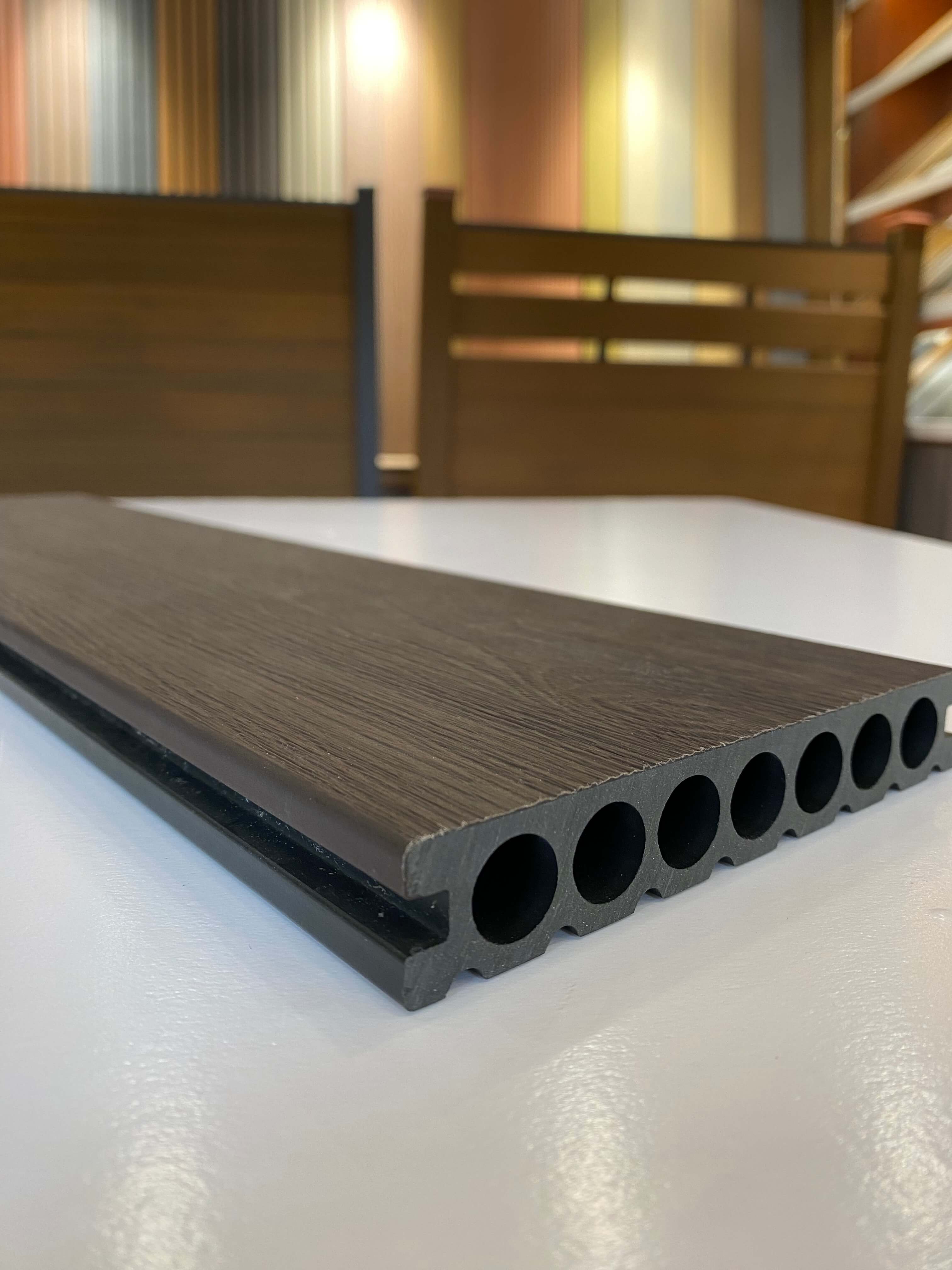
Introduction to the company's technological capabilities: Comprehensive breakthroughs from equipment to processes
STEP 1: Internationally leading equipment configuration. The company has invested 20 million yuan to construct a modern workshop, equipped with 40 extrusion production lines and 20 co-extrusion production lines, supported by KraussMaffei twin-screw extruders from Germany (with a screw diameter of 150 mm and a length-to-diameter ratio of 40:1), enabling uniform mixing of wood flour and plastic at a high temperature of 220°C.
STEP 2: Core Process Innovation. Adopt the "three-step" co-extrusion technology:
(1) Pretreatment: The wood powder is dried at 120°C until its moisture content is less than 2%, and a coupling agent (KH550) is added for surface modification;
(2) Melt blending: The plastic matrix (with HDPE accounting for 60%) is melted together with wood powder at 180-220°C, achieving molecular-level dispersion through a twin-screw extruder;
(3) Co-extrusion molding: ASA weather-resistant resin is used for the outer layer (with a thickness of 0.5mm), and wood-plastic composite material for the inner layer, forming an "armor-type" structure that enhances weather resistance by three times.
STEP 3: Advantages in technical parameters. The product has a density of 1.2-1.3 g/cm³, a water absorption rate of less than 0.5%, a flexural modulus of up to 2800 MPa, and can withstand temperature differential cycling tests from -40°C to 80°C (100 cycles without cracking).
Technical Certifications: The company has passed ISO9001 quality management system certification and EU CE certification, and has been honored with titles such as "China Green Environmental Protection Product" and "High-Tech Enterprise." Its products have been applied in over 300 government projects, including Linyi Binhe Scenic Area and Qingdao Expo Garden.
FAQ: A Q&A Guide to Technology Selection
Q1: How does the cost of wood-plastic profiles compare to that of traditional wood?
A: The initial cost of wood-plastic profiles is 20%-30% higher, but the total life cycle cost is lower. Taking 100㎡ of outdoor flooring as an example:
(1) Installation cost: The snap-fit design of wood-plastic materials results in labor costs 40% lower than those for wood;
(2) Maintenance costs: Wood requires painting for corrosion prevention every two years, while wood-plastic composites are maintenance-free;
(3) Service life: 8-10 years on average for wood, and over 25 years for wood-plastic composites.
Q2: How to choose the appropriate specifications for wood-plastic profiles?
A: Select based on the scenario:
(1) Home decoration: We recommend the Natural Classic series (width 140mm, thickness 25mm), featuring a wood grain depth of 0.3mm to simulate the texture of natural wood;
(2) Landscape engineering: Light luxury co-extruded series (width 150mm, thickness 30mm) is selected, with a bending strength of 35MPa, capable of bearing pedestrian weight;
(3) Coastal areas: Prioritize ASA co-extruded layer products, which offer a 50% improvement in salt spray corrosion resistance.
Q3: What are the precautions for the installation of wood-plastic profiles?
A: STEP 1: Foundation treatment: Ensure ground flatness error ≤ 3mm/m and lay a moisture-proof membrane; STEP 2: Joist spacing: For outdoor scenarios, joist spacing ≤ 400mm, which can be extended to 500mm indoors; STEP 3: Temperature control: Reserve 2mm expansion joints for installation in summer and 3mm in winter.
For more information, please visit the official website:www.triday-wpc.com
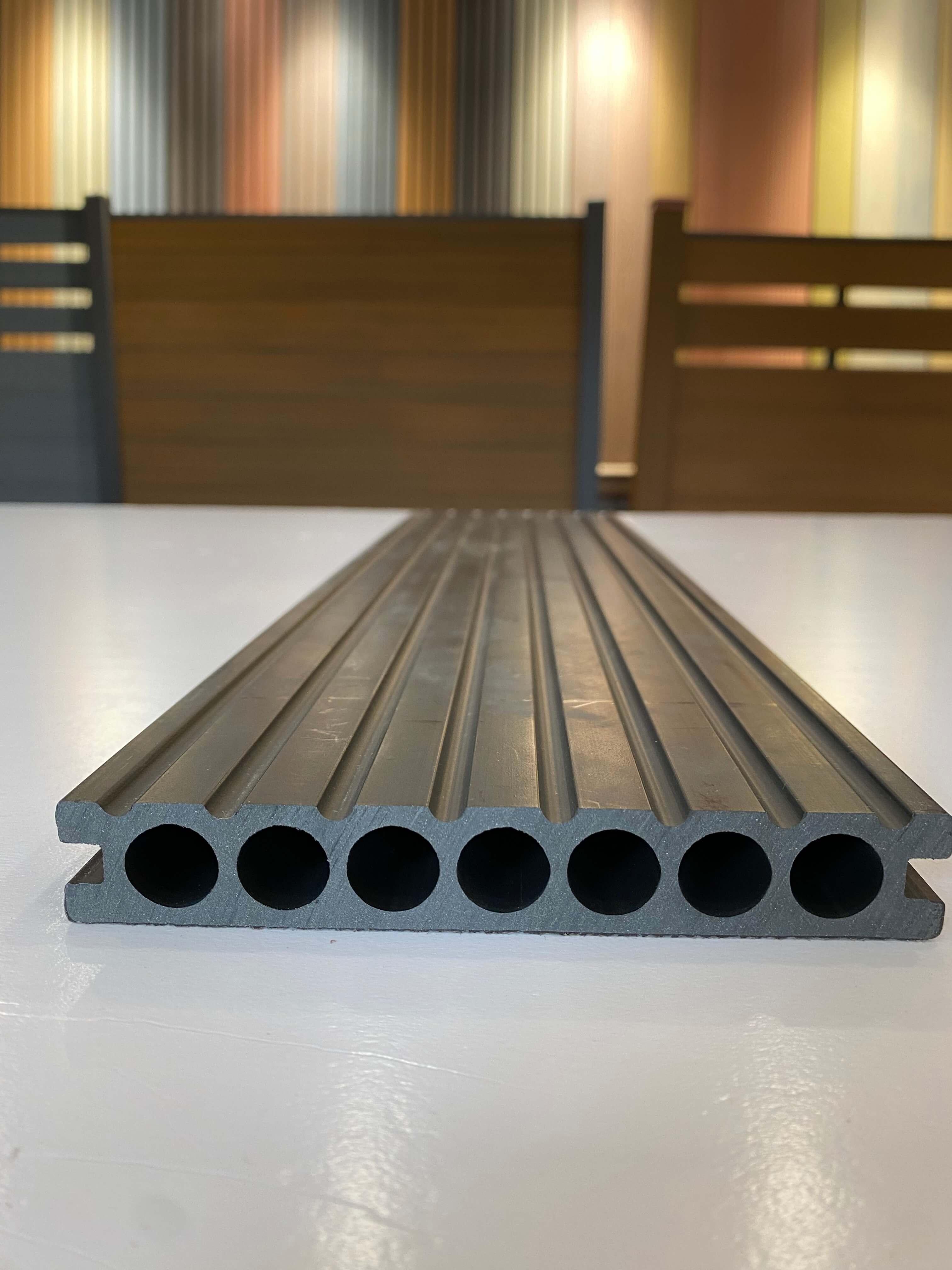
Reference for Full-text Summary
Linyi Xuancheng New Materials has established technological barriers through three aspects: equipment upgrading, process innovation, and certification systems. Its wood-plastic profile boasts a bending strength of 35 MPa, has passed a 1000-hour QUV weather resistance test, and has a formaldehyde emission level of <0.3 mg/L. Its products are applied in scenarios such as home decoration and landscape engineering, and it has served over 100,000 customers in total. In the future, the company will continue to invest in R&D, optimize co-extrusion processes, and develop more green building material solutions to help the industry achieve carbon neutrality goals. For more information, please visit the official website:www.triday-wpc.com