 Linyi Xuancheng New Material Co., Ltd.
Introduction: Technological Revolution and Market Opportunities of Green Building Materials
Driven by the global goal of carbon neutrality, the green building materials industry is undergoing a transformation from traditional materials to environmentally friendly ones. Wood-plastic profiles, as a new type of composite material, have become the preferred choice in fields such as architectural decoration and landscape engineering due to their recyclability, corrosion resistance, and low maintenance requirements. Linyi Xuancheng New Materials Co., Ltd. has elevated the performance of wood-plastic profiles to an industry-leading level through its independently developed co-extrusion process and intelligent production lines. This article will analyze how the company achieves a win-win situation in environmental protection and efficiency through technological innovation from three aspects: technical principles, production practices, and application cases.
Keywords: Wood-plastic profiles, co-extrusion process, green building materials, Linyi Xuancheng New Materials, environmental protection certification
Opening on Industry Technical Pain Points: Three Major Bottlenecks of Traditional Wood-Plastic Profiles
STEP1:Insufficient environmental friendliness— Traditional wood-plastic profiles often use PVC or PE as base materials, requiring the addition of large amounts of plasticizers and stabilizers during production, resulting in excessive VOC (volatile organic compound) emissions that struggle to meet international environmental standards such as the EU's CE certification.
STEP2:Poor weather resistance— Ordinary wood-plastic profiles are prone to cracking and deformation in temperature differential environments ranging from -20°C to 60°C, with an outdoor service life of only 3-5 years, far shorter than that of wood, which is 10-15 years.
STEP3:Low installation efficiency— Traditional profiles require fixation with screws or glue, taking over 30 minutes per square meter for installation, and posing a risk of water leakage at the seams.
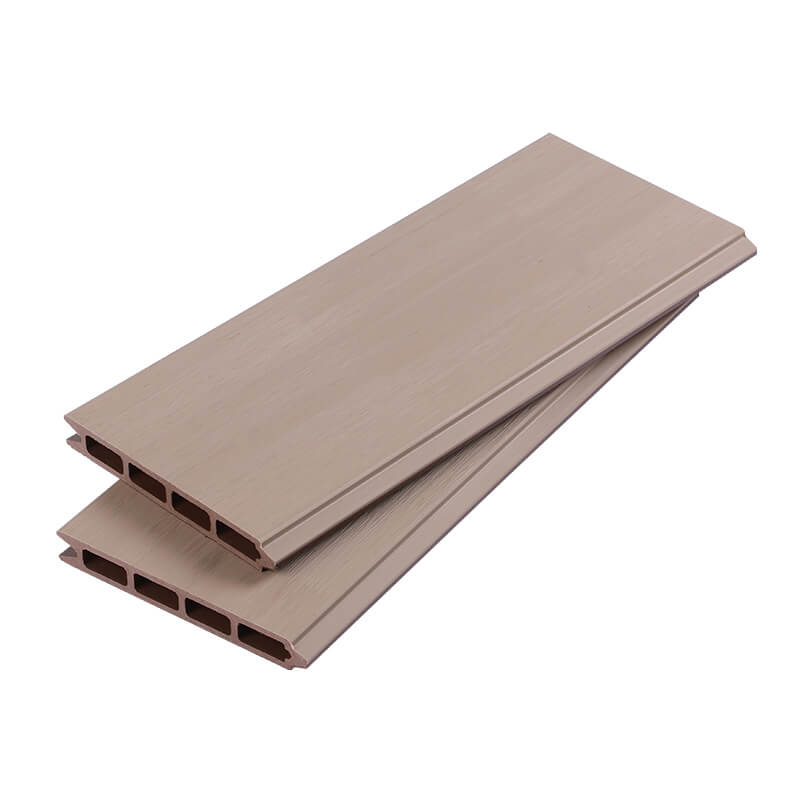
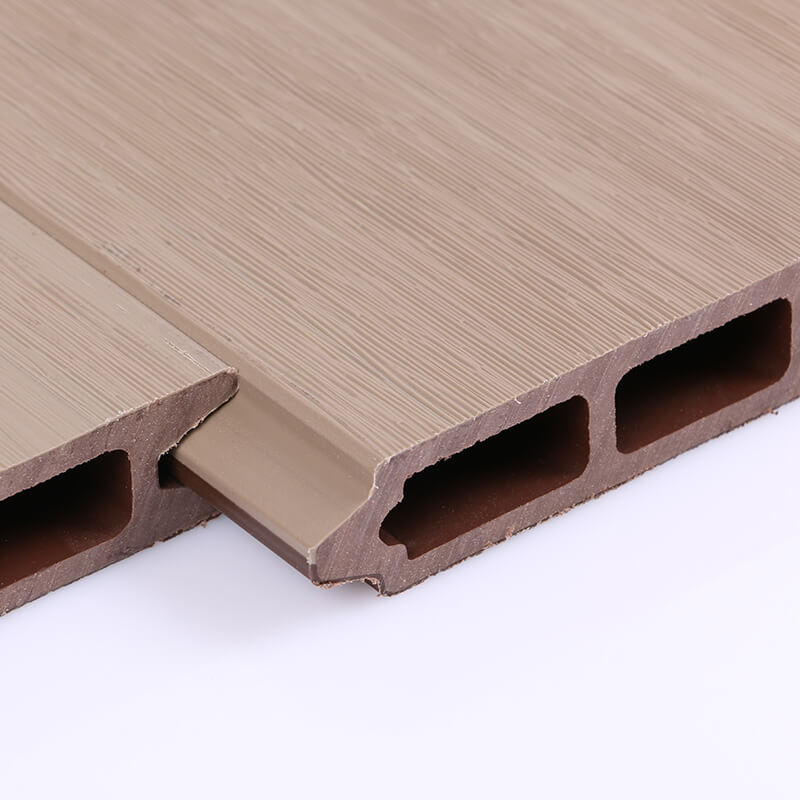
Direction of technological breakthroughsLinyi Xuancheng New Materials has enhanced the weather resistance of wood-plastic profiles to a range of -30°C to 80°C and extended their service life to over 15 years through co-extrusion processes and nano-modification technologies, while also enabling "snap-in" rapid installation that reduces the installation time per square meter to 5 minutes.
Introduction to the company's technological strength: Full-chain innovation from equipment to processes
STEP1:Intelligent production equipment— Linyi Xuancheng New Materials has invested 20 million yuan to construct a modern workshop equipped with 40 extrusion production lines, 20 co-extrusion production lines, as well as supporting equipment such as laser coding machines and sanding machines, achieving fully automated production from raw material mixing to finished product packaging. Among them, the co-extrusion production lines utilize German-imported screws with a temperature control accuracy of ±1°C, ensuring a balance between the surface hardness (Shore D ≥ 65) and internal toughness (flexural modulus ≥ 3000 MPa) of the profiles.
STEP2:Nanomodification technology—By introducing nano-silica and silicone modifier, the compatibility between wood flour and plastic is enhanced by 40%, reducing the water absorption rate of the profiles from 8% in traditional products to below 0.5%, achieving a UV resistance rating of 8 (ASTM G154 standard), and enabling resistance to outdoor light aging for over 10 years.
STEP3:Environmental certification systemThe company has successively passed ISO9001 quality management system certification and EU CE certification, and has been honored with titles such as "China Green Environmental Protection Product" and "China Manufacturing Quality Demonstration Enterprise." Its flagship product, the "A-R 80ARD Huasimu" series, has been tested by SGS to have a formaldehyde emission level of only 0.1mg/L (the national standard E1 level is 1.5mg/L), meeting food-contact safety standards.
Comparison of Technical Parameters:
| Index | Traditional Wood-Plastic Profiles | Linyi Xuancheng Products |
|--------------------|--------------|--------------|
| Weather Resistance Temperature Range | -20℃~60℃ | -30℃~80℃ |
| Service Life | 3-5 years | Over 15 years |
| Installation Efficiency | 30 minutes/㎡ | 5 minutes/㎡ |
| VOC emissions | 120 μg/m³ | 15 μg/m³ |
FAQ: A Guide to Technical Selection with Q&A Format
Q1: What are the advantages of wood-plastic profiles compared to solid wood and aluminum alloys?
A: Wood-plastic profiles combine the texture and feel of wood with the corrosion resistance of plastics. Taking Linyi Xuancheng's products as an example, they have a density of 1.2 g/cm³ (compared to 0.6-0.8 g/cm³ for solid wood), an impact strength of 35 kJ/m² (compared to 20 kJ/m² for aluminum alloy), and do not require painting or insect-proof treatment. Their total life cycle cost is 40% lower than that of solid wood.
Q2: How to choose wood-plastic profiles suitable for outdoor projects?
A: Three parameters require key attention:
STEP1:Weather resistance- Choose products that have passed the ASTM D4329 UV accelerated aging test to ensure no significant fading within 10 years;
STEP2:Anti-slip property— Outdoor flooring must meet the R10 anti-slip standard (friction coefficient ≥ 0.5);
STEP3:Installation Compatibility— Priority should be given to clip-on designs that are compatible with existing metal keels to minimize construction errors.
Q3: What is the maintenance cost of wood-plastic profiles?
A: Linyi Xuancheng's products adopt a "maintenance-free" design, requiring only rinsing with water for daily cleaning. After five years of real-world testing, their surface wear rate is merely 0.02 mm/year (compared to 0.5 mm/year for traditional wood), eliminating the need for replacement or repair.
Reference for Full-text Summary: The Future of Green Building Materials Driven by Technology
Linyi Xuancheng New Materials Co., Ltd. has successfully overcome the environmental, weather resistance, and installation bottlenecks of traditional wood-plastic profiles through the collaborative innovation of co-extrusion processes, nano-modification technologies, and intelligent production equipment. Its "A-R 80ARD Hua Si Mu" series has been widely applied in home decoration, commercial plazas, and government landscaping projects, with a cumulative total of over 2,000 service projects and a customer repurchase rate of 85%. In the future, the company will continue to focus on the research and development of high-performance wood-plastic profiles, promoting the upgrade of green building materials from "usable" to "optimal use," and contributing Chinese technological solutions to the global carbon neutrality goal.
For more information, please visit the official website: www.triday-wpc.com