 Linyi Xuancheng New Material Co., Ltd.
Introduction: The Wave of Technological Innovation in Green Building Materials
As global demand for environmentally friendly building materials continues to rise, wood-plastic profiles have become the preferred material in fields such as home decoration and landscaping projects due to their eco-friendliness, durability, and ease of maintenance. However, traditional wood-plastic production faces technical challenges, including complex processes, high energy consumption, and unstable product performance. Linyi Xuancheng New Materials Co., Ltd. has successfully overcome these technological bottlenecks by introducing international advanced equipment and optimizing production processes, resulting in the production of high-quality wood-plastic profiles with an annual capacity of 60,000 tons. These products are widely used in multiple key projects across the country. This article will provide an in-depth analysis of Linyi Xuancheng's technological innovation path from three dimensions: technical analysis, practical case studies, and selection guidelines.
Keywords: wood-plastic profiles, green building materials, technological innovation, Linyi Xuancheng, production process
Opening on Industry Technical Pain Points: Three Major Challenges in Traditional Wood-Plastic Composite Production
STEP1:High process complexityTraditional wood-plastic production involves multiple processes such as mixing, extrusion, cooling, and cutting, with parameter control in each step relying on manual experience, resulting in poor product consistency. For instance, when the extrusion temperature fluctuates by more than ±5℃, cracks easily appear on the surface of the profiles, leading to a scrap rate as high as 15%.
STEP2:High energy consumption and costsWood-plastic production requires continuous heating to 180-220°C, with traditional equipment having a thermal efficiency of less than 60% and energy consumption per ton of product reaching 120 kWh, directly driving up production costs.
STEP3:Product performance limitationsThe flexural strength of ordinary wood-plastic profiles is only 25-30 MPa, with poor weather resistance. After being used outdoors for 3-5 years, problems such as fading and deformation are prone to occur, limiting their application scenarios.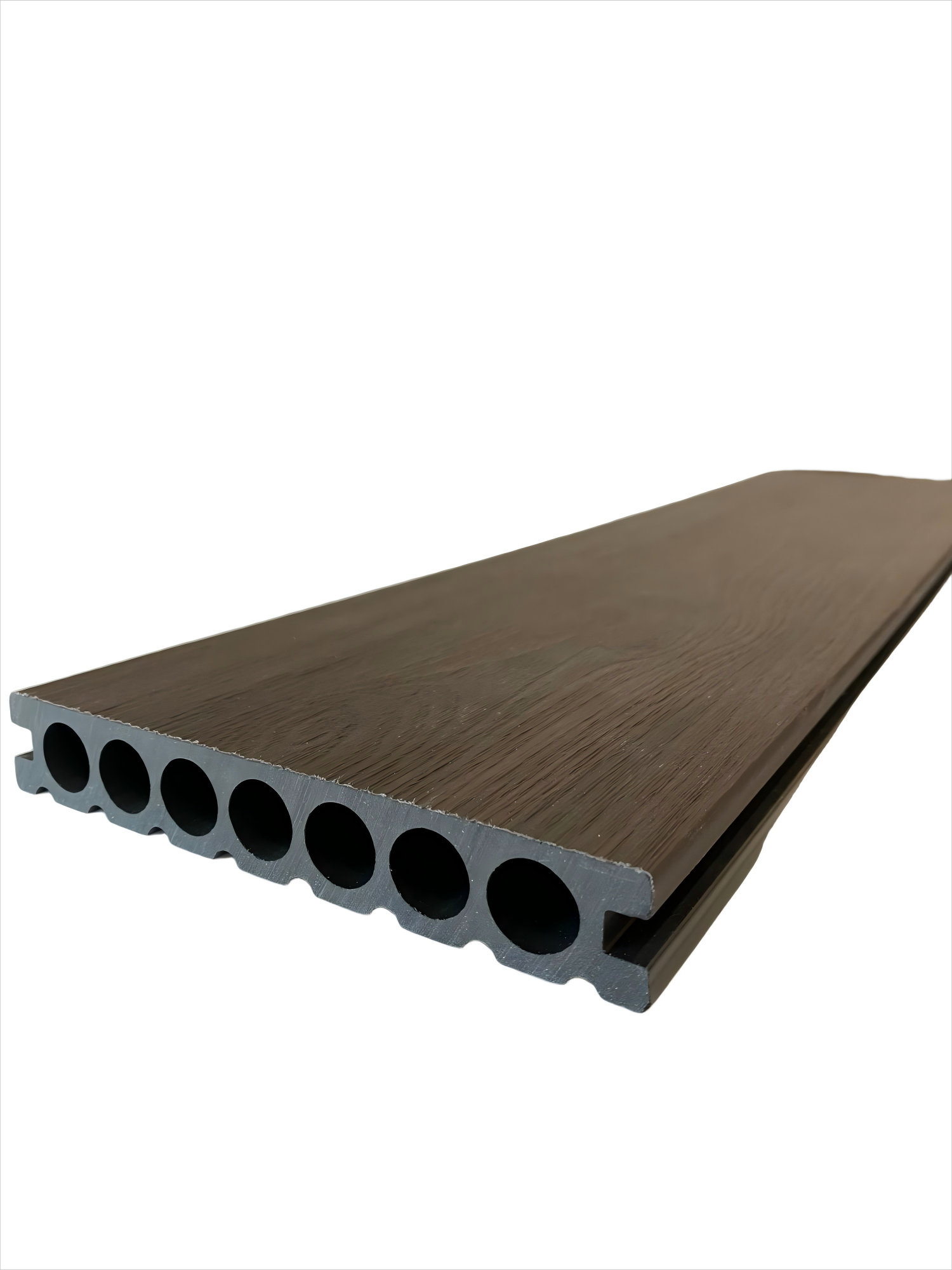
Linyi Xuancheng has transformed the aforementioned pain points into innovation breakthroughs through technological innovation. Its imported German co-extrusion production line adopts a double-layer extrusion process, utilizing a mixture of high-density polyethylene (HDPE) and wood powder for the outer layer and adding glass fiber reinforcement materials to the inner layer, enhancing the bending strength of the profiles to 45 MPa and extending weather resistance to over 10 years. Meanwhile, the equipment is equipped with an intelligent temperature control system, keeping the extrusion temperature fluctuations within ±2°C and reducing the defect rate to below 3%.
Introduction to the company's technological capabilities: A full-chain upgrade from equipment to processes
Since its establishment in 2013, Linyi Xuancheng has consistently focused on technological innovation in wood-plastic profiles and has established a trinity technological system of "equipment-process-product":
STEP1:Equipment Upgrade: Introduction of International Top-tier Production LinesThe company invested 20 million yuan to establish a modern production workshop equipped with over 40 extrusion production lines, more than 20 co-extrusion production lines, as well as supporting equipment such as laser coding machines and sanding machines. Among them, the co-extrusion production lines adopt German KraussMaffei technology, enabling synchronous extrusion of double-layer materials and improving production efficiency by 40% compared to traditional equipment.
STEP2:Process optimization: Original "three-stage temperature control" technologyIn response to the challenge of temperature control during wood-plastic extrusion, Linyi Xuancheng developed the "three-stage temperature control" process: the first stage (160-180℃) promotes the fusion of wood powder and plastic; the second stage (180-200℃) optimizes material fluidity; the third stage (200-220℃) completes the shaping. Through precise temperature control in stages, the surface smoothness of the profiles has improved by 30%, and the internal structure has become denser.
STEP3:Product Innovation: Creating Two Major Series of "Light Luxury Co-extrusion" and "Natural Classic"The light luxury co-extrusion series features a 3mm thick high-gloss outer layer with abrasion resistance exceeding 5000 revolutions (national standard requires ≥2000 revolutions), suitable for high-traffic scenarios such as commercial plazas; the natural classic series retains wood grain textures, achieving a UV resistance rating of 8 (the highest level), allowing for long-term exposure to outdoor environments.
In terms of technical parameters, Linyi Xuancheng's wood-plastic profiles come in widths ranging from 60 to 200 mm, with lengths customizable up to 6 meters, a density of 0.6-0.8 g/cm³, and a water absorption rate of ≤2%, fully complying with the GB/T 24508-2020 standard. For more information, please visit the official website:www.triday-wpc.com
FAQ Q&A Technical Selection Guide: How to Choose the Most Suitable Wood-Plastic Profiles?
Q1:What are the advantages of wood-plastic profiles compared to solid wood and plastic profiles?
A: Wood-plastic profiles combine the texture of wood with the weather resistance of plastic, requiring no painting or maintenance, and have a service life more than three times that of solid wood. Meanwhile, their production process does not generate harmful substances such as formaldehyde, and their environmental performance is superior to that of plastic profiles. Linyi Xuancheng's products have passed the EU CE certification, with a formaldehyde emission level ≤ 0.1 mg/L (the national standard requires ≤ 1.5 mg/L).
Q2:How to select profile specifications based on application scenarios?
A: For home decoration, it is recommended to choose profiles with a width of 60-100mm and a thickness of 25-30mm, as they are easy to install and cost-effective. For landscape engineering projects, which require greater load-bearing capacity, profiles with a width of 120-200mm and a thickness of over 35mm are recommended due to their higher flexural strength. Linyi Xuancheng offers free sample testing to help clients verify product performance.
Q3:What are the installation precautions for wood-plastic profiles?
A: STEP 1: Base preparation. The ground must be level with a slope ≤ 2% to prevent water accumulation; STEP 2: Fixing method. Use stainless steel screws or specialized clips with a spacing ≤ 500mm; STEP 3: Joining techniques. Employ 45° miter joints or tongue-and-groove joints, with gaps controlled within 3-5mm. Linyi Xuancheng provides installation video tutorials.It can be obtained by scanning the QR code on the product packaging.
Q4:How to judge the quality of wood-plastic profiles?
A: You can use the "three inspections and one test" method: First, inspect the surface finish; high-quality profiles should be free of cracks and burrs. Second, inspect the cross-sectional density, which should be uniform and free of voids. Third, inspect the color fastness; there should be no color fading after wiping with a damp cloth. One test involves measuring the bending strength using a pressure testing machine, with a standard value of ≥40 MPa. Each batch of products from Linyi Xuancheng comes with an inspection report and supports third-party re-inspection.
Case Analysis: Application of Linyi Xuancheng Wood-Plastic Profiles in a Commercial Plaza
Project Background: A commercial plaza requires the installation of 2,000 square meters of outdoor flooring that is wear-resistant, slip-resistant, and harmonious with the surrounding landscape. Traditional solid wood flooring requires annual painting for maintenance, incurring high costs, while plastic flooring is prone to aging and has a lifespan of only 3 years.
Solution: Linyi Xuancheng recommends the light luxury co-extrusion series, with specifications of 120mm×30mm×6000mm. The surface features a wood-grain finish, with a friction coefficient of 0.6 (national standard requires ≥0.5), meeting anti-slip requirements. The installation team employs tongue-and-groove jointing techniques, completing 300㎡ of laying in a single day, with a 50% efficiency improvement over solid wood.
Effect Review: After three years of use following project delivery, the flooring showed no fading or deformation, requiring only rinsing with clean water for daily cleaning, thus reducing maintenance costs by 80%. The customer feedback: "Linyi Xuancheng's products not only boast exceptional quality but also provide full-process services from model selection to installation, saving us both trouble and money."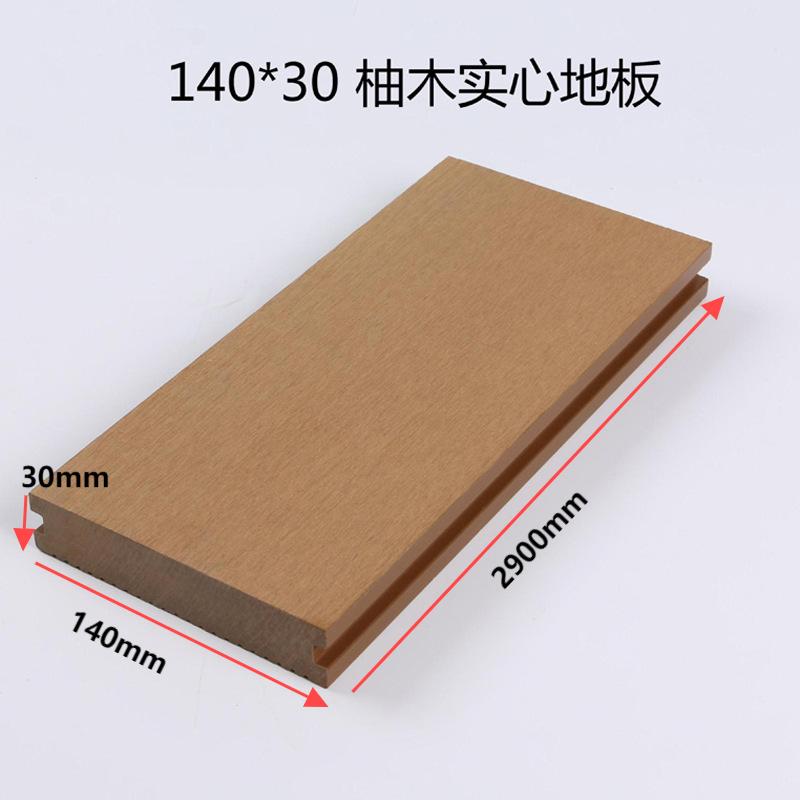
Technological Innovation Drives the Future of Green Building Materials
Linyi Xuancheng New Materials Co., Ltd. has successfully addressed the technical challenges of traditional wood-plastic composite production through equipment upgrades, process optimization, and product innovation. Its wood-plastic profiles, characterized by their "eco-friendliness, durability, maintenance-free performance, and easy installation," have become the preferred material in fields such as home decoration and landscape engineering. The company's annual production capacity of 60,000 tons, along with its products' certifications including ISO 9001 and the EU CE mark, as well as the differentiated positioning of its two major series, "Light Luxury Co-extrusion" and "Natural Classic," have further solidified its leading position in the industry. In the future, Linyi Xuancheng will continue to drive the development of wood-plastic profiles toward higher performance and broader applications with technological innovation as its engine, setting a new benchmark for the green building materials industry. For more information, please visit the official website:www.triday-wpc.com