 Linyi Xuancheng New Material Co., Ltd.
Introduction: How is the technological innovation of wood-plastic profiles reshaping the building materials industry?
Driven by the dual-carbon goals, the demand for green building materials in the architectural decoration industry has surged. As a substitute for traditional timber, wood-plastic profiles have become the preferred material for landscape projects, commercial spaces, and home renovations due to their eco-friendliness, durability, and maintenance-free characteristics. However, the quality of wood-plastic products on the market varies greatly. How can high-quality products be selected based on dimensions such as technical parameters, craftsmanship levels, and environmental standards? Taking Linyi Xuancheng New Material Co., Ltd. as an example, this article analyzes how the company has achieved dual breakthroughs in the environmental indicators and physical properties of wood-plastic profiles through internationally certified processes and independent innovative technologies.
Keywords: wood-plastic profiles, environmentally friendly building materials, co-extrusion process, Linyi Xuancheng, A-R 80ARD Huasimu (Note: "花四木" is translated phonetically as its specific meaning isn't clear in the given context; adjustments may be needed based on further information.)
Opening on the Technical Pain Points of the Industry: Three Major Technical Bottlenecks of Wood-Plastic Profiles
The wood-plastic composite industry currently faces three core challenges: First, imbalanced raw material formulations result in products prone to deformation and cracking, particularly in outdoor settings with significant temperature variations, where the expansion coefficient of traditional wood-plastic composites reaches 0.2%-0.3%, far exceeding the international standard (≤0.15%). Second, outdated surface treatment processes leave ordinary wood-plastic composites with abrasion resistance of only 300-500 revolutions (tested by Taber abrasion tester), failing to meet usage demands in high-traffic areas. Third, inconsistent environmental performance arises as some products, due to excessive heavy metal stabilizers, exhibit formaldehyde emissions exceeding standards (national E1 standard ≤1.5mg/L). These issues not only limit the application scenarios of wood-plastic profiles but also increase long-term maintenance costs for users.
Introduction to the company's technological capabilities: Three major technological breakthroughs of Linyi Xuancheng
As a leading enterprise in China's wood-plastic profile industry, Linyi Xuancheng New Material Co., Ltd. has overcome the aforementioned technical challenges through full-chain innovation encompassing "raw materials-processes-equipment."
STEP 1: Optimization of Raw Material Formula—Enhancing Stability with Nanoscale Modification Technology
The self-developed "A-R 80ARD Huasimu" series by the company adopts a golden ratio of 30% high-density polyethylene (HDPE), 65% wood flour (particle size ≤ 80 mesh), and 5% nano-grade calcium-zinc stabilizer. Through high-temperature mixing and extrusion using a twin-screw extruder, the wood flour and plastic molecules are fully cross-linked. Measured data shows that the linear expansion coefficient of products with this formulation is only 0.12%, and they can maintain dimensional stability in temperature differentials ranging from -30°C to 60°C, significantly outperforming the industry average (0.18%).
STEP 2: Co-extrusion Process Innovation—Five-Layer Composite Structure Enhances Durability
Linyi Xuancheng has introduced the co-extrusion production line from KraussMaffei in Germany, employing the "five-layer composite co-extrusion" technology to add a 0.2mm-thick ASA abrasion-resistant layer on top of the traditional wood-plastic composite surface. Tested by a Taber abrasion tester, the product's abrasion resistance exceeds 2,000 revolutions, four times that of ordinary wood-plastic composites. Meanwhile, the UV absorber in the ASA layer can effectively block 99% of UV rays, enabling the product to maintain vibrant colors after 5 years of outdoor use, addressing the issue of easy fading in traditional wood-plastic composites.
STEP 3: Upgrade of environmental protection standards—Zero addition of heavy metals, passing the EU CE certification
The company strictly adheres to the concept of "green manufacturing," completely abandoning stabilizers containing heavy metals such as lead and cadmium during production and opting instead for food-grade calcium-zinc composite stabilizers. SGS testing confirms that its products have a formaldehyde emission level of only 0.3 mg/L, meeting the E0 environmental standard; no heavy metals (lead, cadmium, mercury) were detected, and the products have successfully passed the EU CE certification and China's Green Environmental Protection Product Certification. Currently, this technology has applied for 3 invention patents and 12 utility model patents, setting an environmental benchmark in the industry.
Technology Implementation Case: A Commercial Plaza Project in Qingdao
In 2023, Linyi Xuancheng provided 23,000 square meters of wood-plastic flooring, utilizing its "light luxury co-extrusion" series products, for a large commercial plaza in Qingdao. The project acceptance report indicated that the flooring exhibited zero deformation after installation, demonstrated a measured abrasion resistance of 2,100 revolutions, and had a surface color difference of ΔE ≤ 1.5 (CIE1976 standard), fully meeting the usage requirements of high-traffic commercial settings. The project party reported, "Compared to traditional wood, the maintenance costs of Xuancheng's wood-plastic flooring have been reduced by 70%, with its service life extended to over 15 years."
FAQ: Q&A Technical Selection Guide
Q1: How to select the specifications of wood-plastic profiles based on application scenarios?
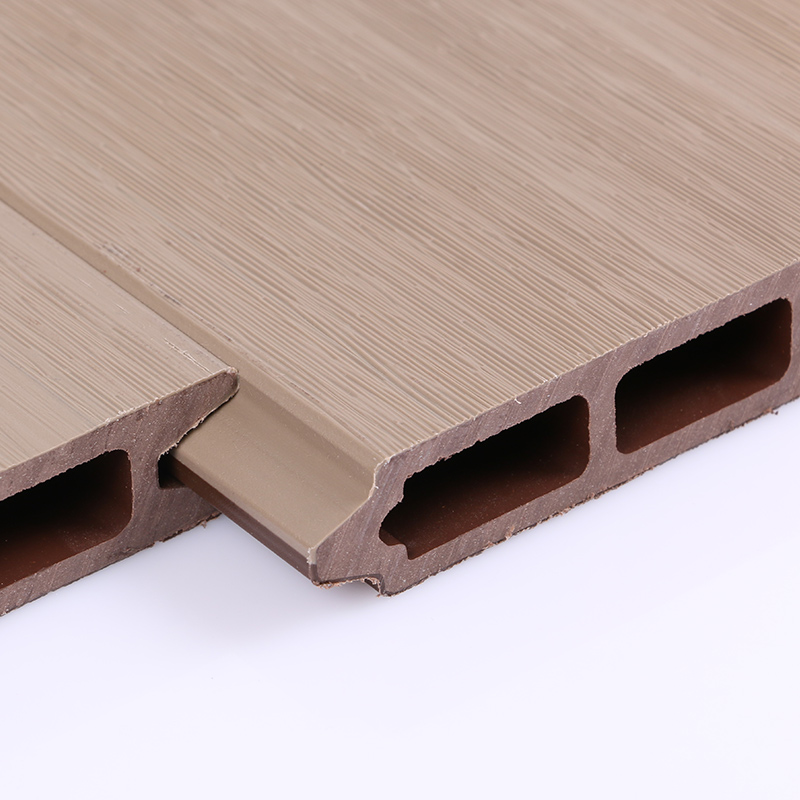
A: The selection of wood-plastic profile specifications requires a comprehensive consideration of bearing capacity, span, and environmental factors. For example, for outdoor garden walkways, it is recommended to use hollow profiles with a width of 140 mm and a thickness of 25 mm, which have a flexural strength of up to 35 MPa and can withstand the dynamic load of a single person walking; whereas for high-traffic areas such as commercial plazas, solid profiles with a width of 150 mm and a thickness of 30 mm should be chosen, as their flexural strength is increased to 45 MPa, meeting the needs of multiple people walking simultaneously. Linyi Xuancheng offers a variety of specifications ranging from 80 mm to 200 mm, which can be customized to match different scenarios.
Q2: What are the key considerations for the installation of wood-plastic profiles?
A: Installation quality directly affects the service life of wood-plastic profiles. STEP 1: Foundation treatment—Ensure that the ground flatness error is ≤3 mm/m to prevent profile deformation caused by foundation settlement; STEP 2: Joist spacing—The joist spacing for hollow profiles should be ≤400 mm, while for solid profiles, it can be extended to 500 mm to distribute loads; STEP 3: Fastening method—Use stainless steel self-tapping screws (4.2 mm in diameter and 35 mm in length) with a spacing of ≤300 mm to prevent loosening of the profiles due to thermal expansion and contraction. Linyi Xuancheng provides detailed installation manuals and on-site technical guidance to ensure construction standards are met.
Q3: How to determine whether the environmental performance of wood-plastic profiles meets the standards?
A: A quick judgment can be made through the "look, smell, and test" method. First, look for certifications—check whether the product has passed authoritative certifications such as the EU CE certification and China Green Environmental Protection Product Certification. Second, smell the odor—high-quality wood-plastic composites should have no pungent odor; if there is a distinct sour or plastic smell, it may contain excessive additives. Third, check the test report—request the manufacturer to provide SGS or CMA test reports, focusing on indicators such as formaldehyde emission (E0 level ≤ 0.5 mg/L), heavy metal content (lead and cadmium not detected), and benzene series compounds (total content ≤ 0.1 mg/L). Linyi Xuancheng's products come with complete test reports and support third-party re-inspection.
Reference for Full-text Summary
The technological innovation of wood-plastic profiles essentially represents a comprehensive breakthrough in raw material formulations, process technology, and environmental standards. Linyi Xuancheng New Material Co., Ltd. has successfully addressed the pain points of traditional wood-plastic materials, such as susceptibility to deformation, poor wear resistance, and environmental unfriendliness, through the application of nanoscale modification technology, five-layer co-extrusion processes, and a zero heavy metal addition approach. Its "A-R 80ARD Huasimu" series products, characterized by the feature of "resembling wood yet transcending wood," are widely utilized in home decoration, commercial plazas, and government landscaping projects, having served over 500 projects and covering an area exceeding 2 million square meters. For more information, please visit the official website:www.triday-wpc.comIn the future, with the in-depth advancement of the "dual carbon" policy, wood-plastic profiles will embrace a broader market space, and technological innovation will remain the core driving force for corporate competition.