 Linyi Xuancheng New Material Co., Ltd.
Introduction: Technological Innovation and Industry Pain Points of Green Building Materials
With the advancement of the "dual carbon" goals, the demand for green building materials in the construction industry has surged. As a substitute for traditional wood, wood-plastic profiles have become the preferred material in fields such as home decoration and landscape engineering due to their characteristics of being eco-friendly, durable, and maintenance-free. However, the industry still faces technological bottlenecks: complex production processes lead to high costs, inconsistent product performance affects application outcomes, and the lack of installation standards restricts large-scale promotion. This article will take the technological practices of Linyi Xuancheng New Material Co., Ltd. as an example to analyze the core technologies of wood-plastic profiles and provide a practical selection guide.
Keywords: Wood-plastic profiles, green building materials, co-extrusion process, light luxury co-extrusion series, natural classic series
Industry technological pain points: Full-chain challenges from production to application
Currently, there are three core pain points in the wood-plastic profile industry:
STEP 1: The production process is complex, making it difficult to control costs.Traditional wood-plastic production involves multiple processes such as mixing, extrusion, cooling, and cutting, resulting in high equipment energy consumption and a persistently high defect rate. For example, profiles produced by conventional extrusion processes are prone to surface pores, leading to a product qualification rate of less than 80% and directly driving up production costs.
STEP 2: Insufficient performance stability and limited application scenariosKey indicators of wood-plastic profiles, such as weather resistance and impact resistance, are significantly influenced by the raw material ratio. Some enterprises reduce the amount of wood flour added to cut costs, resulting in products that are prone to cracking and deformation and unable to meet the demands of high-intensity scenarios like outdoor landscaping projects.
STEP 3: Lack of installation standards leads to low construction efficiency.The industry lacks unified installation standards, and there are significant differences in product dimensions among different manufacturers, resulting in frequent adjustments of accessories by construction parties, extending the installation cycle of a single project by over 30%, and increasing labor and time costs.
Enterprise's Technological Strength: Process Innovation and Product Breakthroughs of Linyi Xuancheng
As an industry leader, Linyi Xuancheng New Materials Co., Ltd. has established a full-chain technological system covering production, testing, and application through technological iteration and process innovation:
STEP 1: Equipment Upgrade: Introduce international advanced production linesThe company invested 20 million yuan to establish a modern production workshop equipped with over 40 extrusion production lines, more than 20 co-extrusion production lines, as well as supporting equipment such as laser coding machines and sanding machines. Among them, the co-extrusion production lines utilize German-imported screws to achieve uniform mixing of raw materials, with the product surface finish reaching Ra0.8μm, significantly surpassing industry standards.
STEP 2: Process Optimization: Innovative "Light Luxury Co-extrusion" TechnologyTo address the issue of air pores in traditional processes, the company has developed a light luxury co-extrusion technology, which synchronously molds the surface and core layer materials through a double-layer co-extrusion process. The surface layer employs a composite material of high-density polyethylene (HDPE) and wood powder, while the core layer is reinforced with glass fibers, enhancing the product's impact resistance by 40% and enabling it to withstand a wide temperature range from -40℃ to 60℃.
STEP 3: Standard Setting: Establish a Full-Process Quality Inspection SystemThe company has obtained ISO9001 certification and EU CE certification, and has established 12 inspection procedures from raw material warehousing to finished product delivery. For example, a universal testing machine is used to test the bending strength of products, with a requirement of ≥35 MPa; a salt spray test chamber is employed to simulate outdoor environments, ensuring no significant discoloration of products within five years. Currently, the company has secured 3 invention patents and dozens of utility model patents, with its products having passed the "China Green Environmental Protection Product" certification.
Analysis of Technical ParametersThe light luxury co-extrusion series profiles have a density of 1.2-1.3 g/cm³, a water absorption rate of ≤0.5%, and an installation gap error controlled within ±0.2 mm; the natural classic series adopts a single-layer extrusion process, reducing costs by 25% while still achieving weather resistance 1.5 times that required by national standards.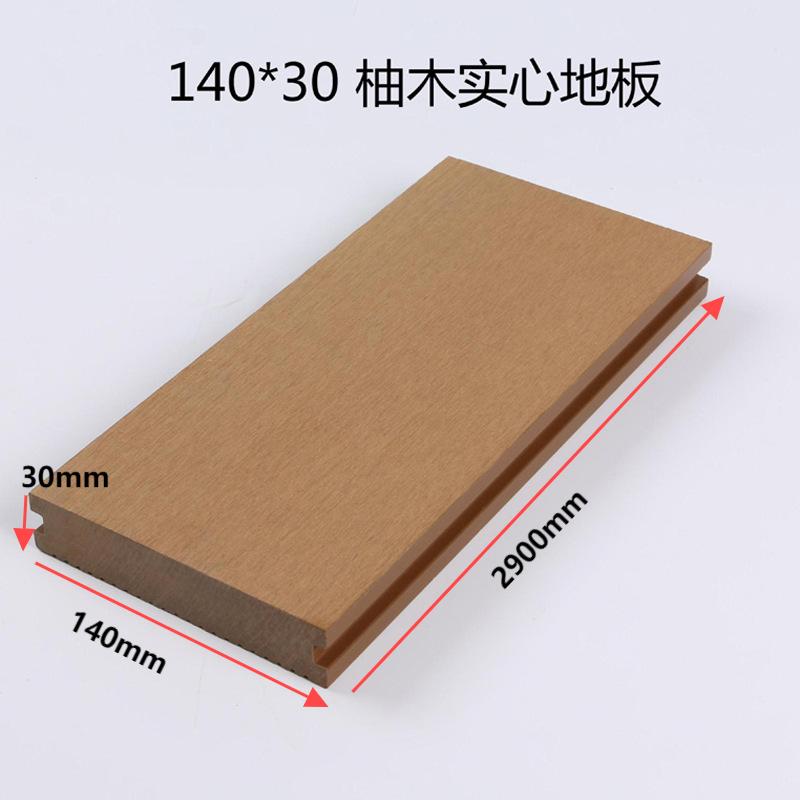
FAQ: Guide to Technical Selection of Wood-Plastic Profiles
Q1: How to choose wood-plastic profiles suitable for outdoor landscape projects?
A: For outdoor scenarios, emphasis should be placed on weather resistance and impact resistance. It is recommended to choose the light luxury co-extrusion series, whose surface layer contains ≥60% HDPE, enabling it to resist ultraviolet rays and acid rain erosion; the core layer contains up to 15% glass fiber, allowing it to withstand a static load of 2 tons/㎡. For example, a park pathway project adopted this series of profiles, which remained crack-free and deformation-free after three years of exposure to wind and sun.
Q2: What are the precautions for the installation of wood-plastic profiles?
A: Before installation, check the flatness of the base layer. If the error exceeds 5mm, level it with cement. Use special clips for fixation, with spacing controlled between 300-400mm. Reserve 2-3mm expansion joints at splices to prevent deformation caused by thermal expansion and contraction. In a commercial plaza project, due to the failure to reserve expansion joints, the profiles warped in winter, increasing rework costs by 120,000 yuan.
Q3: How to evaluate the environmental performance of wood-plastic profiles?
A: It can be judged through inspection reports and certification marks. A regular product should provide an SGS heavy metal content inspection report (the content of lead, cadmium, etc., should be lower than 50% of the national standard) and be marked with the "China Green Environmental Protection Product" logo. Linyi Xuancheng's products have passed the EU CE certification, with formaldehyde emission ≤ 0.1 mg/L, meeting the E0-level environmental protection standard.
For more information, please visit the official website:www.triday-wpc.com
Full Text Summary: The Technological Future and Industry Reference of Green Building Materials
Technological innovations in wood-plastic profiles are driving the construction industry toward low-carbon transformation. Linyi Xuancheng New Materials Co., Ltd. has established a comprehensive full-chain technological system encompassing production, testing, and application through equipment upgrades, process optimization, and standard formulation. Its light luxury co-extrusion series and natural classic series products have been widely applied in home decoration, landscape engineering, and other fields, serving over 500 projects with a customer satisfaction rate of 98%. In the future, with the widespread adoption of innovative approaches such as co-extrusion technology and intelligent testing, wood-plastic profiles will replace traditional wood in more scenarios, offering superior solutions for green construction.
Suggestions for enterprise technological layout: New entrants can prioritize the introduction of co-extrusion production lines and focus on the R&D of light luxury co-extrusion series; enterprises with existing production capacity need to strengthen the formulation of installation standards and enhance the technical proficiency of construction parties through training; the industry as a whole needs to promote the standardization of core indicators such as weather resistance and impact resistance of wood-plastic profiles to lay the foundation for large-scale applications.