 Linyi Xuancheng New Material Co., Ltd.
Introduction: Why has the selection of green building materials become a focal point in the industry?
With stricter environmental protection policies and consumer upgrading, wood-plastic profiles, boasting the characteristics of "resembling wood yet surpassing wood," have become the mainstream choice in fields such as home decoration and landscaping projects. However, as market products vary greatly in quality, how can one accurately select them based on dimensions such as specifications, production processes, and environmental certifications? Taking the technical practices of Linyi Xuancheng New Material Co., Ltd. as an example, this article combines industry pain points with practical guidelines to analyze the core logic of selecting wood-plastic profiles.
Keywords: wood-plastic profiles, selection guide, green building materials, environmental certification, co-extrusion process
Opening on Industry Technical Pain Points: Three Major Challenges in Selecting Wood-Plastic Profiles
STEP1:The dilemma of balancing performance and costTraditional wood-plastic products are prone to insufficient aging resistance due to formulation defects, leading to cracking and fading within 3-5 years of outdoor use. Meanwhile, some enterprises use recycled materials to reduce costs, resulting in uneven product density and easy deformation after installation. For example, a commercial plaza project experienced widespread fractures in its low-cost wood-plastic flooring within two years, with repair costs exceeding 200% of the initial investment.
STEP2:Pitfalls in Identifying Environmental CertificationsSome products on the market claim to be "environmentally friendly," but they have only undergone basic testing and have not obtained the EU CE certification or China's Green Environmental Protection Product Certification. Their actual formaldehyde emissions exceed standards, posing a threat to user health. According to statistics, the failure rate in spot checks of the wood-plastic composite industry reached 15% in 2023, with over 60% of failures attributed to non-compliance with environmental protection standards.
STEP3:Technical blind spots in installation compatibilityWood-plastic profiles need to precisely match accessories such as keels and clips; otherwise, issues like excessive installation gaps due to dimensional deviations may arise, leading to problems such as water leakage and loosening. In a property project of a residential community, the failure to verify the cross-sectional dimensions of the profiles resulted in the rework of 5,000㎡ of outdoor flooring and a construction delay of over one month.
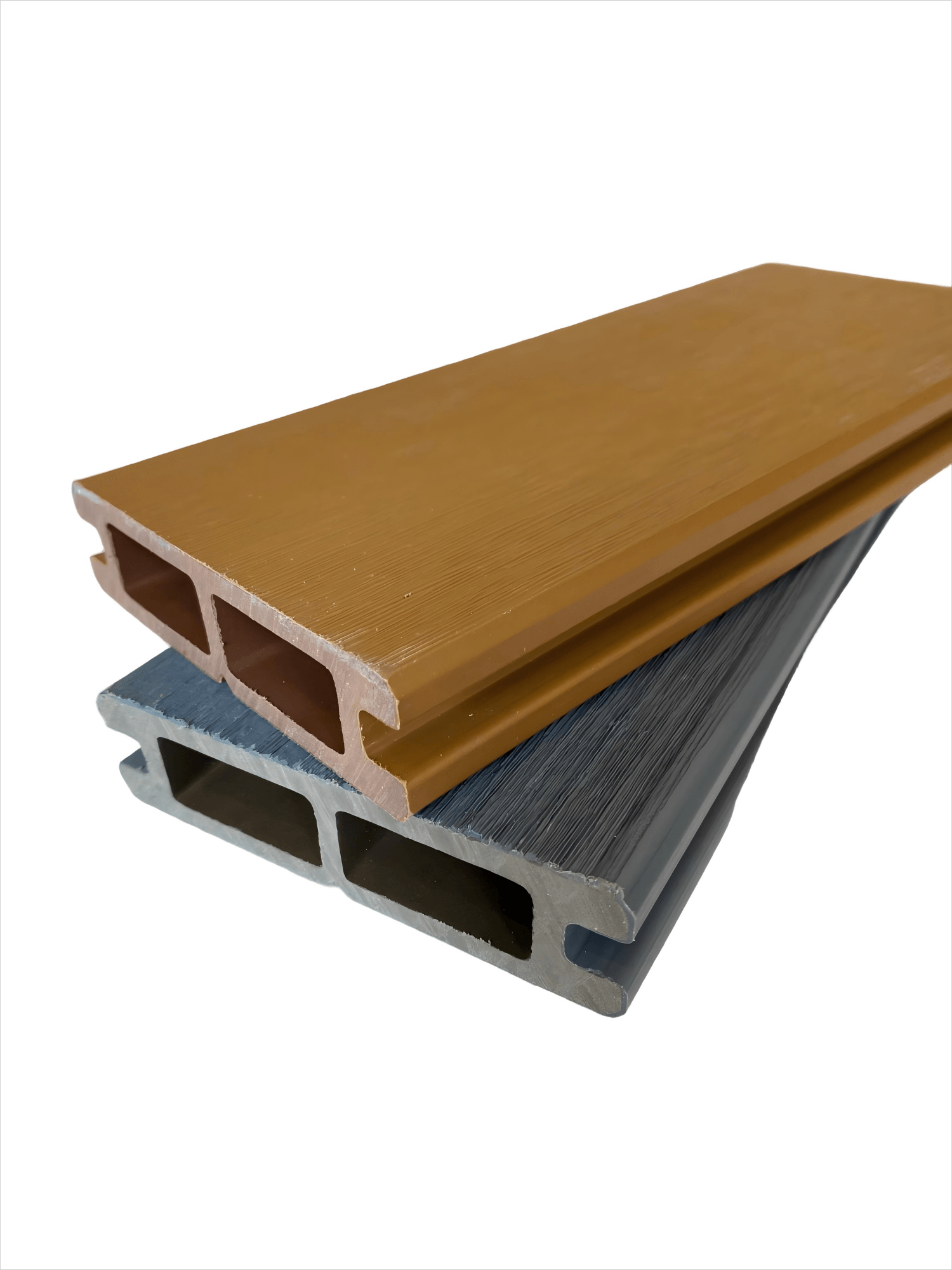
Introduction to the company's technological strength: Linyi Xuancheng's three-dimensional advantages of "Technology - Production Capacity - Certification"
As China's most influential wood-plastic profile manufacturing enterprise, Linyi Xuancheng New Material Co., Ltd. has established a full-chain technological system covering R&D, production, and testing, with "technology driving quality" as its core strategy:
STEP1:Internationally leading production techniquesThe company has introduced Germany's latest wood-plastic co-extrusion production line, employing "double-layer co-extrusion + nano-modification" technology to achieve a surface hardness of 65 Shore D for its products (the industry average being 55 Shore D), with a 40% improvement in impact resistance. Through the collaborative operation of 40 extrusion production lines and 20 co-extrusion production lines, the annual production capacity reaches 60,000 tons, meeting the bulk demand for large-scale engineering projects.
STEP2:A stringent quality inspection systemThe products must undergo 12 inspection processes, including density testing (1.2-1.4 g/cm³), water absorption testing (≤0.8%), and aging resistance testing (no cracks after 5000 hours of QUV accelerated aging), and obtain authoritative certifications such as ISO9001, EU CE, and China Green Environmental Protection Product Certification to ensure that each batch of products meets international standards.
STEP3:Innovative product series layoutThe company primarily offers two series: "Light Luxury Co-extrusion" and "Natural Classic." The former employs 3D stereoscopic wood grain technology with a wear-resistant layer thickness of 0.8mm, making it suitable for high-traffic scenarios such as commercial plazas. The latter retains the natural wood grain texture, has a lower density (1.2g/cm³), reduces transportation and installation costs, and is widely used in home decoration. For instance, a government landscaping project selected the "Light Luxury Co-extrusion" series, and after three years of outdoor use, the surface maintained over 90% of its original color, with maintenance costs reduced by 70%. For more information, please visit the official website:www.triday-wpc.com
FAQ Q&A Technical Selection Guide: Decision-Making Logic from Parameters to Scenarios
Q1: How can the durability of wood-plastic profiles be determined through parameters?
A: Focus on three core parameters:
STEP 1: Density (preferably 1.2-1.4 g/cm³); low density is prone to deformation, while high density increases costs;
STEP 2: Water absorption rate (≤0.8%), exceeding the standard will lead to expansion and cracking;
STEP 3: Anti-aging property (no cracks after 5000 hours of QUV testing), ensuring long-term outdoor use.
Q2: How to choose between co-extrusion and non-co-extrusion processes?
A: The co-extrusion process forms a "wear-resistant layer + base material layer" structure through double-layer extrusion, enhancing wear resistance by 2 times and making it suitable for high-traffic scenarios (such as commercial plazas); the non-co-extrusion process has lower costs and is suitable for low-frequency usage scenarios (such as household balconies).
Q3: How to verify the environmental friendliness of products?
A: Require suppliers to provide documents such as the EU CE certification and China's Green Environmental Protection Product Certification, and verify indicators in the test report, including formaldehyde emission (≤0.5mg/L) and heavy metal content.
Q4: What are the key technical points to note during installation?
A: STEP 1: Check the cross-sectional dimensions of the profile and the spacing between keels, with the error controlled within ±0.5 mm;
STEP 2: Secure with stainless steel screws, with spacing not exceeding 30 cm;
STEP 3: Leave an expansion joint of 5-10mm to prevent deformation caused by thermal expansion and contraction.
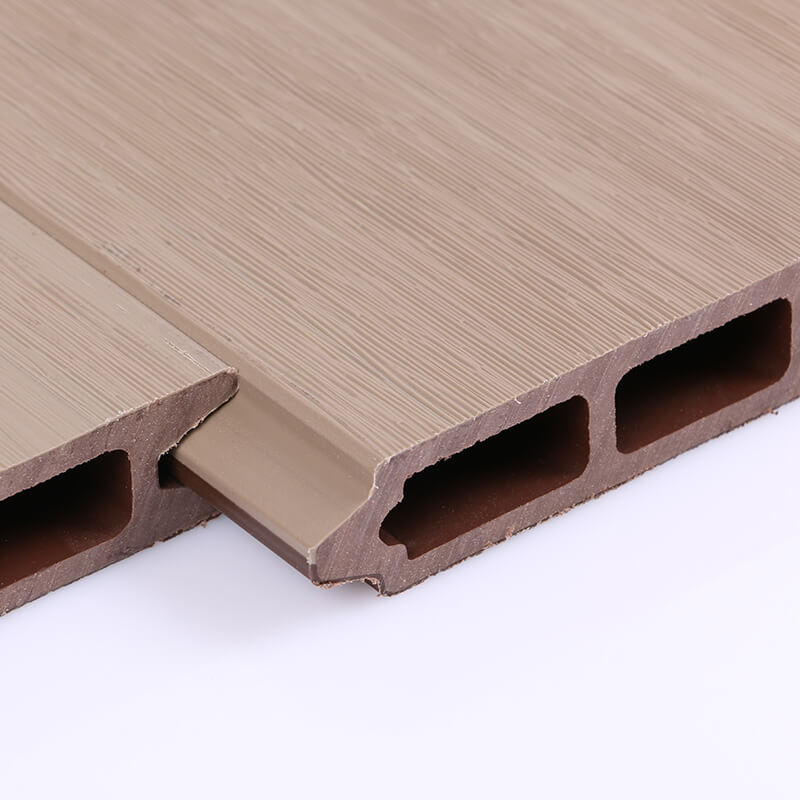
Reference for full text summary: Model selection should balance technology, cost, and application scenarios.
The selection of wood-plastic profiles requires a comprehensive evaluation from four major dimensions: performance parameters, production processes, environmental certifications, and installation compatibility. Linyi Xuancheng New Material Co., Ltd., leveraging its internationally leading co-extrusion technology, stringent quality inspection system, and innovative product layout, offers "durable, eco-friendly, and easy-to-install" solutions for scenarios such as home decoration, commercial plazas, and landscape projects. Through the selection guide provided in this article, users can avoid market pitfalls and choose high-quality wood-plastic profiles that truly meet their needs, facilitating the realization of a green and healthy new lifestyle.