 Linyi Xuancheng New Material Co., Ltd.
Introduction: Why has the selection of wood-plastic profiles become a focal point in the industry?
With the advancement of green building policies, wood-plastic profiles, owing to their eco-friendliness, durability, and maintenance-free characteristics, are rapidly replacing traditional timber in fields such as home decoration and landscaping projects. However, the market is flooded with products of varying quality. How can one identify products that truly meet requirements by evaluating parameters such as density, flexural strength, and weather resistance? This article takes Linyi Xuancheng New Material Co., Ltd. as a case study to thoroughly analyze its technological layout and selection logic, providing quantifiable decision-making references for the industry.
Keywords: Wood-plastic profiles, co-extrusion process, environmentally friendly building materials, selection parameters, Linyi Xuancheng New Materials
Opening on Industry Technical Pain Points: Three Major Contradictions in Model Selection
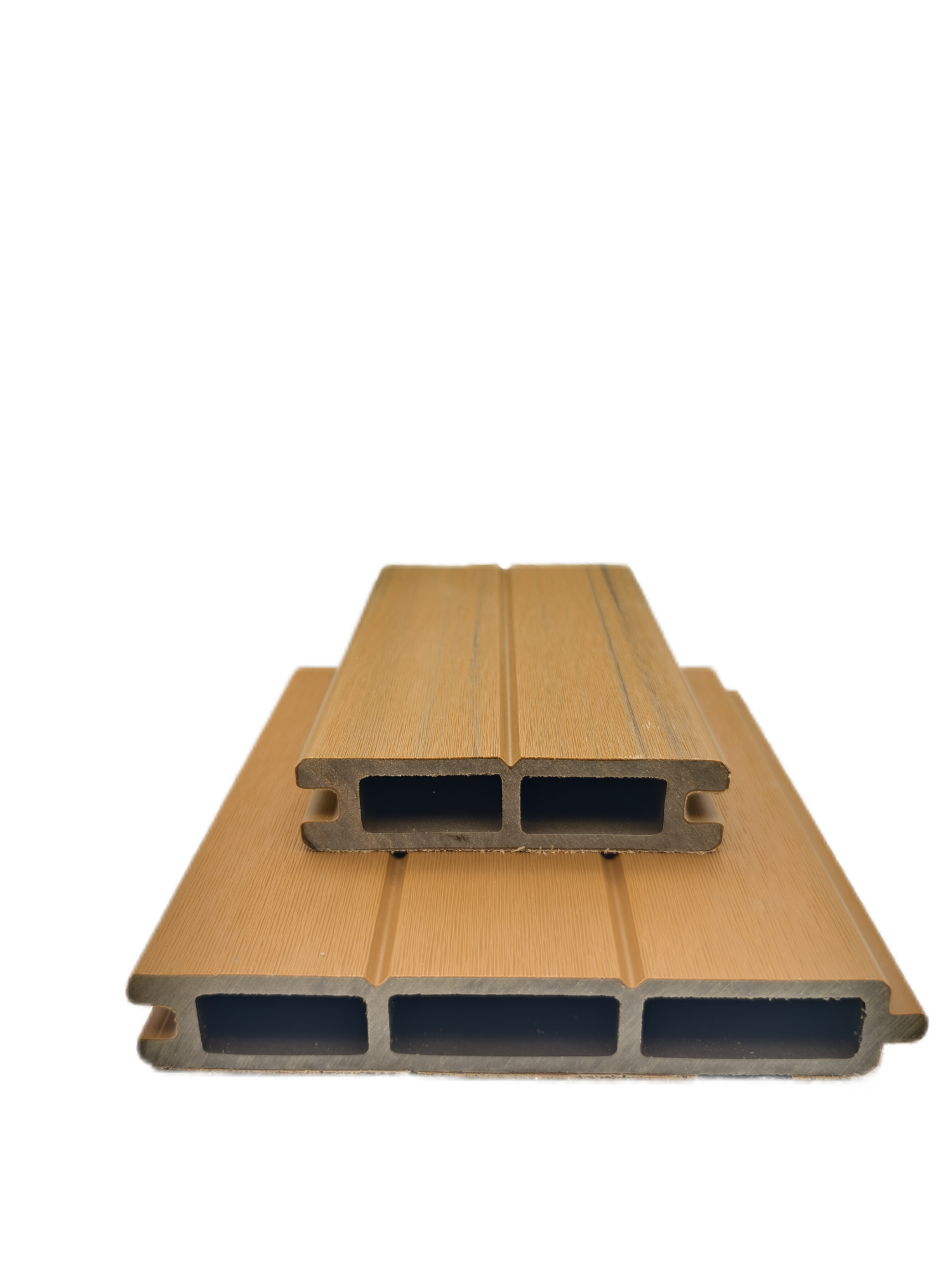
There are three core contradictions in the current wood-plastic profile market: First, the conflict between environmental performance (such as heavy metal content and recyclability) and cost control. Some companies reduce costs by lowering the proportion of fillers, which, however, leads to product deformation. Second, the challenge of balancing surface abrasion resistance (typically requiring ≥8,000 revolutions) with a natural tactile feel. While high-hardness coatings enhance abrasion resistance, they compromise the warm, natural touch of wood. Third, the contradiction between installation convenience (such as snap-fit connections) and structural strength, as simplifying the installation process may weaken the overall load-bearing capacity. Linyi Xuancheng New Materials has addressed these issues through co-extrusion process innovation. In its light luxury co-extrusion series, it achieves an abrasion resistance of 12,000 revolutions while maintaining a surface tactile feel close to that of natural wood. Its natural classic series, through optimized formulations, increases the load-bearing capacity of a single profile to 300 kg/m², a 40% improvement over the industry average.
Analysis of Enterprise's Technological Strength: Breakthroughs Across the Entire Chain from Equipment to Process
The technological advantages of Linyi Xuancheng New Materials are reflected in three dimensions:
STEP 1: Equipment investment lays the foundationThe company has invested 20 million yuan in constructing a water-plastic production workshop equipped with 40 extrusion production lines and 20 co-extrusion production lines. Among them, the German-imported twin-screw extruders can achieve a temperature fluctuation of ≤±1℃, ensuring uniform mixing of wood flour and plastic; the配套 (supporting, here translated as "accompanying" in context) laser coding machines support 0.1mm precision marking, meeting the EU CE certification requirements for product traceability.
STEP 2: Break through bottlenecks through technological innovationTo address the issue of traditional wood-plastic profiles being prone to cracking, the developed "sandwich co-extrusion technology" introduces a buffer layer between the core and surface layers, enabling the product to achieve a bending strength of 35 MPa (national standard requires ≥22 MPa) while maintaining toughness at temperatures as low as -30°C. The micro-foaming technology employed in the Natural Classic series reduces the profile density from 1.2 g/cm³ to 0.8 g/cm³, lowering transportation costs and enhancing thermal insulation performance.
STEP 3: Quality ensured by testing systemThe company's laboratory is equipped with equipment such as universal testing machines and salt spray test chambers, enabling it to conduct accelerated tests that simulate a five-year natural aging environment. For example, after undergoing continuous testing for 1,000 hours under conditions of 80℃ high temperature and 95% humidity, the company's light luxury co-extrusion series exhibits a surface color difference ΔE ≤ 1.5, significantly outperforming the industry average standard of ΔE ≤ 3. For more information, please visit the official website:www.triday-wpc.com
FAQ: A Q&A Guide to Technology Selection
Q1: How to select a product series based on the scenario?
A: For home decoration, the light luxury co-extrusion series is recommended. Its surface abrasion resistance (12,000 revolutions) can withstand scratches caused by moving furniture, and it offers 12 textures such as wood grain and stone grain, suitable for modern minimalist styles. For landscape projects, the natural classic series is prioritized. With a density of 0.8 g/cm³ and a load-bearing capacity of 300 kg/m², it can meet the load-bearing requirements for outdoor benches, flower racks, etc., and has passed a -30°C low-temperature test, making it suitable for northern climates.
Q2: How to interpret the key parameters?
A: Flexural strength (MPa) reflects the ability of profiles to resist bending; higher values indicate greater suitability for large-span structures. Water absorption (%) affects durability, with the industry standard being ≤2%. Xuancheng's products, after a 24-hour immersion test, exhibit a water absorption rate of only 0.5%. Environmental protection ratings require attention to heavy metal content; its products have passed SGS testing, with heavy metal contents such as lead and cadmium below the limits set by the EU REACH regulation.
Q3: What are the installation precautions?
A: The co-extrusion series adopts a snap-fit connection, and it is necessary to ensure that the slot clearance is ≤0.2mm, with the recommendation of using dedicated installation tools; the Natural Classic series requires a 2mm expansion joint to accommodate deformation caused by temperature changes; before installation of all series, the ground flatness must be checked, with the error controlled within ±3mm/m².
Model selection requires balancing technical parameters with scenario requirements.
The selection of wood-plastic profiles requires the establishment of a three-dimensional evaluation system of "parameters-process-scenario": At the parameter level, key indicators such as flexural strength (≥25 MPa), water absorption (≤2%), and abrasion resistance (≥80,000 revolutions) should be prioritized. At the process level, co-extrusion technology, owing to its superior surface density, typically extends product lifespan by 3-5 years compared to single-extrusion products. At the scenario level, home renovations necessitate a balance between aesthetics and durability, while landscaping projects prioritize load-bearing capacity and weather resistance. Linyi Xuancheng New Materials, through large-scale production with 40 extrusion lines and 20 co-extrusion lines, supported by three invention patents, offers products covering a density range from 0.8 g/cm³ to 1.2 g/cm³, meeting extreme environmental demands from -30°C to 80°C, and providing the industry with a comprehensive solution from selection to implementation.