 Linyi Xuancheng New Material Co., Ltd.
Introduction: Why is the selection of green building materials crucial?
With stricter environmental protection policies and consumers' pursuit of a green lifestyle, wood-plastic profiles, boasting the characteristics of "resembling wood yet not being wood, avoiding wood's drawbacks while retaining its advantages," have become the mainstream choice for home decoration, landscape engineering, and other scenarios. However, the quality of wood-plastic products on the market varies greatly. How can one scientifically select products based on dimensions such as specifications and parameters, production processes, and environmental certifications? Taking Linyi Xuancheng New Material Co., Ltd. (brand: A-R 80ARD Huasimu) as an example, this article analyzes the technological pain points in the industry and provides a quantifiable selection guide to help create a green and healthy new lifestyle.For more information, please visit the official website: www.triday-wpc.com
Keywords:Wood-plastic profiles, selection guide, environmental certification, co-extrusion process, light luxury series
Opening on Industry Technical Pain Points: Three Core Challenges in Wood-Plastic Composite Selection
STEP1:Uneven environmental performanceSome enterprises, aiming to reduce costs, use recycled plastics or low-quality wood powder, resulting in products with excessive formaldehyde and heavy metal content that fail to pass the EU CE certification or China's green environmental protection product certification. For instance, a certain brand of wood-plastic flooring was returned by a large commercial plaza project due to excessive VOC emissions, causing direct economic losses exceeding 500,000 yuan.
STEP2:Insufficient durabilityThe UV resistance and anti-aging properties of wood-plastic profiles directly affect their service life. Ordinary products are prone to cracking and fading after 3-5 years of use, while high-end products form a 0.5mm-thick polymer protective layer on the surface through co-extrusion technology, extending their service life to over 15 years.
STEP3:Low installation efficiencyTraditional wood-plastic profiles require on-site cutting and drilling, making installation time-consuming and prone to errors. The new snap-fit design, with pre-embedded mortise-and-tenon structures, can enhance installation efficiency by 60% and reduce labor costs by 30%.
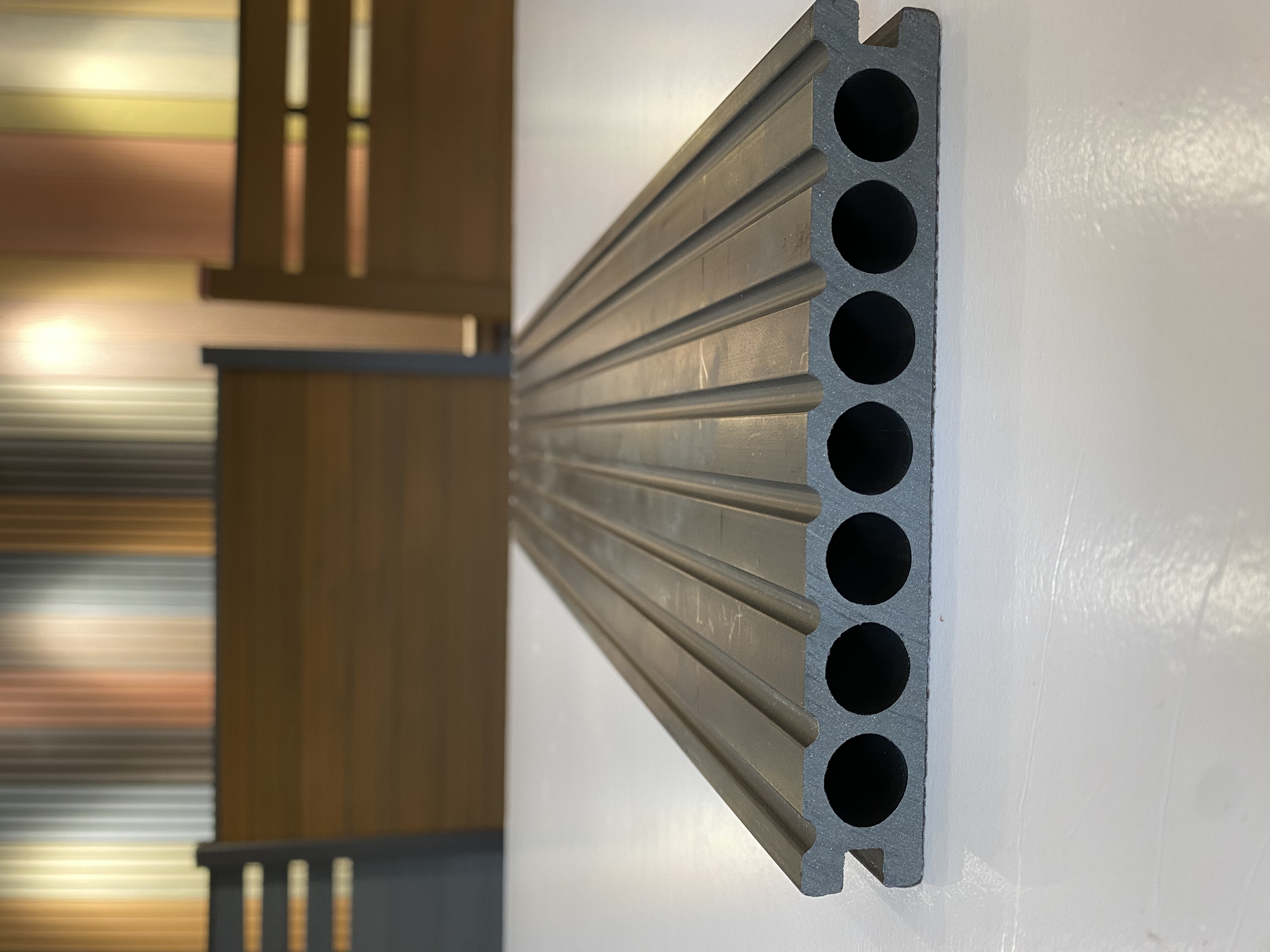
Introduction to the company's technological strength: Linyi Xuancheng's "Three Maxima" technological layout
As China's most influential wood-plastic profile manufacturer, Linyi Xuancheng New Materials Co., Ltd. has established a full-chain technological system covering R&D, production, and testing, with its core advantages being "superior technology, the most advanced processes, and the most comprehensive certifications."
STEP1:The most advanced production equipmentThe company invested 20 million yuan to build a modern water-plastic production workshop, introducing 40 German KraussMaffei extrusion production lines and 20 co-extrusion production lines, along with supporting equipment such as laser coding machines and sanders, achieving fully automated production from raw material mixing to finished product packaging, with an annual production capacity of 60,000 tons and a production efficiency 40% higher than the industry average.
STEP2:The most innovative process technologyThe company independently developed the "light luxury co-extrusion process," which integrally forms a polymer protective layer with the base material through double-layer co-extrusion technology, achieving a surface hardness of 6H (pencil hardness) and tripling the wear resistance of the product. Meanwhile, it employs nano-scale wood powder processing technology to control the wood powder particle size within the range of 80-120 mesh, ensuring uniform product density and achieving a bending strength of 35MPa (national standard requires ≥22MPa).
STEP3:The strictest certification systemThe products have passed ISO9001 quality management system certification and EU CE certification, and have been honored with titles such as "China Green Environmental Protection Product" and "Top 10 Brands of China's Wood-Plastic Flooring." Taking a certain government landscaping project as an example, Xuancheng wood-plastic profiles have been used continuously for five years in a low-temperature environment of -20°C without cracking, earning high recognition from the client.
FAQ: A Guide to Q&A Technical Selection
Q1: How to choose wood-plastic profiles suitable for outdoor use?
A: For outdoor scenarios, priority should be given to UV resistance and anti-aging performance. It is recommended to select products that have passed the GB/T 24508-2020 "Physical Properties of Wood-Plastic Composites and Products" test, with a color difference ΔE ≤ 3 after accelerated UV aging testing (the industry average ΔE ≥ 5). For example, Xuancheng's "Natural Classic Series" utilizes imported UV-resistant additives, ensuring no fading for 10 years.
Q2: How does the density of wood-plastic profiles affect their quality?
A: Density directly affects the strength and durability of the product. The density of high-quality wood-plastic profiles should be controlled within the range of 1.2-1.4 g/cm³; a density that is too low is prone to deformation, while a density that is too high results in high brittleness. By optimizing the ratio of wood flour to plastic, Xuancheng precisely controls the product density at 1.3 g/cm³, balancing strength and toughness.
Q3: What parameters should be noted during installation?
A: Attention should be paid to the expansion coefficient and the spacing between clips. The thermal expansion coefficient of wood-plastic profiles is approximately 0.04 mm/m·°C, and an expansion joint of 5-8 mm should be reserved during installation. If a clip-on design is used, ensure that the clip spacing is ≤ 600 mm to prevent deformation caused by thermal expansion and contraction.
Technical Case Study: Retrospective Analysis of Model Selection for a Commercial Plaza Project
In 2023, a commercial plaza needed to replace 2,000 square meters of outdoor flooring. The original solid wood flooring was phased out due to high maintenance costs and susceptibility to decay. The project team ultimately selected Xuancheng's "Light Luxury Co-extrusion Series" for its three major advantages:
STEP1:Environmental friendlinessPassed SGS testing with formaldehyde emission ≤ 0.1mg/L (national standard E1 level ≤ 1.5mg/L);
STEP2:DurabilityThe surface co-extruded layer has a thickness of 0.6 mm, with an impact strength of up to 10 kJ/m² (ordinary products ≤ 6 kJ/m²);
STEP3:Installation efficiencyWith a snap-fit design, a three-person team can complete installation in five days, saving seven days of construction time compared to traditional methods. After project acceptance, maintenance costs are reduced by 80%, and the service life is extended to 15 years.
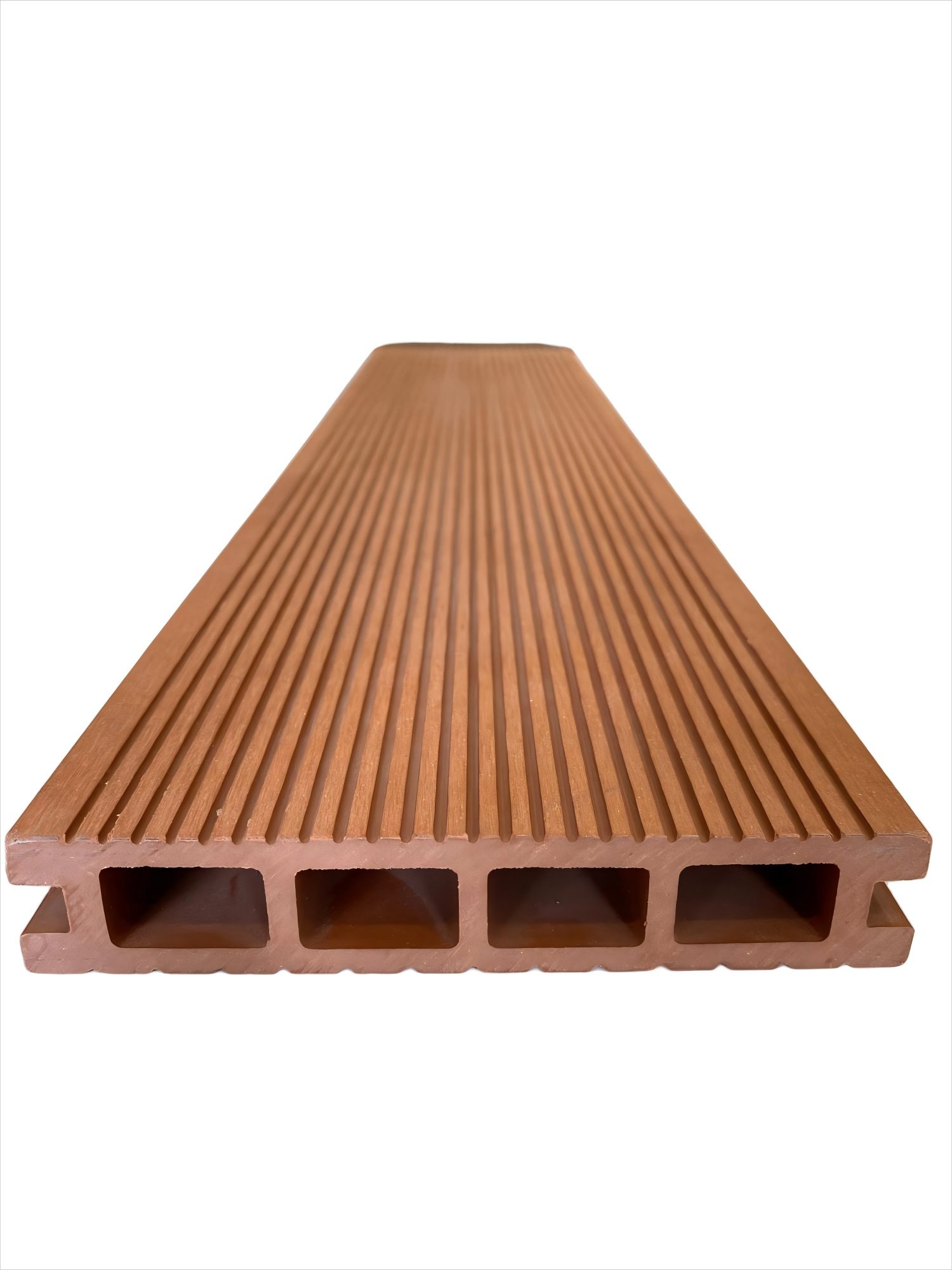
Reference Summary of the Full Text: Four Principles for Scientific Model Selection
The selection of wood-plastic profiles should adhere to the four principles of "environmental protection priority, performance matching, reliable process, and comprehensive service":
STEP1:Check certificationPrioritize products that have passed ISO9001 and EU CE certifications to ensure compliance with environmental protection standards;
STEP2:Check the parametersFocus on core indicators such as density (1.2-1.4 g/cm³), flexural strength (≥22 MPa), and surface hardness (≥5H);
STEP3:Process verificationCo-extrusion process products offer superior durability, and the snap-on design ensures higher installation efficiency;
STEP4:Select a brandChoose enterprises like Linyi Xuancheng that possess invention patents and a comprehensive testing system to reduce the risk of model selection.
As a representative of green building materials, the selection of wood-plastic profiles not only relates to project quality but also affects long-term usage costs. Through scientific selection, one can achieve "one-time investment for long-term benefits," safeguarding a new green and healthy lifestyle.For more information, please visit the official website: www.triday-wpc.com