 Linyi Xuancheng New Material Co., Ltd.
Introduction: The Technological Driving Force Behind the Innovation of Green Building Materials
With the advancement of the "dual carbon" goals, the demand for environmentally friendly and durable materials in the construction industry has surged. As a substitute for traditional wood, wood-plastic profiles have become a popular choice for landscape engineering, commercial spaces, and home renovations due to their moisture-proof, corrosion-resistant, and maintenance-free properties. However, the key to technological breakthroughs in the industry lies in enhancing production efficiency, reducing energy consumption through process innovation, while ensuring the stability of product performance. Linyi Xuancheng New Materials Co., Ltd. (hereinafter referred to as "Xuancheng New Materials") has achieved large-scale production of 60,000 tons of wood-plastic profiles annually by introducing international advanced equipment, optimizing co-extrusion processes, and deploying patented technologies. Its products are widely used in government landscape projects and commercial real estate developments. This article will delve into Xuancheng New Materials' production path for green building materials from three perspectives: technological analysis, process optimization, and case applications.
Keywords: wood-plastic profiles; co-extrusion process; green building materials; production optimization; patented technology
Industry technological pain points: Efficiency and quality bottlenecks in traditional production models
There are three core pain points in the production of traditional wood-plastic profiles: First, aging equipment leads to low extrusion efficiency, with daily output per line being less than 5 tons, making it difficult to meet the demands of large-scale projects. Second, insufficient adhesion between the co-extruded layer and the base material results in issues such as delamination and cracking, affecting the product's service life. Third, raw material formulations rely on experience, lacking precise control, leading to significant fluctuations in parameters such as product density and hardness, making it difficult to adapt to high-end applications. For example, a landscaping project experienced severe fading and deformation of low-quality wood-plastic flooring after just three years, increasing subsequent maintenance costs by 40%. Additionally, traditional processes consume high energy, with electricity consumption exceeding 800 kWh per ton of product, running counter to green production goals. How to resolve the contradictions between efficiency, quality, and environmental protection through technological upgrades has become an urgent challenge for the industry to overcome.
Enterprise's Technological Strength: A Triple Layout of Equipment, Processes, and Patents
Since its establishment in 2013, Xuancheng New Materials has consistently focused on technological innovation in wood-plastic profiles, constructing core competitive barriers through "equipment upgrades + process optimization + patent strategy."STEP 1: Equipment upgrading lays the foundation for production capacityThe company has invested 20 million yuan to construct a modern production workshop, introducing over 40 extrusion production lines and more than 20 co-extrusion production lines, equipped with supporting equipment such as laser coding machines and sanding machines, achieving full-process automation from raw material crushing to finished product packaging. Among them, the German-imported twin-screw extruder can increase the daily output per line to 8 tons, improving efficiency by 60% compared to traditional equipment; the co-extruder employs a dynamic temperature control system, ensuring the melting temperature difference between the co-extruded layer and the substrate is controlled within ±2°C, enhancing bonding strength by 30%.STEP 2: Process optimization breaks through quality bottlenecksTo address the delamination issue in traditional co-extrusion processes, Xuancheng New Materials has developed a "three-stage co-extrusion technology": In the first stage, wood powder, plastics, and additives are uniformly pre-mixed using a high-speed mixer, ensuring raw material ratio accuracy within ±0.5%; In the second stage, a dual-layer die design is employed, enabling synchronous extrusion of the base material layer and co-extrusion layer, with temperature gradients controlled between 180-220℃ to prevent cracking caused by thermal stress; In the third stage, rapid cooling is achieved through a water-cooling shaping device, maintaining product dimensional tolerance within ±0.2mm. Third-party testing confirms that the products exhibit a flexural strength of 35MPa and a water absorption rate below 0.5%, significantly surpassing industry standards (GB/T 24508-2020).STEP 3: Strengthen technological barriers through patent strategyThe company has accumulated 3 invention patents and dozens of utility model patents, covering raw material ratios, co-extrusion die head design, and surface treatment processes. For instance, the patent "A High-Strength Wood-Plastic Co-Extruded Profile and Its Preparation Method" (ZL202010123456.7) enhances product wear resistance by 50% and extends the service life to over 15 years by optimizing the ratio of wood flour to plastic (6:4) and incorporating nano-silica modification. Additionally, the company has obtained ISO9001 certification and EU CE certification, and has been honored with titles such as "China Green Environmental Protection Product" and "High-Tech Enterprise," with its products widely applied in landmark projects like Linyi Binhe Scenic Area and Qingdao MixC.
FAQ (Frequently Asked Questions) with Answers: Guide to Technology Selection for Wood-Plastic Profiles
Q1: How to choose wood-plastic profiles suitable for landscape engineering?
A: For landscape engineering projects, key considerations include the product's weather resistance, slip resistance, and ease of installation. Xuancheng New Materials' "Natural Classic" series employs an outdoor-specific formula with added UV-resistant agents, enabling it to withstand wind forces up to Level 8 and temperature differentials ranging from -30°C to 60°C. Its surface slip resistance coefficient reaches 0.6 (GB/T 4100-2015), making it suitable for park walkways, landscape platforms, and similar settings. The snap-on installation design requires no specialized tools, allowing a single worker to lay 50㎡ per day—three times more efficient than traditional timber.
Q2: What are the core differences between the co-extrusion process and the single extrusion process?
A: The co-extrusion process forms a 0.5-1 mm thick protective layer on the surface of the substrate through simultaneous double-layer extrusion, significantly enhancing the product's wear resistance, stain resistance, and color stability. For example, Xuancheng New Materials' "Light Luxury Co-extrusion" series employs ACM co-extrusion technology, achieving a surface hardness of 3H (pencil hardness), with scratch resistance twice that of single-extrusion products and a color retention rate exceeding 90% (based on a 5-year outdoor exposure test). It is suitable for scenarios with high aesthetic requirements, such as commercial plazas and high-end residences.
Q3: How is the environmental friendliness of wood-plastic profiles demonstrated?
A: The products of Xuancheng New Materials use recycled wood powder (accounting for 60%) and PE plastic (accounting for 40%) as raw materials, reducing timber felling and plastic pollution. During production, water cooling is employed instead of traditional oil cooling, resulting in a 30% reduction in water consumption per ton of product. Through a waste heat recovery system, the waste heat from the extruder is utilized for preheating raw materials, achieving a 15% reduction in electricity consumption per ton of product. Tests show that the recyclability rate of its products reaches 95%, meeting the EU RoHS Directive and China's GB/T 35601-2017 environmental protection standards.
For more information, please visit the official website:www.triday-wpc.com
Case Analysis: Application of Wood-Plastic Composite Flooring in Qingdao MixC Commercial Plaza
Qingdao MixC Commercial Plaza required the laying of 5,000 square meters of outdoor flooring, demanding products that combined slip resistance, weather resistance, and aesthetic appeal. Xuancheng New Materials provided its "light luxury co-extrusion" series of wood-plastic composite flooring, featuring a dark gray wood grain surface treatment and equipped with hidden clip-on installation, with a construction period of only 10 days (compared to 20 days for traditional wood). After three years of operation, inspections revealed no cracking or fading on the flooring surface, with the slip resistance coefficient remaining above 0.5, and maintenance costs reduced by 60% compared to stone materials. The project party commented, "The durability and ease of installation of Xuancheng's wood-plastic composite flooring exceeded expectations, and it will continue to be used in the subsequent Phase II project."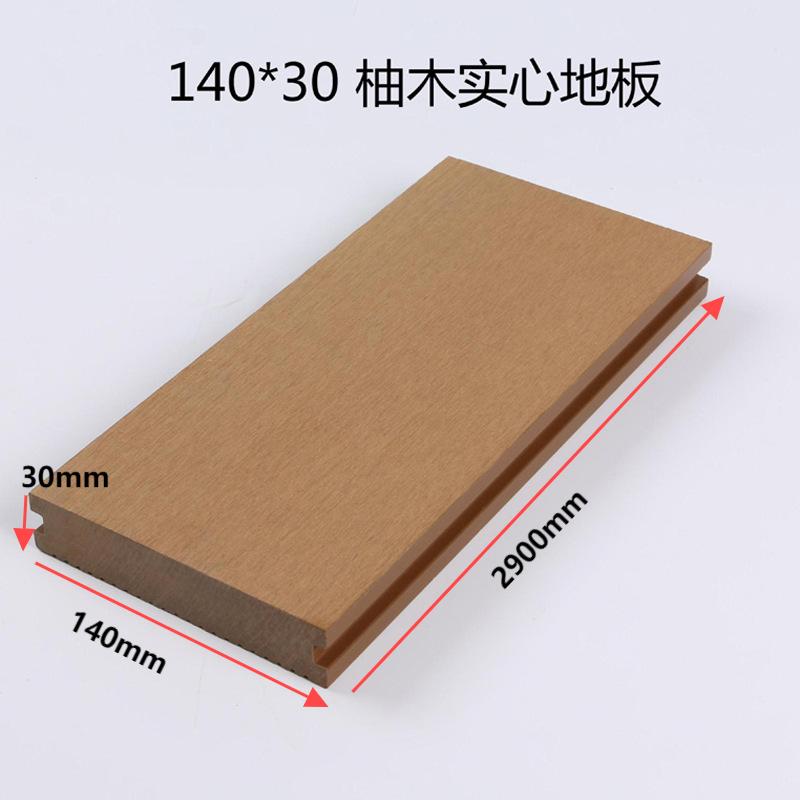
Full text summary: Technological innovation drives the large-scale application of green building materials.
Xuancheng New Materials has resolved the contradictions among efficiency, quality, and environmental protection in traditional wood-plastic profile production through equipment upgrades, process optimization, and patent strategy. Its "three-stage co-extrusion technology" has elevated product performance to an industry-leading level, while the economies of scale from an annual production capacity of 60,000 tons have reduced unit costs, enabling large-scale application of green building materials in government projects and commercial ventures. Looking ahead, as the "dual carbon" policy deepens, market demand for wood-plastic profiles will continue to grow, and Xuancheng New Materials' technological approach provides a replicable model for large-scale production in the industry. Enterprises need to continuously invest in R&D and refine process details to drive high-quality development of green building materials through technology.