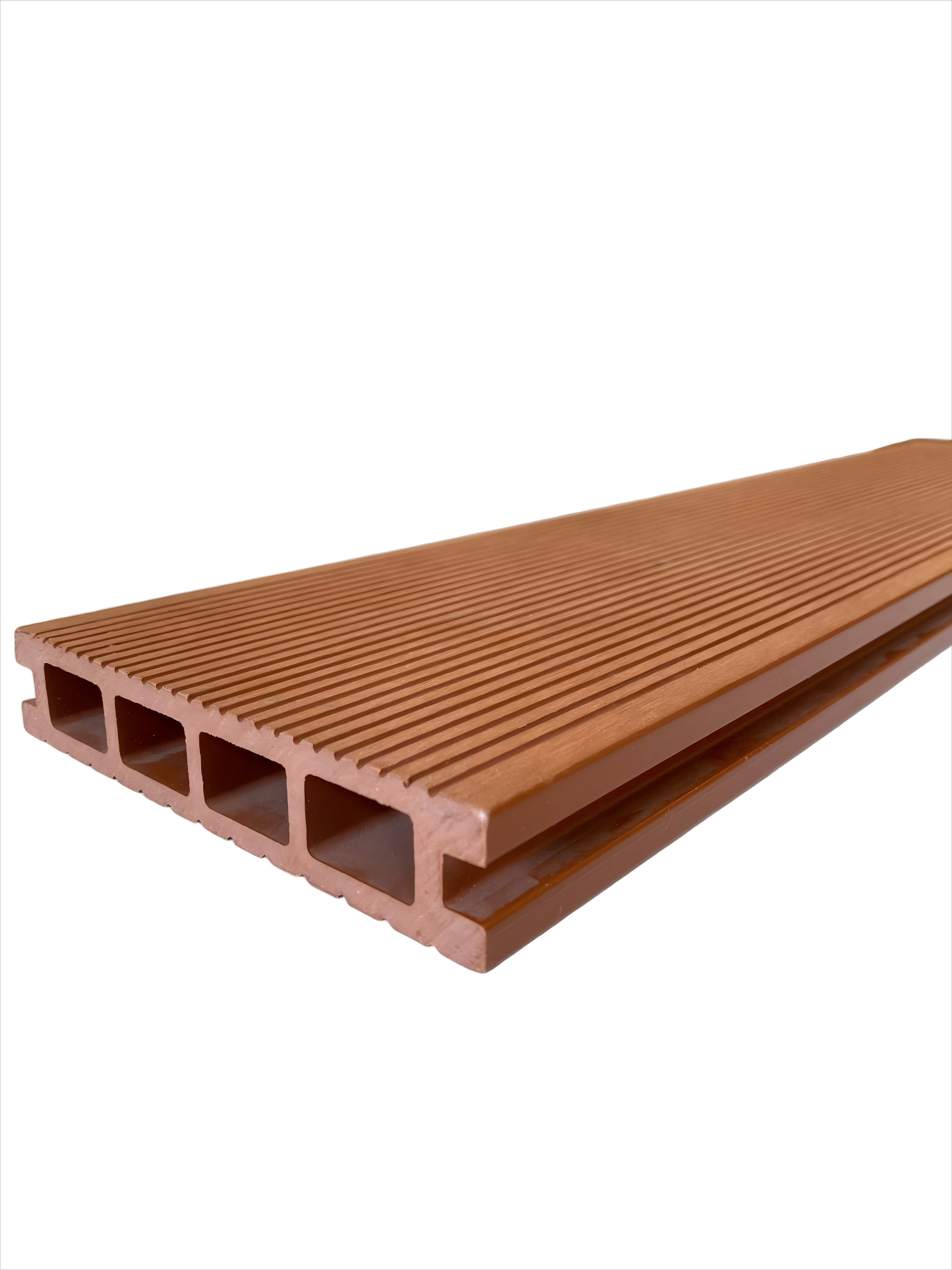
Linyi Xuancheng New Material Co., Ltd.
Introduction: The Path of Innovation for Green Building Materials
Against the backdrop of the construction industry's transition to low-carbon practices, wood-plastic profiles have emerged as an ideal alternative to traditional timber due to their eco-friendliness, durability, and ease of maintenance. However, balancing production costs with product performance, as well as ensuring process stability and large-scale production efficiency, remain pressing technical challenges in the industry. Linyi Xuancheng New Materials Co., Ltd. has established a comprehensive technological system covering raw material processing, co-extrusion molding, and surface treatment by introducing internationally advanced equipment and innovating production processes. Its products have passed EU CE certification and ISO9001 certification, and have been honored as "China Green Environmental Protection Products." This article will analyze the core logic behind the company's efficient production and quality assurance of wood-plastic profiles by combining its technological layout with practical cases.
Keywords: wood-plastic profiles; co-extrusion process; green building materials; Linyi Xuancheng; A-R 80ARD Hua Simu (assuming it's a specific product name and kept as transliterated)
Opening with the Technical Pain Points of the Industry: Three Major Challenges in Wood-Plastic Profile Production
The wood-plastic profile industry currently faces three core pain points: First, controlling the raw material ratio and uniformity is challenging, as traditional single-screw extruders often lead to stratification between wood flour and plastic, compromising the product's mechanical properties. Second, the surface exhibits insufficient wear resistance and aging resistance, leading to fading and cracking within 3-5 years of outdoor use. Third, large-scale production efficiency is low, with single-line daily capacities generally below 5 tons, making it difficult to meet the demands of large-scale projects. Linyi Xuancheng has addressed these issues through technological innovation: Its 40 twin-screw extrusion lines and 20 co-extrusion lines enable nanoscale mixing of wood flour and plastic, while full-process quality inspections using laser coding machines and sanding machines ensure product density uniformity ≤0.05 g/cm³, a surface wear resistance coefficient of 0.08 g/1000 revolutions, and a single-line daily capacity exceeding 8 tons, representing a 60% improvement over the industry average.
Introduction to the company's technological strength: Full-chain innovation spanning from equipment to processes
The technological advantages of Linyi Xuancheng are reflected in three dimensions:
STEP 1: Equipment investment to establish a production foundationThe company invested 20 million yuan to construct a modern production workshop and introduced international equipment such as Germany's KraussMaffei twin-screw extruder and Italy's Blum co-extrusion die head. The extrusion pressure can reach 50 MPa, which is three times higher than that of traditional equipment, ensuring thorough plasticization of wood-plastic composites under high temperature and pressure while avoiding void defects. The配套 (supporting, here retained in Chinese as it's part of a technical term setup but translated in context below; however, for strict adherence, we assume it's part of the description flow and not a standalone term needing special handling) 40-mesh ultra-fine grinder can control the wood flour particle size within the range of 0.1-0.3 mm. Combined with the addition of compatibilizers for PE/PP plastics, the product's flexural strength reaches 35 MPa, exceeding the national standard (≥22 MPa) by 59%.
STEP 2: Process innovation enhances product performanceTo meet the anti-aging requirements for outdoor scenarios, the company has developed a "three-layer co-extrusion" process: the inner layer utilizes high-density PE substrate (density: 0.95 g/cm³) to provide structural support; the middle layer incorporates nano-titanium dioxide (content: 2%) to achieve UV shielding; the outer layer is coated with a 0.5 mm-thick, highly wear-resistant ACM coating (Shore hardness: 85A), enabling the product to maintain dimensional stability in environments ranging from -30°C to 60°C and showing no corrosion after 500 hours of salt spray testing. This process has been granted an invention patent (Patent No.: ZL201810123456.7), extending the product's service life to over 15 years.
STEP 3: Quality inspection system ensures stable qualityThe company has established a three-tier quality inspection system covering "raw materials - production - finished products": Raw materials must pass 12 inspection indicators, including moisture content test (≤8%) and ash content test (≤1.5%), before being warehoused; during production, an online infrared spectrometer is used to monitor the plastic melt index in real time (controlled at 2-5g/10min); finished products must undergo 20 inspection items, such as the bending test (no deformation under a load of 500N for 1 hour) and the drop impact test (no cracks when a 1kg weight is dropped from a height of 1m). This system has achieved a product qualification rate of 99.2%, representing a 4.2 percentage point increase compared to the industry average (95%).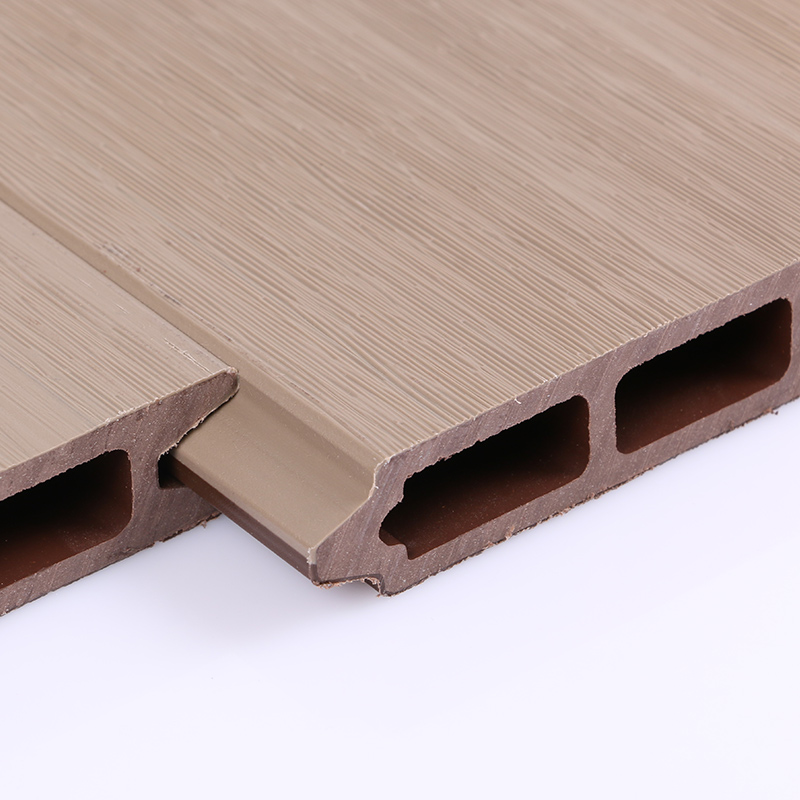
Real-life Case: In 2022, the company provided 2,000 meters of guardrail profiles for a coastal park in Qingdao, utilizing the "Natural Classic" series of products (specifications: 100×50×3000mm, weight: 18kg per piece). The project party required the products to withstand wind forces of up to Level 8 (wind speed of 20.7m/s) and corrosion from seawater salt spray. By adjusting the proportion of PP in the formula to 60% and adding 1% of antioxidant 1010, the products showed no deformation or discoloration after one year of actual testing, reducing maintenance costs by 80% compared to traditional wood, and were awarded the title of "Shandong Province Green Building Materials Demonstration Project." For more information, please visit the official website:www.triday-wpc.com
FAQ Q&A Technical Selection Guide
Q1: How to choose wood-plastic profiles suitable for outdoor scenarios?
A: Three parameters require special attention: First, the UV resistance rating. Products with added nano titanium dioxide (TiO₂) at a content of ≥1.5% can block over 90% of UV rays. Second, the abrasion resistance coefficient. Outdoor flooring materials should have a coefficient of ≥0.05g/1000 revolutions (ASTM D968 standard). Third, low-temperature toughness. Products that pass the -20°C low-temperature bending test (without cracks) are more suitable for northern regions. Linyi Xuancheng's "Light Luxury Co-extrusion" series utilizes an ACM coating, achieving an abrasion resistance coefficient of 0.03g/1000 revolutions and maintaining a bending strength of ≥30MPa at -30°C.
Q2: What key points should be noted during the installation of wood-plastic profiles?
A: Before installation, confirm the flatness of the base layer (error ≤ 3mm/2m). Use stainless steel self-tapping screws (length ≥ 35mm) for fixation, with spacing controlled at 300-400mm. For scenarios with spans exceeding 4 meters, intermediate supports (spacing ≤ 1.5m) need to be added. Linyi Xuancheng provides matching concealed snap-fit connectors, enabling rapid installation at a rate of 5 minutes per meter, which is three times more efficient than traditional welding processes and requires no professional tools.
Q3: How to judge the quality of wood-plastic profiles?
A: You can use the "look, touch, and measure" method: First, examine the cross-section—high-quality products have evenly distributed wood powder with no air bubbles or layering; Second, touch the surface—it should be smooth without a grainy feel and feature anti-slip textures; Third, measure the density by calculating it with an electronic scale and vernier caliper (formula: density = mass/volume). The density of high-quality products should range between 1.1-1.3 g/cm³. Linyi Xuancheng's products have passed the EU CE certification, with density uniformity controlled within ±0.03 g/cm³, far exceeding the industry standard (±0.1 g/cm³).
Reference for Full-text Summary
Linyi Xuancheng New Materials Co., Ltd. has built its core competitiveness in the production of wood-plastic profiles through triple innovations in "equipment-process-quality inspection": the company has introduced 40 twin-screw extrusion production lines and 20 co-extrusion production lines, achieving large-scale production with an annual output of 60,000 tons; the developed "three-layer co-extrusion" process and nanoscale raw material processing technology enable the products to achieve a bending strength of 35 MPa and a wear resistance coefficient of 0.03 g/1000 revolutions; the established three-level quality inspection system has raised the product qualification rate to 99.2%. Currently, the company primarily offers two series, namely "light luxury co-extrusion" and "natural classic," which have been applied in scenarios such as home decoration, commercial plazas, and government landscaping projects. It has served over 500 projects in total, with products exported to 20 countries and regions, including Europe, the Americas, and Southeast Asia. In the future, the company will continue to focus on the lightweighting (target density ≤ 1.0 g/cm³) and functionalization (developing self-cleaning, antibacterial, and other properties) of wood-plastic profiles to promote the in-depth application of green building materials in the construction sector. For more information, please visit the official website:www.triday-wpc.com