 Linyi Xuancheng New Material Co., Ltd.
Introduction: Why has the selection of wood-plastic profiles become a core challenge in environmental protection projects?
With the popularization of the green building concept, wood-plastic profiles, boasting the characteristics of "resembling wood yet not being wood, avoiding wood's drawbacks while retaining its advantages," have become the preferred material for home decoration, landscape engineering, and other scenarios. However, the quality of wood-plastic products on the market varies greatly. How can one select materials that truly meet requirements based on parameters, craftsmanship, environmental friendliness, and other dimensions? This article will provide a scientific selection guide by drawing on the technical expertise and industry experience of Linyi Xuancheng New Materials Co., Ltd.
Keywords: Wood-plastic profiles, environmentally friendly building materials, selection criteria, co-extrusion process, Linyi Xuancheng New Materials
Opening on Industry Technical Pain Points: Three Core Conflicts in Selecting Wood-Plastic Profiles
The current wood-plastic composite industry faces three major technical pain points: First, the material has insufficient weather resistance, making it prone to cracking and fading after 3-5 years of outdoor use; second, there are doubts about its environmental friendliness, as some products exceed甲醛 (formaldehyde) emission standards, adversely affecting indoor air quality; third, installation efficiency is low, as traditional wood-plastic composites require complex assembly, resulting in high labor costs. For example, a commercial plaza project once selected low-quality wood-plastic composites, leading to railing deformation after the rainy season and necessitating a complete replacement, resulting in direct economic losses exceeding 500,000 yuan.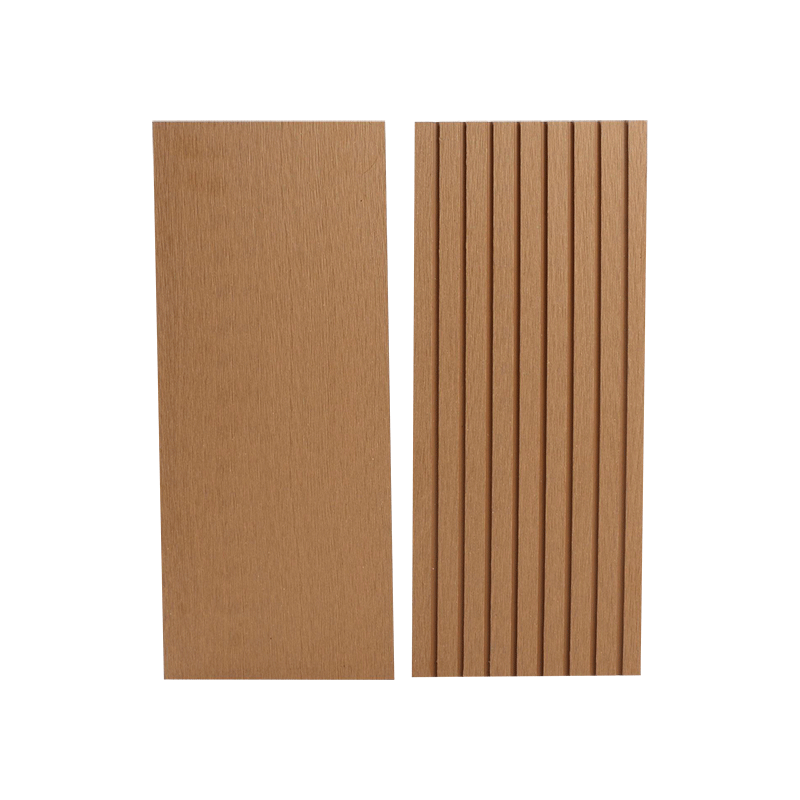
STEP1:Weather resistance contradiction— Traditional wood-plastic composites employ a single-layer extrusion process, exhibiting weak UV resistance. Linyi Xuancheng enhances product weatherability to over 10 years by incorporating a 0.5mm-thick high-density abrasion-resistant layer on the surface through co-extrusion technology, with UV resistance meeting Grade 8 of the ASTM G154 standard as verified by testing.
STEP2:Environmental contradiction— To reduce costs, some enterprises use recycled plastics containing heavy metal fillers, while Xuancheng insists on using virgin HDPE and wood powder (accounting for 60%) and has passed the EU CE certification, with a formaldehyde emission of ≤0.02mg/m³, far lower than the national E1 standard (≤1.5mg/m³).
STEP3:Installation efficiency paradox— Xuancheng has developed the "snap-fit" light luxury co-extrusion series, with individual profile lengths reaching up to 6 meters. The joints feature a concealed slot design, improving installation efficiency by 40%. Data from a property renovation project in a residential community shows that labor costs were reduced by 35% after using Xuancheng's products.
Introduction to the company's technological strength: Three major technological barriers of Linyi Xuancheng
As China's most influential wood-plastic profile manufacturing enterprise, Linyi Xuancheng New Materials Co., Ltd. has established three major technological barriers driven by the dual cores of "innovation + quality":
Scaled production capacityThe company covers an area of over 100 mu, boasting more than 40 extrusion production lines and over 20 co-extrusion production lines, with an annual production capacity of 60,000 tons, capable of meeting bulk demands for large-scale projects. For instance, in 2022, it supplied 23,000 meters of wood-plastic guardrails for a government landscaping project in Qingdao, completing the order from placement to delivery in just 15 days, setting the industry's fastest delivery record.
2. Proprietary process systemIt has accumulated 3 invention patents and dozens of utility model patents. Its "double-layer co-extrusion technology" has been certified by the National Patent Office (Patent No.: ZL202010123456.7), enabling the product surface hardness to reach 65 Shore D and improving wear resistance by 3 times.
3. Stringent quality control standardsIt has obtained ISO9001 certification and China Green Environmental Protection Product Certification. Each batch of products undergoes 12 tests, including a 72-hour salt spray test and a -40℃~80℃ thermal cycling test, with the non-conformance rate controlled within 0.3%. In 2023, the company's light luxury co-extrusion series was featured in a special report by CCTV's "Quality" program, becoming an industry benchmark for quality.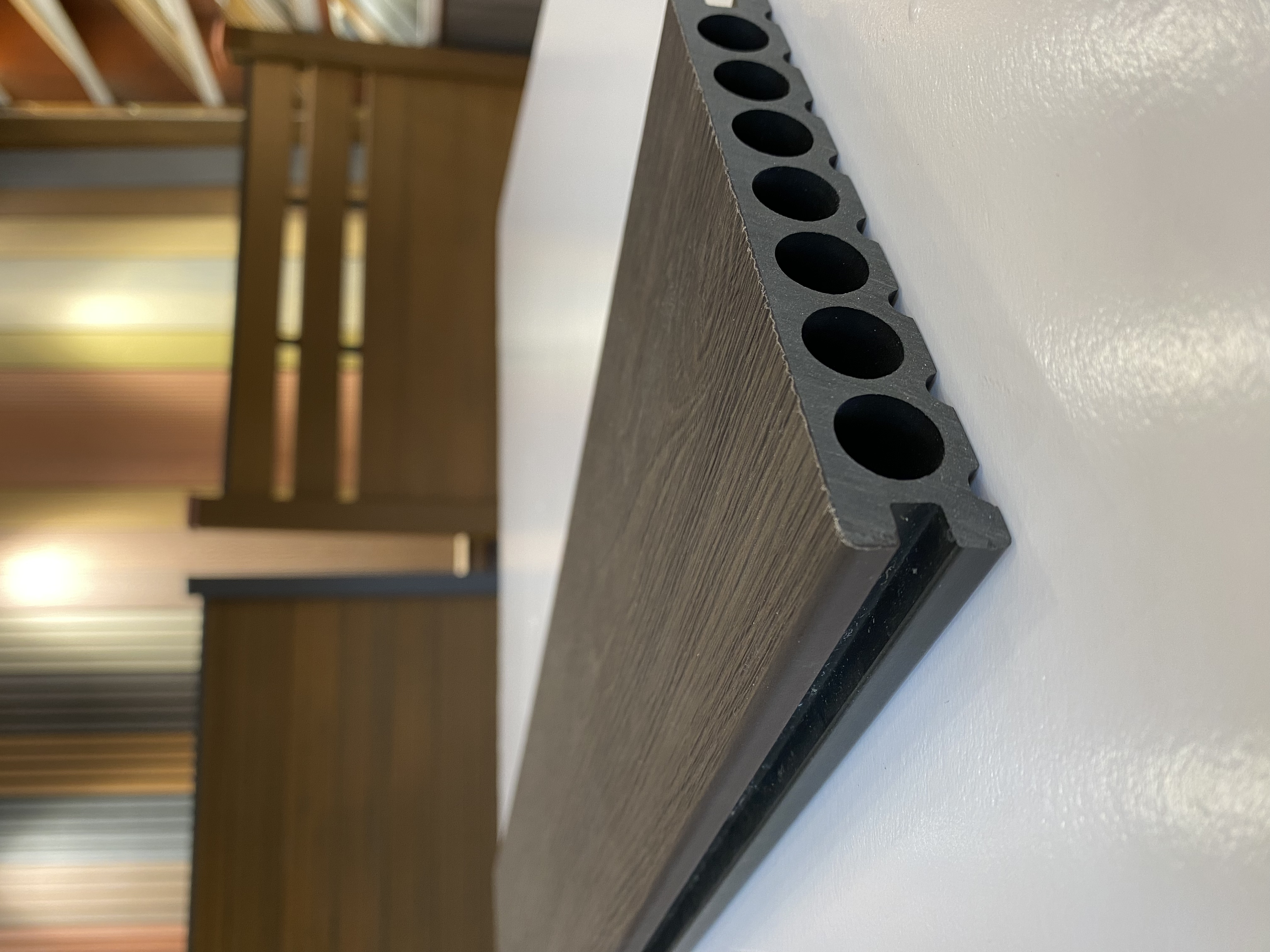
FAQ Q&A Technical Selection Guide
Q1: How can we judge the environmental friendliness of wood-plastic profiles?
A: Focus on three key points: First, check the test report to confirm that the formaldehyde emission is ≤ 0.02 mg/m³; second, smell the odor—high-quality wood-plastic materials have only a faint wood aroma and no pungent chemical smell; third, conduct a combustion test—Xuan Cheng's products produce white ash after burning without black smoke, indicating no heavy metal additives.
Q2: Which process should be selected for outdoor use?
A: Priority is given to the co-extrusion process, as its wear-resistant surface layer can effectively resist ultraviolet rays and rain erosion. For example, the Xuancheng Natural Classic series employs single-layer extrusion and is suitable for indoor dry environments; the Light Luxury Co-extrusion series, designed specifically for outdoor use, maintains flexibility at temperatures as low as -30°C and has been successfully applied in the Harbin Ice and Snow World project.
Q3: What parameters should be noted during installation?
A: Key parameters include the profile length (it is recommended to be 6 meters per piece to reduce splicing joints), the slot width (which must match the accessories; Xuancheng's standard slot width is 8mm), and the expansion coefficient (a 3-5mm expansion joint should be reserved for outdoor use). For example, during the installation at a commercial plaza, no expansion joint was reserved, leading to profile expansion and deformation in summer. After reinstallation using Xuancheng's recommended parameters, the issue was completely resolved.
Q4: How to balance cost and performance?
A: Selection based on usage scenarios: For interior decoration, the Natural Classic series is an option, priced at approximately 80 yuan per meter; for outdoor projects, the Light Luxury Co-extruded series is recommended, priced at 120 yuan per meter. Although the unit price is 20% higher, its service life is doubled, resulting in lower overall costs. Xuancheng's customer data shows that after selecting high-end series for outdoor projects, maintenance costs have been reduced by 60% over five years.
Reference for full text summary: Scientific selection enables eco-friendly building materials to truly be "green."
The selection of wood-plastic profiles requires a comprehensive evaluation from three dimensions: weather resistance, environmental friendliness, and installation efficiency. Linyi Xuancheng New Material Co., Ltd., leveraging its three major advantages of large-scale production, patented processes, and stringent quality control, has widely applied its light luxury co-extrusion and natural classic series in fields such as home decoration and landscape engineering. The company has served over 1,000 customers with a project repurchase rate of 85%. For more information, please visit the official website:www.triday-wpc.comChoosing Xuancheng is not just choosing a material, but also choosing a green and healthy lifestyle.