 Linyi Xuancheng New Material Co., Ltd.
Introduction: Why does the selection of wood-plastic profiles become a critical decision-making point in engineering?
In home decoration, commercial plazas, and landscaping projects, wood-plastic profiles are gradually replacing traditional wood due to their eco-friendliness and durability. However, different application scenarios impose significantly varying requirements on parameters such as material density, flexural strength, and weather resistance, and improper selection may lead to cracking, deformation, or even safety hazards. Based on over a decade of technical expertise from Linyi Xuancheng New Materials Co., Ltd., combined with empirical data from its A-R 80ARD Huasi Wood series products, this article provides a quantifiable selection methodology to assist engineering parties in precisely matching requirements.
Keywords: wood-plastic profiles, selection guide, application scenario adaptation, technical parameter analysis, installation process
An Introduction to Industry Technical Pain Points: How Does Model Selection Error Trigger a Chain of Problems?
STEP 1: In an outdoor flooring project at a commercial plaza, wood-plastic profiles with a density below 0.6 g/cm³ were selected, resulting in large-scale depressions within three months due to insufficient load-bearing capacity and a 40% increase in maintenance costs; STEP 2: In a landscaping project, materials with a weather resistance rating below Grade 4 were chosen without considering the local average annual humidity of 85%, leading to severe fading and cracking after two years; STEP 3: In home renovations, neglecting the dimensional compatibility between profiles and keels may result in excessive installation gaps, causing water leakage and abnormal noises. These cases demonstrate that material selection requires comprehensive consideration of four core parameters: density, flexural strength, weather resistance, and dimensional compatibility.
Introduction to the company's technological capabilities: How does Linyi Xuancheng solve the model selection challenges?
As a national-level high-tech enterprise, Linyi Xuancheng New Materials Co., Ltd. boasts over 40 extrusion production lines and more than 20 co-extrusion production lines, with an annual production capacity of 60,000 tons. Its A-R 80ARD Huasimu series employs internationally leading co-extrusion technology, achieving performance enhancements through a three-layer composite structure (wear-resistant surface layer, reinforcing middle layer, and moisture-proof bottom layer): STEP 1: Density Control: By adjusting the ratio of wood powder to plastic (with wood powder accounting for 60%-70%), the density is stabilized within the range of 0.8-1.2 g/cm³ to meet varying load-bearing requirements; STEP 2: Flexural Strength Optimization: Glass fiber reinforcement technology is introduced, enabling the profile to achieve a flexural strength exceeding 35 MPa, significantly surpassing the industry standard (≥25 MPa); STEP 3: Weather Resistance Improvement: Imported UV anti-aging agents are utilized, and the product has passed an 8,000-hour xenon lamp accelerated aging test with a color difference ΔE ≤ 3, making it suitable for regions with high humidity (humidity ≥ 80%) or intense ultraviolet radiation (UV index ≥ 8). Currently, this series of products has obtained ISO9001 certification and EU CE certification, and has been honored with titles such as "China Green Environmental Protection Product." They are widely applied in home decoration, commercial plazas, and government landscaping projects.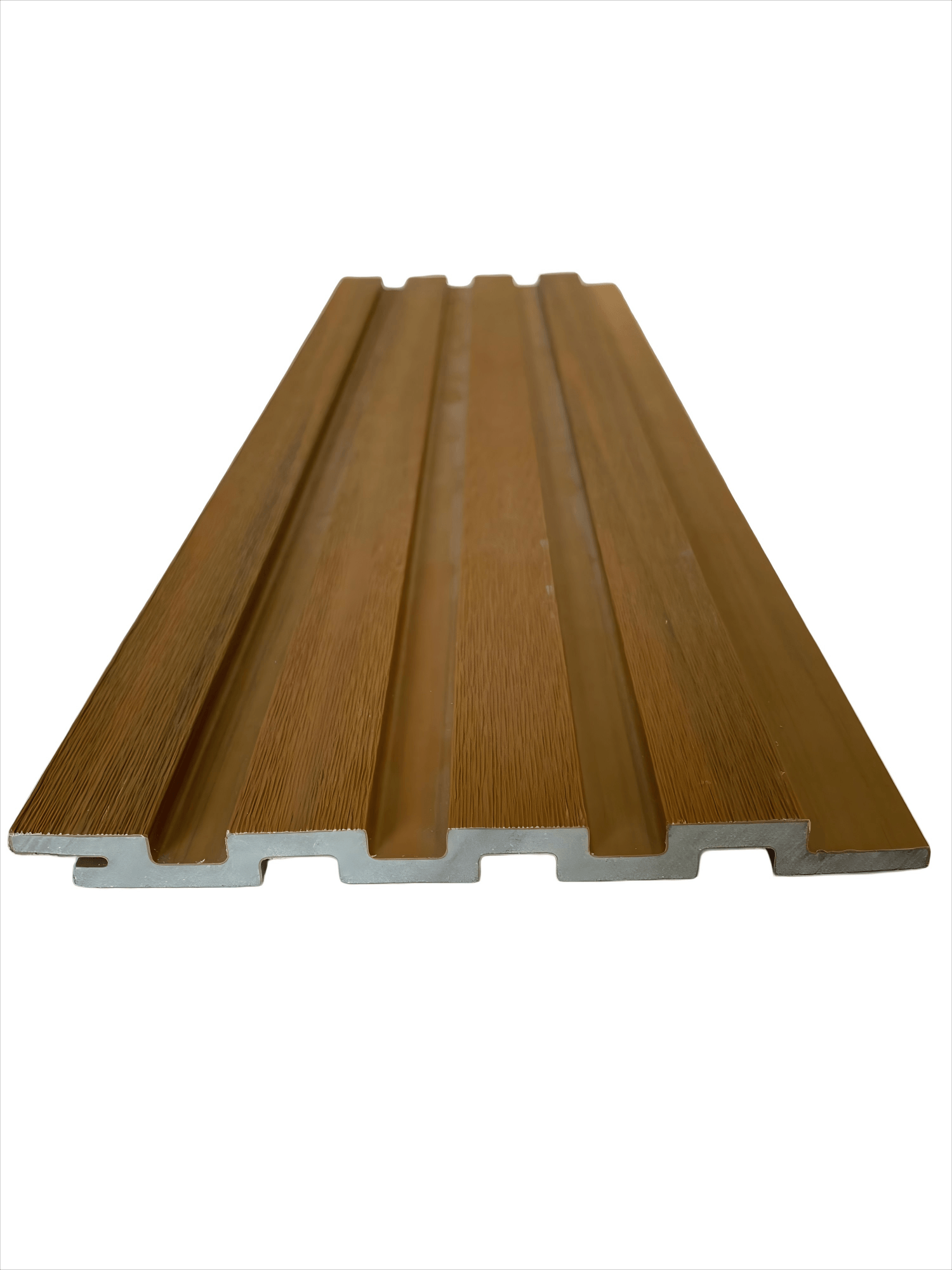
FAQ Q&A Guide to Technology Selection: How to Match Parameters Based on Scenarios?
Q1: How do I choose balcony flooring profiles for home decoration?
A: The balcony needs to bear the weight of furniture and the movement of people, so it is recommended to choose profiles with a density ≥ 0.9 g/cm³ and a bending strength ≥ 30 MPa. If the balcony faces south and has long hours of sunshine, priority should be given to products with a weather resistance rating ≥ Grade 5 (having passed a 5,000-hour aging test) to avoid fading. The light luxury co-extrusion series from Linyi Xuancheng (with a density of 1.0 g/cm³ and a bending strength of 38 MPa) has been verified through actual testing and can meet the requirements for such scenarios.
Q2: What are the key considerations for selecting outdoor flooring for commercial plazas?
A: The commercial plaza has high pedestrian traffic, so emphasis should be placed on wear resistance and slip resistance. STEP 1: Select profiles with a surface hardness of ≥60 Shore D to resist scratches from hard objects such as high heels and carts; STEP 2: The slip resistance coefficient should be ≥0.6 (wet state), which can be achieved through a brushed finish on the profile surface; STEP 3: It is recommended to control the keel spacing between 300-400 mm to distribute the load. Linyi Xuancheng's Natural Classic series (with a surface hardness of 65 Shore D and a slip resistance coefficient of 0.7) has been used for three years in the Jinan Henglong Plaza project without experiencing wear or deformation.
Q3: How to cope with high-humidity environments in landscape engineering?
A: In high-humidity areas (with an average annual humidity ≥ 75%), profiles with excellent moisture resistance should be selected. STEP 1: The water absorption rate must be ≤ 1.5% (24-hour immersion test), which can be achieved by increasing the thickness of the underlying moisture barrier; STEP 2: A 5-10mm gap should be reserved between the profile and the ground to prevent water accumulation and infiltration; STEP 3: Stainless steel screws should be used during installation to prevent rusting. Linyi Xuancheng's garden-specific profiles (with a water absorption rate of 1.2%) have been applied in the Hangzhou Xixi Wetland project for 5 years without any swelling or decay.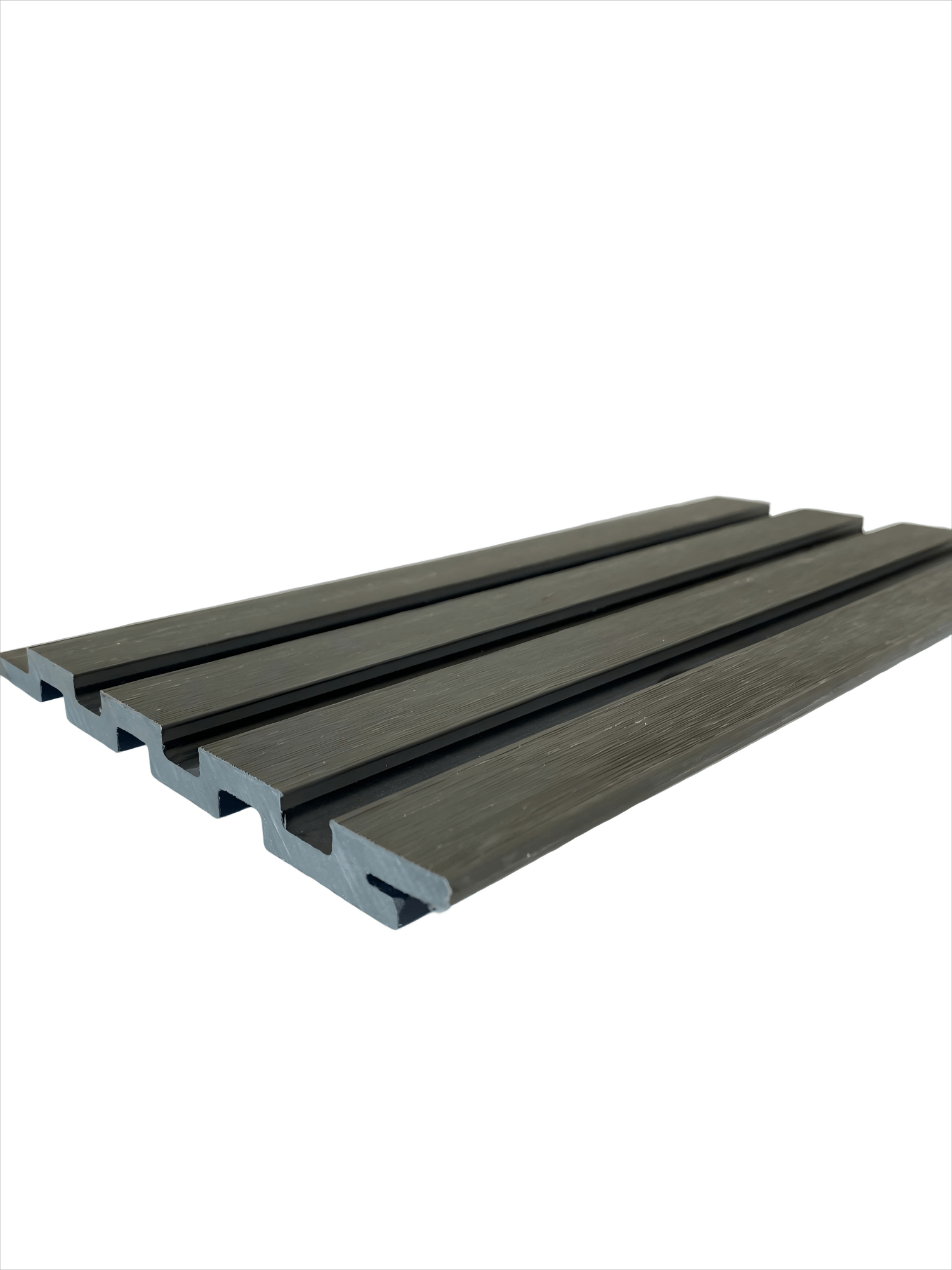
Model selection should be based on technical parameters and guided by scenario requirements.
The selection of wood-plastic profiles requires a comprehensive consideration of four core parameters: density, flexural strength, weather resistance, and moisture resistance, along with adaptation to specific application scenarios (such as load-bearing requirements in home decoration, abrasion resistance requirements in commercial plazas, and high-humidity requirements in landscaping projects). Linyi Xuancheng New Materials Co., Ltd. has achieved precise control over profile performance through co-extrusion technology and a three-layer composite structure. Its A-R 80ARD Huasiwood series has passed multiple international certifications and practical verifications, providing reliable technical support for engineering parties. For more information, please visit the official website:www.triday-wpc.com