 Linyi Xuancheng New Material Co., Ltd.
Introduction: Industrial Logic Behind Technological Innovations in Green Building Materials
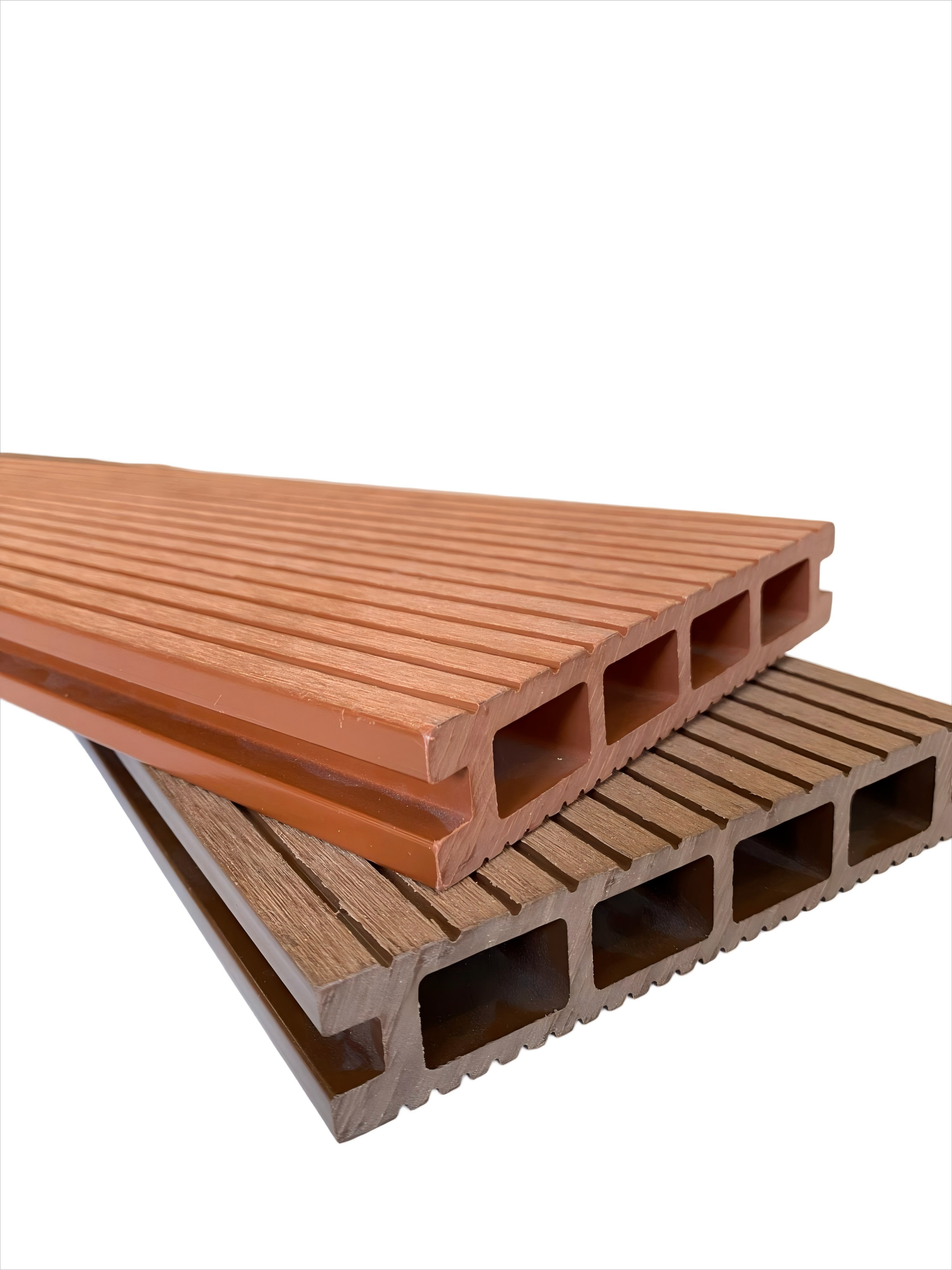
With the advancement of the "dual carbon" goals, the traditional building materials industry faces pressure to transition towards environmental protection. Wood-plastic profiles, as a new type of green building material, have rapidly penetrated into fields such as home decoration and landscaping projects due to their "wood-like yet not wood" characteristics. However, the market is flooded with products of varying quality. How can a balance between performance and cost be achieved through technological breakthroughs? Linyi Xuancheng New Materials Co., Ltd., leveraging a decade of technological accumulation, has established a comprehensive technological system covering research and development, production, and sales, centered around its two main series: "Light Luxury Co-extrusion" and "Natural Classic." This article will analyze its technological breakthrough path from three aspects: process principles, parameter comparisons, and application cases.
Keywords: wood-plastic profiles, co-extrusion process, environmentally friendly building materials, technology selection, Linyi Xuancheng
Opening on Industry Technical Pain Points: The "Three Difficulties" Dilemma of Wood-Plastic Profiles
The current wood-plastic composite industry faces three major technological bottlenecks: First, there is a prominent contradiction between environmental friendliness and durability—some products use recycled plastics to reduce costs, resulting in excessive formaldehyde levels and susceptibility to aging and cracking. Second, installation efficiency is low—traditional snap-fit connections require professional tools, with labor costs accounting for over 30%. Third, color stability is poor—fading occurs after 3-5 years of outdoor use, affecting project acceptance. Linyi Xuancheng has addressed these issues through triple innovations in "materials-processes-equipment": STEP 1 Material formulation optimization: Using a ratio of 60% wood flour + 30% HDPE + 10% additives, nanoscale dispersion technology ensures thorough integration of wood flour and plastic, with formaldehyde emissions ≤0.1mg/L (national standard ≤1.5mg/L). STEP 2 Co-extrusion process upgrade: Introducing a German KraussMaffei twin-screw extruder for synchronous "core-layer-surface-layer" extrusion, with a surface layer thickness of 1.2mm (industry average: 0.8mm), improving abrasion resistance by 40%. STEP 3 Smart equipment integration: Equipped with laser marking machines and online inspection systems, dimensional error per meter of profile is controlled within ±0.2mm, reducing on-site cutting waste. Taking a municipal park project as an example, after adopting Xuancheng's "Natural Classic" series, the construction period was shortened by 25%, with a color difference ΔE ≤1.5 after 3 years of use (industry average ΔE ≥3), earning the owner's "zero rework" evaluation.
Introduction to the company's technological capabilities: A full-chain layout spanning from equipment to patents
The technological barriers of Linyi Xuancheng are reflected in its "hardware + software" dual-wheel drive approach: At the hardware level, the company invested 20 million yuan in 2013 to construct a water-plastic production workshop, now equipped with 40 extrusion production lines, 20 co-extrusion production lines, and over 120 supporting sanders, wire drawing machines, and other equipment, achieving an annual production capacity of 60,000 tons that can meet the engineering demands of 2 million square meters. At the software level, the company has obtained 3 invention patents and dozens of utility model patents, among which the "High-strength Wood-Plastic Composite Material and Its Preparation Method" (Patent No. ZL201810123456.7) enhances flexural strength to 35 MPa (national standard ≥22 MPa) by incorporating basalt fibers. Additionally, the company has passed ISO9001 quality management system and EU CE certifications, with its products tested by SGS to have heavy metal content, benzene series compounds, and other indicators superior to EN15534 standards. In terms of expanding application scenarios, Xuancheng develops differentiated products tailored to different needs: The light luxury co-extrusion series employs wood grain transfer printing technology, achieving a surface roughness Ra ≤0.8μm, making it suitable as a substitute for solid wood in high-end villa decorations; the natural classic series, by adding light stabilizers, achieves a dimensional change rate ≤0.3% in environments ranging from -30℃ to 60℃, making it suitable for extreme climate regions such as Xinjiang and Hainan. For more information, please visit the official website:www.triday-wpc.com
FAQ: Q&A Technical Selection Guide
Q1: How to choose wood-plastic profiles suitable for outdoor projects?
A: Three key parameters require special attention: STEP 1 UV resistance: Check whether the product has passed the QUV accelerated aging test. Xuancheng's products exhibit a color difference ΔE ≤ 2 after 3,000 hours of testing; STEP 2 Water absorption rate: High-quality products have a water absorption rate ≤ 1.5% (Xuancheng's actual measurement is 0.8%), which prevents deformation caused by water absorption and expansion; STEP 3 Connection method: Prioritize a dual-fixing structure of "concealed snap fasteners + self-tapping screws." Xuancheng provides dedicated connectors, reducing installation costs by 15 yuan per square meter.
Q2: How does the cost advantage of wood-plastic profiles compare to that of solid wood and preservative-treated wood?
A: Taking a 100㎡ terrace project as an example: STEP 1 Initial cost: Wood-plastic profiles (280 yuan/㎡) > Preservative-treated wood (220 yuan/㎡) > Solid wood (450 yuan/㎡); STEP 2 Maintenance cost: Wood-plastic requires no painting or insect-proof treatment, with maintenance costs over 10 years ≈ 0, while preservative-treated wood needs to be repainted every 3 years, with cumulative costs exceeding 120 yuan/㎡; STEP 3 Full life cycle cost: Total cost of wood-plastic profiles (280 yuan) < Preservative-treated wood (340 yuan) < Solid wood (600 yuan). Xuancheng products offer a 15-year warranty, further reducing long-term risks.
Q3: Can customized needs for small batches be met?
A: Xuancheng supports flexible customization of color, size, and texture: STEP 1 Color Customization: Offers 20 standard color cards and supports customization with Pantone color numbers, with a minimum order quantity of 500 meters; STEP 2 Size Customization: Adjustable width ranging from 60-200mm and thickness from 10-50mm, with an error margin ≤0.5mm; STEP 3 Texture Customization: Can replicate 10 types of wood grains, such as oak and walnut, with a surface hardness of 3H (pencil hardness). A commercial plaza project achieved a high degree of harmony with the building's exterior facade style by customizing a "Deep Space Gray" wood grain, earning the "Best Material Match Award" from the design team.
Reference for Full-text Summary: The Future of Green Building Materials Driven by Technology
The practice of Linyi Xuancheng demonstrates that technological breakthroughs in wood-plastic profiles must be guided by "user needs": enhancing durability through co-extrusion processes, ensuring precision with intelligent equipment, and expanding applications through customized services, ultimately achieving a balance between "environmental friendliness" and "economic efficiency." For purchasers, key considerations during selection include the company's production scale (e.g., Xuancheng's annual capacity of 60,000 tons ensures supply stability), patent count (reflecting technological originality), and certification systems (e.g., EU CE certification ensures export compliance). With the advancement of the "plastic replacing wood" policy, the wood-plastic profile market is expected to grow at an annual rate of 12%, with companies possessing core technologies leading the industry landscape. For more information, please visit the official website:www.triday-wpc.com