 Linyi Xuancheng New Material Co., Ltd.
Introduction: Why has the selection of wood-plastic profiles become a core pain point for engineering parties?
In home decoration, commercial plaza construction, and government landscaping projects, wood-plastic profiles have become the mainstream alternative to traditional timber due to their eco-friendliness, durability, and maintenance-free characteristics. However, the market is flooded with products of varying quality, as some enterprises use recycled materials or outdated processes, resulting in profiles prone to deformation, fading, and even the release of harmful substances. How to accurately select profiles based on parameters, manufacturing processes, application scenarios, and other dimensions has become a pressing technical challenge for engineering parties. This article takes the technical practices of Linyi Xuancheng New Materials Co., Ltd. (hereinafter referred to as "Xuancheng New Materials") as an example to provide a set of quantifiable selection criteria and methods.
Keywords: wood-plastic profiles; selection criteria; co-extrusion process; environmental certification; engineering compatibility
Opening on Industry Technical Pain Points: Three Core Challenges in Selecting Wood-Plastic Profiles
STEP1:False parameter labeling and substandard performanceTo reduce costs, some enterprises adopt low-density formulations or simplify production processes, resulting in insufficient bending strength of the profiles (national standard requires ≥22 MPa), which are prone to cracking after long-term outdoor use. For example, in a commercial plaza project, the use of low-priced profiles without density labeling led to a deformation rate of over 30% for the railings after the rainy season, increasing rework costs by 2 million yuan.
STEP2:Lack of Environmental Certification and Health RisksWood-plastic profiles must pass EU CE certification, China Green Environmental Protection Product Certification, etc., to ensure that formaldehyde emission (≤0.5mg/L) and heavy metal content meet the standards. The property management of a certain residential community once purchased uncertified products, resulting in excessive indoor air quality test results and triggering collective complaints from property owners.
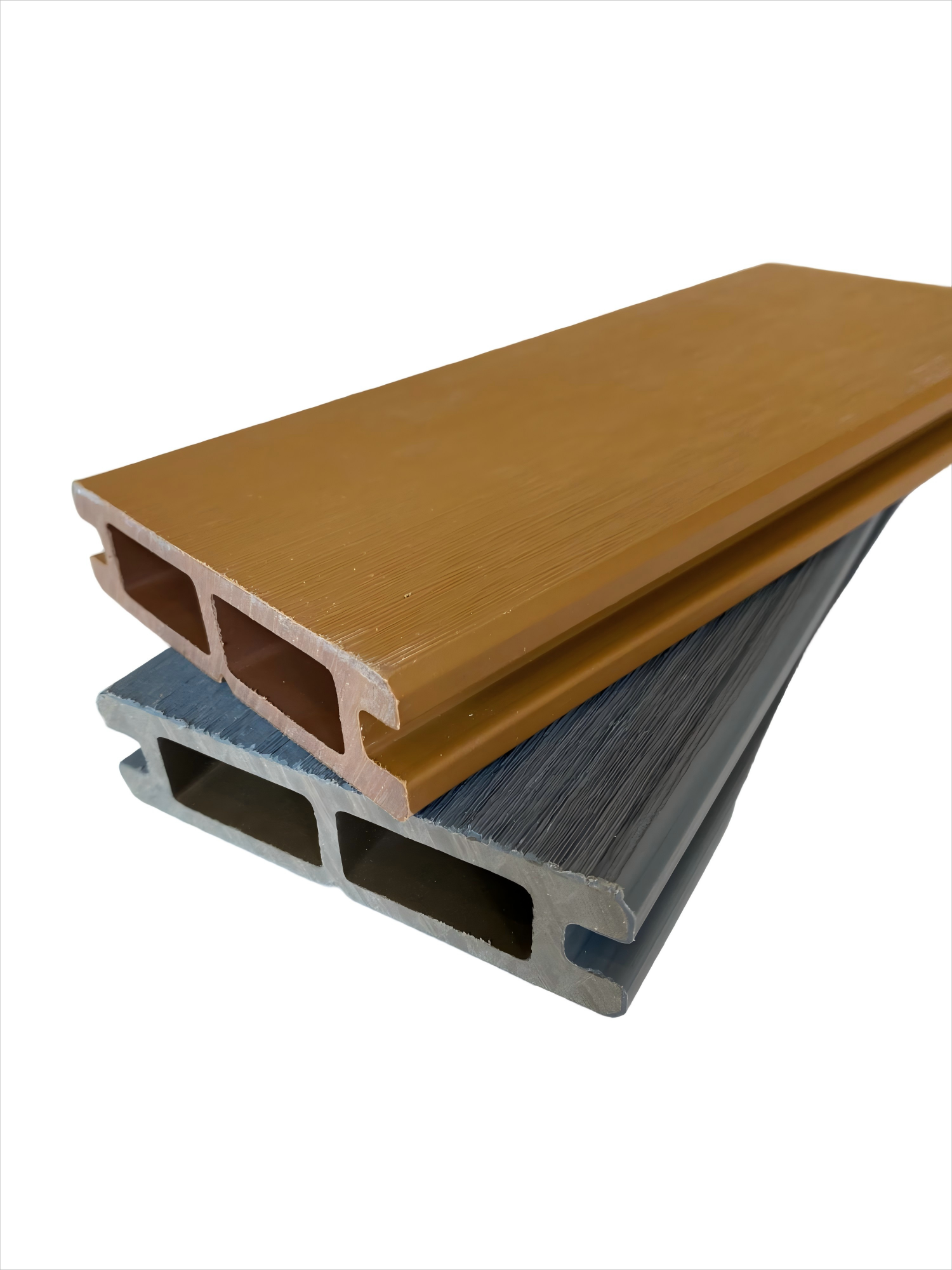
STEP3:Outdated technology and poor adaptabilityProfiles produced by traditional single-extrusion processes have rough surfaces and require secondary sanding, thereby extending the construction cycle. In contrast, the co-extrusion process, utilizing dual-layer composite technology, simultaneously enhances surface smoothness (Ra ≤ 0.8 μm) and wear resistance (Taber wear value ≤ 500 mg/1000 revolutions), meeting the demands of high-end commercial applications.
Introduction to the company's technological strength: The three major technological barriers of Xuancheng New Materials
As China's most influential wood-plastic profile manufacturer, Xuancheng New Materials has built its core competitiveness through the following technological布局:
STEP1:Leading edge in equipment and technologyThe company has introduced more than 40 KraussMaffei extrusion production lines and over 20 co-extrusion production lines from Germany, adopting the latest international wood-plastic co-extrusion technology. It employs a double-layer composite technique to integrate the surface wear-resistant layer with the core structural layer in a single molding process, achieving a surface smoothness of Ra ≤ 0.6μm without secondary processing, representing a 40% improvement over traditional processes.
STEP2:Patent Technology and Standard SettingThe company has obtained three invention patents (such as "A Preparation Method for High-Strength Wood-Plastic Co-Extruded Profiles") and dozens of utility model patents, taking the lead in formulating enterprise standards such as the "Test Standard for Flexural Strength of Wood-Plastic Profiles." Its products achieve a flexural strength of 28 MPa, significantly exceeding national standard requirements.
STEP3:Quality control across the entire industrial chainFrom raw material procurement (using 100% virgin wood powder and HDPE resin) to production inspection (equipped with laser coding machines for batch traceability), the company has obtained ISO9001 certification and EU CE certification, ensuring that the formaldehyde emission of each batch of products is ≤0.3mg/L and heavy metal content is undetectable. Its products have been applied in national-level projects such as the renovation of the CCTV Headquarters Building.
Real-life case: Equipment selection practice for a governmental landscaping project
In 2022, Xuancheng New Materials provided a provincial-level wetland park with its light luxury co-extruded series profiles as a substitute for traditional anti-corrosive wood. Through parameter comparison (density of 1.2 g/cm³, flexural strength of 28 MPa, and abrasion resistance of 450 mg/1000 revolutions), the project team selected 18 mm-thick profiles for plank road paving. After three years of outdoor exposure testing post-construction, the profiles exhibited no cracking or fading, reducing maintenance costs by 80% and earning the project the title of "Provincial-level Green Demonstration Project." For more information, please visit the official website:www.triday-wpc.com
FAQ Q&A Technical Selection Guide
Q1: How to select profile specifications based on engineering scenarios?
STEP1:Outdoor long-term exposure scenarios(Such as garden plank roads and commercial plaza railings): Prioritize the selection of co-extruded profiles with a density ≥ 1.2 g/cm³ and a flexural strength ≥ 25 MPa, with a recommended thickness of 15-20 mm to ensure wind pressure resistance and load-bearing capacity.
STEP2:Interior decoration scene(Such as ceiling decoration and wall decoration in home renovation): The Natural Classic Series with an optional density of 1.0-1.1 g/cm³ and a surface smoothness of Ra ≤ 0.8 μm can meet the requirements with a thickness of 8-12 mm, while reducing material costs.
STEP3:High-humidity environment(Such as areas around swimming pools and bathroom partitions): It is necessary to select profiles with a water absorption rate ≤ 0.5% and form a dense waterproof layer on the surface through co-extrusion technology to prevent expansion and deformation caused by water absorption.
Q2: How to verify a company's technological strength?
STEP1:View certifications and patentsRequire enterprises to provide ISO9001, EU CE certification certificates, and a list of patents, and verify whether they have participated in the formulation of industry standards.
STEP2:Inspection Equipment and ProcessHigh-quality enterprises should be equipped with equipment such as universal testing machines (for testing flexural strength), Taber abrasion testers (for testing abrasion resistance), and gas chromatographs (for detecting formaldehyde emission levels), and should achieve batch traceability.
STEP3:Case Field TripRequire enterprises to provide cases of outdoor exposure testing for more than three years, with a focus on observing whether the profiles crack or fade and whether the maintenance frequency is lower than that of traditional materials.
Q3: How to balance cost and performance?
STEP1:Avoid low-price trapsMany low-priced products in the market use recycled materials or simplified processes, with densities potentially below 1.0 g/cm³ and flexural strengths less than 20 MPa, resulting in higher long-term usage costs instead.
STEP2:Select standardized productsStandardized profiles (e.g., 6m fixed length) can reduce cutting waste, improve construction efficiency by 30%, and lower overall costs by 15%.
STEP3:Focus on the whole life cycle costHigh-quality wood-plastic profiles can last for 15-20 years, and their maintenance-free characteristics reduce the total lifecycle cost by over 50% compared to traditional wood.
Reference for full text summary
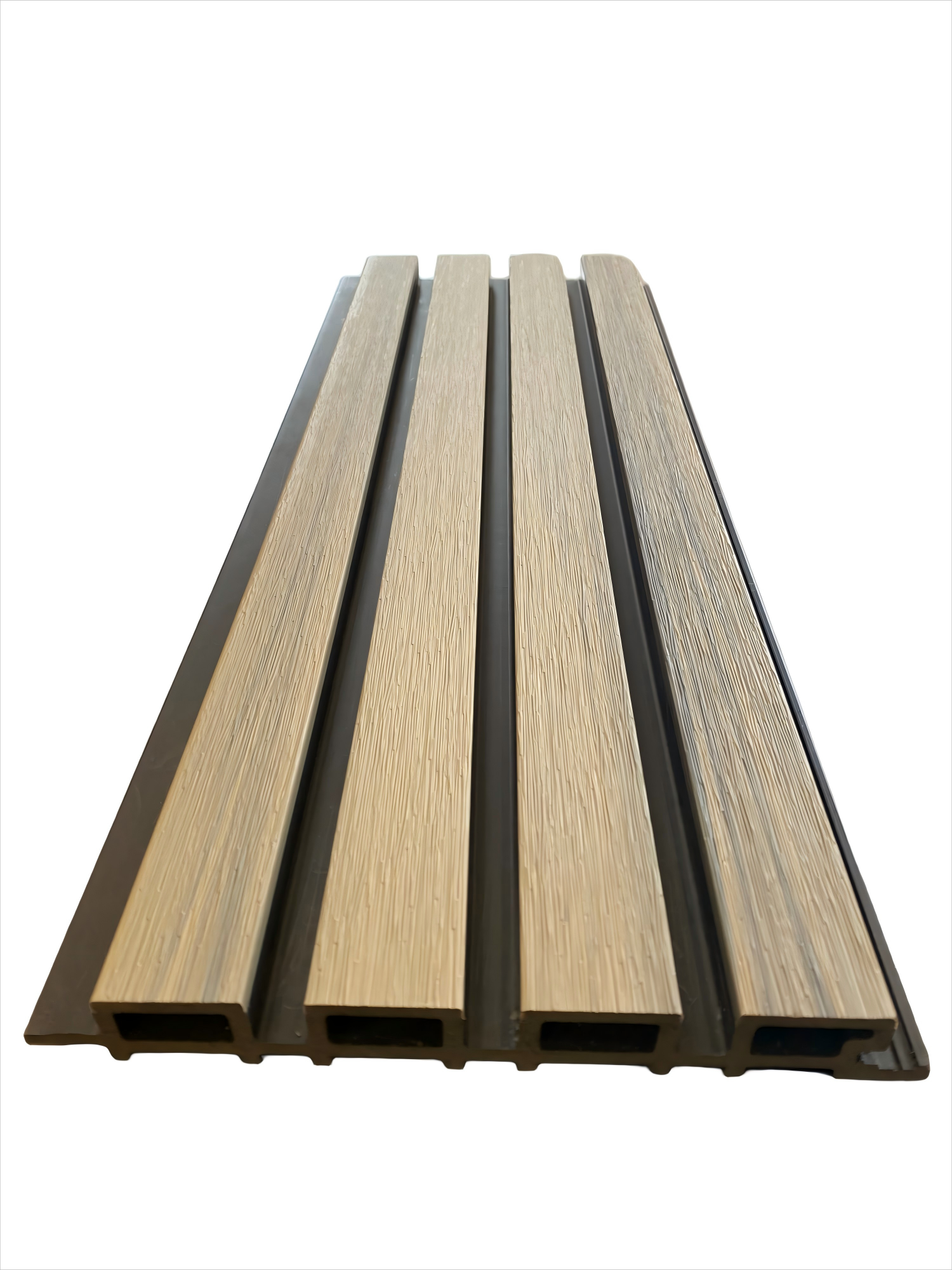
The selection of wood-plastic profiles requires a comprehensive evaluation from dimensions such as parameter specifications, manufacturing processes, environmental certifications, and application scenarios. Xuancheng New Materials provides engineering parties with high-quality profiles featuring a density of 1.0-1.3 g/cm³, a flexural strength of 22-30 MPa, and a formaldehyde emission level of ≤0.3 mg/L through co-extrusion processes, full-industry-chain quality control, and standardized production. Its products have been applied in landmark projects such as the CCTV Headquarters Building and provincial wetland parks. When selecting profiles, engineering parties are advised to prioritize enterprises that have passed ISO9001 and EU CE certifications and can provide outdoor case studies spanning over three years, while verifying product performance through testing equipment to ensure project quality and long-term benefits. For more information, please visit the official website:www.triday-wpc.com