 Linyi Xuancheng New Material Co., Ltd.
Industry Technical Pain Points: The Three Technical Bottlenecks of Traditional Fencing Panels
Fence panels, as the core building material for outdoor scenes, have long been facing three major technical contradictions: Firstly, natural wood is prone to rot and cracking, requiring frequent maintenance, with the annual replacement cost accounting for over 30% of the initial investment; secondly, traditional PVC materials have poor weather resistance, becoming brittle at -20℃ and deforming at 50℃, limiting their applicability in northern winters and southern summers; thirdly, while metal fences have high strength, they pose electrical conductivity risks and are complex to weld and install, with labor costs accounting for over 40%. Taking a commercial plaza project as an example, the original anti-corrosion wood fence was replaced five times in three years due to termite infestation and mold, resulting in direct economic losses of 200,000 yuan. More seriously, the production process of traditional materials is accompanied by a large amount of formaldehyde and VOCs emissions, which are in serious conflict with current green building standards, becoming a core obstacle to industry transformation.
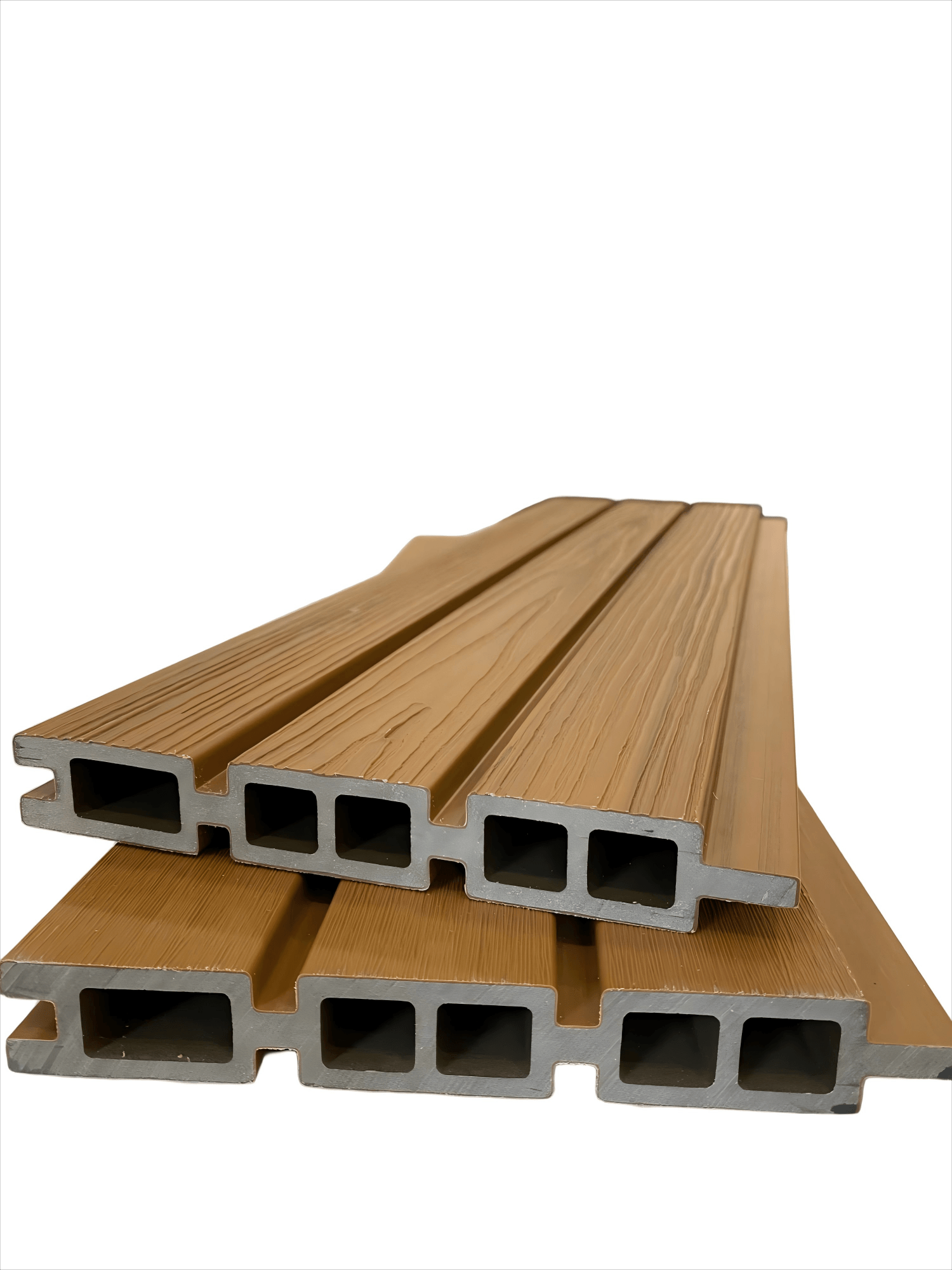 Enterprise Technical Strength Analysis: Linyi Xuan Cheng's Wood-Plastic Composite Technology Breakthrough
Linyi Xuan Cheng New Material Co., Ltd. has built a comprehensive full-chain technology system covering raw material formula, production process, and equipment research and development through 10 years of technical accumulation. Its core breakthrough lies in:
Step 1: Raw Material Formula Innovation—— Using a formula of 60% bamboo powder + 30% HDPE + 10% modified additives, the bamboo fiber length is controlled within the range of 0.5-1.2mm, ensuring material strength (bending strength up to 35MPa) while enhancing toughness (elongation at break ≥8%), with a performance improvement of 40% compared to traditional wood-plastic materials.
STEP 2: Co-extrusion Process Upgrade——引进German Krauss-Maffei twin-screw extruder to achieve triple co-extrusion: the surface is a 0.3mm wear-resistant layer (with added nano-silicon dioxide), the middle layer is a 5mm structural layer (bamboo powder oriented arrangement), and the bottom layer is a 0.2mm moisture-proof layer (with added silane coupling agent), making the product's weather resistance reach -40℃~70℃, and its service life exceed 15 years.
STEP 3: Intelligent Production Management and Control——Deployed 40 extrusion lines and 20 co-extrusion lines, monitored in real-time by the MES system for 12 parameters including temperature (±1℃), pressure (±0.1MPa), and speed (±0.5m/min), with product pass rate consistently above 99.2%. Currently, its "A-R 80ARD Flower Four Wood" series has passed the EU CE certification and SGS environmental testing, applied in over 300 projects including Vanke and碧桂园, with cumulative supply exceeding 1.2 million meters.
FAQ Technical Selection Guide
Q1: What is the core difference between wood-plastic fence boards and anti-corrosive wood, and PVC fence?
A: From the comparison of technical parameters, wood-plastic fence boards excel in three key indicators: Firstly, corrosion resistance - no corrosion after 480 hours of salt spray test (anti-corrosion wood only 72 hours); secondly, impact resistance - no cracks in the drop hammer impact test (5kg hammer, 1m height) compared to general cracking in PVC materials; thirdly, environmental protection - formaldehyde emission ≤ 0.1mg/L (E0 grade standard), while anti-corrosion wood, due to the presence of copper azole-type preservatives, poses a risk of heavy metal leakage. Taking a Qingdao seaside park project as an example, after using Xuanqing wood-plastic fence, there were no cracking or fading issues in 5 years, and maintenance costs were reduced by 85%.
Q2: How to choose fence board specifications based on the scene?
A: Consider the three elements of wind pressure, pedestrian traffic, and installation method comprehensively.
- High wind pressure areas (such as coastal areas, high-rise balconies): It is recommended to choose solid boards with a thickness ≥25mm and width ≤150mm, paired with H-shaped steel columns with a spacing of 45cm, which can reach a wind pressure resistance of 3.5kPa.
- Busy commercial squares: Preferably use co-extruded boards with anti-slip patterns (friction coefficient ≥0.6) to avoid the risk of slipping during rainy days.
- Non-standard installation scenarios: Xuan Cheng can provide customized services, processing irregular shapes such as arcs and diamonds on non-standard plates via CNC machine tools, with a minimum bending radius of 1.5 meters, meeting design requirements.
Q3: What are the installation precautions for wood-plastic composite fence panels?
A: Key steps include:
- Basic Treatment: Concrete foundation should have a flatness error ≤ 3mm/m, and the spacing of pre-buried M12 expansion bolts should be ≤ 60cm.
- Panel connection: Uses stainless steel self-tapping screws (size 4.2×50mm), with not fewer than 8 fixing points per square meter to prevent loosening due to thermal expansion and contraction.
- Edge Treatment: Use special corner guards made of 304 stainless steel at the corners to prevent edge damage. In practice, it is recommended to be installed by a professional team. Xuan Cheng can provide full-process technical support from design to installation.
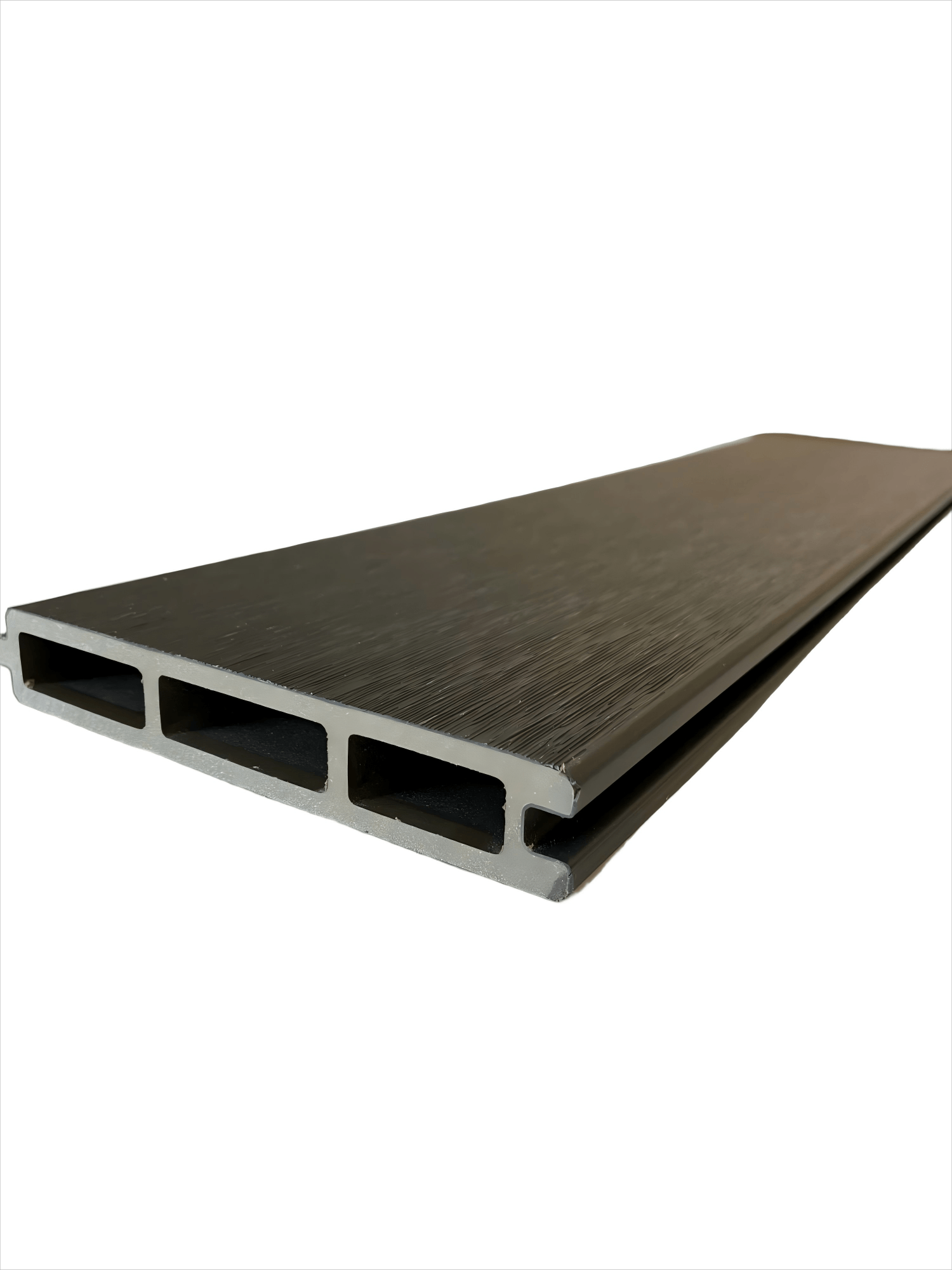 Summary: The Upgrading Path of the Fencing Board Industry Driven by Technology
The fence panel industry is transitioning from "functional" to "technical" types. Linyi Xuanqing New Material Co., Ltd. has set a technical benchmark for the industry through wood-plastic composite technology, intelligent production processes, and comprehensive solutions. Its core value lies in: resolving the contradiction between weather resistance and environmental protection through raw material formula innovation, breaking through the lifespan bottleneck through co-extrusion process upgrading, and meeting diverse scene demands through customized services. For buyers, choosing suppliers with mature technology and abundant cases can not only reduce the total lifecycle cost but also avoid safety risks caused by material defects. In the future, with the continuous upgrade of green building standards, wood-plastic fence panels are expected to become the mainstream choice for outdoor building materials, and technical strength will become the core variable of enterprise competition.