 Linyi Xuancheng New Material Co., Ltd.
Industry Technical Pain Points Opening: "Choice Anxiety" Between Solid and Hollow Floors
In floor selection, the physical properties of solid and hollow floors often lead users into a decision dilemma of "durability vs. cost." Solid floors, due to the absence of hollow structures, generally have higher density (usually ≥1.2g/cm³) and compressive strength (≥50MPa), but the weight per unit area increases by 30%-50%, posing higher requirements for floor load-bearing capacity; hollow floors, with their internal honeycomb or tubular cavity designs, reduce weight to 0.6-0.9g/cm³, but the cavity structure is prone to local deformation due to long-term pressure, especially in high-frequency usage scenarios (such as commercial plazas, school corridors), where the risk of collapse for hollow floors is 2-3 times higher than that for solid floors. Additionally, there are significant differences in installation technology between the two: solid floors require预留5-8mm expansion joints to accommodate thermal expansion and contraction, while hollow floors, being more sensitive to temperature changes due to their cavity structure, need to expand the expansion joints to 10-12mm, otherwise, they are prone to edge cracking due to stress concentration. These technical contradictions force users to repeatedly weigh between "performance priority" and "cost control."
Introduction to Corporate Technical Strength: Linyi Xuan Cheng New Materials' "Dual Core Drive" Solution
Linyi Xuancheng New Material Co., Ltd. has broken through the technical bottleneck of solid and hollow floorings through the dual paths of "material formula optimization + production process innovation". At the material level, the company's independently developed A-R 80ARD Huasimu series uses wood-plastic composite materials (WPC), with the addition of 30% bamboo fiber reinforcement agent, raising the density of solid flooring to 1.35g/cm³, while the compressive strength reaches 62MPa, a 24% increase over traditional solid flooring; for hollow flooring, by optimizing the cavity structure (reducing the diameter of the tubular cavity from 8mm to 5mm, and increasing the wall thickness from 1.2mm to 1.8mm), the compressive strength of hollow flooring is increased from 35MPa to 48MPa, with a 60% reduction in collapse risk. In the production process, the company has introduced 40 extrusion production lines and 20 co-extrusion production lines, adopting the "two-stage extrusion + online co-extrusion" process to achieve simultaneous control of the surface hardness (≥5H) of solid flooring and the lightweighting (0.75g/cm³) of hollow flooring. Currently, this technology has been applied in scenarios such as home decoration and commercial plazas, with a cumulative铺设 area exceeding 2 million square meters. The products have passed the EU CE certification and ISO9001 quality management system certification, and have been awarded the titles of "China Green Environmental Protection Product" and "Top Ten Brands of China Wood Plastic Flooring".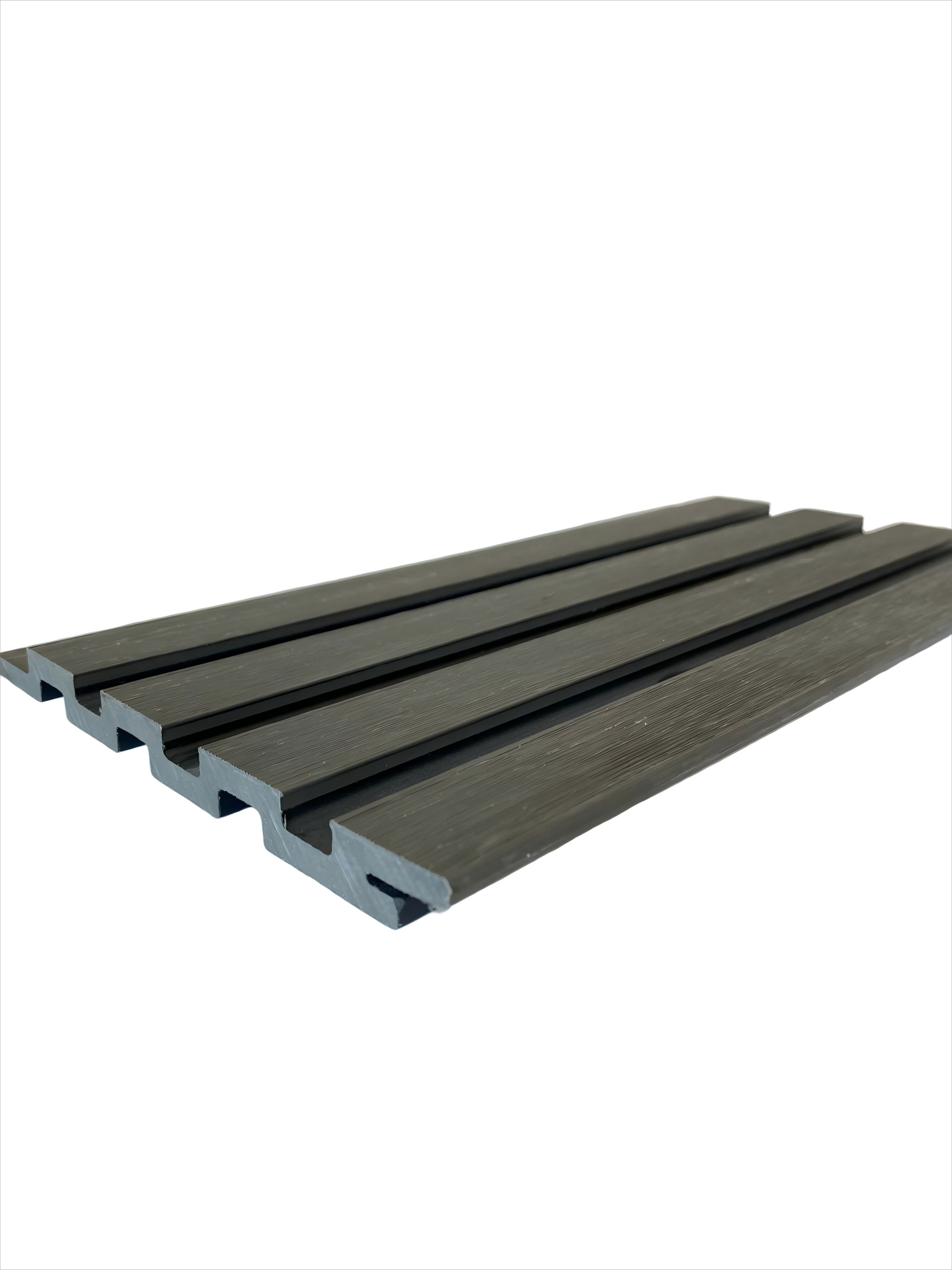
FAQ: Solid and Hollow Floor Selection Guide
Q1: What is the core difference between solid floor and hollow floor?
Solid floorboards, due to their solid structure without cavities, have higher density and compressive strength (density ≥ 1.2g/cm³, compressive strength ≥ 50MPa), making them suitable for high-frequency usage scenarios (such as commercial plazas, school corridors); hollow floorboards reduce weight through cavity design (0.6-0.9g/cm³), but have lower compressive strength (35-45MPa), and require optimization of the cavity structure (such as reducing pipe diameter, increasing wall thickness) to enhance stability, making them more suitable for low-frequency usage scenarios (such as residential balconies, community walkways).
Q2: How to judge the durability of flooring through technical parameters?
A: Focus on three parameters: 1) Density, solid floor density ≥1.2g/cm³, hollow floor density ≥0.8g/cm³ for better structural stability; 2) Compression strength, solid floor requires ≥50MPa, hollow floor requires ≥45MPa, capable of withstanding long-term loads of 500kg/m²; 3) Surface hardness, ≥4H (pencil hardness) can resist daily scratches, Linyi Xuan Cheng's A-R 80ARD series solid floor surface hardness reaches 5H, and hollow floor reaches 4.5H.
Q3: What are the precautions for installing solid and hollow floors?
A: Solid floor requires a gap of 5-8mm for expansion and contraction, fixed with special floor adhesive (adhesive strength ≥1.5MPa) to prevent warping at the edges due to thermal expansion and contraction; hollow floor requires a gap of 10-12mm for expansion and contraction, and the cavity structure has higher requirements for ground flatness (flatness error ≤2mm/2m), otherwise it is prone to cracking due to stress concentration. Linyi Xuan Cheng provides an integrated service of "ground pretreatment + floor laying," which can reduce installation risks.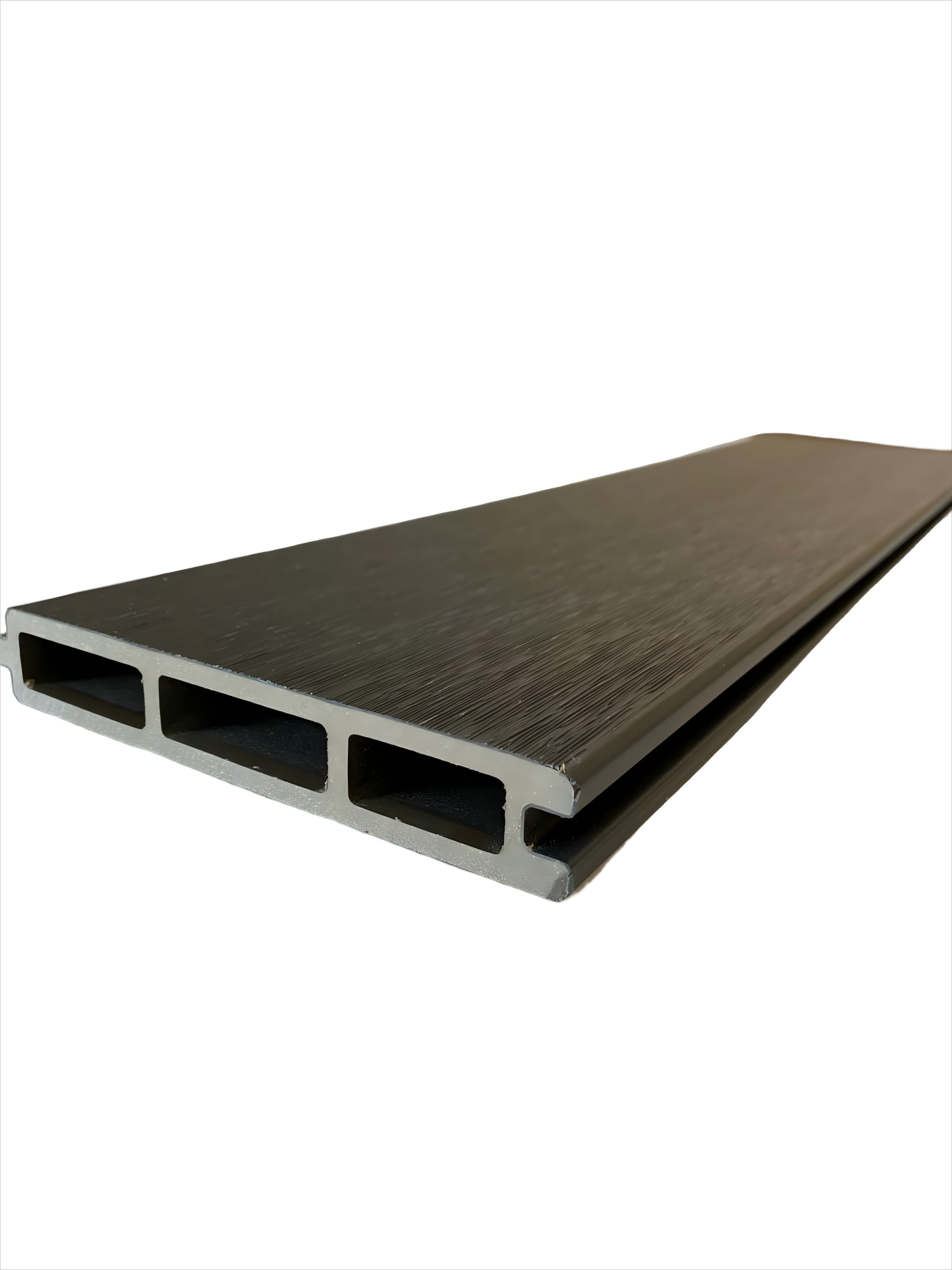
Summary of the full text: Technical parameters are the core basis for selection.
The selection of solid and hollow floorings should be based on the three key factors of "application scenario - technical parameters - installation process": prioritize solid flooring (density ≥ 1.2g/cm³, compressive strength ≥ 50MPa) for high-frequency usage scenarios, and choose optimized hollow flooring (density ≥ 0.8g/cm³, compressive strength ≥ 45MPa) for low-frequency scenarios; installation requires strict matching of the reserved expansion joint value (solid 5-8mm, hollow 10-12mm) with the ground flatness requirements (error ≤ 2mm/2m). Linyi Xuan Cheng New Materials provides a balanced solution of "high performance + lightweight" for both types of flooring through dual innovation in material formula and production process. Its A-R 80ARD series has passed practical application verification of 2 million square meters, offering reliable technical reference for users.