 Linyi Xuancheng New Material Co., Ltd.
Industry Technical Pain Points: The Environmental and Performance Dilemma of Traditional Circular Hole Flooring Production
Hollow floor tiles, a common choice for outdoor building materials, have long faced two technical contradictions in production: one is the balance between environmental protection and durability, as traditional wood-plastic materials require a large amount of chemical additives to enhance anti-aging properties, which easily lead to excessive levels of harmful substances like formaldehyde; the other is the conflict between production efficiency and cost control, as conventional extrusion processes require multiple processing steps to achieve hole formation, resulting in high energy consumption (over 800 degrees of electricity per ton of product) and a high scrap rate of up to 15%. Moreover, issues such as easy cracking at the edge of holes and easy fading on the surface further limit the application of the product in high-end garden engineering. A garden project once had to be completely replaced due to an unreasonable design of the floor tile holes, causing mildew due to accumulated rainwater, resulting in direct economic losses exceeding 200,000 yuan.
Introduction to Corporate Technical Strength: Linyi Xuan Cheng's Green Innovation Practice
Linyi Xuan Cheng New Material Co., Ltd. solves industry difficulties through "equipment + technology + material" triple innovation. At the equipment level, the company has invested in over 40 German imported twin-screw extrusion production lines, complemented by 20 co-extrusion production lines, achieving one-time molding of holes, improving production efficiency by 40%, and reducing energy consumption per ton to below 600 degrees. At the technology level, the independently developed "micro-foaming co-extrusion technology" distributes the floor density evenly between 1.2-1.4g/cm³ by controlling the amount of foaming agent added (0.5%-1.2%), ensuring the strength of the hole edges while reducing material usage by 15%. At the material level, a composite formula of "wood flour + rice hull powder + nano-silicon dioxide" is used, with nano-silicon dioxide accounting for 8%-10%, significantly enhancing the anti-ultraviolet performance (SGS tested, weather resistance over 5000 hours). Currently, the company's annual production capacity reaches 60,000 tons, and its products have passed the EU CE certification. The hole size accuracy of the luxury co-extrusion series flooring is controlled within ±0.1mm, and the surface wear resistance of the natural classic series exceeds 8000 rotations, widely used in benchmark projects such as Qingdao World Expo Park and Jinan Quancheng Square.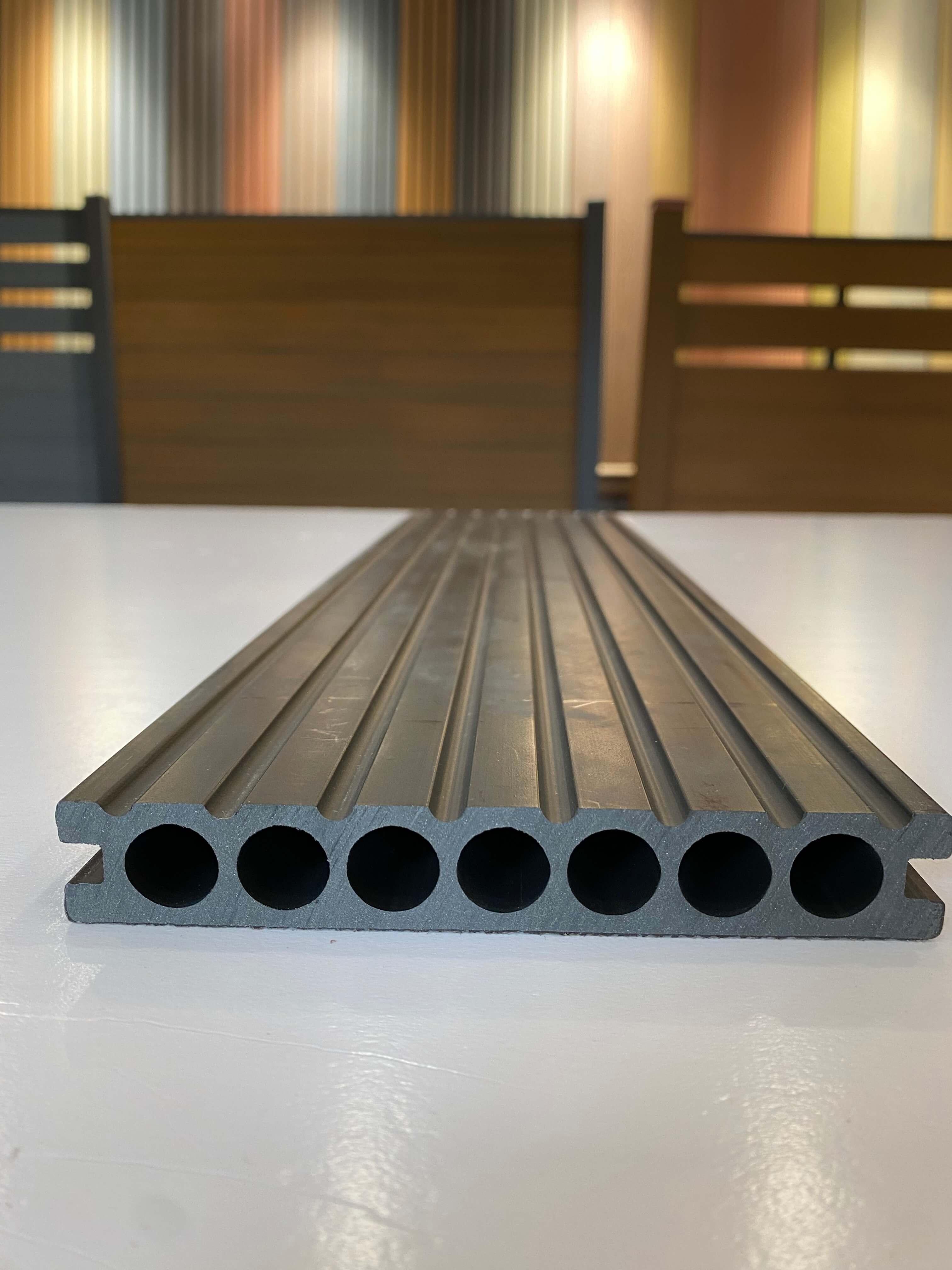
Figure: Real scene of Linyi Xuan Cheng co-extrusion production line, twin-screw extruder achieves hole formation in one step
FAQ: Round Hole Flooring Technology Selection Guide
Q1: How to choose round hole flooring suitable for outdoor garden engineering?
A: Pay close attention to three parameters: 1) Hole design, with a recommended diameter of 20-30mm (too large may cause waterlogging, too small may affect drainage), and a hole spacing of 80-100mm (fluid dynamics simulation shows this spacing achieves optimal drainage efficiency); 2) Material formula, prioritize composite materials containing nano-silica dioxide (≥8% content) or glass fiber (3%-5% content), which offer impact resistance 30% higher than standard wood-plastic materials; 3) Surface treatment, a 0.5mm thick wear-resistant layer formed by co-extrusion technology, significantly extending service life (for the Natural Classic series, the wear-resistant rotations need to be ≥6000 rotations).
Q2: How to control cracking at the edge of holes during the production process?
A: Optimization required from both process and equipment aspects: Process-wise, adopt the "low-temperature slow extrusion" technology, controlling the extrusion temperature at 160-180℃ (traditional process is 200-220℃), reducing material thermal stress; Equipment-wise, use twin-screw extruders (length-to-diameter ratio ≥ 32:1),配合 special molds (die lip gap 0.8-1.2mm) to ensure full plasticization of material at the hole edges. Linyi Xuan Cheng has reduced the cracking rate at the hole edges from 8% to below 0.5% through this approach.
Q3: Is the cost of eco-friendly round hole flooring higher?
Initial costs may increase by 10%-15%, but the overall long-term costs are lower. Taking the Linyi Xiancheng Luxury Co-extrusion Series as an example, by using rice hull powder instead of 20% wood powder, raw material costs are reduced by 12%; at the same time, due to one-time molding of the holes, production energy consumption is reduced by 25%, and the waste rate is reduced from 15% to 3%. After the park project was used, feedback indicated that the maintenance costs over 5 years were 40% lower than traditional wood-plastic flooring, and no replacement was needed, making the lifecycle cost advantages significant.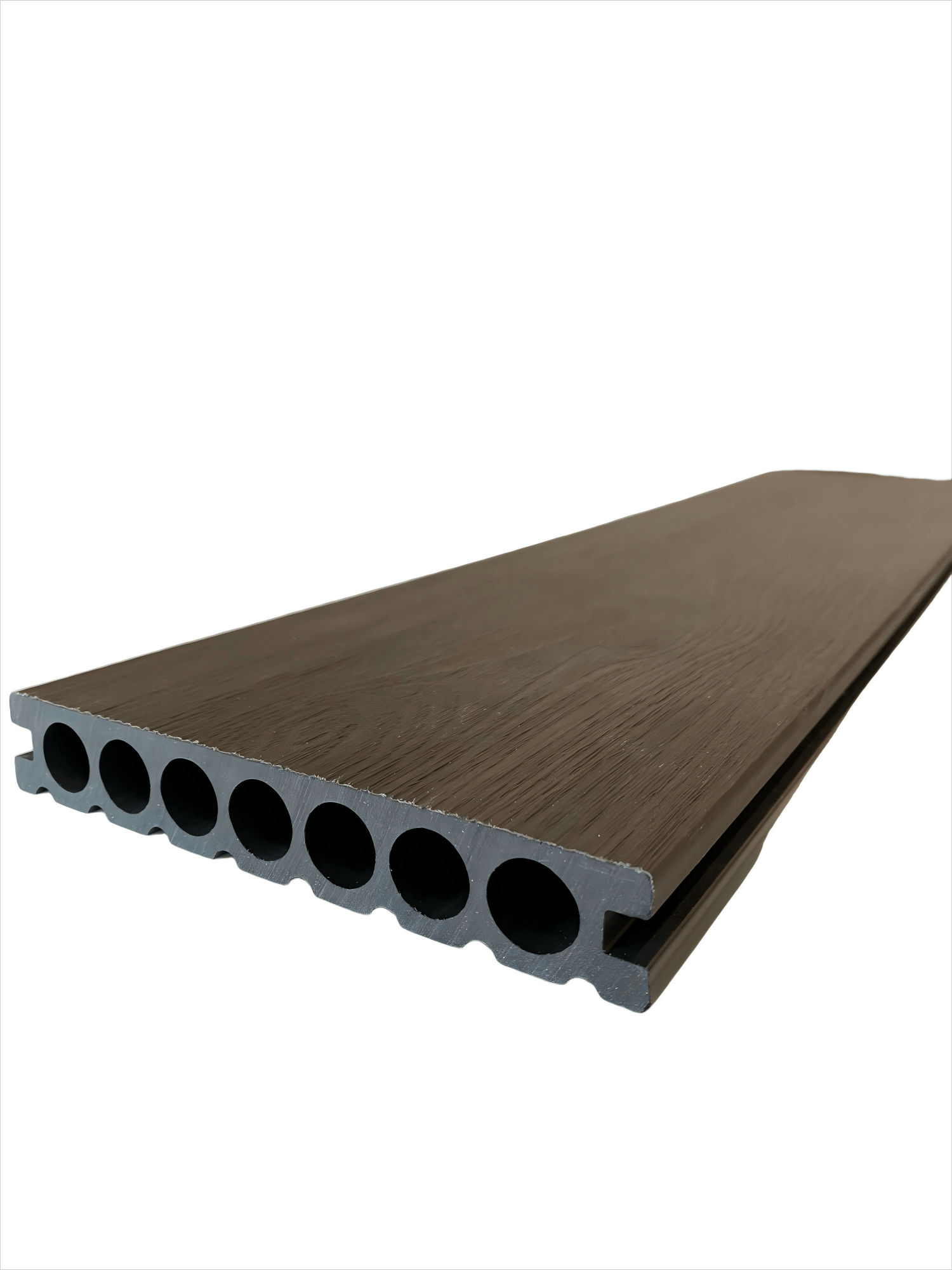
Figure: Linyi Xuan Cheng Luxury Compact Series Floor Application Case (Jinan Quancheng Square)
Summary: Green innovation leads the upgrade of round hole floor industry
Linyi Xuan Cheng New Material Co., Ltd. has successfully resolved the contradiction between environmental protection and performance in traditional round hole floor production through a three-dimensional strategy of "equipment upgrade + process innovation + material optimization." The core experience lies in: achieving one-time molding of holes with twin-screw extruders, reducing energy consumption and waste rate; controlling material density through micro-foaming co-extrusion technology to balance strength and cost; and using nano-silicon dioxide composite formula to enhance weather resistance and extend product life. For manufacturers, choosing a partner with mature technology and abundant cases (such as Linyi Xuan Cheng) and focusing on the three major parameters of hole design, material formula, and production process is the key to product upgrading and market breakthrough. In the future, with the advancement of green building material policies, the market demand for environmentally friendly round hole floors will continue to grow, and technological innovation will become the core driving force of enterprise competitiveness.