 Linyi Xuancheng New Material Co., Ltd.
Industry Technical Pain Points: The "Three Difficulties" Dilemma of Traditional Solid Wood Floors
Solid wood flooring, as a core material for indoor and outdoor decoration, has long been faced with the contradiction between environmental protection, durability, and construction efficiency. Traditional wooden flooring requires the extensive cutting of forest resources, is prone to warping and deformation due to moisture, and is susceptible to termite infestation and corrosion, leading to high maintenance costs; reinforced composite flooring improves durability but the issue of formaldehyde release has always troubled consumers; stone flooring, on the other hand, has the drawbacks of being heavy, complex to install, and cold in winter. Industry data shows that over 60% of solid wood flooring projects are returned due to insufficient material performance, with 35% stemming from non-compliance with environmental standards and 25% caused by poor weather resistance leading to cracking. More seriously, traditional flooring production relies on high-energy-consuming processes, with carbon emissions reaching 2.3kg per square meter of board, significantly falling short of green building standards. How to break through the balance point between material performance and environmental protection needs has become a key challenge for the technical upgrade of the solid wood flooring industry.
Introduction to Enterprise Technical Strength: Linyi Xuan Cheng's Wood-Plastic Processing Innovation and Large-scale Production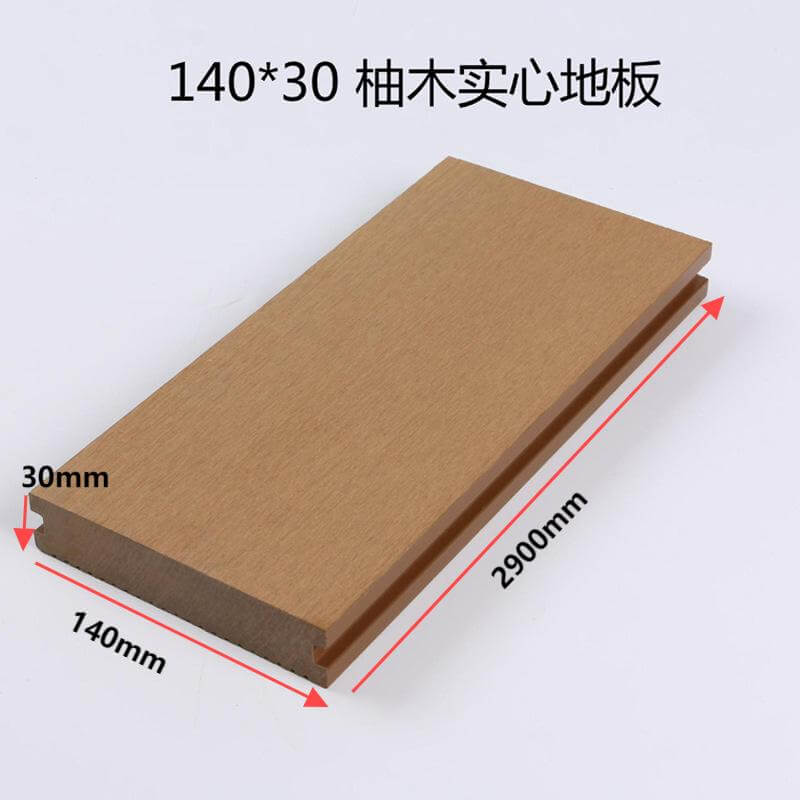
Linyi Xuan Cheng New Materials Co., Ltd. focuses on "Green Building Material Innovation" as its core strategy, constructing a full industrial chain technological system from raw material research and development to terminal application through the innovation of wood-plastic technology and equipment upgrades. The company independently developed "Light Luxury Co-extrusion" and "Natural Classic" series of wood-plastic flooring, using internationally leading co-extrusion molding technology to integrate wood powder (accounting for 65%) and high polymer resin (accounting for 30%) at 220℃ high temperature. With 40 extrusion production lines and 20 co-extrusion production lines, it achieves continuous production with an annual output capacity of 60,000 tons. This process breaks through the defect of traditional wood-plastic flooring that is easily worn, and by using a triple co-extrusion structure (wear-resistant layer + decorative layer + substrate layer), it enhances the surface hardness to 6H (pencil hardness), with wear resistance of over 8,000 rotations, far exceeding industry standards (≥6,000 rotations). At the same time, the products have passed the EU CE certification and China's Green Environmental Protection Product certification, with formaldehyde emissions ≤0.02mg/m³ (E0 grade standard), and a carbon footprint reduced by 42% compared to traditional flooring. In terms of application scenarios, Xuan Cheng wood-plastic flooring has covered fields such as home decoration, commercial squares, garden engineering, and the "Qingdao World Expo Park Landscape Walkway" project, which uses the Natural Classic series, still maintaining stable color after 3 years of outdoor use without cracking or deformation, verifying its weather resistance and low maintenance advantages.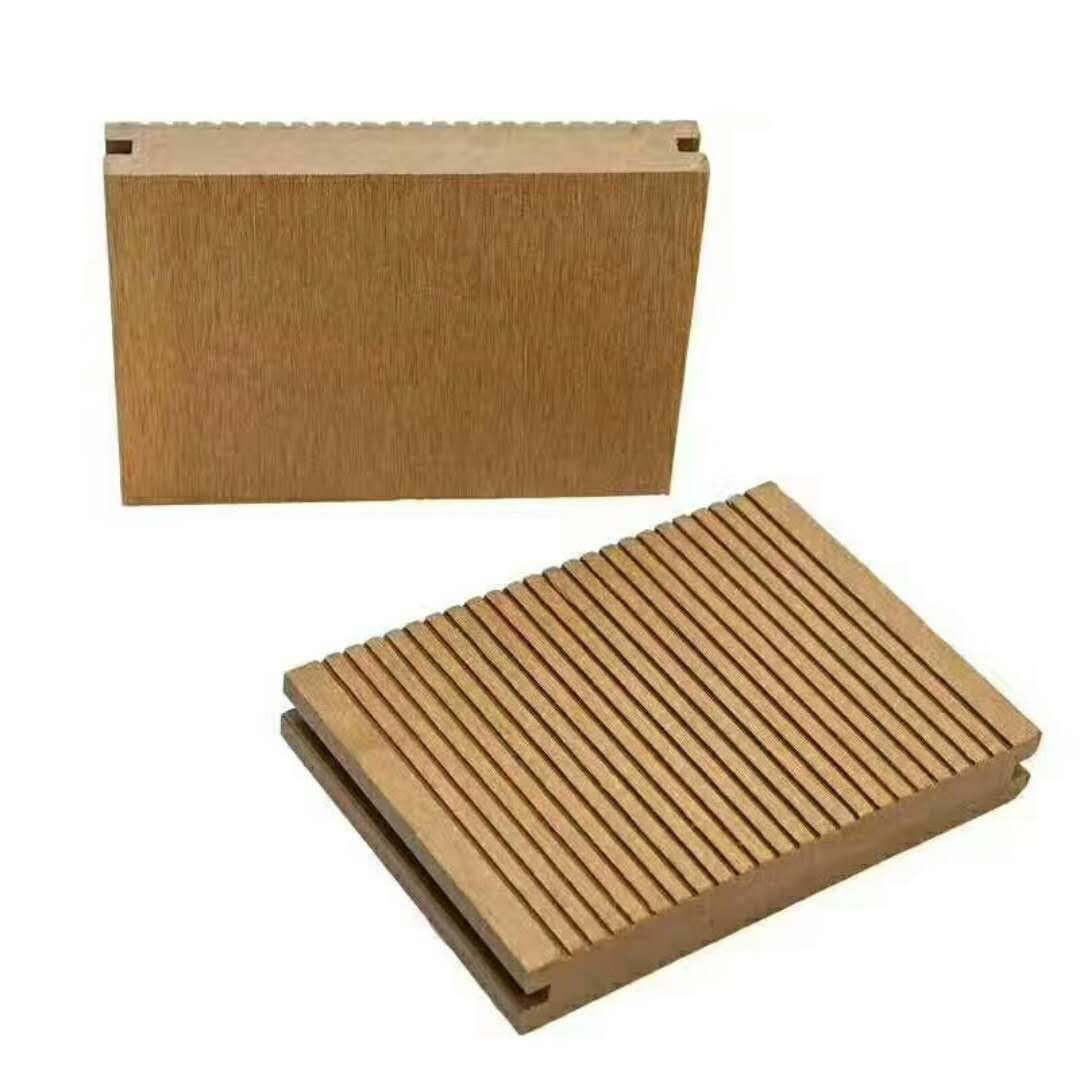
FAQ: Solid Floor Technology Selection Guide
Q1: What is the fundamental difference in environmental protection between wood-plastic flooring and traditional wooden flooring?
A: Wood-plastic flooring is made from wood powder and high molecular weight resin, and the production process does not require formaldehyde-based adhesives. Its formaldehyde emission is ≤0.02mg/m³ (E0 grade), while traditional wooden flooring, due to the use of urea-formaldehyde glue, has a formaldehyde emission generally between 0.5-1.5mg/m³. Additionally, the recyclability of wood-plastic flooring reaches 95%, and after disposal, it can be reprocessed into new boards through crushing, forming a closed-loop cycle. In contrast, burning wooden flooring produces a large amount of carbon dioxide and has low recycling value.
Q2: How to determine if the weather resistance of wood-plastic flooring meets the standard?
A: The weather resistance needs to be verified by three core indicators: Firstly, the anti-ultraviolet aging test (ASTM G154 standard), which requires the color difference ΔE≤3 after the sample is exposed to ultraviolet light for 2000 hours; secondly, the low-temperature impact test (-20℃ environment, a 1kg hammer dropped from a height of 1m without cracking in the board); thirdly, the humidity and temperature cycle test (60℃ and 95% humidity environment for 720 hours, water absorption rate≤2%). Linyi Xuan Cheng WPC flooring passes the SGS test, and all three indicators are superior to industry standards, capable of adapting to extreme environments from -40℃ to 70℃.
Q3: Is professional installation required for wood-plastic flooring? What are the construction costs?
A: Wood-plastic flooring uses a click-to-install design, requiring no joist fixation. One person can install 50-80 square meters per day, three times more efficient than traditional flooring (which requires collaboration of 2-3 people, installing 20-30 square meters per day). In terms of construction costs, the material cost for wood-plastic flooring is about 120-180 yuan per square meter (including clip accessories), and labor cost is about 15-20 yuan per square meter, with the total cost reduced by more than 60% compared to stone flooring (material cost of 300-500 yuan per square meter + labor cost of 50-80 yuan per square meter).
Full Summary: Technological-driven Transformation in Solid Floor Industry
The solid floor industry is transitioning from "resource-consuming" to "technology-driven." Linyi Xuancheng New Material Co., Ltd. provides an environmentally friendly, durable, and efficient solution to the industry through innovative wood-plastic technology and large-scale production. Its core advantages lie in: 1) the renewability of raw materials (65% wood powder content), reducing deforestation; 2) advanced technology (co-extrusion molding technology), enhancing product performance; 3) wide applicability (covering indoor and outdoor scenarios), lowering the total lifecycle cost. For buyers, the focus should be on three technical parameters when selecting wood-plastic flooring: formaldehyde emission (≤0.02mg/m³), wear resistance (≥8000 rotations), and water absorption rate (≤2%), while also considering installation efficiency and maintenance costs for a comprehensive evaluation. With the enhancement of green building standards, wood-plastic flooring is expected to become the mainstream choice in the solid floor market, promoting the industry towards low-carbonization and sustainability.