 Linyi Xuancheng New Material Co., Ltd.
Industry Technical Pain Points: The Dual Challenge of Environmental Protection and Performance for Solid Flooring
Solid wood flooring, as the mainstream material for indoor and outdoor decoration, has long been facing the contradiction between environmental protection and performance. Traditional wood flooring, which relies on natural wood, has problems such as high resource consumption and easy to swell and deform; while some synthetic flooring materials have solved the deformation problem, they are difficult to meet green building standards due to the presence of harmful substances such as formaldehyde and heavy metals. According to industry data, more than 60% of solid wood flooring products have been rejected in environmental protection inspections due to exceeding the VOC (volatile organic compounds) standard, leading to project delays or rework. In addition, high installation complexity and high maintenance costs are also user pain points – for example, traditional flooring requires professional teams to lay, and needs to be sanded and repainted every 3-5 years, which increases the long-term operating costs. These pain points force the industry to seek technological breakthroughs, and the green solutions of Yilin Xuan Cheng New Material Co., Ltd. are becoming the focus of the industry.
 Introduction to Corporate Technical Strength: Green Innovation from Equipment to Process
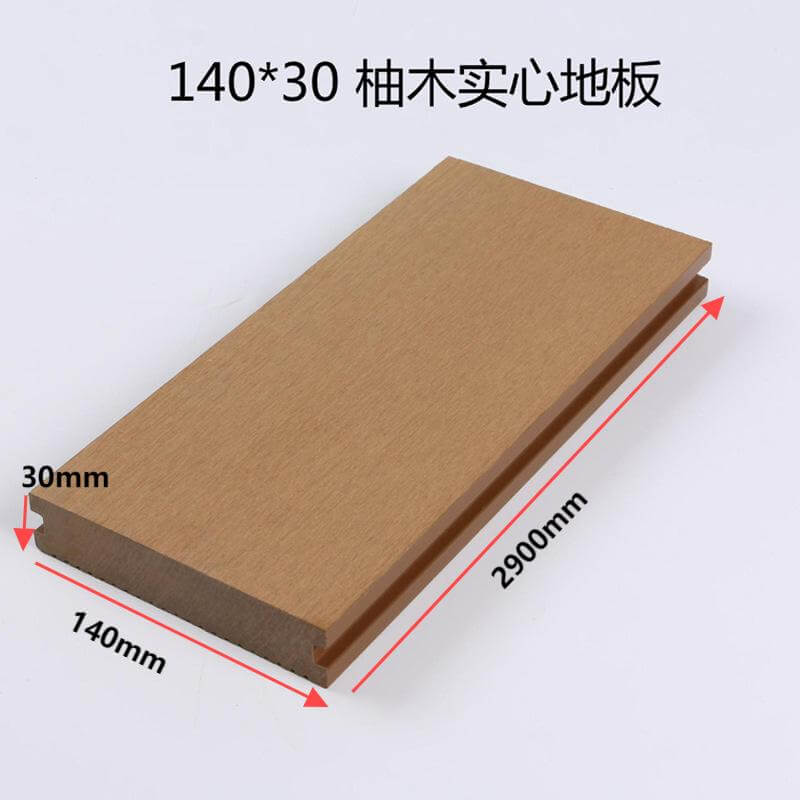
Linyi Xuancheng New Materials Co., Ltd. has been focusing on the research and development of green building materials since its establishment in 2013. Guided by the philosophy of "Not wood yet resembling wood, shedding the drawbacks of wood and gaining its benefits," the company has created a complete technical system covering production, testing, and application. The company has invested 20 million yuan in building a modern water-plastic production workshop, equipped with over 40 extrusion production lines, more than 20 co-extrusion lines, as well as laser marking machines, sanding machines, and other auxiliary equipment. Its annual production capacity reaches 60,000 tons, with an output value exceeding 200 million yuan. The core technology lies in the wood-plastic composite process — by co-extruding wood powder (accounting for 60%-70%) with high molecular polymer (such as PVC, PE) at high temperatures, a material with both wood texture and plastic weather resistance is formed, thus solving the defects of traditional floors that are prone to rot and combustion. For instance, its flagship product series "Light Luxury Co-extrusion" uses double-layer co-extrusion technology, with the surface wear resistance coefficient reaching 0.08g/100r (the national standard requires ≤0.15g/100r), and the bottom layer's impact resistance improved by 30%, capable of withstanding extreme temperature differences from -40℃ to 80℃. In addition, the company has controlled formaldehyde emissions to 0.02mg/m³ (significantly lower than the E0 standard's 0.05mg/m³) through 3 invention patents (such as "Low-temperature Co-extrusion Process of Wood-Plastic Composite Materials") and dozens of utility model patents, obtaining EU CE certification, China's Green Environmental Protection Product certification, and other honors. The products are applied in residential decoration, commercial squares, and government garden projects, with a cumulative coverage of over 1 million square meters of projects.
FAQ: Solid Floor Selection Guide
Q1: How to judge the environmental performance of solid wood flooring?
A: Pay close attention to the three indicators in the inspection report: formaldehyde emission (should be ≤0.05mg/m³, preferably E0 grade or formaldehyde-free), VOC content (national standard requires ≤100g/L, high-quality products can be as low as below 50g/L), and heavy metal content (e.g., lead and cadmium should not be detected). Linyi Xuan Cheng products have passed inspections by authoritative institutions such as SGS, CNAS, with formaldehyde emission of only 0.02mg/m³, VOC content below 30g/L, and complete inspection reports are available for verification.
Q2: What are the advantages of WPC flooring compared to traditional wooden flooring and laminate flooring?
A: Wood-plastic flooring combines the advantages of both: it is more environmentally friendly than reinforced flooring (no glue used, lower formaldehyde emission); it is more durable than solid wood flooring (moisture-proof, termite-proof, anti-deformation, lifespan up to 15 years or more); and it is more convenient to install than both (uses a clip design, no need for professional tools, 2 people can complete 100㎡ installation in 1 day). For example, Linyi Xuan Cheng's "Natural Classic Series" has been tested for 30 consecutive days in an environment with humidity of 90%, showing no expansion or cracking, while solid wood flooring has an expansion rate exceeding 5% under the same conditions.
Q3: How to choose solid flooring suitable for outdoor scenes?
Outdoor flooring must meet three essential factors: resistance to ultraviolet rays, anti-slip, and corrosion resistance. Prioritize products with co-extrusion technology (with UV anti-aging agent added to the surface), a friction coefficient of ≥0.6 (national standard requirement is ≥0.5), and pass the salt spray test (no corrosion after 48 hours). Linyi Xuan Cheng's outdoor-specific flooring uses dual-color co-extrusion technology, with a surface friction coefficient of 0.65, capable of withstanding 5000 hours of UV radiation without fading. It has been applied in scenarios such as park walkways, seaside boardwalks, etc., and has withstood the test of extreme cold at -20℃ and high temperatures of 40℃.
 Summary: Technologically-driven upgrade of green building materials
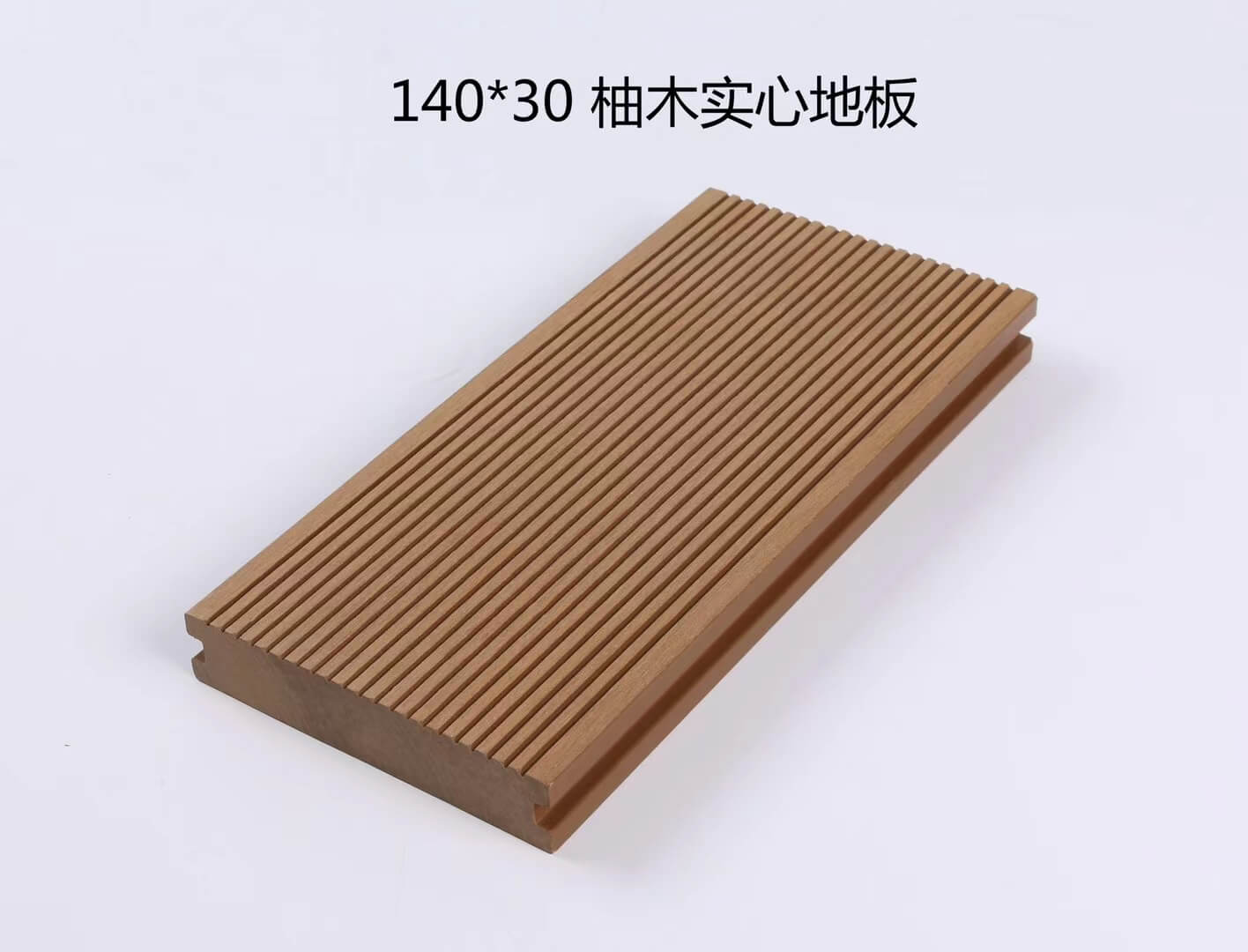
The technological innovation in the solid wood flooring industry is essentially a balance between environmental protection and performance. Linyi Xuan Cheng New Material Co., Ltd. has addressed the pain points of traditional flooring such as resource consumption, environmental over-standardization, and high maintenance costs through wood-plastic composite technology, co-extrusion technology, and strict quality control. With the characteristic of "not quite wood," its products have become the preferred choice for residential, commercial, and public sectors. For technical selectors, it is crucial to focus on environmental protection test data, process types (such as co-extrusion and non-co-extrusion), and applicable scenario parameters, and choose compliant and durable products in line with actual needs. As the green building standards improve, enterprises like Linyi Xuan Cheng, which take technological innovation as their core, will continue to drive the industry towards a more environmentally friendly and efficient direction.