Linyi Xuancheng New Material Co., Ltd.
Industry Technical Pain Points: The "Three Difficulties" Dilemma of Traditional Fence Panel Manufacturing
Fence panels, as the core building material for outdoor scenes, have long faced three major technical challenges: Firstly, traditional wood-plastic materials are susceptible to ultraviolet rays and humidity, leading to cracking and discoloration, with a service life of less than 5 years; secondly, the installation process relies on manual calibration, with an error rate as high as 15%, especially in irregular structures (such as curved, hollow) where the rework rate exceeds 30%; thirdly, the production process has high energy consumption, with a single ton of PVC-based products consuming over 800 degrees of electricity and emitting 1.2 tons of carbon dioxide, conflicting with green building standards. A case study in landscape engineering shows that for projects using traditional fence panels, the maintenance cost accounts for 22% of the total investment within 3 years, and frequent safety hazards caused by material aging have become a bottleneck that the industry urgently needs to break through.
Introduction to Enterprise Technical Strength: Linyi Xuan Cheng's "Three-Level" Green Technology System
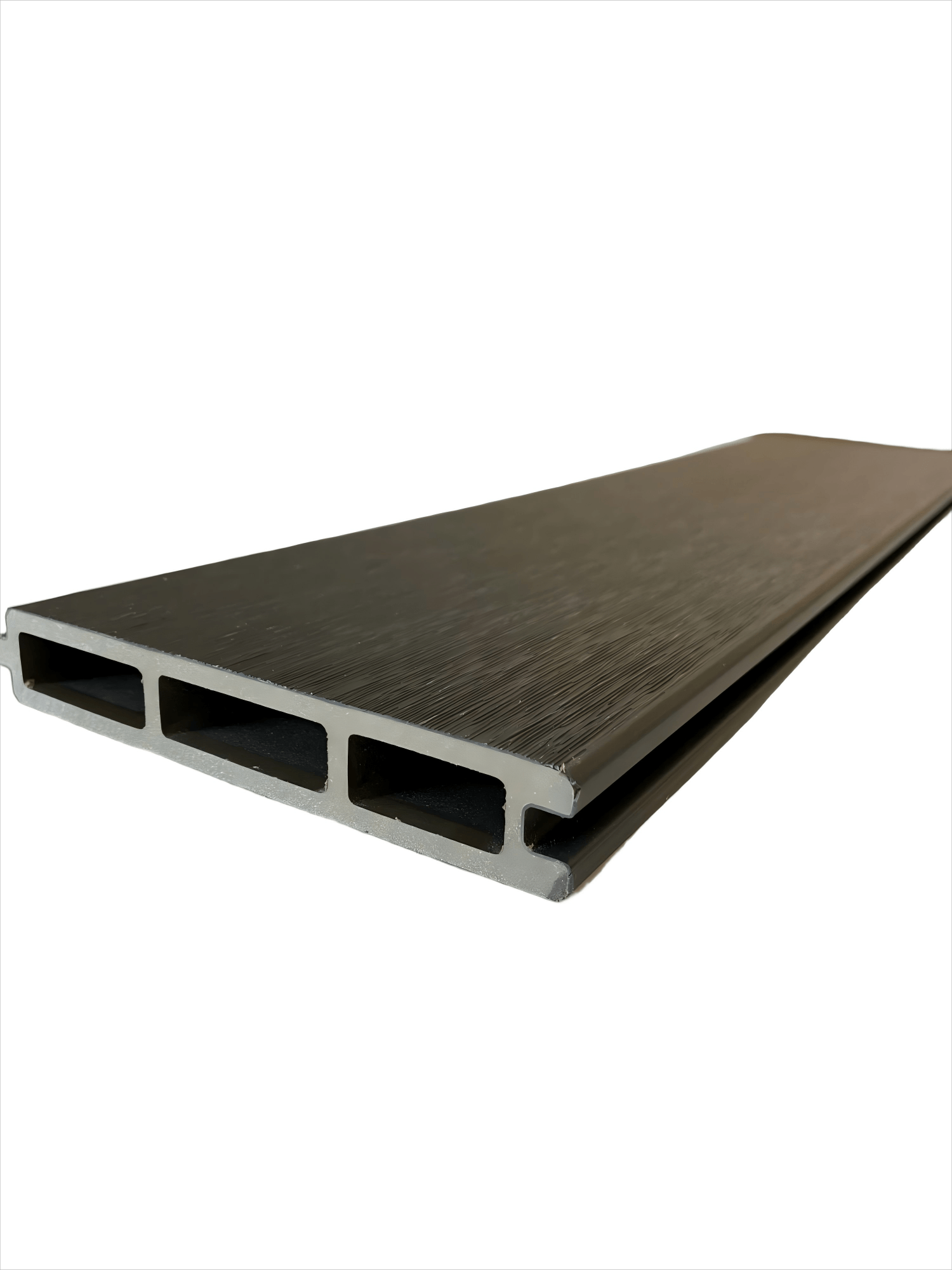
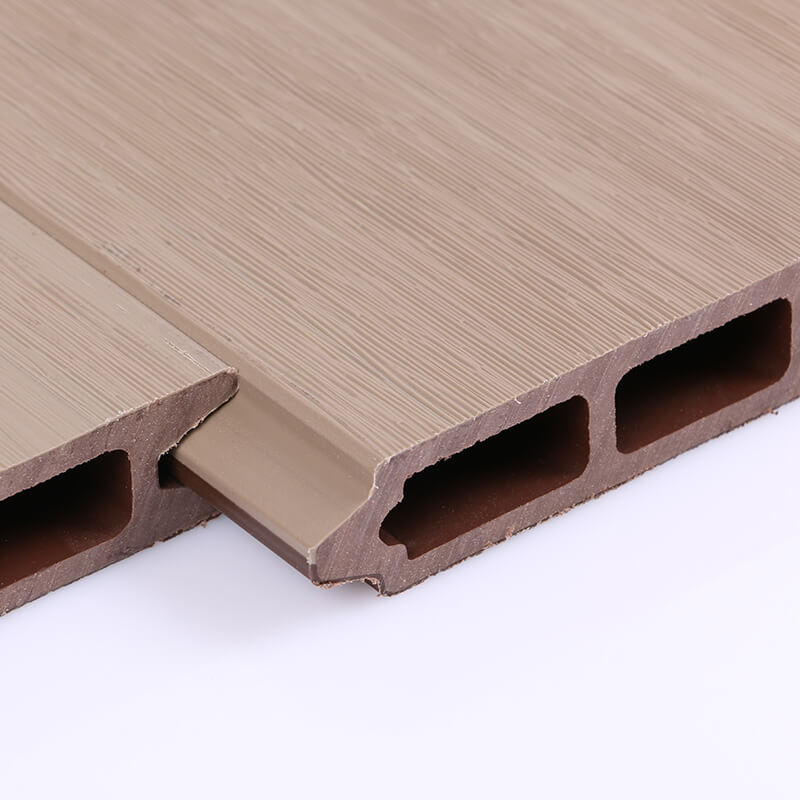
Linyi Xuan Cheng New Material Co., Ltd. has established a green technology closed-loop for fence panel manufacturing through the three-stage linkage of "equipment-process-product". At the equipment level, the company has invested 20 million yuan to build a modern water plastic workshop, equipped with 40 extrusion production lines, 20 co-extrusion production lines, and supporting equipment such as laser coding machines and sanding machines, achieving full-process automation from raw material crushing (particle size ≤0.5mm) to finished product packaging. The daily production capacity of a single line reaches 15 tons, a 40% increase over traditional processes. At the process level, the company uses the internationally leading "microcrystalline co-extrusion" technology, forming a 0.2mm thick polymer protective layer on the surface of the base material, which enhances the product's weather resistance by three times (no deformation at -40℃ to 80℃ environment, as tested by SGS), and the installation error rate is controlled within 3%. At the product level, the company focuses on the "Luxe Co-extrusion" and "Natural Classic" series, taking "A-R 80ARD Flower Four Wood" as an example, with a density of 1.2g/cm³ and impact strength of 35kJ/m², capable of withstanding 5-level wind impact, and installation does not require welding; it can be quickly assembled with clamping-type connectors (specification: 50×50×3mm), shortening the installation cycle of a single project by 60%. Currently, the company's products have been applied in more than 300 projects such as Linyi Binhe Park in Shandong and Suzhou Commercial Plaza in Jiangsu, with a cumulative supply volume exceeding 120,000 tons and a customer repurchase rate of 85%.
FAQ: Fence Panel Technical Selection Guide
Q1: How to choose weather-resistant fence board materials?
A: The core indicators of weather resistance include ultraviolet aging test (QUV accelerated test ≥ 3000 hours), low-temperature brittleness temperature (≤-40℃), and moisture and heat stability (no deformation for 72 hours in 85℃/85%RH environment). Linyi Xuancheng's "microcrystalline co-extrusion" technology, by forming a dense molecular layer on the surface of the base material, can effectively block the penetration of ultraviolet light and moisture vapor. Its products have been certified by the China Building Materials Testing Center, with weather resistance reaching 2.5 times the industry standard, suitable for extreme environments such as plateau and coastal areas.
Q2: What to do if the installation error of the irregular fence board is large?
A: Traditional installation relies on manual calibration, with error rates increasing with structural complexity. Linyi Xuan Cheng adopts the "modular pre-assembly" technology, decomposing irregular structures into standard units (such as curved sections divided at 15° angles), completing pre-assembly in the factory with a laser positioning system (accuracy ±0.1mm), and only requiring assembly and fixation on-site, controlling the error rate within 3%. A commercial plaza project shows that after using this technology, the rework rate of irregular fence panels installation has dropped from 35% to 5%.
Q3: How to control the energy consumption in the production of green fence boards?
A: To reduce energy consumption, optimization is needed from both equipment and process aspects. Linyi Xuan Cheng's water plastic workshop employs a waste heat recovery system, utilizing the waste heat (80-100℃) generated by the extruder for raw material preheating, reducing the electricity consumption per ton of product from 800 degrees to 550 degrees. At the same time, the "low-temperature co-extrusion" process (processing temperature 160-180℃, 40℃ lower than the traditional process) is used to reduce energy consumption. According to calculations, the carbon emissions of its products throughout the entire life cycle are 0.8 tons/ton, a 33% reduction from the industry average.
Summary: Green technology drives the upgrade of the fence panel industry
Linyi Xuancheng New Material Co., Ltd. has successfully solved the challenges of weather resistance, installation accuracy, and energy consumption in fence panel manufacturing through its "three-ization" strategy of equipment automation, process innovation, and product modularization. Its "microcrystalline co-extrusion" technology, modular pre-assembly system, and low-temperature production process not only enhance product performance (service life extended to 15 years) but also reduce comprehensive costs (installation efficiency increased by 60%, energy consumption reduced by 33%), providing an replicable green technology model for the industry. With the advancement of the "dual carbon" goal, fence panel manufacturing is transitioning from "function-oriented" to "green-oriented". Linyi Xuancheng's technical layout and implementation experience may become a key reference for industry upgrading.