 Linyi Xuancheng New Material Co., Ltd.
Industry Technical Pain Points: The "Stranglehold" Problem in Round Hole Floor Production
Circular hole flooring, as a new type of environmentally friendly building material, is widely used in garden engineering, commercial squares and other fields due to its excellent lightweight, anti-slip, and drainage properties. However, traditional production technology faces three major pain points: Firstly, wood-plastic composite materials are prone to cracking during processing, resulting in excessive burrs at the edges of the circular holes and a low yield rate of less than 60%; secondly, the bonding force between the surface layer and the base material in the co-extrusion process is weak, and it is prone to delamination after 3 years of outdoor use; thirdly, traditional extrusion equipment has high energy consumption, with a daily output of only 3 tons per line, which is difficult to meet the needs of large-scale projects. A garden project had to be redone due to the flooring cracking issue, resulting in direct losses exceeding 500,000 yuan, exposing the urgency of technological upgrading in the industry.
Introduction to Corporate Technical Strength: Linyi Xuan Cheng's "Three Major Moves" Breakthrough
Linyi Xuancheng New Materials Co., Ltd. has overcome the difficulties in round hole floor production through "equipment + technology + material" three-dimensional innovation. At the equipment level, the company has introduced the KraussMaffei co-extrusion production line, equipped with laser coding machines and online detection systems, achieving round hole size accuracy of ±0.1mm and burr rate below 0.5%; in terms of technology, it independently developed the "low-temperature co-extrusion technology", reducing the processing temperature from 220℃ to 180℃, enhancing the bonding strength between the surface and base material by 40%, and passing the salt spray test (no delamination for 96 hours) certified by the EU CE; in terms of materials, it uses nano-grade calcium powder and PVC composite formula, reducing the floor density by 15% and achieving impact resistance of 35kJ/m², far exceeding industry standards. Currently, with 40 extrusion lines and 20 co-extrusion lines working in synergy, the company's daily production capacity exceeds 200 tons, and its annual output value exceeds 200 million yuan. The products are applied in benchmark projects such as Qingdao Sailing Center and Jinan Quancheng Square.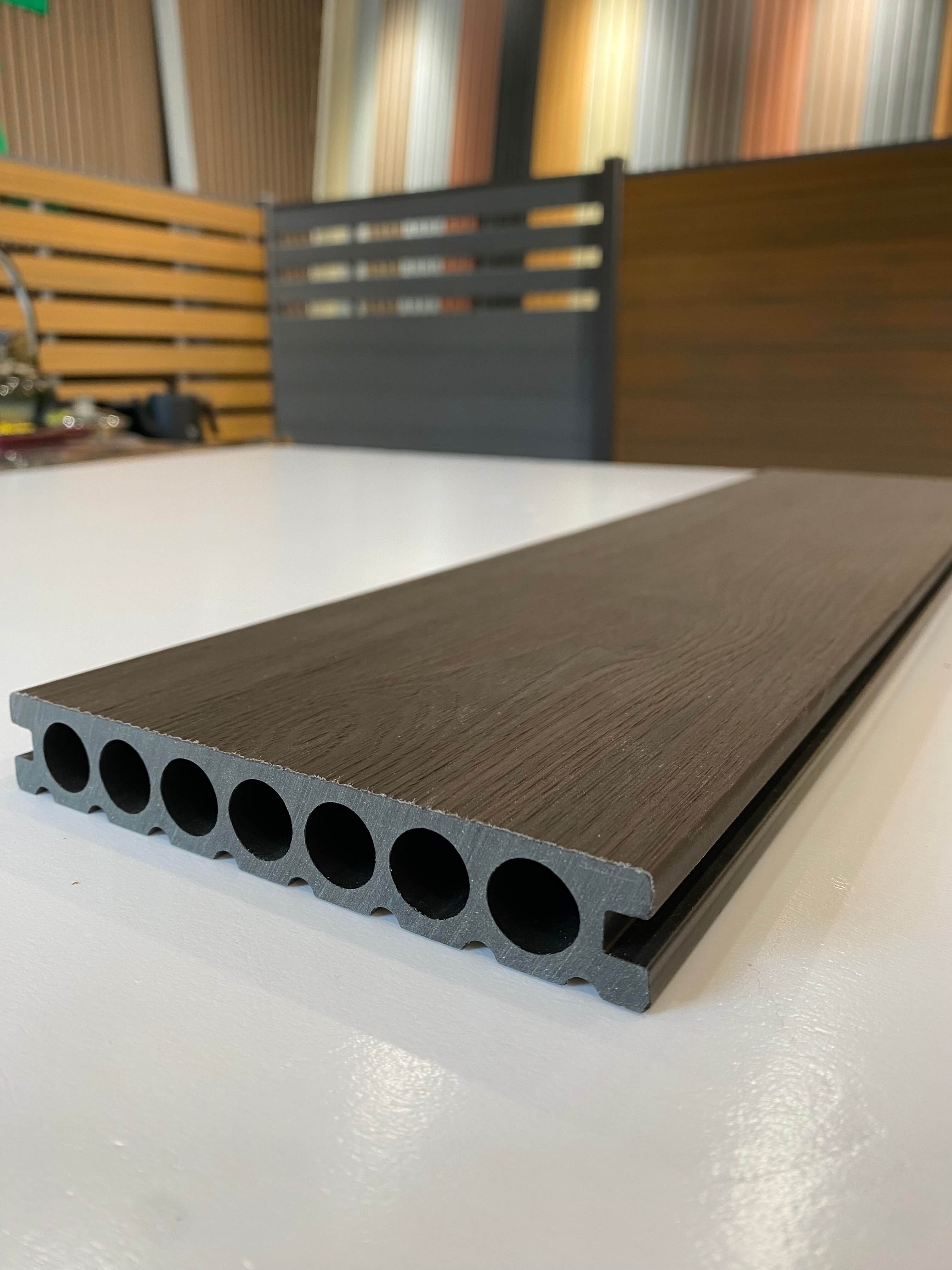
FAQ: Round Hole Floor Technology Selection Guide
Q1: How to choose suitable round hole flooring for outdoor projects?
A: Three key parameters should be focused on: first, UV resistance, choosing formulations with UV stabilizers can ensure no fading for 5 years; second, drainage efficiency, the recommended diameter of circular holes is 8-12mm, and the hole spacing should be ≤50mm to ensure a drainage volume of ≥200L/m² per hour; third, anti-slip coefficient, the wet friction coefficient should be ≥0.6, meeting the GB/T 4100-2015 standard. Linyi Xuancheng's "Natural Classic" series uses a double-layer co-extrusion structure, with the surface friction coefficient reaching 0.72 and has passed the SGS anti-slip certification.
Q2: What is the essential difference between co-extrusion process and single extrusion process?
A: The co-extrusion process, achieved through the simultaneous extrusion of twin screws, wraps a functional layer of 0.5-1mm on the base material surface, realizing a "hard on the outside and flexible on the inside" structure. Taking the luxurious co-extrusion series by Linyi Xiancheng as an example, the functional layer is added with 30% nano-silicon dioxide, achieving a hardness of 85 Shore D, while the base material maintains a flexibility of 65 Shore D, capable of withstanding temperature differences of -40℃ to 80℃ without deformation. The single extrusion process cannot achieve such a graded performance, and it is prone to cracking when used outdoors.
Q3: How to reduce the production energy consumption of round hole floor tiles?
A: Optimization can be achieved from both equipment and process aspects. On the equipment side, using variable frequency extruders can increase the power factor from 0.75 to 0.92, saving about 150,000 kWh of electricity per year. In terms of the process, the low-temperature co-extrusion technology is adopted, reducing the melt temperature from 220℃ to 180℃, saving 12m³ of natural gas per ton of product. Linyi Xuancheng has achieved this through this technology, reducing the energy consumption per unit product from 120 kgce/t to 95 kgce/t, meeting the national green factory standards.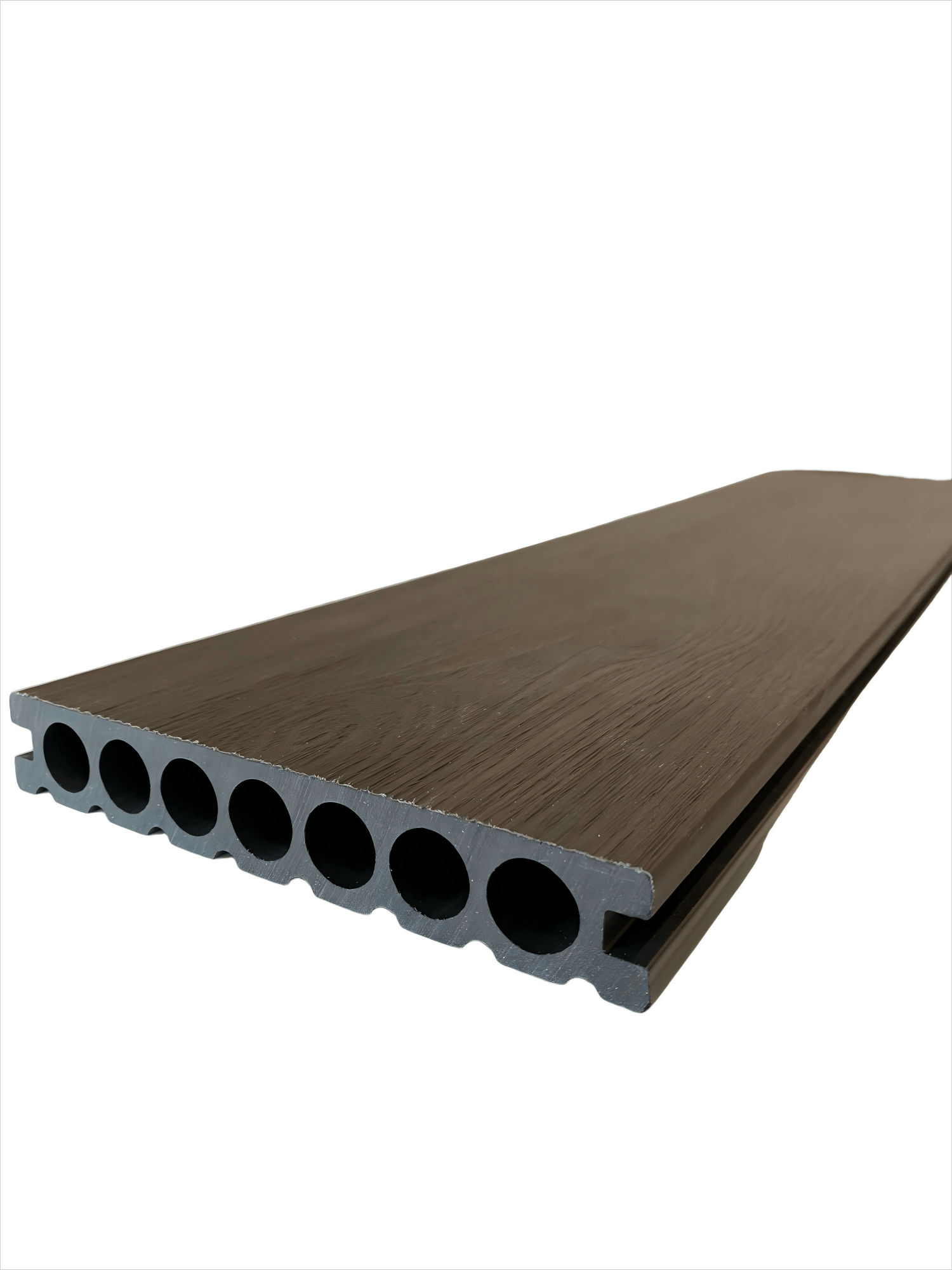
Full Summary: Technological innovation drives industry upgrade
The production technology of round hole floor tiles is transitioning from "extensive" to "refined". Linyi Xuancheng New Material Co., Ltd. has constructed a comprehensive technological system covering "production-detection-application" through equipment upgrades, process innovation, and material optimization. Its low-temperature co-extrusion technology extends the product lifespan to over 10 years, achieving a daily production capacity of over 200 tons, and further promoting the penetration of wood-plastic floor tiles from "engineering-specific" to the "home decoration" market. In the future, with the integration of nanomodification technology and intelligent production lines, round hole floor tiles are expected to occupy a larger market share in the green building materials field, contributing technical strength to the carbon neutrality goal.